

























































The Normalization of Automation: How 18,000 Robot Orders Signal a Structural Shift in North American Logistics

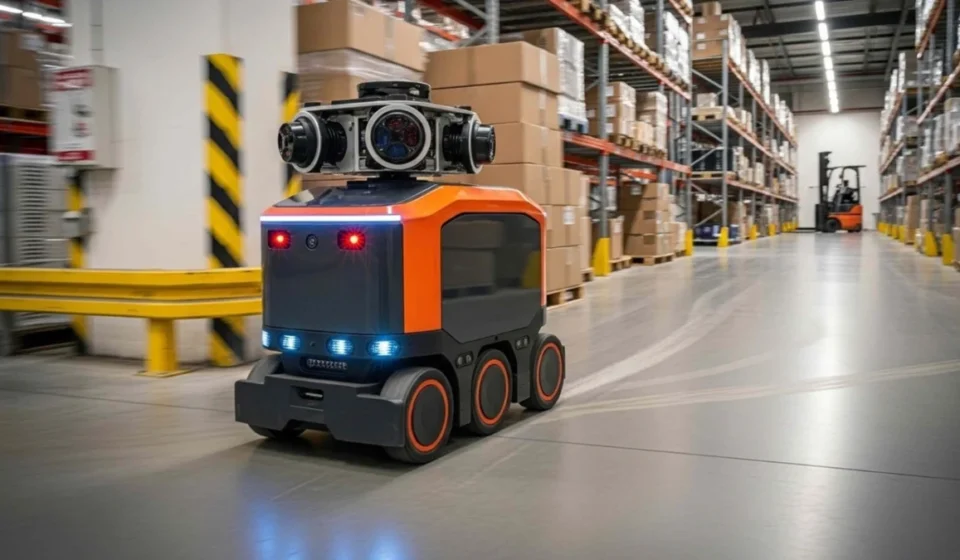
The quiet hum of an autonomous mobile robot (AMR) navigating a warehouse aisle has transitioned from a high-tech novelty to a standard feature of modern supply chain infrastructure. As these machines carry totes, transport pallets, and feed inventory to packing stations, they represent a larger macroeconomic trend.
According to mid-2026 data released by the Association for Advancing Automation (A3), North American enterprises are continuing to invest heavily in automation. During the first half of 2026, companies ordered 17,995 industrial robots valued at approximately $1.166 billion. While the increase in physical units was modest—rising 2% year-over-year—the total capital deployed grew by 6.6%. This variance reveals a critical shift: businesses are investing more capital per unit, moving away from isolated, entry-level machinery toward sophisticated, high-value integrated systems.
Driven by persistent labor shortages, rising wages, and demanding delivery expectations, automation has transitioned from an experimental strategy to a core operational necessity. However, as these fleets expand, logistics operators are discovering that physical hardware is only part of the equation. The real challenge of this automated era lies in software integration, workflow orchestration, and workforce adaptation.
Main Facts: The Changing Landscape of Robotics Capital
The H1 2026 market figures published by A3 highlight a stabilizing yet maturing robotics sector. The headline data indicates that while volume growth has leveled off, financial commitment is rising.
- Total Orders and Valuation: North American companies placed orders for 17,995 industrial robots during the first six months of 2026, representing a total transaction value of $1.166 billion.
- The Spending Disconnect: Unit orders grew by a modest 2% compared to the first half of 2025, but the total order value surged by 6.6%. This indicates that buyers are purchasing more expensive, specialized, or highly integrated systems.
- Quarterly Acceleration: The second quarter of 2026 saw a notable acceleration. Companies ordered 8,940 robots valued at $622 million—a 4.3% increase in units and a substantial 21.3% increase in revenue compared to Q2 2025.
- Sector Diversification: The historical dominance of automotive manufacturers in the robotics market is shifting. While orders from automotive OEMs declined by 25% year-over-year, non-automotive sectors experienced double-digit growth. Semiconductor and electronics orders climbed 35%, life sciences and pharmaceuticals rose 32%, and food and consumer goods increased by 17%.
- The Rise of Collaborative Robots (Cobots): Cobots represented 15.4% of all units ordered in H1 2026, with 2,774 units purchased at a valuation of $114 million.
Chronology: The Journey Toward Integrated Automation
The current state of robotics in 2026 is the result of a multi-decade evolutionary process that has accelerated rapidly over the last several years.
[2012] Amazon acquires Kiva Systems, validating mobile robotics at scale.
  │
[2020-2022] Pandemic-driven e-commerce boom sparks rapid, isolated hardware acquisitions.
  │
[June 2025] Amazon deploys its 1-millionth robot and introduces DeepFleet AI.
  │
[H1 2026] North American robotics orders hit 17,995 units ($1.166B), showing a 6.6% value increase.
  │
[Mid-2026] Shift focuses on software integration, vertical storage, and multi-vendor orchestration.
The Pioneer Era (2012–2019)
The modern warehouse robotics era began in earnest in 2012 when Amazon acquired Kiva Systems for $775 million. This move effectively monopolized the leading mobile robotic technology of the time, forcing competitors and third-party logistics (3PL) providers to seek alternative solutions. This catalytic event spurred a wave of venture capital funding into robotics startups, laying the groundwork for the diverse AMR and automated storage and retrieval system (AS/RS) market seen today.
The Peak Demand Shock (2020–2022)
The COVID-19 pandemic brought unprecedented e-commerce demand alongside severe labor shortages. Warehouse operators purchased hardware rapidly, often deploying standalone robotic solutions to address immediate bottlenecks. During this period, the primary goal was securing physical capacity, with long-term integration strategy frequently treated as a secondary concern.
The Consolidation and Rationalization Phase (2023–2025)
Following the pandemic-era surge, the market entered a period of stabilization. Companies focused on optimizing their existing fleets rather than buying more hardware. By June 2025, industry leaders like Amazon had reached historic milestones, deploying their one-millionth robot. At the same time, the focus shifted toward using artificial intelligence to optimize these massive fleets.
The Current Era of Integrated Orchestration (2026)
By the first half of 2026, the market entered a mature phase. Companies are no longer buying robots as isolated tools. Instead, they are designing complete systems where AMRs, vertical lift modules (VLMs), conveyors, and software work together under unified control systems.
Supporting Data: Economic Pressures and Market Dynamics
To understand why companies are spending more per robot, we must look at the underlying financial and labor data driving these capital investments.
H1 2025 vs. H1 2026 Performance Comparison
The shift toward higher-value systems is clear when comparing first-half data from 2025 and 2026:
| Period | Robot Units Ordered | Total Order Value | Average Cost Per Unit |
|---|---|---|---|
| H1 2025 | 17,635 | $1.094 Billion | ~$62,035 |
| H1 2026 | 17,995 | $1.166 Billion | ~$64,795 |
| Year-over-Year Change | +2.0% | +6.6% | +4.4% |
This increase in average unit cost reflects a growing preference for advanced configurations, integrated sensor suites, and collaborative capabilities over basic, single-use machinery.
The Labor Economics of Automation
The primary driver behind this capital expenditure is the rising cost and scarcity of industrial labor.
U.S. Warehousing Labor Statistics (June 2026)
├─ Average Hourly Wage: $26.85
├─ Sector Job Openings: 392,000
└─ Month-over-Month Increase: +97,000 openings (from May 2026)
According to the U.S. Bureau of Labor Statistics (BLS), the average hourly wage for warehousing and storage workers reached $26.85 in June 2026. Simultaneously, the June Job Openings and Labor Turnover Survey (JOLTS) reported 392,000 open positions across the transportation, warehousing, and utilities sector—a monthly increase of 97,000 openings from May.
For a typical distribution center operating multiple shifts, these labor dynamics translate into high recurring costs and constant operational uncertainty. Walking inventory across a facility, pushing manual carts, and handling heavy pallets can consume up to 60% of a picker’s daily shift. By shifting these repetitive tasks to automated systems, logistics operators can allocate their available staff to higher-value duties.
Sector-Specific Growth Rates (H1 2026 vs. H1 2025)
The A3 data shows a notable shift in where robots are being deployed:
Automotive OEMs:   ████████████████████ -25%
Automotive Parts:  ████████████████████ +24%
Food & Consumer:   ████████████████████ +17%
Life Sciences:     ████████████████████ +32%
Semiconductors:    ████████████████████ +35%
This diversification indicates that sectors with highly variable product handling needs—such as sterile pharmaceutical environments and high-precision semiconductor cleanrooms—are successfully adapting robotics to their specific operational requirements.
Official Responses and Industry Perspectives
Industry leaders and market analysts emphasize that the current wave of automation is defined by software integration rather than mechanical hardware alone.
The Association for Advancing Automation (A3)
In its market report, A3 noted that the broadening of demand across industries is a healthy sign for the robotics sector. While the decline in automotive OEM orders represents a cyclical shift in car manufacturing retooling, the double-digit gains in life sciences, food processing, and electronics indicate that automation is becoming a standard operational tool across the wider economy.
Interact Analysis: The Integration Bottleneck
While hardware acquisition is straightforward, integrating these systems remains a major challenge. Research published by Interact Analysis in July 2026 revealed that 45% of surveyed logistics executives considered integration difficulty the single largest barrier to adopting automated material-transportation systems.
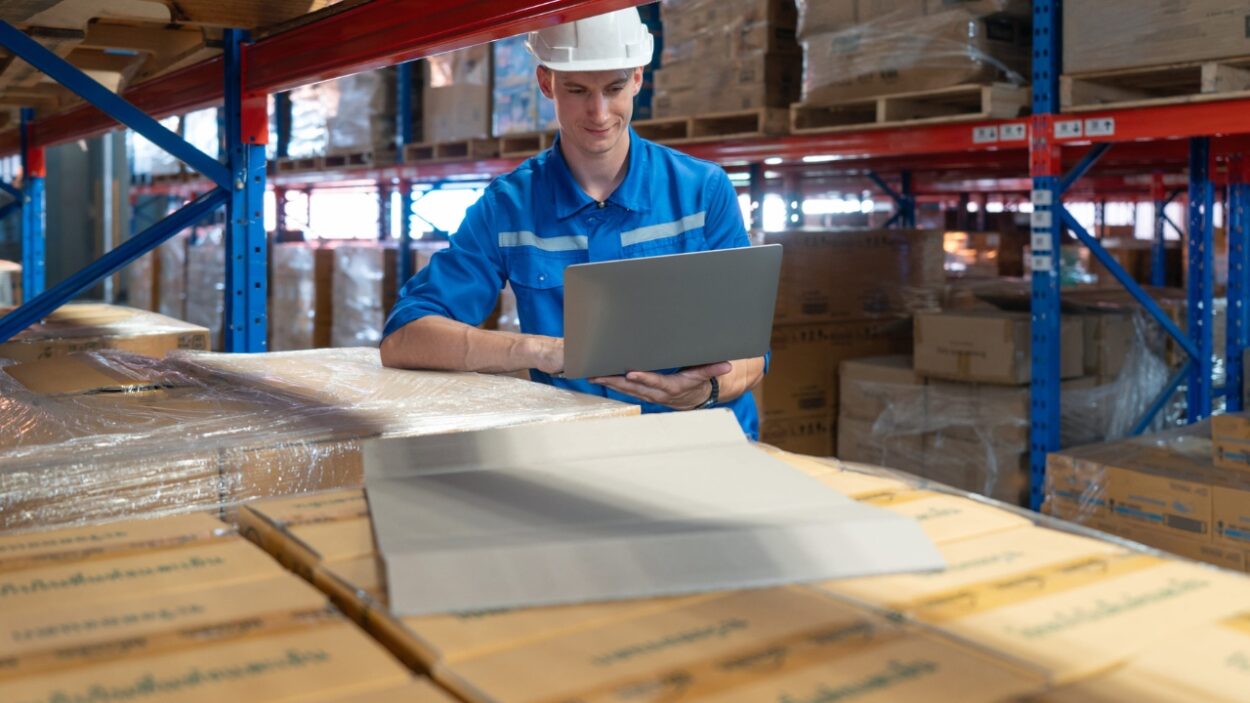
Analysts at the firm point out that a modern warehouse often features equipment from multiple vendors—such as an AS/RS from one manufacturer, AMRs from another, and a conveyor system from a third. Connecting these systems to ensure they work together smoothly is a major engineering challenge for modern logistics operations.
Amazon’s Scaling Strategy
Amazon’s massive logistics network serves as a key reference point for the industry. Having deployed over one million robots by mid-2025, the e-commerce giant has shifted its focus from hardware deployment to software optimization.
With the introduction of DeepFleet, an AI-driven fleet management model, Amazon reported a 10% improvement in travel efficiency for its mobile fleets. By optimizing paths and reducing traffic jams, the company demonstrated that software coordination is just as critical to throughput as the physical speed of the robots.
Operational and Labor Implications: The Integrated Future
The transition to highly automated logistics operations has significant implications for system architecture, software infrastructure, and workforce development.
The Software Integration Challenge
The primary challenge of modern automation is avoiding localized bottlenecks. A high-speed AMR fleet delivers little value if it constantly bottlenecks at an understaffed packing station or a slow conveyor.
[WMS / ERP System] -> (Global Inventory & Order Management)
       │
[Warehouse Execution System (WES)] -> (Orchestration & Workflow Logic)
       │
┌──────┴────────────────────────┐
▼                               ▼
[Fleet Manager A (AMRs)]     [AS/RS Controller]
To prevent these issues, warehouse operators are implementing Warehouse Execution Systems (WES) and Warehouse Control Systems (WCS). These software layers act as central coordinators, managing tasks, directing traffic, and adjusting workflows in real time. The goal is to build an adaptable network of specialized systems that work together under a single, unified software interface.
The Evolution of the Warehouse Worker
The rise of robotics is changing the nature of warehouse employment rather than simply replacing human labor. While robots excel at repetitive, predictable tasks, human workers remain essential for tasks requiring dexterity, problem-solving, and adaptability.
| Task Characteristics | Best Suited For | Typical Roles |
|---|---|---|
| Repetitive, Heavy, Structured | Robotics & Automation | Palletizing, horizontal transport, high-density storage retrieval |
| Variable, Unstructured, Cognitive | Human Workers | Quality control, exception handling, complex packing, system maintenance |
This technological shift requires a corresponding investment in workforce training. As warehouses adopt more automation, the demand for traditional manual labor is decreasing, while the need for skilled technicians who can operate, troubleshoot, and maintain these automated systems is rising.
Conclusion: A Pragmatic Path Forward
The H1 2026 robotics data shows a clear trend toward practical, well-planned automation. Rather than buying hardware simply to keep pace with technology, North American logistics operators are taking a more strategic approach. They are carefully assessing which processes to automate, how to connect new equipment with legacy systems, and how to prepare their workforce for an automated environment.
With nearly 18,000 orders placed in the first half of the year, robotics is cementing its role as a standard element of logistics infrastructure. For the modern warehouse manager, success is no longer measured by the number of robots on the floor, but by how effectively those machines are integrated into a cohesive, productive system.