


























ServiceNow Bets Big on Indian Fintech: A $40 Million Strategic Pivot into Autonomous Banking

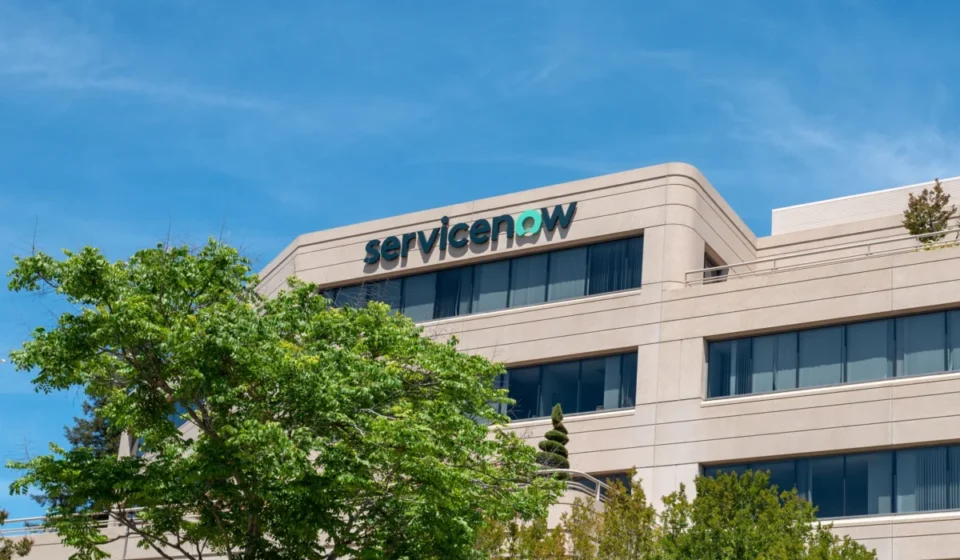
In a move that signals a deepening consolidation of enterprise software and specialized vertical AI, U.S.-based workflow automation giant ServiceNow has announced a $40 million investment in BusinessNext, an Indian banking software specialist. This strategic transaction, which secures a roughly 5% equity stake for ServiceNow, values the Noida-based fintech firm at approximately $700 million.
The partnership is far more than a simple capital injection; it represents a symbiotic alliance designed to propel both entities into the next generation of global financial services. By integrating BusinessNext’s deep-rooted banking domain expertise with ServiceNow’s expansive global sales infrastructure, the two firms aim to dominate the rapidly evolving landscape of AI-driven financial operations.
The Core Facts: A Strategic Alignment
ServiceNow, renowned for its prowess in automating IT service management and HR workflows, is aggressively expanding its footprint within the financial sector. BusinessNext, formerly known as CRMNext, brings to the table a sophisticated "autonomous banking" platform that has been refined over two decades.
The $40 million deal is designed to provide BusinessNext with the "go-to-market machinery" it requires to scale in geographies where its presence remains nascent, specifically within the competitive U.S. and European markets. For ServiceNow, the investment serves as a tactical acquisition of specialized vertical intelligence, allowing it to offer financial institutions a comprehensive, end-to-end suite that bridges back-office efficiency with front-office customer engagement.
Chronology: From CRMNext to an AI-Native Powerhouse
The trajectory of BusinessNext is a study in iterative innovation and long-term strategic planning:
- 2002: The company is founded in India as CRMNext, initially focusing on customer relationship management solutions for the banking sector.
- 2010–2020: The firm scales significantly across Southeast Asia and the Middle East, securing high-profile clients including the Reserve Bank of India, State Bank of India, and HDFC Bank.
- 2021: BusinessNext secures a valuation of $181 million, according to data from Tracxn, supported by investors like Avataar Ventures, Norwest Venture Partners, and Ascent Capital.
- 2022: A pivotal year; the company rebrands to "BusinessNext" to reflect its shift from a pure-play CRM provider to an autonomous, AI-led banking platform. The management team begins rewriting the software stack to embed AI at the core rather than as an add-on feature.
- 2024: ServiceNow finalizes its $40 million investment, valuing the company at $700 million and initiating a joint go-to-market strategy for global financial institutions.
Supporting Data: Scaling the "Autonomous" Vision
BusinessNext is currently a profitable enterprise, reporting approximately $32 million in revenue for the most recent financial year. With a workforce of over 1,300 employees, the firm manages a customer base of more than 70 major banks.
A critical component of its growth strategy is its international footprint: nearly 50% of its current revenue is generated outside of India. Founder and CEO Nishant Singh has emphasized that this international exposure is not accidental but the result of a deliberate push to modernize banking stacks globally.
The platform’s technical architecture is built on the principle of "private AI." Recognizing the stringent data sovereignty and privacy regulations governing the banking sector, BusinessNext ensures that all sensitive customer data is processed within private AI infrastructure. This design choice is what differentiates it from general-purpose SaaS tools that may rely on public cloud models, providing an essential layer of trust for central banks and large-scale retail lenders.
Official Perspectives: The Synergy of Platforms
The Strategic "Borrowing" of Infrastructure
Nishant Singh, CEO of BusinessNext, describes the deal as a "strategic partnership cemented with funding." During an interview regarding the announcement, Singh noted that the company deliberately bypassed pure financial investors in favor of a strategic partner that could provide more than just capital.
"Think of it as a strategic partnership," Singh said. "We are effectively borrowing [ServiceNow’s] go-to-market machinery." By plugging into ServiceNow’s global sales infrastructure, BusinessNext expects to dramatically shorten the sales cycle in North America and Europe, markets where they previously faced significant barriers to entry.
ServiceNow’s View: The Inflection Point
Kulmeet Bawa, ServiceNow’s group vice president and managing director for India and SAARC, views the investment as a proactive response to the shifting requirements of global financial institutions.
"India’s financial services sector is at an inflection point," Bawa noted. "Institutions are moving from digital experimentation to full-scale AI-led operations." Bawa believes the marriage of ServiceNow’s enterprise-grade workflow automation with BusinessNext’s specialized banking domain expertise creates a "category-defining" offering. The goal is to provide banks with a unified system where customer-facing workflows (handled by BusinessNext) seamlessly trigger back-office operations (handled by ServiceNow).
Implications: The Future of Enterprise SaaS
The Pressure to Evolve
The landscape of enterprise software is currently undergoing a painful transition. Customers are increasingly skeptical of traditional, bloated SaaS tools that promise efficiency but deliver complexity. With the rise of AI-native alternatives, incumbents are being forced to justify their value propositions.
For ServiceNow, this deal is a preemptive strike against the commoditization of its services. By embedding itself into the core of banking operations through a partner that is already "AI-native," ServiceNow is fortifying its position against potential disruptors.
The Rise of Vertical AI
The BusinessNext investment underscores a broader trend in the tech industry: the shift from "horizontal" software—which aims to be everything to everyone—to "vertical" AI, which is purpose-built for the unique regulatory and functional constraints of a specific industry. Banking, with its complex web of KYC (Know Your Customer) requirements, fraud detection needs, and high-frequency transaction processing, is the ultimate test case for this model.
Impact on the Indian Startup Ecosystem
This deal serves as a massive validation for the Indian enterprise SaaS sector. While India has long been a hub for software services and outsourcing, companies like BusinessNext prove that Indian firms can build sophisticated, proprietary AI platforms that compete on a global stage. The $700 million valuation for a company that started as a local CRM provider showcases the massive scalability inherent in deep-tech, vertical-specific software solutions.
Looking Ahead
The collaboration between ServiceNow and BusinessNext is expected to yield new product integrations over the next 18 to 24 months. As these two companies combine their engineering resources, they aim to offer a "full-stack" banking solution that covers everything from customer onboarding and loan origination to regulatory compliance and automated back-office reconciliation.
For banks, the promise is simple: the ability to leverage AI without sacrificing security or compliance. For ServiceNow, the partnership is a cornerstone of its strategy to remain the essential nervous system of the modern enterprise. As the financial sector moves from "digital" to "autonomous," this $40 million bet may prove to be one of the most consequential investments in the firm’s history.
In the long run, the success of this partnership will likely be measured by how many global Tier-1 banks adopt this combined architecture. If the joint effort succeeds, it could set a new standard for how large-scale enterprise software firms integrate niche, AI-native players to stay ahead of the curve in a rapidly changing technological landscape.