












































In the autumn of 2019, the cultural tapestry of Oaxaca, Mexico, became the backdrop for an exploration of the profound, the surreal, and the ancestral. While the world often associates Día de los Muertos (Day of the Dead) with sanitized aesthetic displays, the reality in the small community of San Gabriel Etla is a visceral, communal, and intoxicating experience. Far from a solemn funeral, it is a boisterous, multi-generational reclamation of life—and the afterlife.
The Cultural Significance: Bridging Two Worlds
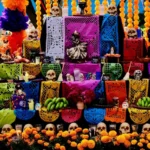
The core of Día de los Muertos lies in the ofrenda, a temporary altar constructed within the sanctity of the family home. It is a vessel of memory, adorned with photographs of the departed, marigolds, and favorite tokens of the deceased. Tradition dictates that for this brief window in early November, the barrier between the living and the dead thins. Those honored on the ofrenda are believed to cross back into the world of the living, returning to the hearth of their kin to partake in the essence of the celebration.
To move beyond the role of a tourist and into that of an observer-participant, many travelers look to local experts. In this instance, the tour operator Coyote Aventuras served as the bridge, providing an authentic, ethically grounded conduit into a celebration that is, at its heart, a private family affair.
Chronology of a Night Without End
6:00 PM: The Breaking of Bread
The journey began in a family home in San Gabriel Etla. We were welcomed as strangers—a group of 12—into a multi-generational household. The table was laden with the pillars of Oaxacan holiday cuisine: Pan de Muerto (bread of the dead), rich pozole, and savory tamales.
However, the defining element of the evening was the mezcal. In this setting, the term "decanter" is insufficient; the spirit was dispensed from a large plastic jug equipped with a nozzle, sitting prominently at the head of the table. As the evening progressed, the distinction between host and guest dissolved. Conversations flowed in a fluid mix of Spanish and English, bridging cultures through the universal language of shared history and hospitality. It was a moment of profound humility, witnessing elders and children celebrating their ancestors with a candid joy that felt entirely alien to the more reserved, often somber, mourning customs of the United States.
8:00 PM: The Call of the Brass Band
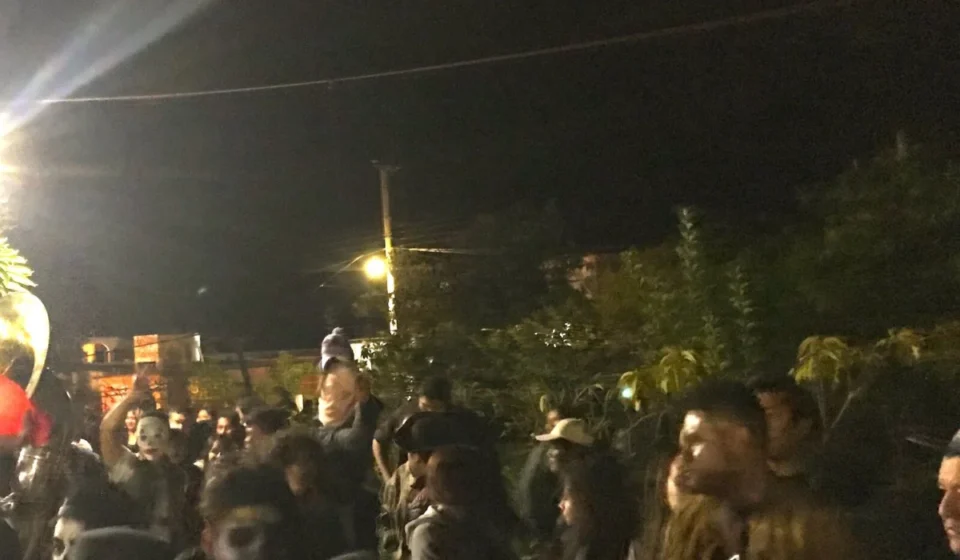
As dinner concluded, the atmosphere shifted. We followed our hosts to the community basketball court adjacent to the local church. The space was transformed into a theater of the macabre and the magnificent. Approximately 250 residents and visitors were packed into the square, many donned in elaborate masks and costumes. Stilt-walkers—figures of haunting grace—towered above the crowd, their movements calculated and predatory, yet strangely synchronized with the shifting mood of the gathering.
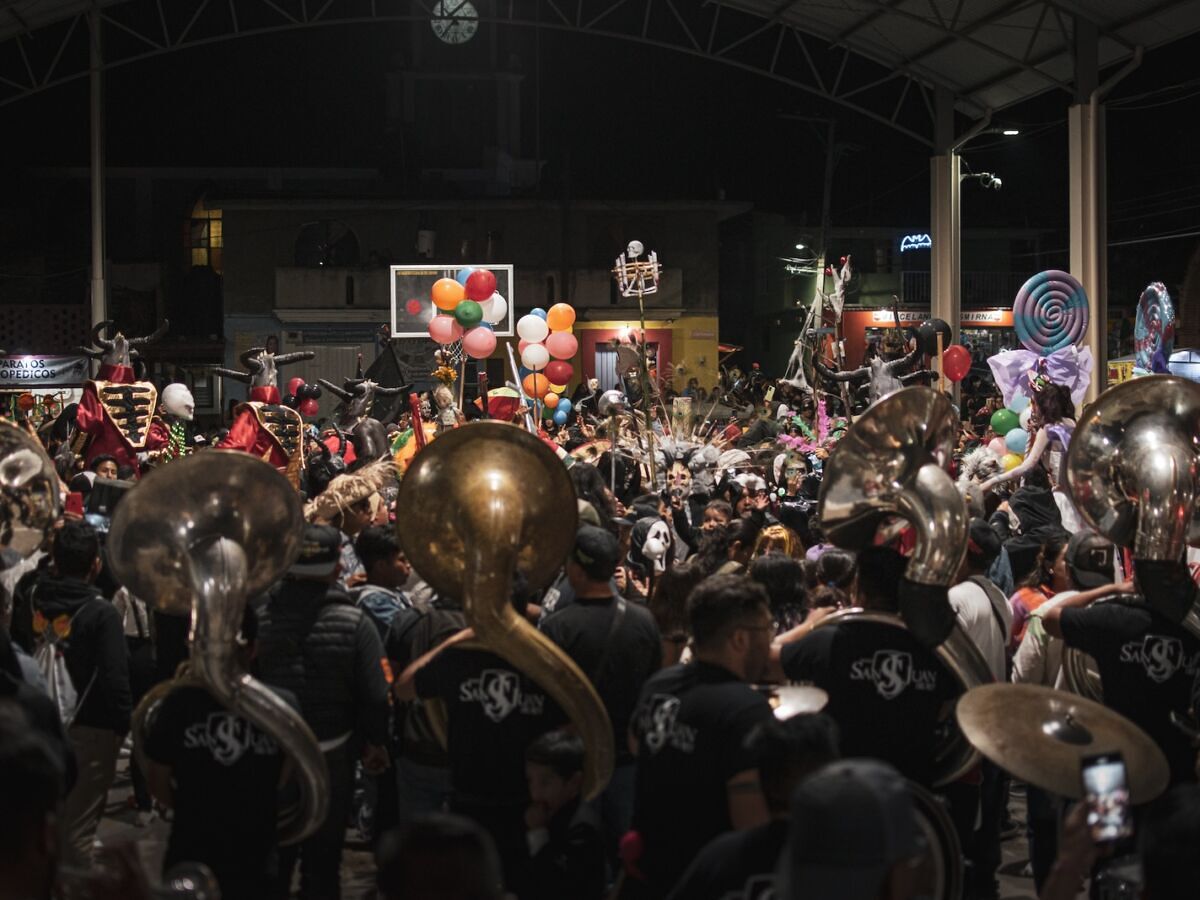
The silence of the anticipation was shattered when the brass band struck an upbeat, frantic dance tempo. The crowd erupted into a spontaneous, joyous mosh pit. There was no hesitation; the revelry was immediate and all-encompassing.
10:00 PM: The Procession and The Theatrics
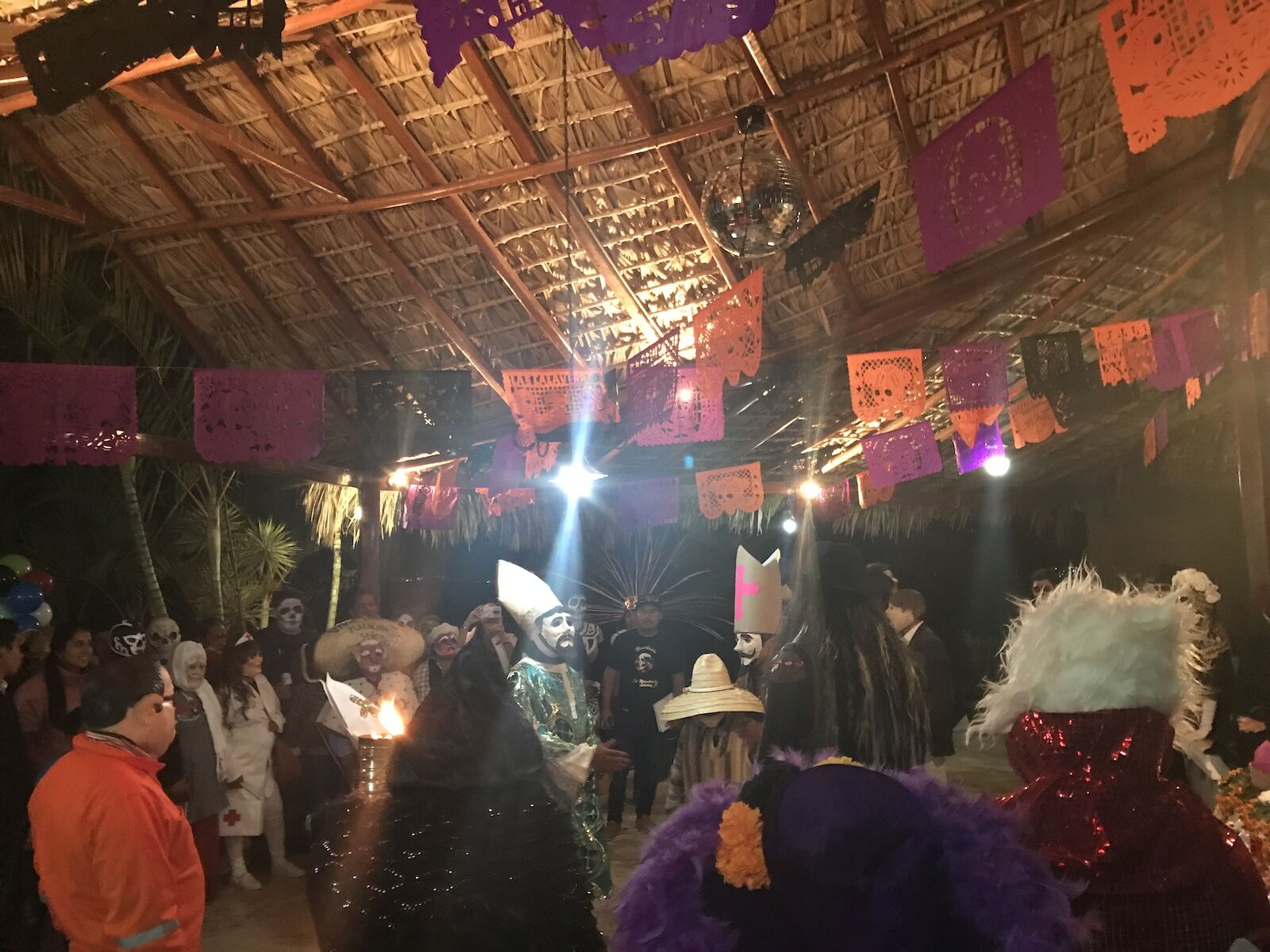
The celebration was nomadic. After the initial frenzy at the basketball court, the procession moved into the streets, stopping at private backyards and community hubs. At each stop, the narrative changed. We were treated to short, biting theatrical performances—some focusing on the crossing of spirits, others incorporating local political satire. The mezcal continued to flow, with families providing their own communal jugs, ensuring that the energy never waned.
Midnight and Beyond: The Surreal Return
By the fourth stop, the linear progression of time ceased to matter. The parade eventually turned back toward the starting point, a staggering, rhythmic march through the night. The road was lined with pop-up food stalls, the air thick with the smell of smoke and the sound of horns. It was here, in the height of the chaos, that the experience turned truly surreal. The blend of costumes, the relentless music, and the sheer density of emotion created a sensory environment that felt, to the uninitiated, like a psychedelic hallucination, despite the absence of any substance beyond the mezcal.
Supporting Data: The Logistics of Participation
Ethical Considerations and Cultural Appropriation
A recurring question for those visiting Oaxaca during this time is the ethical boundary of participation. Is wearing face paint or a costume an act of appropriation or appreciation? During our stay, this topic was broached with our hosts. The consensus among the locals in San Gabriel Etla was one of inclusivity; the community does not view the participation of respectful visitors as inherently disrespectful.
However, the nuance remains important. While face painting and costuming are widely available, they are not mandatory. Many visitors, feeling the weight of being "outsiders," choose to remain observers. The key is in the intent—engaging with the holiday as a guest rather than a spectator.
The Role of Responsible Tourism
The choice of tour operator is the most significant factor in a successful experience. Coyote Aventuras operates on a model of community integration. They ensure that the families hosting the dinners are compensated fairly and that the tour itself does not overwhelm the local community. By choosing a company that maintains long-term relationships with local guides—like Yesi, who facilitated our connection—the experience remains authentic rather than performative.
Official and Community Perspectives
While Día de los Muertos is a time for individual family reflection, the San Gabriel Etla celebrations are a matter of deep communal pride. The involvement of local theater troupes and brass bands serves to reinforce local identity and preserve oral histories. For the community, the influx of visitors is secondary to the preservation of the tradition. The presence of tourists is treated with a mixture of curiosity and stoic hospitality, provided those visitors adhere to the unspoken rules of respect and participation.
Implications for the Future of Cultural Tourism
The San Gabriel Etla experience offers a blueprint for how cultural tourism can function in the 21st century. It suggests that travelers are moving away from passive sightseeing and toward immersive, human-centric experiences. However, this shift carries risks. As events like these gain global notoriety via social media, the burden on local communities to maintain their privacy while accommodating visitors will grow.
The implication is that future travelers must prioritize sustainability. This includes:
- Direct Economic Contribution: Ensuring money spent stays within the local economy rather than going to multinational travel conglomerates.
- Small Group Dynamics: Keeping the footprint small to avoid disrupting the intimacy of the rituals.
- Education: Understanding the history of the ofrenda and the significance of the Día de los Muertos before arriving.
As we drove back to Oaxaca City, the van filled with the exhausted, euphoric singing of our group, it was clear that we had witnessed something that could not be replicated. The "crazy party" was, in reality, a deeply structured, ancestral ritual that had been adapted to survive the modern era.
The lesson of San Gabriel Etla is simple: Death is not the end of the conversation; it is merely a change in the medium. By engaging with the living, the dead are kept present. And for those of us invited to the table—whether as guests or observers—we are reminded that the most profound human experiences are those that require us to step outside our comfort zones and into the rhythm of a culture that understands, perhaps better than any other, how to celebrate the inevitable.