











































A Nostalgic Power-Up: Burger King and Toei Animation Partner for Nationwide Dragon Ball Super Campaign

A comprehensive analysis of the fast-food giant’s strategic licensing deal, the culinary execution of the themed menu, and the dual-demographic appeal of anime collectibles.
1. Main Facts: The Burger King and Dragon Ball Super Collaboration
On September 1, quick-service restaurant giant Burger King officially launched a nationwide promotional campaign in the United States in partnership with Toei Animation, bringing the globally acclaimed Dragon Ball Super franchise to its menu. This limited-time collaboration introduces themed packaging, specialized menu items, and a highly anticipated set of collectible figures, available at participating locations across the country while supplies last.
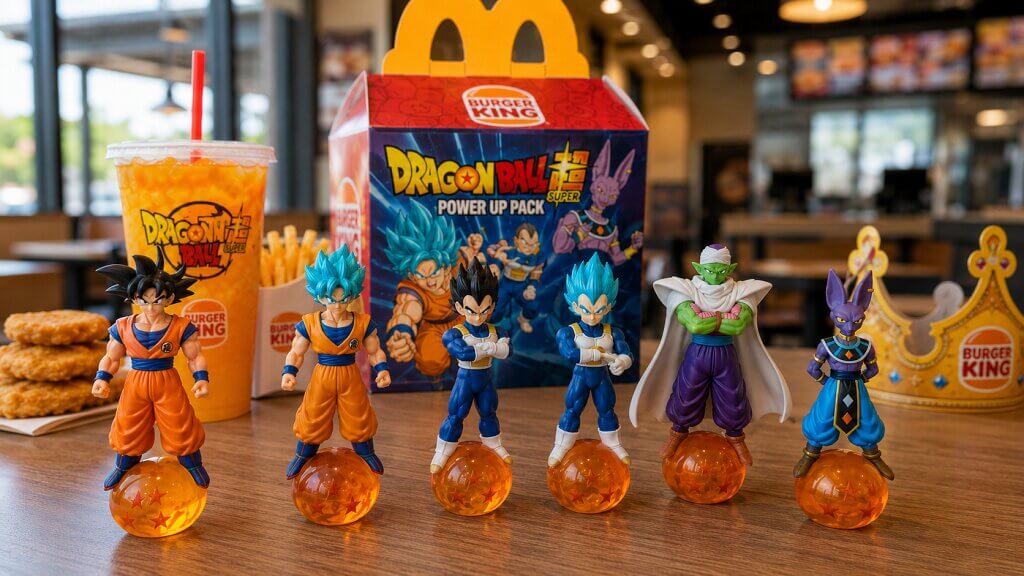
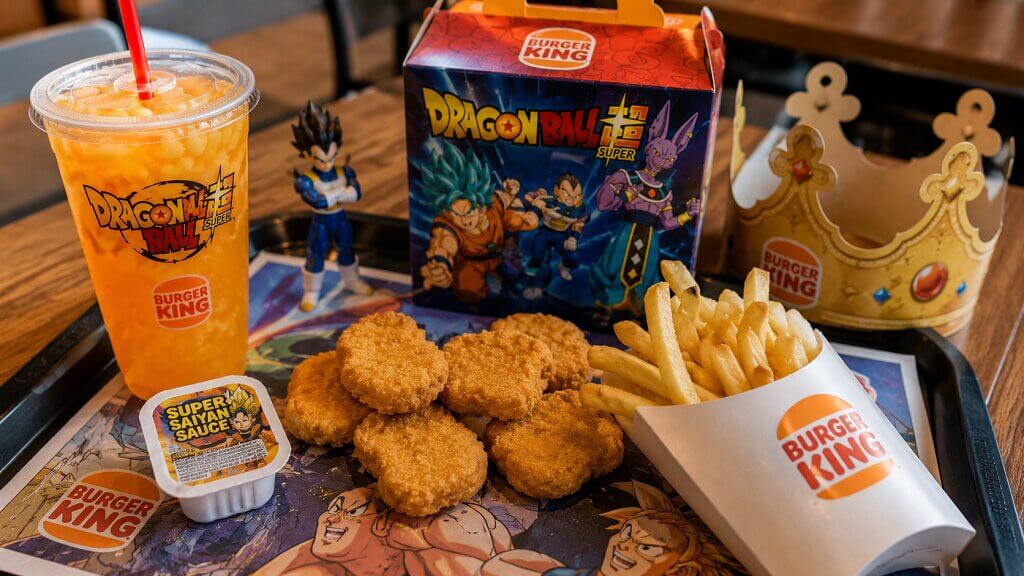
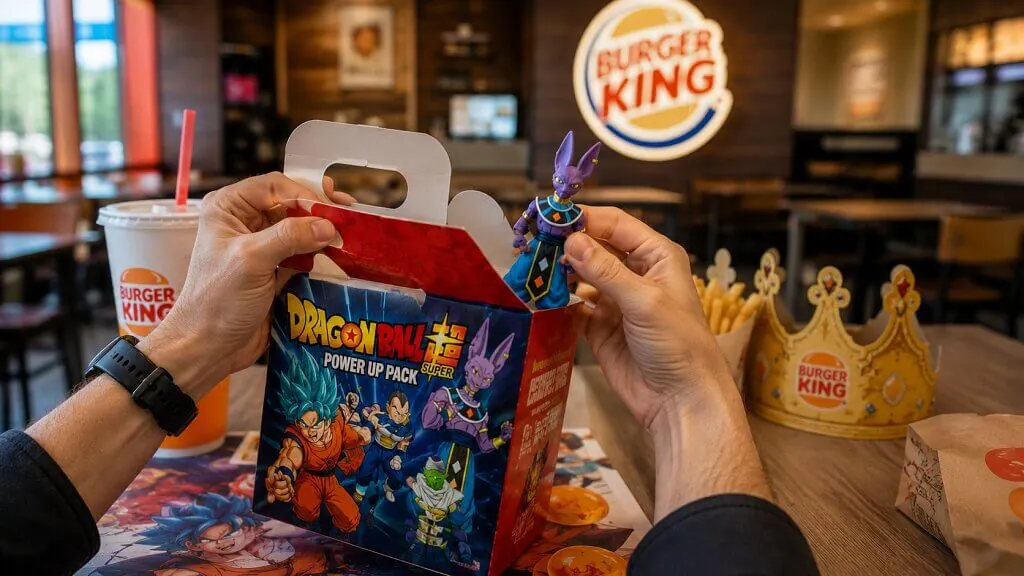
At the center of the promotion is the Dragon Ball Super Power Up Pack. Designed to appeal to both younger audiences and adult collectors, this meal deal includes:
- Ten chicken nuggets.
- A medium order of French fries.
- An exclusive, limited-time Super Saiyan Sauce.
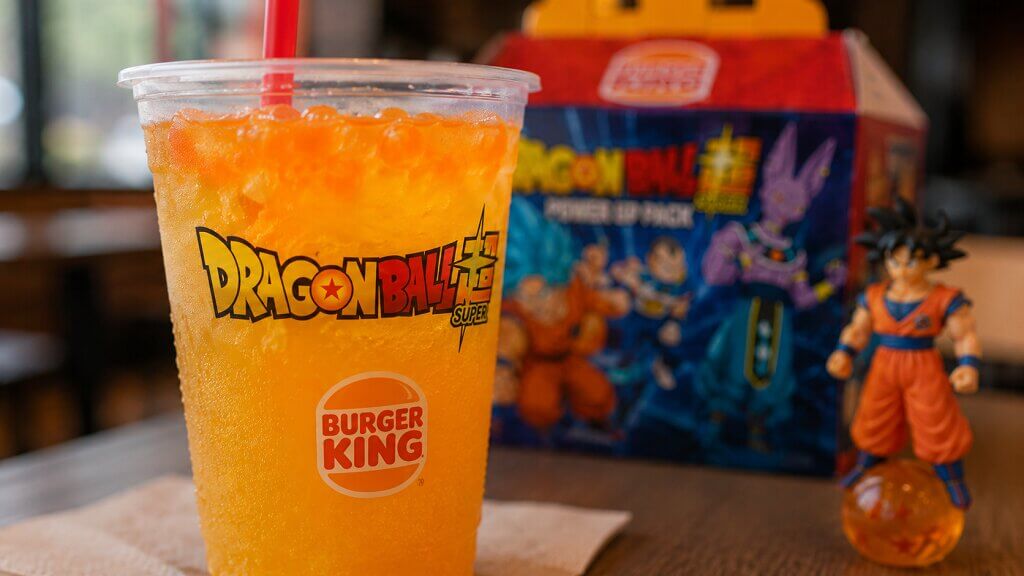
- The Dragon Ball Burst Lemonade.
- One random, individually packaged Dragon Ball Super collectible toy.
Additionally, the promotion features themed paper crowns, custom-designed beverage cups, and meal boxes showcasing prominent characters from the series. To accommodate younger fans with smaller appetites, Burger King has also integrated the same six-figure toy lineup into its standard King Jr. Meals, ensuring the collectibles are accessible across multiple price points and meal configurations.
2. Chronology: From Underground Licensing to Mainstream Retail Dominance
To fully understand the significance of a major American fast-food chain dedicating its national marketing power to a Japanese anime franchise, one must look at the historical trajectory of Dragon Ball in the Western market.
[Late 1990s - Early 2000s] ──> [Mid-2000s - 2010s] ──> [2015] ────────────────> [Present Day]
Scarcity & Ocean Dub Loop       Mainstream Syndication  Dragon Ball Super       National QSR Tie-Ins
(Hard-to-find merchandise,      (Toonami block, video   Premiere (Global        (Burger King partnership,
repeating TV broadcast cycles)  game market expansion)  franchise revival)      mass-market retail integration)
The Era of Scarcity (Late 1990s–Early 2000s)
In the late 1990s and early 2000s, anime was still a niche subculture in the United States. Officially licensed merchandise was exceptionally difficult to find, often restricted to specialty comic book shops or import stores. Fans frequently relied on low-quality VHS bootlegs or fan-translated tapes to watch the series. On television, early syndication agreements meant that networks repeatedly broadcasted the same limited run of episodes—specifically the early Saiyan and Namek sagas—leaving audiences in a perpetual loop of anticipation.
The Mid-2000s Expansion and the Toonami Era
The licensing landscape shifted dramatically when Cartoon Network’s Toonami programming block brought Dragon Ball Z to millions of households daily. This exposure catalyzed a massive wave of merchandise, including action figures by Irwin Toy and Jakks Pacific, alongside a flurry of video games for consoles like the PlayStation 2. While these games and toys saw varying levels of critical and commercial success, they established Dragon Ball as a permanent fixture of Western youth culture.
The Modern Revival (2015–Present)
The premiere of Dragon Ball Super in 2015 marked a massive renaissance for the franchise. Rather than relying solely on nostalgia for the original 1980s and 90s runs, Dragon Ball Super introduced a new generation of characters, transformations, and lore—such as Super Saiyan Blue, the God of Destruction Beerus, and the multiverse-spanning Tournament of Power.
Today, Dragon Ball is no longer an import novelty; it is a multi-billion-dollar global intellectual property. The partnership with Burger King represents the culmination of this multi-decade journey, shifting the franchise from niche hobby shops to the drive-thrus of mainstream corporate America.
3. Supporting Data & Culinary Analysis: Evaluating the Menu and Collectibles
An analysis of the promotional campaign reveals a strategic balance between operational simplicity and thematic fan service. Quick-service restaurant promotions must balance appealing to dedicated fanbases with the operational realities of high-volume, fast-paced kitchens.
The Culinary Offerings: Flavor Profiles and Visual Design
| Menu Item | Description | Flavor Profile / Visual Hook | Strategic Purpose |
|---|---|---|---|
| Super Saiyan Sauce | Limited-time dipping sauce | Sweet, savory, and tangy teriyaki-style | Approachable flavor profile designed to appeal to the masses rather than a niche spicy palate. |
| Dragon Ball Burst Lemonade | Mango-peach lemonade featuring orange mango-flavored popping boba | Sweet, tropical, and highly visual | The standout item. The orange boba spheres float in the cup to mimic the iconic, star-filled Dragon Balls. |
| Standard Sides | 10-piece chicken nuggets and medium French fries | Classic salted fast-food fare | Minimizes kitchen disruption by using high-volume, pre-existing menu items. |
While some fans may have hoped for more complex culinary innovations—such as a spicy burger themed after Vegeta’s fiery temper or a frozen dessert styled after Frieza—Burger King opted for a low-friction, high-efficiency menu. By utilizing pre-existing ingredients like chicken nuggets, fries, and lemonade bases, and introducing only two new components (the pre-packaged dipping sauce and the popping boba), the chain successfully avoided kitchen bottlenecks during peak hours.
The Toy Lineup: Character Selection and Collectibility
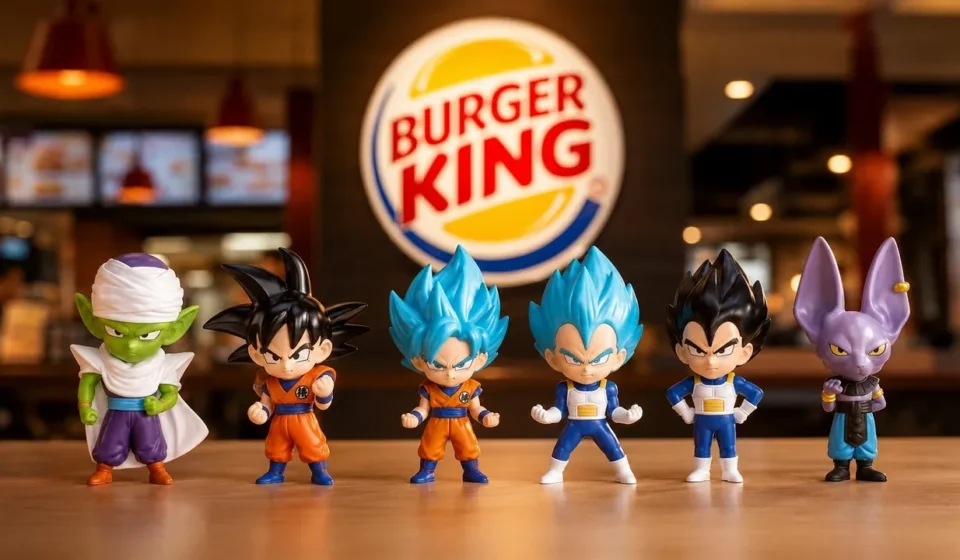
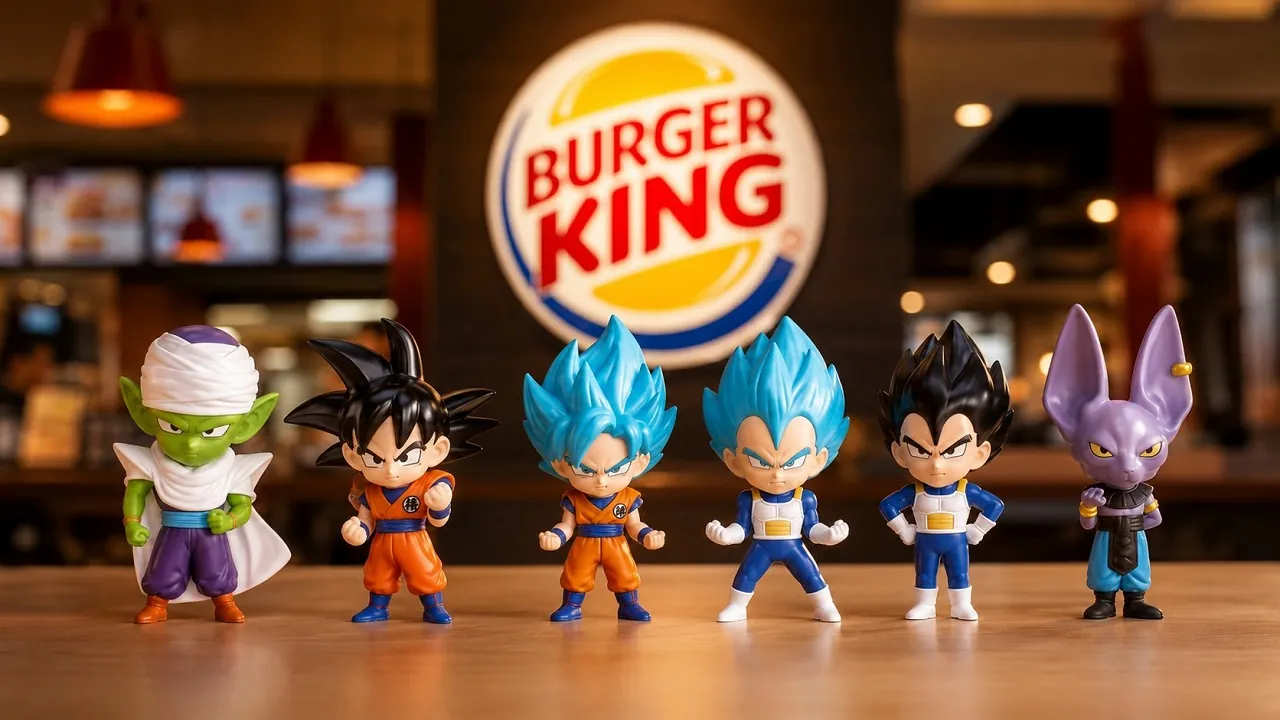
The promotion features six distinct plastic figures. However, the character distribution has drawn both praise and criticism from the collector community:
                  ┌── Goku (Base Form)
                  ├── Super Saiyan Blue Goku
                  ├── Vegeta (Base Form)
Dragon Ball ──────┼── Super Saiyan Blue Vegeta
Super Figures     ├── Piccolo
└── Beerus (God of Destruction)- The Redundancy Critique: Four out of the six available slots are occupied by just two characters: Goku and Vegeta, each represented in both their base forms and their Super Saiyan Blue transformations. From a marketing standpoint, Goku and Vegeta are the undisputed faces of the franchise. However, from a collector’s perspective, dedicating two-thirds of the set to these two characters represents a missed opportunity. Characters like Golden Frieza, Future Trunks, or Android 17 (who enjoyed a major popularity surge during the Tournament of Power) could have provided a more diverse and compelling set.
- The Standout Inclusions:
- Piccolo: A perennial fan favorite, Piccolo’s inclusion is highly justified. The character recently enjoyed a major narrative resurgence in the feature film Dragon Ball Super: Super Hero, which introduced his "Orange Piccolo" form and re-established him as a central protagonist.
- Beerus: The purple, feline God of Destruction is perhaps the most fitting choice for a restaurant tie-in. Since his introduction, Beerus’s character has been defined by his obsession with Earth’s culinary delights. His inclusion provides a humorous, self-aware connection to the food-service environment.
4. Official Responses & Operational Context
In its official press release, Burger King expressed enthusiasm for the collaboration, emphasizing the shared global reach of both brands. Representatives from Toei Animation echoed this sentiment, highlighting the partnership as a unique way to engage with fans across generations.
According to industry analysts, the operational design of the campaign reflects a highly calculated approach to modern QSR (Quick-Service Restaurant) promotions:
"Fast-food chains cannot afford to introduce highly complex menu items that disrupt the speed of service," says retail analyst Marcus Thorne. "By packaging the promotion around a special sauce, a boba drink, and pre-manufactured toys, Burger King successfully creates a high-impact, highly shareable event without slowing down kitchen operations or requiring expensive new equipment."
This operational efficiency is critical for a nationwide rollout. It ensures that any participating restaurant, regardless of staff size or kitchen layout, can seamlessly execute the promotion. The reliance on a "blind bag" distribution method—where customers receive a random figure with each meal—also serves an operational and financial purpose, encouraging repeat visits from collectors attempting to complete the full set of six.
5. Implications: The Economics of Nostalgia and Dual-Demographic Marketing
The Burger King Dragon Ball Super promotion highlights a growing trend in the fast-food industry: the strategic monetization of adult nostalgia.
                           ┌──> Children (Introduced via DBS, games, streaming)
Burger King Collaboration ─┤
                           └──> Adult Collectors (Millennials/Gen X who grew up with DBZ)
The Rise of the "Kidult" Consumer
In recent years, major quick-service brands have recognized that adult consumers are highly receptive to toy-based promotions. Following the massive success of initiatives like McDonald’s "Adult Happy Meals" (developed in collaboration with streetwear brand Cactus Plant Flea Market), Burger King’s campaign is designed to capture this lucrative "kidult" market.
For an adult who grew up watching the Saiyan Saga on a CRT television, purchasing a Power Up Pack offers a cheap, accessible hit of nostalgia. It allows them to participate in a childhood collecting ritual without the financial commitment of high-end, triple-digit resin statues.
Cross-Generational Appeal
Dragon Ball is uniquely positioned to bridge generational divides. Because the franchise has remained active through video games, theatrical movies, and streaming platforms, it boasts a dual-generation fanbase:
- The Parents (Millennials/Gen X): Those who originally watched Dragon Ball Z in the late 1990s and early 2000s.
- The Children (Gen Z/Gen Alpha): Those who have grown up with Dragon Ball Super, the Super Hero film, and massive gaming franchises like Dragon Ball Xenoverse and Dragon Ball Legends.
This overlap makes the promotion incredibly effective. A parent can visit Burger King, order a King Jr. Meal for their child and a Power Up Pack for themselves, and share a mutual interest in the exact same intellectual property.
Conclusion: A Calculated Success
While the promotion may have missed opportunities for more adventurous culinary items or a more varied toy lineup, it succeeds where it matters most. It delivers a visually striking, operationally viable, and deeply nostalgic experience that appeals to fans of all ages. By tapping into decades of built-up brand equity, Burger King and Toei Animation have demonstrated the enduring power of Dragon Ball in the modern consumer landscape.