
















































At Rocco’s Pub and Pizza in Goodview, Minnesota, a conspicuous void now haunts the wall near the jukebox. Where Ron Hunt’s 1972 pastoral landscape, Coming In, once hung for decades—a serene depiction of ducks drifting over a marshy riverbed—there now exists only a rectangular patch of discolored white paint. In the center of this architectural scar, an official-looking placard bears the logos of both the restaurant and the Minnesota Marine Art Museum (MMAM), informing patrons that the local treasure is currently “on loan.”
This is not a case of theft or decay; it is a meticulously orchestrated act of institutional theater. The painting, along with two tables and three original booth seats from the restaurant, has been transported across town to the MMAM, where they serve as the anchor for artist Andy DuCett’s ambitious new installation, Home(town). By physically displacing these everyday artifacts of Winona life into the sterile, hallowed halls of a museum, DuCett is asking a profound question: Who owns the narrative of a community, and what happens when the mundane items of our daily existence are suddenly granted the status of high art?
The Anatomy of a Hometown Myth
Andy DuCett, a Minneapolis-based artist, has spent his career exploring the intersections of reality and fiction, often utilizing institutional language to poke fun at the structures that govern our lives. Home(town) is his most comprehensive effort to date, a sprawling, multi-media investigation into the past, present, and future of Winona.
The exhibition is a labyrinth of maps, diagrams, found objects, zines, sculptures, and collaborative installations. It is designed to be a "collective narrative experience," one that blurs the lines between civic history and the personal, often hazy, memories of residents.
"DuCett is not merely documenting Winona," says one local observer. "He is creating a mythogeography. He is taking the things we walk past every day—a local pizza joint, an ice cream shop, a Zamboni—and forcing us to look at them as if they were historical monuments."
Chronology of an Artistic Intervention
The roots of this exhibition trace back to DuCett’s long-standing interest in the role of the museum. Before Home(town) opened in late 2026, DuCett was already experimenting with fictionalized institutional structures.
In 2024, his piece On Loan (2019) became a fixture of the MMAM’s Fluid: What Is Marine Art, and What Can It Be? exhibit. In that work, DuCett created a surreal experience that simulated the sensation of standing on a rocking ship at sea. The inclusion of a credit line attributing the work to the "South London Museum of Maritime Kinetics"—a completely fictitious entity—was a clear indicator of DuCett’s intent to challenge the authority and "truth" of the museum label.
By September 2026, this conceptual framework moved from the global to the hyper-local. DuCett began reaching out to local institutions, including Rocco’s Pub and Pizza. He sought to borrow the very fabric of the city’s social life. When he arrived at Rocco’s, he found a quintessential Midwestern establishment—a place that serves thin-crust pizza with a heavy side of nostalgia. The restaurant, with its glowing Old Style lanterns and blue-gray booths, became the perfect microcosm for his project.

Supporting Data: The Logistics of a "Home" Exhibit
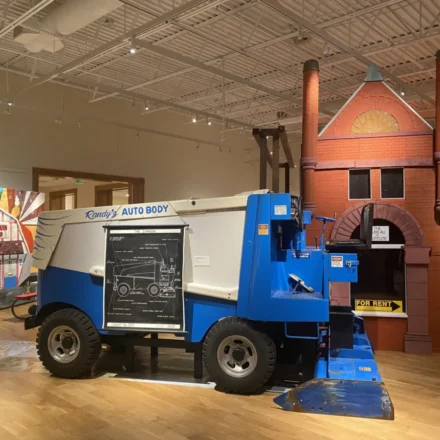
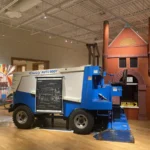
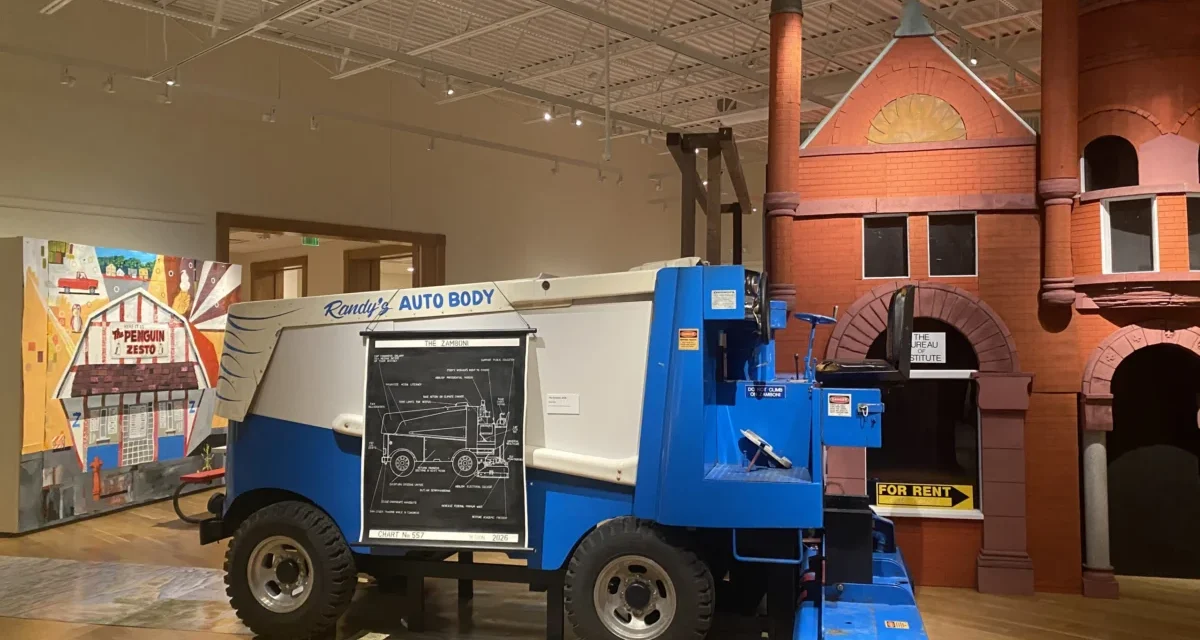
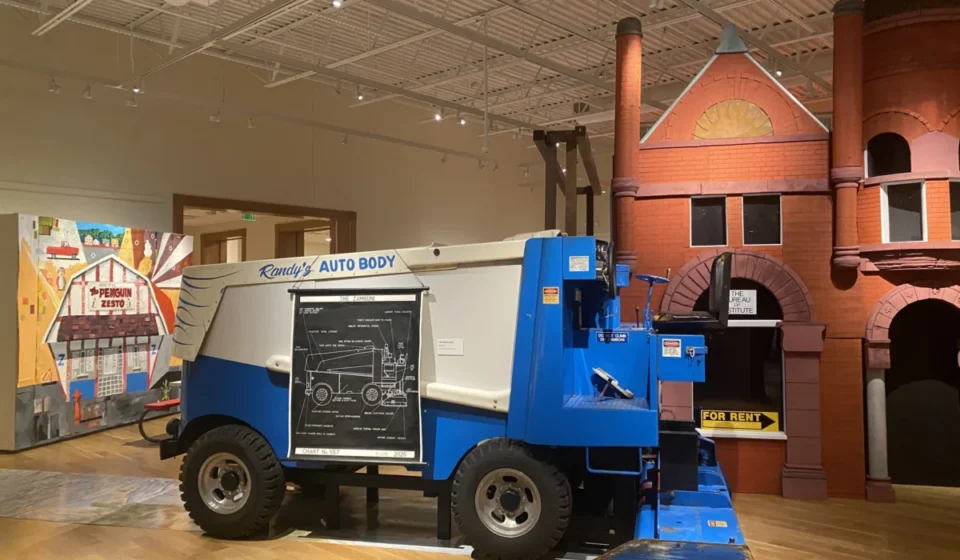
The logistical scope of Home(town) is as impressive as its conceptual depth. Upon entering the exhibition, visitors are greeted not by a painting or a sculpture, but by a fully functional, industrial-sized Zamboni.
This is not a replica; it is a machine pulled straight from the cold reality of a Minnesota winter. It serves as the base for a map created by artist Allen Brewer, which illustrates a fantastical route from Winona to the headwaters of the Mississippi River at Lake Itasca.
The machine is further contextualized by a diagram from collaborator Mark Dion, who labels the various mechanical parts of the Zamboni as instruments of political change. A tire is marked "Overturn Citizens United"; a gear is labeled "Abolish the Electoral College." The juxtaposition is deliberate: by turning a machine that smooths ice into a manual for democratic reform, DuCett and his collaborators are suggesting that the tools to fix our future are sitting right in our own backyards.
Further into the exhibit, visitors encounter a structural approximation of a historic Winona building. It features a "For Rent" sign, but also displays a sign for the "Bureau of Institute"—a nonsensical, Kafkaesque agency that mirrors the absurdity of bureaucratic administration. The building is designed to evolve throughout the run of the exhibition, with new "businesses" planned to rotate through the space.
The Human Element: Echoes of the River
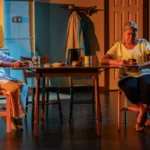
While the exhibition leans into irony, it is anchored by a sincere affection for the Winona region. The Rocco’s installation is perhaps the most evocative. By recreating the restaurant’s booth experience—complete with a neon Miller Lite sign and custom menus—DuCett captures the warmth of a local hangout.
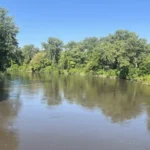
The inclusion of Ron Hunt’s Coming In serves as a bridge between the museum and the natural landscape that defines the region. For those who have visited the Trempealeau National Wildlife Refuge, the connection is immediate. The refuge, lush and teeming with the same herons and pelicans depicted in Hunt’s painting, provides the physical context for the art. It reminds the viewer that the culture of Winona is inextricably linked to the Mississippi River.
Another highlight of the exhibit is the collaboration with artist Carolyn Swiszcz, who celebrates the legendary local ice cream shop, Penguin Zesto. Through a mural and a series of zines, Swiszcz documents the multi-generational history of the shop, including the now-vanished giant ice cream sculpture that once stood at the East location. It is a poignant reminder of how small, seemingly insignificant local icons become the anchors of our collective memory.
Official Responses and Institutional Significance
The Minnesota Marine Art Museum has been undergoing a quiet revolution of its own. For years, the institution has been tasked with expanding the definition of "marine art" beyond traditional nautical painting. By hosting DuCett’s Home(town), the museum is signaling a pivot toward a more community-engaged, sociological approach to art.

"The exhibition asks who gets to decide what is worth preserving," says a museum representative. "When we hang a piece of local history—a booth from a pizza shop—next to a 19th-century maritime masterpiece, we aren’t saying they are the same thing. We are asking why we value one and ignore the other."
Critics and attendees have responded to the exhibition with a mix of bewilderment and delight. The "institutional weight" of the signage in the vacant spot at Rocco’s has been particularly successful in forcing diners to acknowledge the museum’s role in their daily life. It turns a missing painting into a conversation piece, effectively extending the museum’s reach into the very heart of the Goodview community.
Implications for the Future of Community Art
The ultimate implication of Home(town) is a challenge to the traditional barrier between the "public" and the "institution." DuCett’s work suggests that if we wait for museums to decide what is culturally significant, we may lose the very things that define us. By "curating" his own hometown, DuCett provides a roadmap for others to engage with their local histories.
As the exhibition prepares for a series of events—including a "Meet the Artist" session in October and a participatory bingo game hosted at the Winona Athletic Club—the project continues to grow. It is a living, breathing installation that thrives on the participation of the Winona residents.
Ultimately, Home(town) is a triumph of "mad love." It is an exhibition that understands that nostalgia is a powerful force, but it refuses to let that nostalgia become stagnant. By lacing its sentimentality with satire and irony, it forces a community to look at itself with fresh eyes. Whether it is a map of a Zamboni’s route or a booth from a local pizza joint, DuCett proves that the most profound art is often the stuff we have been sitting on, eating at, or driving past our entire lives.
As the "For Rent" signs in the gallery suggest, the story of Winona is still being written—and for once, the community itself has been given the pen.