









































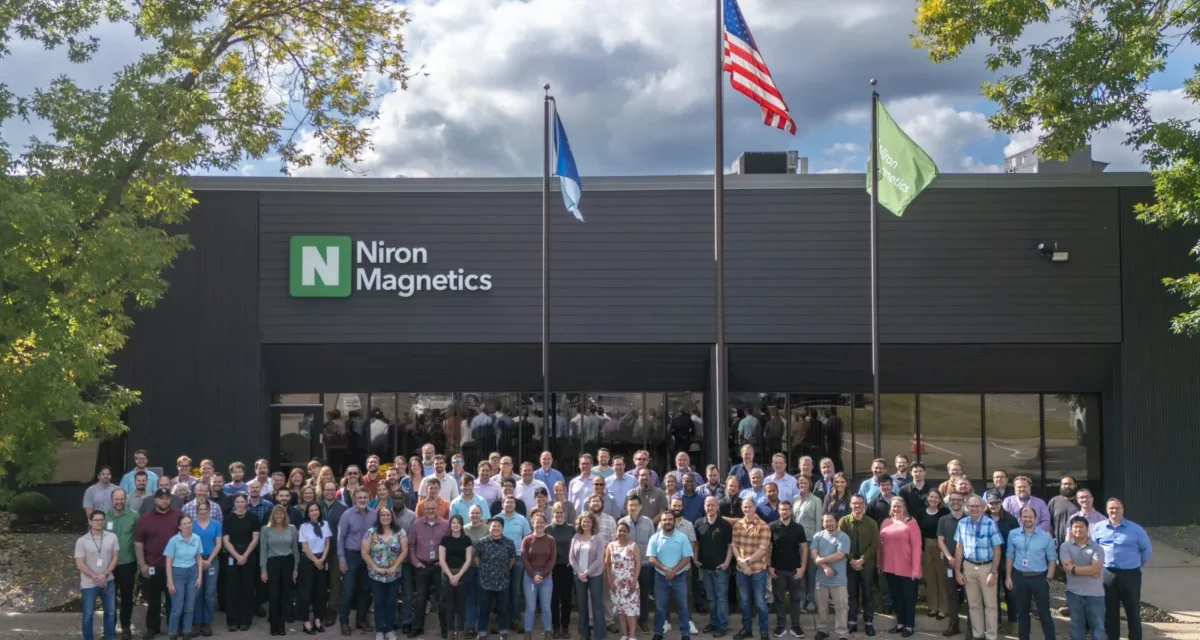



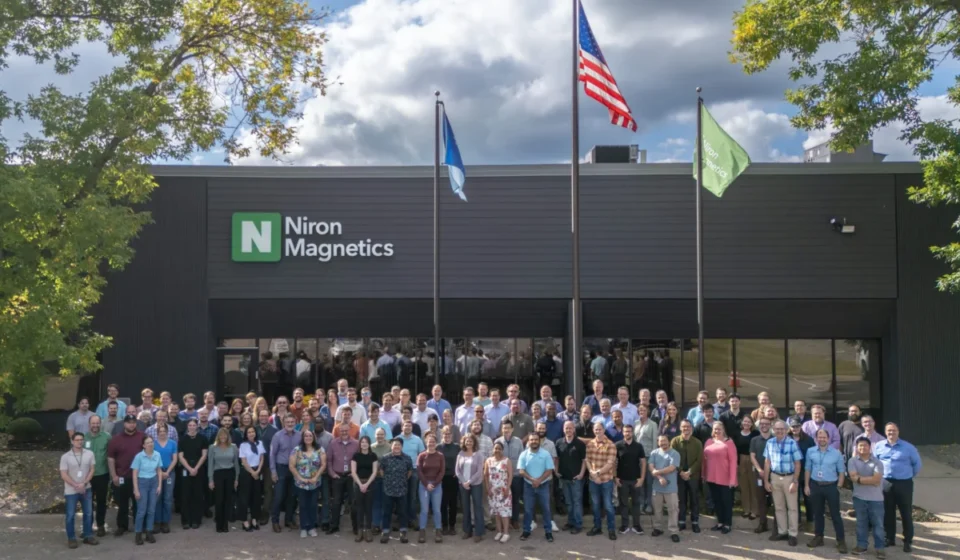
The Magnet of the North: Niron Magnetics and the High-Tech Rebirth of Minnesota’s Iron Range

For over a century, the Iron Range of Northern Minnesota has been defined by the rhythmic thrum of taconite mining and the grit of industrial steel production. However, as global markets shifted toward recycled feedstock and imported steel, the region’s traditional economic engine began to stall, leaving behind a legacy of shuttered plants and a workforce searching for a new identity. Today, a transformative opportunity is emerging—one that promises to bridge the gap between Minnesota’s industrial heritage and the clean-energy future.
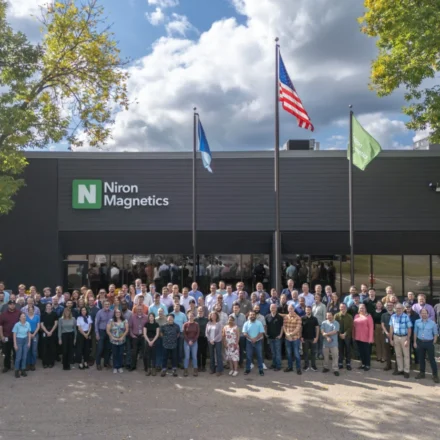
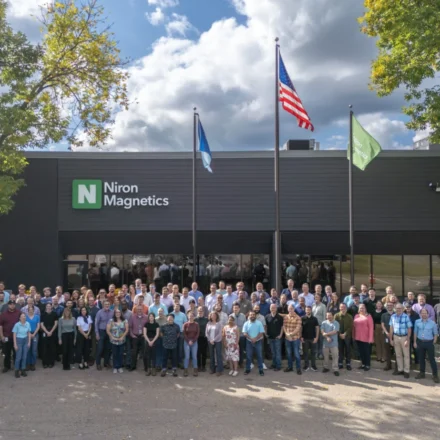
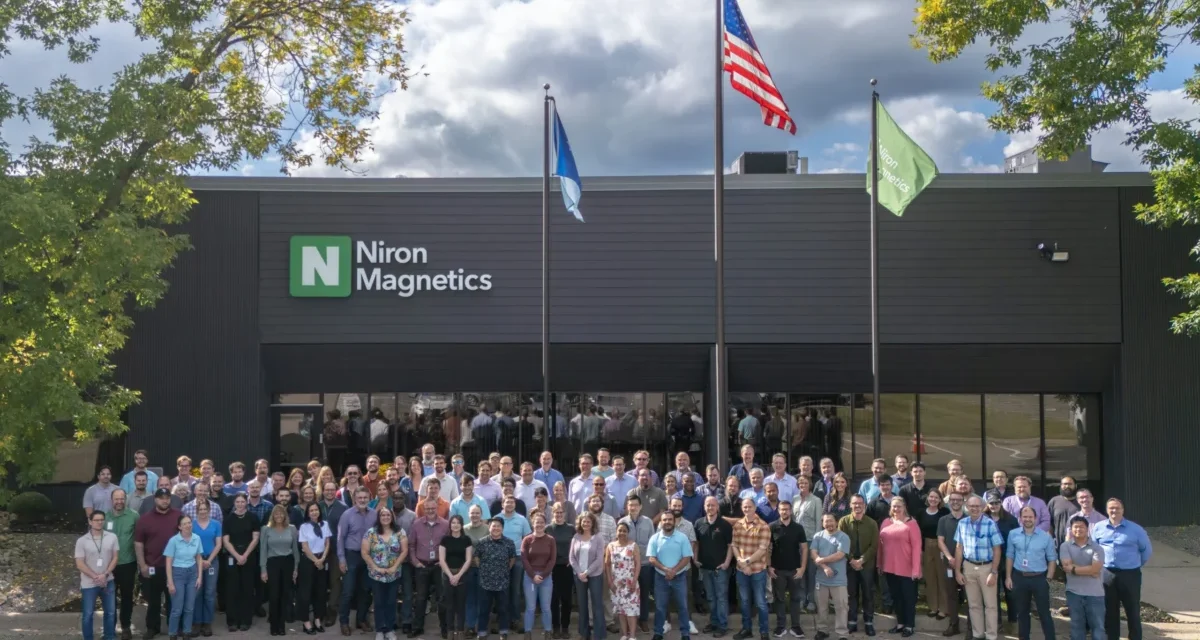
Minneapolis-based Niron Magnetics is currently evaluating the Iron Range as the potential site for a massive, $1.8 billion manufacturing facility. This project, which would be the company’s third and largest to date, represents more than just an industrial expansion; it is a strategic move to decouple the United States from its reliance on Chinese-controlled rare-earth minerals. By utilizing a breakthrough technology that replaces expensive rare earths with common iron and nitrogen, Niron seeks to turn the Iron Range into a global hub for "Clean Earth Magnets."
Main Facts: A $1.8 Billion Vision for Domestic Resilience
Niron Magnetics’ proposed expansion is a multi-layered initiative designed to solve one of the most pressing bottlenecks in the modern economy: the supply of high-performance permanent magnets. These components are the invisible workhorses of the 21st century, essential for everything from electric vehicle (EV) drivetrains and wind turbines to consumer electronics and advanced defense systems.
The core of Niron’s value proposition lies in its patented "Iron Nitride" technology. Currently, the global magnet market is dominated by Neodymium (NdFeB) magnets, which require rare-earth elements that are difficult to mine and environmentally hazardous to process. Niron’s magnets, however, are derived from two of the most abundant materials on the planet: iron and nitrogen.
Key Project Statistics:
- Investment Value: Approximately $1.8 billion.
- Facility Scale: A planned 1.6-million-square-foot integrated manufacturing plant.
- Job Creation: Anticipated to employ over 700 high-skilled workers by 2029.
- Production Capacity: A target of 10,000 tons of magnets annually at full scale.
- Economic Context: Aiding the transition of the Iron Range from raw ore extraction to high-value advanced manufacturing.
Unlike the controversial Twin Metals project—a proposed copper and nickel mine that has faced years of legal and environmental challenges due to its proximity to the Boundary Waters Canoe Area (BWCA) watershed—Niron’s facility would operate outside the watershed and focus on value-added manufacturing rather than hard-rock mining. This distinction has made it a rare point of bipartisan consensus in Minnesota politics.
Chronology: From University Lab to Global Stage
The journey of Niron Magnetics is a testament to the power of academic research paired with aggressive commercialization strategies. The timeline of the company’s growth reflects the accelerating demand for domestic clean-tech solutions.
2014–2020: The Research Foundation
The technology was born at the University of Minnesota, spearheaded by Professor Jian-Ping Wang. His research into the magnetic properties of iron nitride—a material previously thought too unstable for commercial use—unlocked a path to high-performance magnets without rare earths. Niron Magnetics was formed to commercialize this IP, securing early-stage funding from the U.S. Department of Energy’s ARPA-E program.
2021–2023: Pilot and Proof of Concept
Niron established its headquarters and a pilot production plant in Northeast Minneapolis. During this phase, the company focused on refining its "secret sauce"—a process that involves reducing iron or recycled steel to a fine powder and mixing it with a nitrogen-based chemical compound. In 2023, the company broke ground on its first commercial-scale production plant in Sartell, near St. Cloud. This facility, representing a $10 million state investment, is expected to employ 175 people and produce 1,500 tons of magnets annually.
2024–Present: Site Selection for the "Mega-Plant"
Earlier this year, Niron hired Savills, a global commercial real estate advisory firm, to lead the site selection for its third and largest facility. While the company is considering other states to ensure competitive leverage, the Iron Range has emerged as a frontrunner due to its existing infrastructure and skilled labor pool. In April 2024, CEO Jonathan Rowntree emphasized that the company is looking for a partner that shares a vision for "rebuilding U.S. manufacturing capability."
2028–2029: The Horizon
If the Iron Range site is selected, construction is slated to begin in 2028, with full operational status targeted for 2029. This timeline aligns with the projected "tipping point" for global EV adoption, where demand for magnets is expected to outpace current rare-earth supply chains.
Supporting Data: The Geopolitics of Rare Earths
To understand the scale of Niron’s potential impact, one must look at the global mineral landscape. Currently, China controls approximately 70% of the world’s rare-earth mining and upwards of 90% of the processing and magnet manufacturing.
The Vulnerability of the Status Quo
The U.S. largely abandoned rare-earth mining decades ago due to the extreme environmental degradation caused by chemical separation processes. This has left American manufacturers vulnerable to geopolitical shifts. Last fall, China implemented export controls on certain minerals, a move that Jonathan Rowntree noted was a "great benefit" to Niron’s business case, as it highlighted the urgent need for alternatives.
Material Efficiency and Cost
Niron’s technology is not just about availability; it is about economics. Traditional rare-earth magnets require extreme heat and complex metallurgical processing. Niron’s iron-nitride magnets:
- Lower Input Costs: Iron is orders of magnitude cheaper than neodymium or dysprosium.
- Environmental Footprint: The process uses atmospheric nitrogen and avoids the radioactive byproduct issues associated with rare-earth tailings.
- Recycling Integration: The facility is designed to use recycled steel feedstock, aligning with the "circular economy" goals of many automotive partners.
The company has already secured approximately $300 million in public and private capital. Its roster of partners and investors reads like a Who’s Who of global industry: GM Ventures, Volvo, Samsung Ventures, Stellantis (Chrysler/Fiat), and Western Digital.
Official Responses: A Bipartisan Economic "Home Run"
The prospect of a $1.8 billion plant has catalyzed a rare moment of unity among Minnesota officials, from local development agencies to the Governor’s office and the state’s congressional delegation.
Ryan Malich, Executive Director of Business Development at the Minnesota Department of Iron Range Redevelopment and Resources (IRRR), views the project as the "frontside of technological development." In a recent interview, Malich stated, "These are the types of jobs that we’re trying to add to the area—evolving, innovative technologies. We have a highly skilled, available workforce. All the elements seem to line up well for this potential development."
Kevin McKinnon, Deputy Commissioner of the Department of Employment and Economic Development (DEED), highlighted the "fabulous story" of the technology’s origin. "The promise, the trajectory of where they are going is very exciting," McKinnon said. "The third project would dwarf Sartell. The scale is exciting. We believe Minnesota is a compelling location for such a project."
Political support is equally robust. While Governor Tim Walz has opposed the Twin Metals project on environmental grounds, his administration is actively courting Niron. Simultaneously, U.S. Rep. Pete Stauber (R-Duluth), a staunch advocate for traditional mining, has voiced strong support for Niron’s expansion. This suggests that Niron is viewed not as a replacement for mining, but as a necessary evolution of the region’s industrial identity.
Implications: Environmental Stewardship and National Security
The implications of Niron Magnetics choosing the Iron Range extend far beyond local employment. This project sits at the intersection of three critical national priorities: environmental protection, energy transition, and national security.
Environmental De-escalation
For years, the Iron Range has been a battleground between those seeking economic growth through new hard-metal mines and those seeking to protect the pristine BWCA watershed. Niron offers a third path. Because it is a manufacturing facility rather than a mine, and because its process is significantly cleaner than rare-earth processing, it sidesteps many of the environmental flashpoints that have stalled Twin Metals. A successful Niron plant could arguably lessen the political and economic desperation that drives interest in riskier mining ventures.
Strengthening the Defense Supply Chain
Magnets are critical to the guidance systems of missiles, the motors of naval vessels, and the communication arrays of fighter jets. By sourcing raw materials (iron and nitrogen) domestically, Niron provides the Department of Defense with a supply chain that is immune to foreign embargoes or maritime blockades. This "national security" angle is a key reason why the U.S. Department of Energy remains a primary partner.
The Socio-Economic Rebirth of the Range
The "Iron Range" name has long referred to the extraction of wealth from the ground. If Niron succeeds, the name could come to signify the creation of wealth through intellectual property and advanced chemistry. For the 700+ workers who may eventually staff the 1.6-million-square-foot plant, these jobs represent a future in a "sunrise" industry—clean tech—rather than the "sunset" industry of traditional ore extraction.
As Niron Magnetics continues its site selection process, the stakes for Minnesota remain high. The company’s vision of a $1 billion revenue stream and a public stock offering within the next few years suggests that this is not just a local story, but a global one. If the Iron Range can secure this "Magnet of the North," it will have successfully reinvented itself for the next century of American industry.