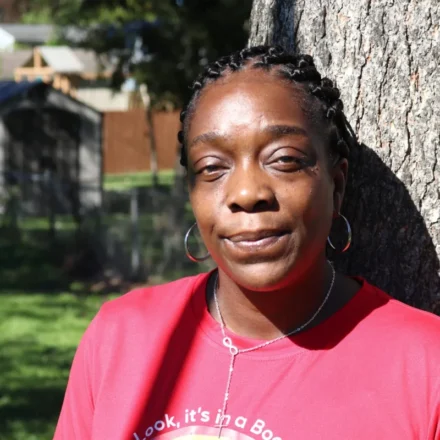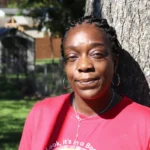
















































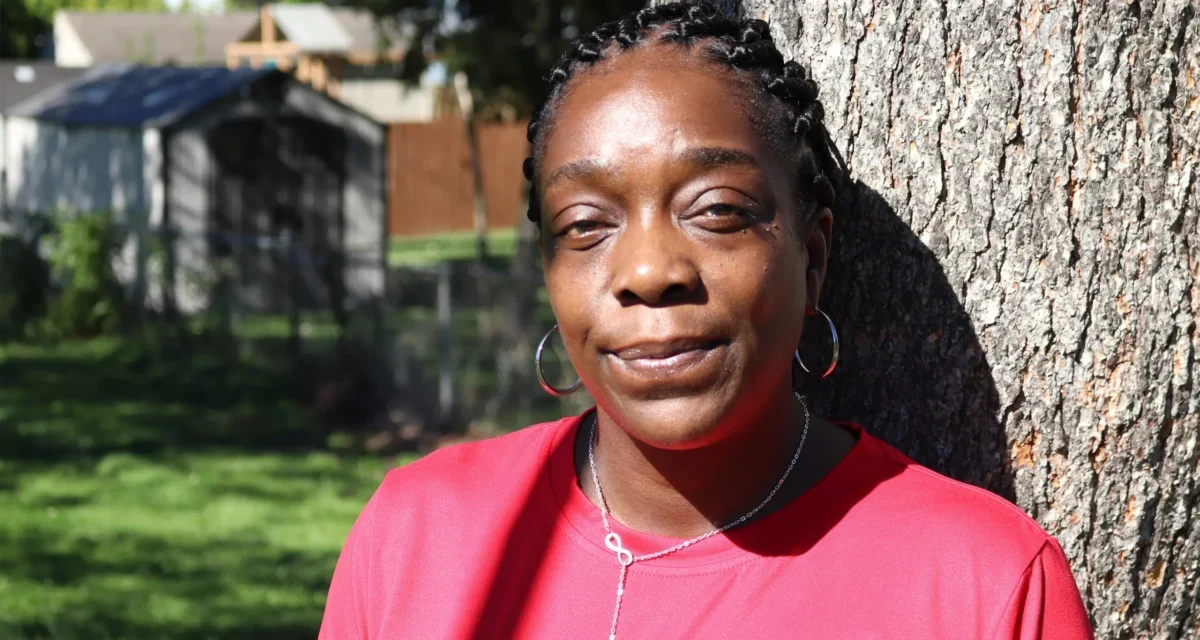





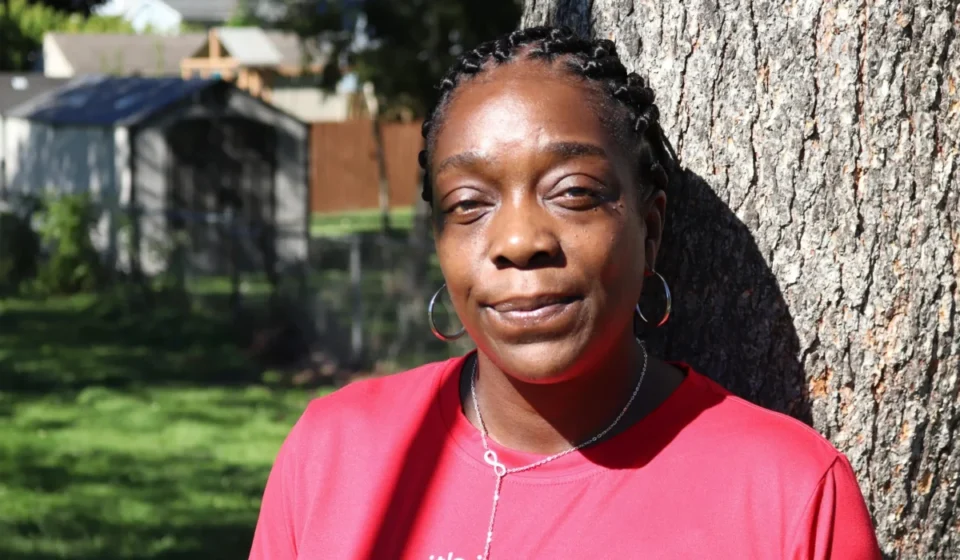

LANSING, Mich. — Christina Starks-Clay stood in the stifling heat of a September afternoon in downtown Lansing, clutching her smartphone. On the screen was a digital record of a $1,000 cashier’s check—money she had just withdrawn from her bank to settle a portion of her son’s mounting dental bills. As a special education paraprofessional, Starks-Clay works in a field dedicated to supporting others, yet she found herself struggling to navigate the crushing weight of her own family’s medical debt. Even with "good" dental insurance, she still faced a remaining balance of $389 after the payment, following a $600 cleaning for herself just weeks earlier.
"I’m telling myself, ‘Tina, you were in a position to do this, be grateful,’" she said, her voice tight with a mix of exhaustion and resolve. "But a lot of people couldn’t do what I had to do today. I couldn’t do it. But I did. So I need to hear: how are you going to make this better for everyone?"
Starks-Clay was one of hundreds waiting in line for a town hall hosted by U.S. Senate candidate Abdul El-Sayed. Her story is not an anomaly in Michigan; it is a reflection of a systemic crisis that has pushed healthcare to the forefront of the American political consciousness.
The Human Cost: A State in Distress
The crowd waiting for El-Sayed represented a cross-section of Michigan’s working class, each carrying a different burden of the healthcare crisis. Ahead of Starks-Clay in line, a man spoke of his brother, who had spiraled into thousands of dollars of medical debt after an unexpected health emergency. Further down the line, a professor emeritus from Michigan State University expressed deep concern for his grandchildren, whose parents were buckling under the weight of a $9,000 insurance deductible.
Inside the venue, the atmosphere was charged with a shared sense of urgency. Healthcare professionals in attendance swapped stories of patients choosing between life-sustaining medications and basic groceries. The rallying cry that greeted El-Sayed when he finally took the stage—"Money out of politics! Money in your pocket! Medicare for All!"—was more than a campaign slogan; for many, it felt like a plea for survival.
A Growing Consensus, A Lingering Definition
Support for "Medicare for All" has reached its highest level in at least a decade. According to a recent KFF poll, two-thirds of Americans now favor expanding the government health program that currently serves the nation’s seniors. Yet, the term remains politically nebulous.
Traditionally, the concept involves establishing a single-payer health insurance program, administered by the federal government, which would provide universal coverage and drastically reduce or eliminate the role of private insurers. However, public support is notoriously volatile, often shifting depending on how the policy is framed by political actors. Despite this ambiguity, in an era where fewer than half of Americans feel they can comfortably afford their healthcare, Medicare for All has evolved into a potent shorthand for systemic, radical change.
"Too many people don’t have health insurance, too many people who do have insurance can’t afford medical care, and many people are terrified about the costs of being sick," said Jonathan Oberlander, a professor at the University of North Carolina-Chapel Hill and a specialist in healthcare reform politics. "In an electorate that wants change and is disenchanted with the status quo, Medicare for All is an important symbol."
Chronology of a Crisis: From ACA Progress to Current Retrenchment
The landscape of American healthcare has undergone a dramatic transformation over the last 15 years. Following the passage of the Affordable Care Act (ACA) in 2010, the nation’s uninsured rate was slashed nearly in half. For the first time, insurance companies were prohibited from denying coverage based on preexisting conditions, and 40 states, along with the District of Columbia, expanded Medicaid to cover low-income populations.
However, the tide has begun to turn. In the last two years, observers like Oberlander point to a deliberate dismantling of these gains. In Michigan, the impact has been particularly severe. Following the expiration of enhanced tax subsidies and a series of legislative shifts, individual marketplace insurance rates in the state spiked by an average of 20%.
Furthermore, the implementation of the "One Big Beautiful Bill Act"—a cornerstone of the current administration’s policy—is projected by the Urban Institute to result in up to 355,000 Michiganders losing Medicaid coverage by 2028. This climate of instability has turned the state into a primary laboratory for the healthcare debate, with candidates like El-Sayed making it the bedrock of their platforms.
The Personal Toll: When the System Fails
For many, the failure of the system is not a matter of statistics, but of lived experience. Darleana Ash, who works at a medical diagnostics lab, reported that patients are increasingly skipping critical tests because of the prohibitive costs. Rural residents, in particular, are forced to drive hours to find labs that remain in their insurance networks.
"If you have someone who is 75 or 80 years old, guess what? They’re going to go without the medication, because they have to eat," Ash said.
The story of Cindy Lou Coolich, a retiree who attended the town hall in a cowboy hat and campaign shirt, underscores the fragility of the status quo. After a career spent helping others enroll in health coverage, Coolich suffered a bout of sepsis that left her disabled. Overnight, she transitioned from a professional to a patient, losing her 15-acre horse farm and nearly everything else she owned. She now survives on $900 a month in Social Security. Her financial stability, she noted with dark irony, only improved following the death of her ex-husband, which allowed her to claim his benefits.
"It hardly seems like the mark of a functioning healthcare system that someone had to die for things to get better," she said.
The Opposition: Official Responses and Political Risks
The debate is not occurring in a vacuum. Republican candidate Mike Rogers, El-Sayed’s opponent, has countered the Medicare for All narrative by focusing on the economic risks of such a massive transition.
"I just can’t think of a more important issue to the people of Michigan than healthcare and costs," Rogers stated at a recent press conference. However, he was quick to frame government-run healthcare as a zero-sum game. "If the government is going to give you something, they have to take it away from someone else," he argued, citing the $4 trillion price tag often associated with the proposal.
While proponents of Medicare for All, including researchers at Yale, point to potential savings of $1 trillion in total healthcare spending through the elimination of administrative overhead and insurance profits, the political messaging remains a hurdle.
"It doesn’t matter if the fears that they’re spreading are actually accurate," Oberlander noted. "Politically, what matters is if they can scare people."
The Road Ahead: Implications and Reality
Even with widespread enthusiasm among the progressive base, the path to implementing a single-payer system remains daunting. The lobbying power of the pharmaceutical and insurance industries, combined with deep-seated institutional opposition in Washington, suggests that even a candidate as committed as El-Sayed would face an uphill battle.
For voters like Thomas "Jermaine" Carey, a local activist who attended a Detroit town hall, the skepticism runs deep. He expressed a feeling of being "sold out" by the political establishment, questioning whether any candidate could truly bypass the influence of super PACs and corporate lobbyists to enact such sweeping reform.
"It’s still America," Carey said with a shrug. "You still have the lobbyists that control everything."
As the election approaches, the discourse surrounding healthcare in Michigan serves as a microcosm for the national struggle. It is a tension between the immediate, agonizing reality of household budgets and the long-term, complex challenges of systemic reform. For voters like Christina Starks-Clay, the goal is simple: a system where the cost of a doctor’s visit no longer requires a trip to the bank to take out a loan, and where the "American Dream" doesn’t end with a medical bankruptcy. Whether that vision can translate into policy, however, remains one of the most significant open questions in American politics.