




























































By [Your Name/Journalistic Desk]
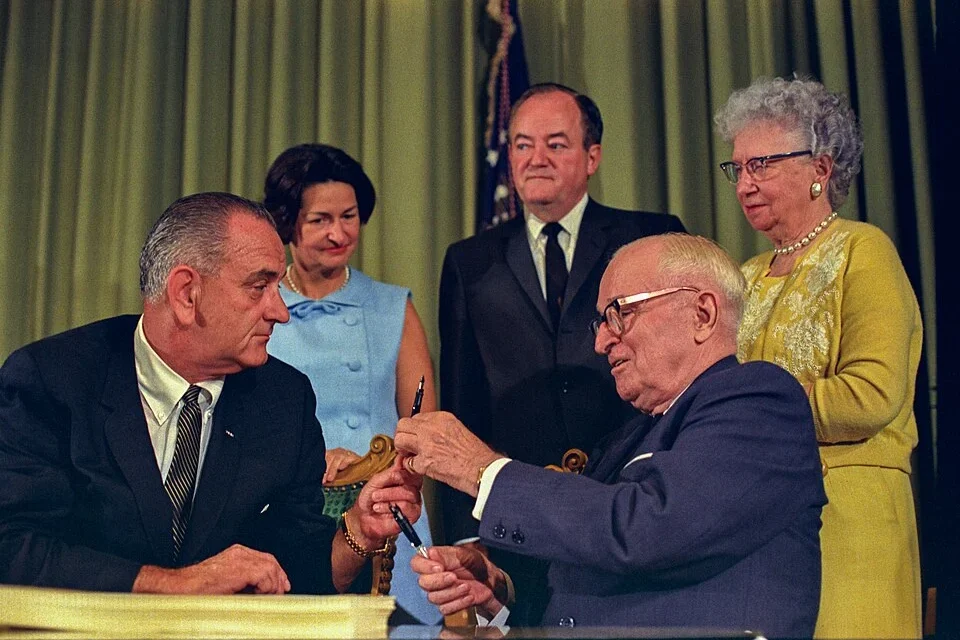
On July 30, 1965, President Lyndon B. Johnson handed the first Medicare card to former President Harry S. Truman, marking a seminal moment in American history. It was a promise that the elderly would no longer face the indignity of medical bankruptcy. Today, as American progressives continue to push for a "Medicare for All" system, the debate often drifts toward the European model—specifically Germany’s statutory health insurance—as the gold standard.
However, a closer look at the German reality reveals a complex, often frustrating landscape that challenges the utopian narrative often presented in U.S. political circles. While no German citizen is forced into debt by medical bills, the system’s structural failures—driven by perverse financial incentives and a two-tier hierarchy—suggest that universal coverage is only half the battle.
The Reality of the Statutory System
The German healthcare system is built on the principle of solidarity: nearly everyone is covered, and costs are strictly controlled. It is, by definition, a "Medicare for All" environment. Yet, for patients navigating chronic conditions, the experience is frequently one of systemic indifference.
Take the recent experience of Henning Schroeder, a professor emeritus at the University of Minnesota, who currently acts as a healthcare proxy for two elderly relatives in Germany. His account serves as a cautionary tale of how bureaucracy and profit motives can override clinical necessity. When one of his relatives began exhibiting classic symptoms of Parkinson’s disease—tremors, mobility issues, and cognitive shifts—the local medical establishment proved remarkably ineffective.
Despite clear clinical indicators, the patient’s primary care physician and a private-practice neurologist repeatedly bypassed physical diagnostic exams. Instead, they focused on high-billing, low-utility procedures: endless blood panels and repeated carotid ultrasounds. Neither of these tests could diagnose Parkinson’s, yet both were lucrative for the practitioners.
A Chronology of Clinical Neglect
The failure to diagnose a common neurological condition highlights the misalignment of incentives within the German outpatient sector:
- The Initial Presentation: The patient presents symptoms characteristic of Parkinson’s disease.
- The "Bureaucratic Loop": Rather than performing a comprehensive 60-minute clinical neurological evaluation, the office-based specialists opt for repetitive, machine-based diagnostics.
- The Economic Driver: A standard neurological evaluation—the gold standard for identifying Parkinson’s—is reimbursed at approximately 50 euros for a publicly insured patient. Conversely, an ultrasound procedure, which takes significantly less time, generates upwards of 200 euros.
- The Outside Intervention: A hospital-based neurologist, operating outside the "solopreneur" private practice structure, eventually volunteers his time to perform the physical exam. He confirms the diagnosis in under an hour, revealing that the patient had been effectively ignored by the statutory system’s primary gatekeepers.
Supporting Data: The Conflict of Interest
The German healthcare system suffers from a structural flaw known as "self-governance." Most doctors operating outside of hospitals function as independent business owners. Unlike integrated health systems where doctors work in teams, these "solopreneurs" operate in silos.
Critically, the oversight of this system is outsourced to the physicians’ own associations. This lack of external accountability creates a regulatory environment reminiscent of the Boeing 737 MAX crisis, where the manufacturer was permitted to self-certify its own safety standards. When the practitioners are also the regulators, the patient’s health often becomes a secondary consideration to the clinic’s bottom line.
The "Malpractice Gap"
One might assume that the risk of lawsuits would keep doctors in check, as it often does in the United States. However, the German system lacks a robust culture of medical litigation. With no "ambulance chaser" equivalent and strict limitations on legal advertising, there is little external pressure for doctors to change their behavior. Consequently, providers can be remarkably cavalier with publicly insured patients, knowing that the barrier to accountability is exceptionally high.
Official Responses and Systemic Defense
Proponents of the German model argue that the system’s primary strength is its financial stability. The German Federal Ministry of Health consistently touts the system’s ability to prevent poverty-inducing medical bills. From an official perspective, the goal of the system is the elimination of financial risk, not necessarily the optimization of patient experience or the acceleration of diagnostic speed.
The "statutory" lobby in Berlin is incredibly powerful. These associations argue that the reimbursement rates are set by the government to keep healthcare costs low for the entire nation. By capping the income of doctors in the statutory system, they maintain a "universal" service. However, critics, including healthcare economists, point out that this has effectively turned the primary care sector into a high-volume, low-touch factory model where doctors are incentivized to move patients through as quickly as possible to maximize revenue from government-approved procedures.
Implications: A Two-Tiered Future
The most scathing indictment of the German model is its inherent inequality. While the system is designed for the masses, there is a clear "opt-out" clause for the wealthy. High-earners—the top 5% of the workforce—are permitted to bypass the statutory system entirely in favor of private insurance.
This creates a two-tier society where the quality of care is literally tied to one’s tax bracket:
- The Statutory Patient: Faces long wait times, limited access to specialized care, and a "five-minute" consultation window.
- The Private Patient: Enjoys reduced wait times, access to premium clinics, and the attention of doctors who are reimbursed at much higher rates than their public-sector counterparts.
For the American observer, this reveals a profound irony. The German system, often cited by American Democratic Socialists as a model for "Medicare for All," functions more like an engine of class stratification. It effectively provides a "Gold" tier of service for the elite, while the "huddled masses" are left to navigate a system that incentivizes the avoidance of complex, time-consuming care.
Conclusion: Lessons for the American Debate
As the United States contemplates the future of its own healthcare, the German experience provides a sobering lesson. Universal coverage is not a panacea; it is a structural framework that can just as easily be used to incentivize bureaucracy as it can to incentivize healing.
If the U.S. were to adopt a similar model without addressing the underlying issues of physician incentives, self-regulation, and the two-tier divide, it risks importing the very problems Germany is currently struggling to solve. True healthcare reform must look beyond the simple act of providing a "card" to citizens. It must ensure that the system is designed to prioritize the clinical needs of the patient over the financial efficiency of the provider.
Without these safeguards, "Medicare for All" risks becoming a hollow promise—a system that ensures no one goes bankrupt, but also one where the quality of care is defined by one’s status rather than one’s medical necessity. The German paradox is a warning: in a system where the doctors police themselves and profit is tied to machinery rather than expertise, the patient is often the one left behind.