






































A Mandate for Change: Twins Ownership Promises Aggressive Off-Season After Disappointing 2026 Campaign

By [Your Name/Staff Writer]
The Minnesota Twins’ 2026 season ended not with a playoff push, but with a somber, high-stakes accounting of a franchise at a crossroads. As the team officially closed the book on a campaign that saw them finish eight games under .500 and a distant third in the American League Central, the message from leadership was clear: the era of "competitive" baseball is over—the new mandate is championship-level performance or bust.
The Scene: A Formal Reckoning
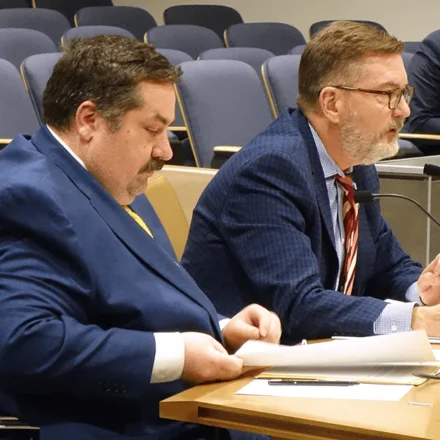
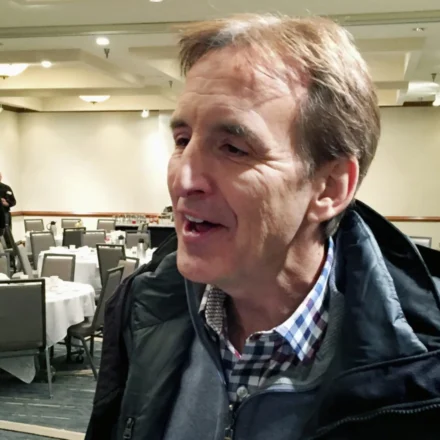
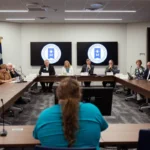
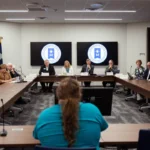
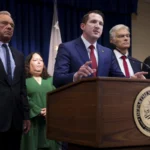
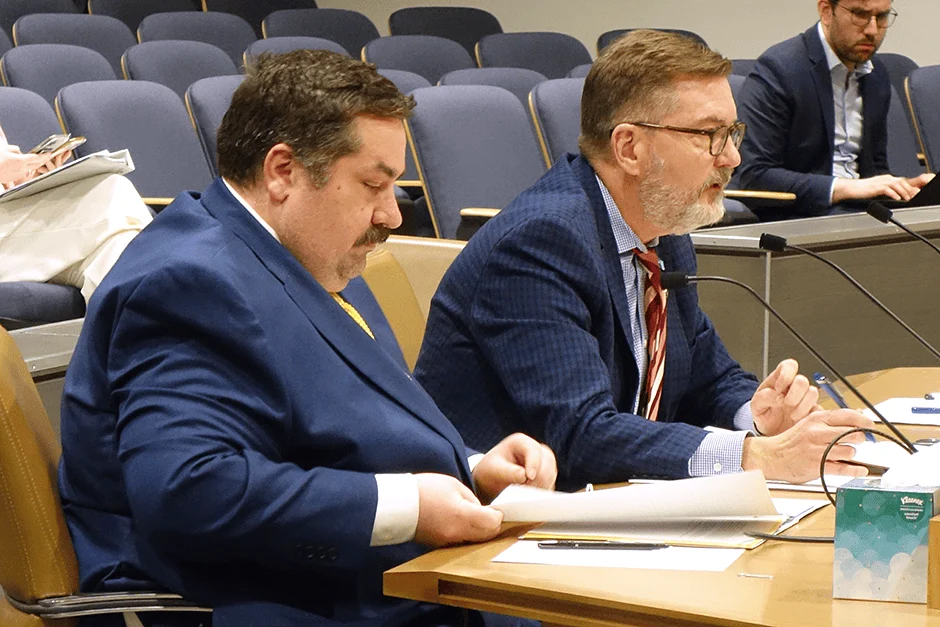
In a departure from the relaxed, business-casual norm typically favored by Twins executives during media sessions, executive chair Tom Pohlad arrived at Tuesday’s end-of-season postmortem dressed in a sharp dark blue suit, conservative tie, and polished brown shoes. Flanked by general manager Jeremy Zoll and manager Derek Shelton, Pohlad’s sartorial shift mirrored the gravity of the situation.
For 45 minutes, the tone was starkly serious. Gone were the typical platitudes regarding "building for the future." In their place was an admission of failure.
"We aspired to play meaningful baseball in September, and we aspired to finish with a winning record," Pohlad stated during his opening remarks. "We fell short on both of those fronts."
Chronology of a Lost Season
The 2026 season was defined by a steady decline that left fans disillusioned and the front office scrambling for answers. After a mild flirtation with a Wild Card berth early in the summer, the team’s momentum evaporated.
The structural issues were evident by mid-season. Following a trade deadline that provided only modest reinforcements—moves that failed to bridge the gap between a middling team and a true contender—the Twins cratered. A dismal 21-30 record over the final two months cemented their fate.
This collapse followed a tumultuous off-season that saw the firing of long-time management figures. Despite the turnover, the expected "new energy" failed to materialize in the standings or at the gate. Attendance figures painted a bleak picture of the current state of the brand: only 1,740,366 fans passed through the turnstiles at Target Field, the lowest mark for a non-pandemic season since the team played at the Metrodome in 2000.
For the first time since the opening of Target Field, the club declined to share its season ticket renewal figures—a telling omission given that the club had consistently boasted a 90% or higher renewal rate for over a decade. Pohlad acknowledged the "eroded" fan base, stating that while the organization believes the stadium should draw 2.5 million fans annually, rebuilding that trust will be a multi-year effort, potentially complicated by impending labor strife at the league level.
The Financial Pivot: Moving Beyond the $100 Million Threshold
Perhaps the most significant development from Tuesday’s press conference was Pohlad’s blunt assessment of the team’s payroll philosophy. After the Twins operated with a payroll of approximately $115 million this season—a significant drop from the $156 million high in 2023—Pohlad signaled that the purse strings would be loosened.
"I have said over and over that a $100 million payroll, or anything close to that, is not sufficient to be consistently competitive and in the playoffs," Pohlad admitted. "And so, we intend to take the off-season and meaningfully invest."
While the executive chair declined to provide a hard dollar range for the 2027 budget, he confirmed that General Manager Jeremy Zoll has been given the "green light" to add salary. This marks a departure from the fiscal conservatism that has drawn the ire of the Twins faithful, who have long called for ownership to reinvest in the roster rather than pocketing profits.

Pohlad acknowledged the frustration of the fan base directly. "People have been critical of a lot of words and not a lot of action. I get that," he said. "There hasn’t been a lot of opportunity to put action to words. We had that opportunity at the trade deadline. We have another opportunity in front of us. This off-season, we intend to use it."
Roster Construction: Building Around a Young Core
Despite the dismal record, there is a foundation upon which to build. Manager Derek Shelton highlighted a burgeoning group of position players who represent the team’s future: infielders Brooks Lee and Kaelen Culpepper, along with outfielders Luke Keaschall, Walker Jenkins, Emmanuel Rodriguez, and Alan Roden. Zoll added the name of star infielder Royce Lewis to that core, emphasizing that the team is no longer in a "rebuild" phase but a "supplement" phase.
The pitching staff, however, is the immediate priority. Pablo Lopez is expected to return from Tommy John surgery by early March, joining a rotation fronted by Joe Ryan and Taj Bradley. The team is currently scouting for two additional starters to bolster a group that includes Bailey Ober, Dean Kremer, and Zebby Mathews.
The front office signaled a willingness to embrace change, evidenced by the firing of pitching coach Pete Maki and assistant Luis Ramirez. The organization admitted that the previous pedagogical approach to developing young arms had failed. The retention of bullpen coach LaTroy Hawkins—whose 21-year major league career is viewed as an invaluable asset for mentoring younger pitchers—suggests the team is prioritizing veteran experience in its coaching structure.
Implications: The Looming Labor Crisis and Roster Turnover
The path forward is complicated by two major factors: the impending expiration of the Collective Bargaining Agreement (CBA) on December 1 and the potential for a fire sale of current assets.
With the league’s owners pushing for a salary cap and the players’ union standing firm in opposition, a work stoppage or a delayed 2027 season appears increasingly likely. This uncertainty adds a layer of volatility to the Twins’ off-season plans.
Furthermore, the roster is set for significant changes. With core pitchers like Lopez, Ryan, Kremer, and Ober entering their final year of control, Zoll did not rule out trading one or more of them to acquire a middle-of-the-lineup power hitter. The team relied too heavily on Kody Clemens last season; while Clemens had a career year with 27 home runs and 81 RBI, the front office acknowledges that he is better suited as a utility piece rather than a primary offensive engine.
The club is expected to pick up the $10 million option on DH Josh Bell, who provided both offensive production and veteran mentorship. Conversely, the departure of catcher Ryan Jeffers seems inevitable. While Jeffers is a free agent, Zoll’s comments regarding the need to "plug the hole" left by his departure suggest the team is already looking elsewhere, likely turning to Victor Caratini to handle the everyday catching duties while extending a $22 million qualifying offer to Jeffers to secure a compensatory draft pick.
Conclusion: The Responsibility of Ownership
The Twins find themselves in a unique position: playing in what is widely considered the weakest division in Major League Baseball, they are essentially one or two aggressive off-season moves away from contention.
"We have a young, exciting core in place, and now it’s ownership’s responsibility to support them," Pohlad concluded. "I want to thank the fans who got behind the team this year. I understand that patience in this market has run out, and I assure you we have a sense of urgency."
For the Pohlad family, the time for rhetoric has passed. With the fan base at a breaking point and the competitive window for their young core beginning to open, the 2026-2027 off-season will be the definitive test of whether the organization is truly committed to building a world-class contender or merely maintaining the status quo.