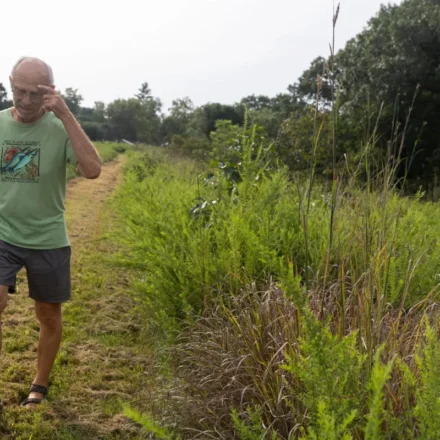













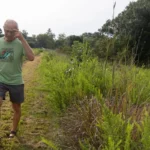

































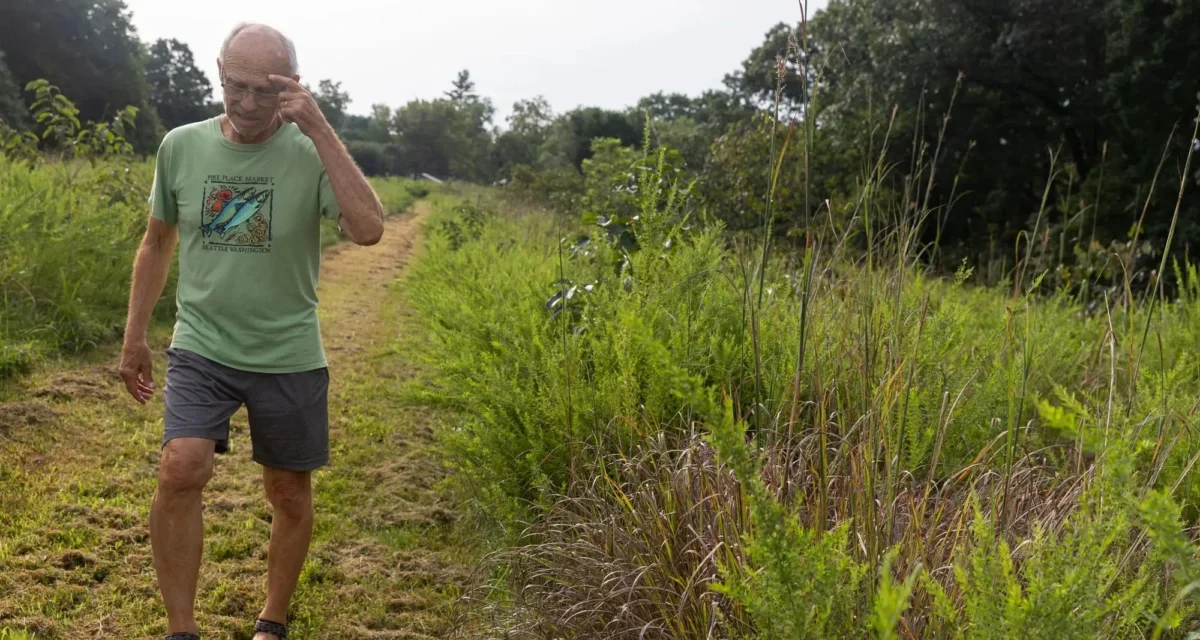




ASHLAND, Mo. — On a sweltering August morning, Dan Kuebler walks the perimeter of what was, for 33 years, the epicenter of his life’s work. The 30 acres of rolling hills in Ashland, Missouri, once yielded a vibrant bounty of seasonal vegetables, pickles, and kimchi that fed the Columbia community. Today, the rows are managed by a new steward, but the land itself remains unchanged—a deliberate, legal act of defiance against the encroaching suburban sprawl.
Kuebler is part of a growing movement of farmers and landowners grappling with an existential question: How do you protect a legacy in an era where the “highest and best use” of soil is increasingly defined by developers, not farmers?
The Disappearing Horizon: A Crisis of Development
The conversion of agricultural land is not merely a local phenomenon in Missouri; it is a national crisis. According to the American Farmland Trust, the United States loses approximately 2,000 acres of farmland every day to development. This loss is driven by two primary forces: the relentless outward creep of metropolitan centers and the rise of "low-density residential" development—the proliferation of rural subdivisions that consume vast swaths of countryside.
Between 2001 and 2016 alone, nearly 7 million acres of agricultural land were lost to large-plot residential development. Projections are even more sobering: the American Farmland Trust estimates that an additional 18.4 million acres—a footprint nearly the size of South Carolina—will be converted by 2040 if current trends persist.
For farmers like Kuebler, who saw Ashland transform from a “bitty, sleepy town” in 1977 into a bustling bedroom community for Columbia and Jefferson City, the threat is personal. As he neared retirement, he faced a crossroads: sell to a developer who would slice his acreage into five-acre plots for luxury homes, or find a way to lock the gates against the bulldozer forever.
Chronology of a Legacy: From Farm to Easement
Dan Kuebler’s journey began at age 40, a late start that bloomed into a three-decade career of sustainable agriculture. Balancing his farm duties with his profession as an in-home physical therapist, Kuebler became a fixture at the Columbia Farmers Market, even advocating for the construction of the permanent shelter that currently houses the market.
However, as the fields surrounding his two-mile dead-end road began to vanish, replaced by asphalt and suburban driveways, Kuebler sought a permanent solution. He engaged with the Greenbelt Land Trust of Mid-Missouri, embarking on a complex, years-long legal journey to secure an agricultural conservation easement on his property.
The process was neither cheap nor simple. Kuebler estimates he spent roughly $20,000 on land surveys, legal fees, and appraisals. Beyond the out-of-pocket costs, the move required a significant financial sacrifice. By signing the easement, Kuebler voluntarily relinquished the right to develop his land. When the property was appraised for sale, its value had dropped by approximately $90,000 compared to what it would have fetched on the open market.
Despite the financial hit, Kuebler found a buyer who shared his vision: a local farmer committed to regenerative agriculture. The deed now includes a unique, personal stipulation—a small cabin on the property remains Kuebler’s sanctuary for the rest of his life.
The Economics of Preservation: Why Farming Loses
The tension between preservation and profit is rooted in how the real estate industry calculates value. Josh Wright of the American Farmland Trust notes that properties are appraised based on “highest and best use”—a term that almost never includes active farming.
“Unfortunately, it’s probably considered the worst use,” Wright explains. “People who have spent their entire lives working their land, whether it be in their family for many generations or not, you become so attached to it. And all of your effort could be snatched up and paved over as soon as you sell the property.”
This economic disparity creates a massive hurdle for aging farmers. For many, the land is their primary retirement fund. When an easement can reduce a property’s appraisal value by up to 65%, the barrier to entry for conservation becomes insurmountable for those who cannot afford to lose that equity.
Official Responses and Federal Intervention
Recognizing the danger of losing critical food-producing soil, Congress expanded the Agricultural Conservation Easement Program (ACEP-ALE) over a decade ago. Initially funded at $450 million annually, the program has since been increased to $650 million. The initiative allows the government to compensate landowners for the development rights they relinquish.
Yet, the efficacy of this program remains uneven. Since its inception in 2014, over 1 million acres have been preserved, but the distribution of this success is heavily skewed toward states like Montana, Wyoming, and Colorado. In Missouri, the program has seen virtually no traction, and states like Illinois and Iowa report only modest acreage under protection.
Eric Gramlich of the Ozark Land Trust points to a lack of awareness and a scarcity of regional land trusts as primary culprits. "It is generally a multiyear process to get the application in, the contracting paperwork, and then to actually do the boots-on-the-ground work," Gramlich says. "Even those federal payments would struggle to keep up with the demand and the price of land for commercial development."
While the Natural Resources Conservation Service (NRCS) has attempted to streamline appraisals and certifications, the administrative burden remains a daunting deterrent for many farmers who simply do not have the time or legal resources to navigate the federal bureaucracy.
The Human Cost: A Case Study in Kansas
The struggle is not unique to Missouri. In Kansas City, Kansas, Rick Mareske and his wife operate a 40-acre farm focused on berries and forest farming. Like Kuebler, they have spent decades nurturing their land. They have weighed the pros and cons of an easement, but the financial reality keeps them in a state of hesitation.
“The cons are, it’s expensive,” Mareske says. “It’s like 20, 25 thousand dollars just to do it, and then you lose money.” For the Mareskes, the land is a vital financial asset. They are caught in a painful paradox: they love their land too much to see it paved over, but they lack the financial cushion to accept a lower sale price for the sake of conservation. Their hope now rests on finding a buyer who values the land’s current use as much as they do, hoping that the soil’s productivity will be enough to entice a successor.
Implications for the Future
The implications of failing to protect these lands are profound. Beyond the loss of local food security and cultural heritage, the conversion of farmland disrupts local ecosystems and accelerates the degradation of watersheds.
Nick Shapiro of the Greenbelt Land Trust emphasizes that the role of land trusts is evolving to meet this challenge. “So much of mid-Missouri’s not just economy, but culture and heritage is based in farming,” Shapiro notes. “There is an important role for us to play in helping to preserve that heritage.”
However, for the preservation model to scale, there must be a fundamental shift in how society values agricultural land. If the "best use" of land continues to be measured solely by the short-term profits of residential development, the next generation of farmers will face an increasingly barren landscape.
As for Dan Kuebler, he no longer sells his goods at the market, but he remains a regular presence there. Every Saturday, he walks the aisles, chatting with old customers and purchasing food from other local growers. He has effectively decoupled his livelihood from his land while ensuring the soil remains productive.
“I see them and we talk, and it’s like I really didn’t lose my community,” Kuebler says. He remains a guardian of his 30 acres, a man who chose a smaller bank account in exchange for the certainty that his fields would never become a subdivision. His story serves as both a blueprint for the future and a warning of the heavy price paid by those who try to save it.