

















































For millions of Americans facing the darkest moments of their lives, the three-digit number 988 has become more than just a sequence—it is a beacon of hope. Since its national launch in July 2022, the Suicide & Crisis Lifeline has evolved into a critical piece of mental health infrastructure. However, for users like Cadence Van Beek, a sophomore at Melrose-Mindoro High School when she first reached out for help, the lifeline’s future feels precarious.
When Van Beek dialed the number during a mental health crisis, she feared the cold, automated experience often associated with underfunded public services. Instead, she was met with the voice of a counselor who prioritized patience, de-escalation, and local connection.
“It didn’t feel rushed,” Van Beek recalls. “She took her time with me, and she was very kind—just a kind soul.”
Despite such success stories, the 988 system in Wisconsin remains in a state of administrative and financial uncertainty. While the service has saved thousands of lives, it operates on a patchwork of federal grants and intermittent state budget allocations, leaving advocates and providers like Van Beek calling for a permanent, sustainable funding solution.
The Data: A Proven Lifesaver
The impact of the 988 lifeline is not merely anecdotal; it is statistically profound. A recent study published in the JAMA Network revealed that in the first two and a half years of the service’s operation, suicide rates among individuals aged 15 to 34 were 11% lower than historical projections would suggest. This statistical shift correlates to approximately 4,400 fewer deaths—a testament to the efficacy of immediate, human-centered intervention.

In Wisconsin alone, the service has handled over 345,000 texts, calls, and chats since July 2022. Yet, as demand surges, the infrastructure is struggling to keep pace. In July 2026, the state received over 11,200 calls, yet only 81% were answered within Wisconsin. The remaining 19% were rerouted to national backup centers. While these centers serve as a necessary safety net, they lack the granular knowledge of local Wisconsin resources, and rerouting often results in longer wait times—a critical factor when a caller is at the point of crisis.
Chronology of a Funding Crisis
The struggle to fund 988 is a recurring cycle in the Wisconsin Capitol.
- July 2022: The 988 Suicide & Crisis Lifeline launches nationally.
- 2023–2025: Advocacy groups, led by the National Alliance on Mental Illness (NAMI) Wisconsin, lobby for a dedicated, permanent funding stream.
- May 2025: Gov. Tony Evers proposes $12.2 million in annual funding; the legislature approves only $7 million.
- June 2025: State Rep. Ben Franklin and Sen. Jesse James introduce a bill to support the lifeline, but the proposal lacks an appropriation clause. The bill eventually stalls.
- January 2026: The federal government commits $4.5 million annually for three years to Family Services of Northeast Wisconsin, which operates the line. While welcome, this leaves a multi-million-dollar gap against the $12.2 million annual operational need.
- May 2026: Cadence Van Beek presents her research at the state Capitol, urging legislators to fund 988 using a model similar to the 911 telecommunications fee.
The Push for "911-Style" Sustainability
The core of the advocacy movement is the push to fund 988 in the same manner as 911. Since 2009, Wisconsinites have paid a modest 75-cent monthly telecommunications fee on their phone bills to support emergency response services. Twelve other states, including neighbors Illinois and Minnesota, have already adopted a similar fee-based model for 988.
The results in these states are tangible. Both Illinois and Minnesota boasted in-state response rates of 90% in July 2026, significantly outperforming Wisconsin’s 81%. Tana Koss, Senior Vice President of Family Services of Northeast Wisconsin, emphasizes that the goal is not a specific funding mechanism, but rather the end of the biennial budget cycle uncertainty.
“I’m not personally attached to any route,” Koss says. “I think the request that I would have and advocate for is sustainability over the long haul because what we’re projecting is this growth hasn’t stopped.”

The Human Element: Why Remote Counselors Matter
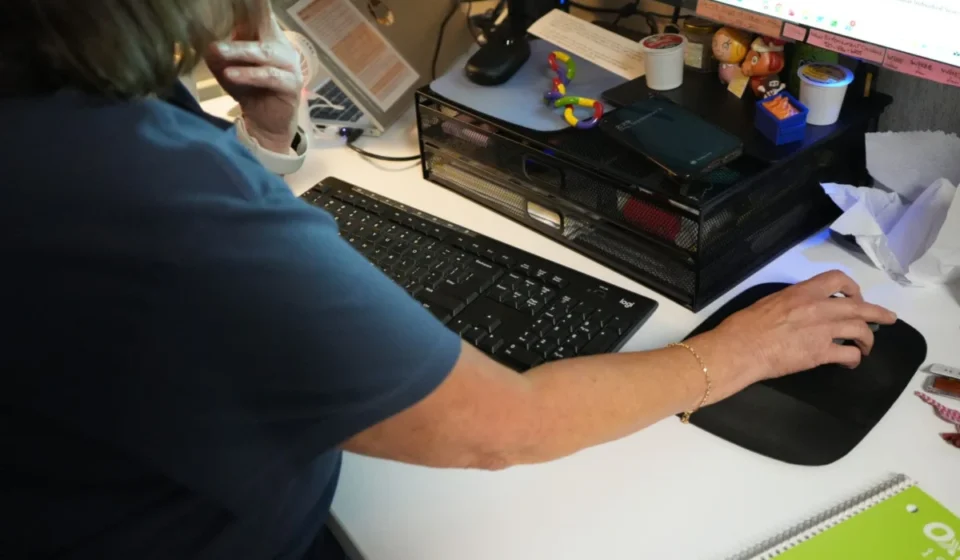
Family Services of Northeast Wisconsin, based in Green Bay, operates the state’s lifeline. However, the service relies on a remote workforce, with counselors working from home offices across the state. This model has allowed for greater flexibility, but it requires constant recruitment and retention efforts.
Koss attributes the spike in demand to two primary factors: the lingering mental health repercussions of the COVID-19 pandemic and a significant reduction in social stigma. For Gen Z, in particular, the anonymity of text and chat features—which were introduced in 2024—has been transformative.
“Gen Z, in general, we’ve always been behind a screen,” Van Beek explains. “988 gives youth the option to text it, and I always have liked that, because talking or maybe even going in person can be overwhelming for youth.”
Official Responses and Political Hurdles
The legislative response to the funding shortfall has been mixed. Critics of previous legislative attempts, such as the bill authored by Rep. Franklin, point to the lack of actual appropriations as a sign of political hesitation.
Brandy Tollefson, a De Pere School Board member and opponent to Franklin, highlights the personal nature of this issue. Having lost a stepbrother to suicide, she argues that the emotional and economic cost of inaction is far higher than the cost of a phone bill surcharge. “I fully support working with any Democrat or Republican who wants to get this permanently funded,” she states.

Meanwhile, some lawmakers are looking beyond traditional funding. Following the trend in Illinois, there is growing interest in legislation that would hold AI companies accountable for failing to provide suicide prevention resources when users express self-harm, with potential fines being diverted into a 988 trust fund.
Implications for the Future
The risks of an underfunded system are clear. When a caller experiences a delay or is pushed to a national center, the likelihood of them "disengaging"—hanging up before receiving help—increases.
Megan Zimmerman, outreach program director at NAMI Fox Valley, works to combat the misconception that calling 988 will lead to forced hospitalization or police intervention. In reality, law enforcement is involved in only 0.4% of Wisconsin calls. The overwhelming majority of interactions are resolved through support and resource coordination.
As the state approaches the 2028 budget cycle, with a projected $6 million deficit for the lifeline, the pressure is mounting. The state’s ability to maintain the current 81% in-state answer rate, let alone reach the 90% target, depends on the legislature’s willingness to treat mental health as an essential service equivalent to fire or police response.
For Cadence Van Beek, who has transitioned from a high school advocate to a college student studying psychology, the fight is personal. She continues to share her story not just to keep the lifeline running, but to ensure that the next person who reaches out for help finds the same "kind soul" on the other end of the line.

“We always kind of assume that it’ll be there,” Van Beek says of the 988 service. “The possibility that there might not be enough counselors on the line because of funding… just makes me a little worried.”
In the halls of the Capitol and the homes of those relying on the service, the message remains the same: mental health is not a biennial budgetary line item—it is a continuous, life-saving necessity.