




















































The Weaponization of Public Data: How Modern Doxxing Transformed Open-Source Information into Physical Threats

Your home address may already reside in a public county database. Your employer is likely listed on your LinkedIn profile. An old wedding announcement archived online can easily identify your spouse, and a public photograph from a school event can reveal exactly where your children spend their mornings.
Individually, these digital fragments are benign. They can sit undisturbed in the corners of the internet for years without causing harm. However, the nature of personal security changes entirely when these disparate details are deliberately harvested. This is the mechanism of doxxing: the systematic gathering, linking, and publishing of an individual’s private or identifying information to an audience primed to use it as a weapon.
As digital footprints expand and online polarization deepens, doxxing has evolved from a niche subcultural harassment tactic into a potent tool of political intimidation, corporate retaliation, and physical violence. Crucially, modern doxxing rarely requires sophisticated hacking. Instead, it relies on the strategic aggregation of publicly available data.
Main Facts: The Evolution of Modern Doxxing
Defining the Threat in the Digital Age
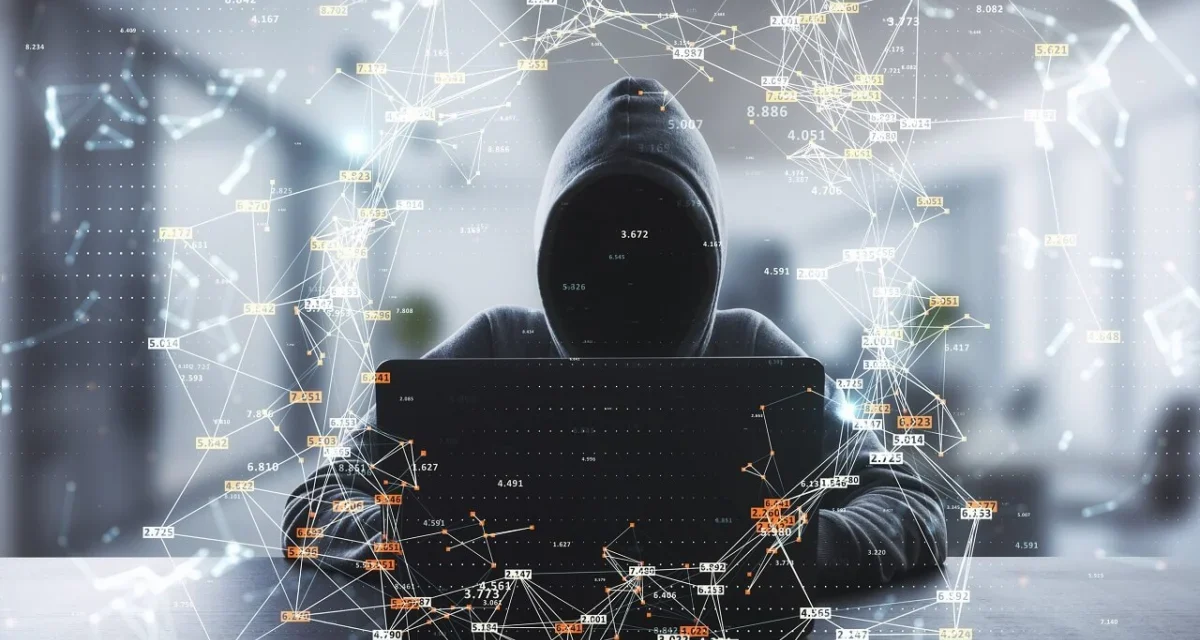
The popular image of a doxxer is an anonymous hacker wearing a hoodie, cracking secure servers in a darkened room to dump stolen databases onto the dark web. While data breaches do fuel the ecosystem, contemporary doxxing is far more pedestrian—and accessible.
According to the Cybersecurity and Infrastructure Security Agency (CISA), doxxing is the act of collecting personally identifiable information (PII) or sensitive materials from open sources or compromised databases, and exposing it publicly with malicious intent.
The term itself originates from 1990s hacker culture. The Legal Information Institute at Cornell Law School traces "doxxing" to the early internet slang "dropping dox" (documents). In that era, exposing a rival hacker’s real-world identity—their "dox"—was a method of stripping away online anonymity.
Today, social media platforms, search engines, and commercial data brokers have scaled this practice. A dossier that once circulated among a dozen users on an internet relay chat (IRC) channel can now be broadcast to millions of users in a matter of minutes.
The Power of Open-Source Intelligence (OSINT)
The fundamental misunderstanding of doxxing is the belief that private information must be stolen to be dangerous. In reality, the vast majority of successful doxxing campaigns leverage open-source intelligence (OSINT).
[Public County Records]
[LinkedIn Profile]     -- (Doxxer Aggregation) -> [Targeted Dossier] -> [Malicious Mobilization]
[Social Media Photos]  /
Doxxers construct highly detailed personal profiles by cross-referencing easily accessible public records:
- Property Registries: Connect an individual’s legal name to their physical home address and mortgage details.
- Corporate Registries & Professional Networks: Reveal employment history, office locations, and professional associations.
- Social Media Footprints: Expose family members, birthdays, hobbies, and daily routines.
- Visual Metadata: Background details in photos—such as street signs, distinctive landmarks, license plates, or school uniforms—allow bad actors to pinpoint locations.
- Data Brokers: Commercial entities that compile public records, voting registries, and consumer habits into comprehensive profiles, which are then sold or made searchable for nominal fees.
Chronology: High-Profile Cases of 2026
The legal and social battlegrounds surrounding doxxing reached a boiling point in 2026. A series of high-profile court cases and institutional crises illustrated how the law struggles to balance public information, free speech, and personal safety.
2026 Chronology of Key Doxxing Events:

  [ May 2026 ] -----------------> [ June 2026 ] -----------------> [ Sept 2026 ]
  • Edwards pleads guilty         • Curcio pleads guilty          • Khalil files lawsuit
    (SCOTUS Justice doxxing)        (ICE attorney swatting)         against Columbia Univ.
  • Wien investigation closed
    (Stephen Miller protest)
May 2026: The Supreme Court Justice Doxxing Prosecution
In May 2026, Kyle Andrew Edwards of North Carolina pleaded guilty in federal court to charges stemming from the publication of a U.S. Supreme Court justice’s home address. Federal prosecutors established that Edwards did not merely post the address; he published it alongside explicit threats and statements encouraging violence against members of the judiciary.
The prosecution demonstrated that while a public official’s address might be searchable in public records, publishing that data with the intent to threaten, intimidate, or facilitate violence crosses the threshold into federal criminal conduct.
May 2026: The Stephen Miller Protest Investigation in Virginia
Simultaneously, a state-level case in Virginia highlighted the high legal bar required to prosecute doxxing under local statutes. Activist Barbara Wien came under investigation after flyers containing the home address of White House adviser Stephen Miller were distributed during protests near his residence in Arlington and Falls Church.
In late May 2026, Commonwealth’s Attorney Parisa Dehghani-Tafti declined to bring state charges against Wien. Prosecutors concluded that the evidence did not meet the statutory requirements under Virginia law, which demands proof of intent to coerce, intimidate, or harass. This case underscored the vast legal gray area where public distribution of factual, public data—even when highly disruptive—remains protected speech absent explicit proof of criminal intent.
June 2026: The ICE Attorney Swatting Case
In June 2026, the physical dangers of doxxing were laid bare in California. Gregory John Curcio of Santa Monica pleaded guilty in federal court to doxxing an attorney representing U.S. Immigration and Customs Enforcement (ICE).
According to the U.S. Attorney’s Office for the Central District of California, Curcio published the attorney’s home address online and actively directed other users to "swat" her. Swatting involves placing a fraudulent emergency call to emergency services to dispatch a heavily armed tactical police response to a target’s home. Curcio’s plea highlighted how quickly digital harassment can escalate into life-threatening physical encounters.
September 14, 2026: The Columbia University Student Lawsuit
The boundaries of doxxing expanded beyond home addresses and federal officials in autumn. On September 14, 2026, former Columbia University graduate student Mahmoud Khalil, alongside other student plaintiffs, filed a federal lawsuit against the university.
The complaint accused Columbia of showing deliberate indifference toward pro-Palestinian students who were systematically targeted by doxxing campaigns. The plaintiffs alleged that their names, photographs, and academic affiliations were displayed on mobile billboard trucks and public websites, resulting in severe harassment, employment loss, and safety concerns.
While Columbia University asserted its commitment to maintaining a safe, inclusive campus, the pending litigation demonstrated that doxxing campaigns do not require a home address to inflict profound professional and personal damage.
Supporting Data: The Mechanics of Digital Footprints
Doxxing campaigns succeed because the internet has fundamentally altered the economics of information gathering. What once required hiring a private investigator can now be accomplished by anyone with an internet connection and a few hours of spare time.
The Role of Commercial Data Brokers
At the heart of the doxxing ecosystem lies the multi-billion-dollar data broker industry. These companies continuously scrape:
- State and federal public records (voter registrations, marriage certificates, property deeds).
- Court dockets and criminal records.
- Commercial transactions and loyalty card data.
- Social media profiles and web-browsing histories.
Raw Public Records + Commercial Transactions + Social Media Scraping
                           │
                           ▼
                 [ Data Broker Engine ]
                           │
                           ▼
          Comprehensive, Searchable Profile
        (Sold to public for as little as $0.99)
By aggregating these sources, data brokers generate comprehensive dossiers on millions of individuals. A searcher can often purchase an individual’s current address, phone numbers, email addresses, immediate family members, and employment history for as little as $0.99.
Visual Metadata and Geolocation
The proliferation of high-resolution smartphones has turned casual photography into a significant vulnerability. Images uploaded to social media platforms often contain exchangeable image file format (EXIF) data, which can embed the exact GPS coordinates where the photo was taken.
Even when platforms automatically strip EXIF metadata upon upload, visual clues remain. Open-source investigators routinely use:
- Shadow analysis: Calculating the time of day and year a photo was taken based on shadow angles.
- Reflections: Analyzing reflections in windows, sunglasses, or shiny surfaces to identify surroundings.
- Foliage and geography: Identifying regional plant life or geological formations to narrow down locations.
Official Responses: Legal Frameworks and Institutional Policies
Because doxxing spans the gap between online speech and physical harm, government agencies and private institutions have struggled to establish cohesive regulatory frameworks.
┌───────────────────────────────────────────────────────────────────────────┐
│                       LIMITS OF THE LEGAL RESPONSE                        │
├──────────────────────────────┬────────────────────────────────────────────┤
│ Federal Law                  │ State-Level Statutes                       │
├──────────────────────────────┼────────────────────────────────────────────┤
│ • Strict but narrow scope    │ • Highly fragmented                        │
│ • Protects specific officials│ • Varies by state line                     │
│ • Requires intent to harm    │ • High evidentiary bar for harassment      │
└──────────────────────────────┴────────────────────────────────────────────┘
Federal Law and CISA Directives
Under United States federal law, there is no single, all-encompassing statute called "doxxing." Instead, prosecutors must assemble charges using a patchwork of existing laws.

Federal prosecutors rely on statutes prohibiting:
- Interstate Stalking (18 U.S.C. § 2261A): Applicable when communication channels are used to cause substantial emotional distress or place a person in reasonable fear of death or serious bodily injury.
- Mailing Threatening Communications (18 U.S.C. § 876): Used when physical mail contains threats alongside personal information.
- Protection of Federal Officers (18 U.S.C. § 119): Makes it a crime to make public the restricted personal information of federal employees, officers, or jurors with the intent to threaten or facilitate harm.
CISA regularly publishes personal security guides urging critical infrastructure workers, election officials, and public servants to monitor their digital footprints. These guides emphasize proactive removal of personal data from public-facing sites before a crisis occurs.
State-Level Legal Discrepancies
At the state level, laws regarding doxxing are highly fragmented. Some states have passed specific anti-doxxing legislation allowing victims to sue perpetrators in civil court for damages, while others rely entirely on existing harassment and stalking statutes.
The primary hurdle for state prosecutors remains proving criminal intent. As demonstrated in the Barbara Wien case in Virginia, distributing someone’s home address during a political protest may be deemed offensive, but proving beyond a reasonable doubt that the distributor intended to coerce or harass the target remains an incredibly high evidentiary standard.
Implications: Physical Danger, Free Speech, and Digital Defense
The rise of doxxing has profound consequences for public discourse, physical safety, and personal privacy.
The Chill on Public Participation
When personal information is weaponized, the cost of speaking out in public increases exponentially. Activists, journalists, academic researchers, and public officials increasingly report self-censoring to protect their families from online mobs.
Doxxing campaigns are designed to strip away the separation between professional debate and personal safety. When an individual’s workplace is targeted with hundreds of hostile phone calls, or when their children’s school is named online, the psychological toll often forces the target to withdraw entirely from public life.
The Swatting Threat and Physical Violence
The integration of doxxing with swatting has elevated online harassment to a potentially lethal threat. When a doxxer publishes an address and coordinates a swatting call, they are weaponizing local law enforcement. Police officers arriving at a home expecting an active shooter or hostage situation are highly primed for conflict, creating a volatile environment where misunderstanding can lead to tragedy.
Proactive Mitigation and Digital Hygiene
Because legal remedies are often reactive, personal security experts emphasize that prevention and rapid mitigation are the most effective defenses against doxxing.
                       HOW TO RESPOND TO DOXXING
                                   │
         ┌─────────────────────────┴─────────────────────────┐
         ▼                                                   ▼
 [ Immediate Action ]                                [ Preventative Steps ]
  • Screenshot & preserve metadata                    • Opt out of data brokers
  • Report to platform trust & safety                 • Implement MFA & password managers
  • Alert local police (for physical threats)         • Audit public photo backgrounds
Immediate Steps After Being Doxxed
If your personal information begins circulating online, the first hours are critical:
- Document Everything: Before attempting to have posts removed, take comprehensive screenshots. Ensure the screenshots capture the poster’s username, the platform URL, the date, time, and any surrounding text or comments.
- Report to Platforms: Contact the host platform immediately. Most major social media companies have explicit policies against posting personally identifiable information (PII) without consent and will prioritize the removal of these posts.
- Notify Law Enforcement: If the doxxing includes threats of violence, or if your home address is published alongside hostile language, notify local law enforcement immediately. Provide them with the documented evidence.
- Secure Accounts: Lock down your online accounts. Change passwords, implement multi-factor authentication (MFA) using authenticator apps rather than SMS, and review recovery email addresses and phone numbers to prevent unauthorized access.
Long-Term Preventative Measures
To minimize the risk of being doxxed, individuals should adopt rigorous digital hygiene practices:
- Data Broker Opt-Outs: Systematically request the removal of your information from major data brokers like Whitepages, Spokeo, and LexisNexis, or use automated privacy services to manage opt-outs.
- Audit Social Media Privacy: Set personal social media accounts to private. Avoid posting real-time location updates, and review historical photos to ensure they do not reveal landmarks, home interiors, or workplace details.
- Separate Professional and Personal Identities: Use distinct email addresses and phone numbers for professional registries, domain registrations, and public-facing accounts.
Doxxing functions because the modern internet stores fragmented pieces of our lives in public spaces and makes them incredibly easy to connect. The most dangerous online post is rarely the one containing a deep, dark secret. More often, it is the post that gathers the mundane details of an ordinary life and hands them to an audience looking for a target.