






















































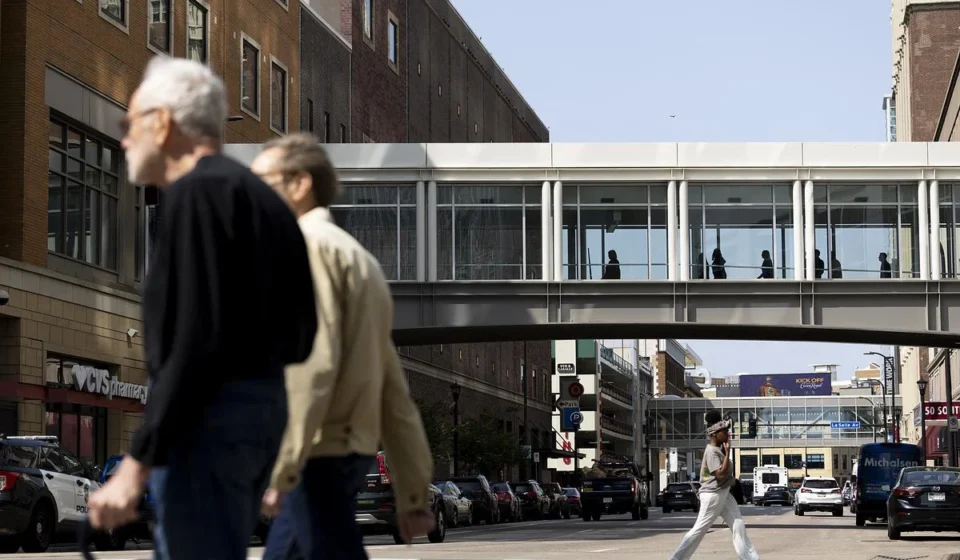
The Pulse of the North: Minneapolis Downtown Reawakens Amid Corporate Return-to-Office Mandates

Introduction
Monday mornings at Corner Coffee in downtown Minneapolis were, for a long time, a quiet affair—a lingering symptom of the "ghost town" era that defined the city’s central business district following the 2020 pandemic. However, the first week of September 2025 marked a definitive shift in the metropolitan atmosphere. Store manager Mia Pariseau recently found herself at the center of a caffeine-fueled whirlwind, with a steady line of at least five customers stretching out the door for over an hour.
“We got just slammed,” Pariseau remarked, noting that the sudden influx caught her two-person team by surprise. This surge in foot traffic is not an isolated incident of local luck; it is the direct result of a tectonic shift in the city’s labor landscape. As Target Corporation—one of the city’s largest and most influential employers—officially summoned its commercial unit back to the office, the ripples are being felt across every skyway, sidewalk, and storefront in the downtown core.
Main Facts: The Target Catalyst and the Urban Resurgence
The primary driver of this newfound vibrancy is the Sept. 2 mandate from Target Corporation. The retail giant, headquartered in the heart of Minneapolis, ordered employees within its massive commercial unit to transition to an in-person work schedule at least three days a week. Given Target’s status as the second-largest employer in the downtown area, trailing only Hennepin Healthcare, the move has functioned as a bellwether for the city’s economic recovery.
According to Kittie Fahey, the senior director of advancement for the Minneapolis Downtown Council, in-person work occupancy has climbed to nearly 75% of pre-pandemic levels. This figure is expected to climb further as the data from Target’s latest policy implementation is fully realized. The influx of thousands of workers into the 11th Street headquarters and surrounding annexes has fundamentally altered the "energy" of the city.
For small business owners like Pariseau, the return of the corporate workforce is the difference between struggling to keep the lights on and planning for growth. Corner Coffee’s proximity to the Target headquarters makes it a primary barometer for the health of the downtown economy. When the "Target team" is in the office, the local ecosystem thrives.
Chronology: From "Ghost Town" to the New Normal (2020–2025)
The road to this recovery has been long and fraught with setbacks. To understand the significance of the current revitalization, one must look at the timeline of the Minneapolis downtown exodus:

- 2020–2021: The Great Vacancy. Following the onset of COVID-19, Minneapolis, like many major U.S. hubs, saw its streets empty overnight. Attorney Jenny Lissarrague, who has worked downtown since 2012, recalls this period as a time of eerie silence. “It was a ghost town,” she said. “It was just nobody.” During this phase, Minnesota’s share of remote workers peaked at 21%, significantly higher than the national average of 17.9%.
- 2022–2023: The Hybrid Experiment. As the immediate threat of the pandemic receded, companies began experimenting with "choice-based" remote work. While this prevented total economic collapse, it left the downtown core in a state of limbo. The share of remote workers dropped to 16.9% in 2022, but the "Tuesday-Wednesday-Thursday" office culture meant that Mondays and Fridays remained desolate.
- June 1, 2025: The Public Sector Lead. A major turning point occurred earlier this summer when Minnesota state government employees were required to spend at least 50% of their workdays in the office. While the move was met with significant resistance and threats of labor strikes, it signaled the state’s commitment to re-occupying the urban center.
- September 2, 2025: The Corporate Mandate. The implementation of Target’s three-day in-person requirement for its commercial unit serves as the most recent and impactful milestone, effectively ending the era of total remote flexibility for the city’s largest private-sector workforce.
Supporting Data: Quantifying the Return
The revitalization of Minneapolis is supported by data from the Federal Reserve Bank of Minneapolis and the Downtown Council, which paints a picture of a state that was slow to return but is now catching up with aggressive momentum.
The Top Employer Landscape:
Of the top 15 employers in downtown Minneapolis, 12 have now implemented formal back-to-office policies. This includes major players such as:
- Hennepin Healthcare: Essential in-person services.
- Target Corporation: Now transitioning to a 3-day minimum.
- Wells Fargo: Maintaining a significant hybrid presence.
- Ameriprise Financial: Encouraging regular in-office collaboration.
Occupancy and Transit Trends:
While the 75% occupancy rate is a high-water mark for the post-pandemic era, the nature of that occupancy has changed. Kittie Fahey notes that traffic hours are more "spread out" than they were in 2019. Instead of a uniform 8:00 AM rush, workers are commuting at staggered intervals, with many arriving around noon or staying later to avoid peak congestion.
However, the data also reveals a lag in infrastructure. The reduction in remote work has not yet been met with a full restoration of transit services. Workers like Lissarrague have noted that there are fewer buses available now than before the pandemic, making the physical act of returning to the office a logistical hurdle for many commuters.
Official Responses: Collaboration vs. Resistance
The return to the office is not merely an economic metric; it is a cultural debate. Within the corporate walls of Target, the response from employees has been a mix of professional optimism and personal adjustment.
Madelyn Dunn-Lammert, an associate designer for Target who began her career during the height of remote work, views the change as a boon for creativity. “Being able to grab lunch with co-workers or work through a project in person helps build team connections,” she explained. In creative fields like design, the "serendipitous collaboration" that occurs in a shared physical space is often cited as something that cannot be replicated over Zoom or Microsoft Teams.
Conversely, the official response from the Minneapolis Downtown Council focuses on the broader civic duty of the workforce. Kittie Fahey is advocating for a shift in mindset—from "working downtown" to "living downtown." She emphasizes that for the city to truly recover, workers must do more than just clock in and out.
“Go out for lunch, stay after and go meet friends, go do some things,” Fahey urged. “Use all the resources we have.”

This sentiment, however, clashes with the reality of the "post-pandemic" service industry. Fahey admitted that a significant barrier to this "after-hours" culture is the fact that many restaurants in the central business district now close much earlier than they did in 2019. “You’d be hard-pressed to find a restaurant open until 11 p.m.,” she said, calling the shift “crazy different.”
Implications: The Future of the Urban Core
As Minneapolis moves toward the final quarter of 2025, the implications of this mass return to the office are twofold: economic stabilization and cultural evolution.
1. The "Stickiness" Factor:
The greatest challenge facing the Minneapolis Downtown Council is the "commuter culture" problem. If the 60,000 downtown residents and the returning workforce continue to view the city solely as a place of labor, the vibrancy will remain artificial—limited to the hours between 9:00 AM and 4:00 PM. The long-term health of the city depends on whether these workers can be convinced to "stick around" for dinner, theater, or nightlife.
2. The Transit Gap:
If companies continue to mandate in-person work, the city and Metro Transit will face increasing pressure to restore the robust bus and light-rail schedules of the previous decade. Without reliable transportation, the friction of the commute may lead to further labor friction and talent attrition.
3. Economic Revitalization of Small Business:
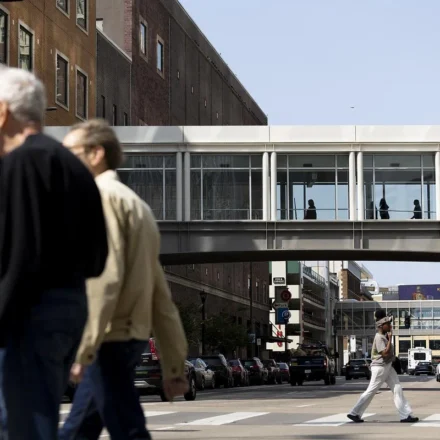
For the "mom and pop" shops in the skyway system, the return of Target and state employees is a lifeline. The "back-to-school" energy currently felt in the IDS Center and other office towers suggests that the retail and service ecosystem is beginning to heal. However, this recovery is fragile and dependent on the continued enforcement of corporate mandates.
Conclusion: An Optimistic Outlook
While Minneapolis has not yet fully reclaimed the bustling, 24-hour liveliness of 2019, the trajectory is undeniably upward. The "ghost town" of 2021 has been replaced by a city that is, in the words of designer Dunn-Lammert, "more vibrant and exciting during the day."
The transition from a remote-first culture to a hybrid-office model is more than just a change in HR policy; it is a reclamation of the urban experience. As Mia Pariseau and the team at Corner Coffee prepare for another "slammed" Monday morning, the sentiment among those who power the city’s daily life remains one of cautious hope.
“The future is bright,” Pariseau said. For a city that spent years in the shadow of empty office towers, that brightness is a welcome change.