














































A Franchise at the Crossroads: The Minnesota Twins’ Midsummer Malaise and the Looming Deadline

The 2026 Major League Baseball season has descended into a state of mediocrity that feels almost systematic. As the calendar turned from June to July, the American League landscape was defined by a chaotic, uninspiring cluster of teams hovering around the .500 mark. In this diluted landscape, the Minnesota Twins find themselves mired in a struggle that transcends mere bad luck. Despite a new manager, a revamped front office, and a change in leadership at the top of the Pohlad family hierarchy, the organization remains trapped in a cycle of defensive ineptitude and strategic indecision.
The State of the Union: A Statistical Freefall
The data paints a grim picture for the Twins. As of early July, the team ranked dead last in Major League Baseball in Defensive Runs Saved (DRS). According to metrics from Sports Info Solutions, the Twins posted negative numbers at every position on the diamond with the solitary exception of center field. Perhaps most damning is the team’s inability to convert ground balls into outs; their 69.9% conversion rate sits well below the league average of 73.4%.
The struggles are most pronounced in the middle infield—traditionally the backbone of any defensive unit. At shortstop, the team’s collective defensive output reached a nadir of minus-15 in DRS, a mark that makes them the worst in the majors by a significant margin. Individual contributors like Tristan Gray and Brooks Lee have struggled mightily, each posting a minus-7 rating, placing them among the lowest-ranked shortstops in the league. At second base, Luke Keaschall has fared little better, tying for 134th out of 136 qualified players.
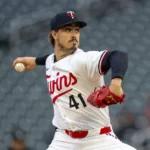
These defensive failures are not merely aesthetic; they are compounding the strain on a pitching staff already decimated by injuries. The loss of ace Pablo Lopez to season-ending Tommy John surgery, coupled with right elbow inflammation for No. 3 starter Bailey Ober, has left the rotation threadbare. When the infield cannot secure routine outs, the pressure on a struggling bullpen becomes insurmountable, creating a feedback loop of defensive errors and high-leverage pitching meltdowns.
Chronology of a Failed Transition
The current defensive instability can be traced back to a series of experimental roster movements that have left the team’s core in a state of perpetual flux. Since Opening Day in Baltimore, the team has been forced to shuffle its starting infielders with reckless frequency. Royce Lewis, Brooks Lee, and Luke Keaschall—three players expected to anchor the infield—have spent the better part of the season playing "musical chairs" at different positions.
This trend of "positional fluidity" has become a hallmark of the modern, cost-conscious front office. By prioritizing versatility over specialization, the organization has attempted to save on payroll, often tasking young, inexperienced players with mastering multiple defensive roles on the fly. Manager Derek Shelton, while acknowledging the reality of modern baseball, has struggled to find stability. "Very few players in the game today, unless you’re a superstar, play only one position," Shelton noted in June.
However, the rapid transition of players like Jorge Polanco in previous years—and the current displacement of Keaschall to right field and Lewis to first base—suggests a strategy that values the idea of flexibility more than the execution of defense. The results, as seen on the field at Target Field, have been disastrous, with players frequently appearing out of their depth in high-stakes moments.
Attendance and the Trust Deficit
The apathy currently felt by the Minnesota fanbase is reflected in the ticket office. Despite a late-June series against the Los Angeles Dodgers that drew over 105,000 spectators—including a sellout crowd for Shohei Ohtani’s start—overall attendance is trending roughly 30,000 fans behind last season’s pace.
While the team has invested in "fan experience" initiatives—live pregame music, weekend happy hours, and promotional giveaways—the core product remains fundamentally broken. The fans, having weathered a 2025 trade deadline selloff that signaled a long-term rebuild, appear to have little patience for the current iteration of the club. The transition of power from the previous ownership to Tom Pohlad has not yet translated into a renewed sense of optimism. If anything, the skepticism has intensified, with the "Sell the Team" chants serving as a recurring soundtrack to a losing effort.
Official Responses and Strategic Implications
The front office faces an existential question as the August 3 trade deadline approaches: to buy or to sell? For an organization that has historically cycled through veterans, the path forward is anything but clear.
Manager Derek Shelton and the front office have remained publicly committed to competing, but the internal metrics tell a story of a team in need of a reset. The potential emergence of high-ceiling prospects like Kaelen Culpepper provides a glimmer of hope, but the team’s reliance on stop-gap utility players has stifled momentum.
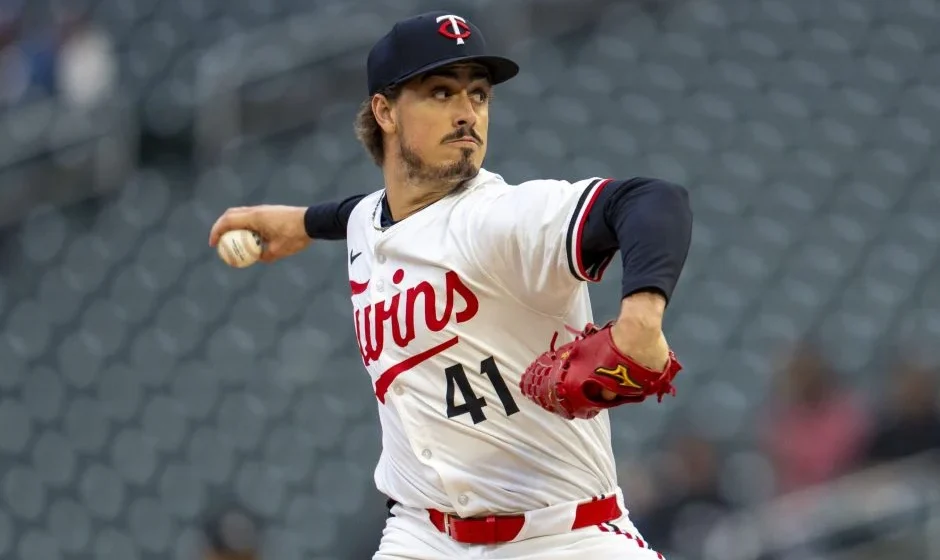
The most critical decision facing the leadership involves the futures of catcher Ryan Jeffers and pitcher Joe Ryan. Both are viewed as pillars of the clubhouse. Jeffers, 29, is approaching free agency, while the 30-year-old Ryan is arbitration-eligible in 2027. In a league where quality starting pitching is increasingly expensive and rare, trading away Joe Ryan would be a signal that the organization has abandoned the pursuit of winning in the near term.
The Case for Stability: Why the Twins Must Pivot
If the Pohlad era is to be defined by something other than the status quo, the organization must break its habit of trading away talent just as they reach their prime. The current strategy of replacing key contributors with cheap, unproven alternatives has alienated the fanbase and left the roster hollow.
Extending the contracts of Ryan and Jeffers would be a statement of intent. It would acknowledge that internal development, when successful, should be rewarded rather than liquidated. These two players represent the kind of veteran leadership necessary to guide the next wave of prospects—such as Walker Jenkins and Culpepper—into the major leagues.
The intangible value of having seasoned veterans who understand the culture of the club cannot be overstated. When the team allowed Sonny Gray to walk in free agency, it was a tactical failure that Joe Ryan publicly critiqued—a move that proved to be correct as the team struggled to replace his production. The organization would be wise to heed such feedback.
Conclusion: A Test of Ownership
As the trade deadline looms, the Minnesota Twins stand at a precipice. The team is currently three games behind Cleveland in the AL Central and hovering on the periphery of the wild-card race. While the standings might suggest that a "fire sale" is the logical outcome for a flawed roster, the long-term health of the franchise demands a different approach.
Keeping talent and building a culture of continuity is the only way to reverse the downward trend in both attendance and performance. Whether Tom Pohlad is willing to break the cycle and invest in the team’s current stars remains the central question of the 2026 season. The fans are waiting to see if this is truly a new chapter or merely a continuation of a failed script. For a team that has long relied on the loyalty of its base, the time to reward that loyalty is now. Anything less will only deepen the divide between the front office and the seats at Target Field.