








































Inside Burger King’s Dragon Ball Super Partnership: A Strategic Fusion of Nostalgia, Merchandising, and Operational Efficiency

The landscape of anime licensing in the United States has undergone a massive paradigm shift over the past three decades. Once a niche subculture characterized by hard-to-find import VHS tapes, localized television edits, and scarce merchandise, Japanese animation has evolved into a dominant pillar of mainstream global entertainment.
In a clear sign of this cultural integration, fast-food giant Burger King, in collaboration with Toei Animation, launched a nationwide promotional campaign centered on the globally acclaimed franchise Dragon Ball Super. The partnership features a limited-time menu, themed packaging, and a highly anticipated set of collectible figures.
This article examines the structural mechanics of the collaboration, analyzing its menu composition, historical context, corporate motivations, and broader implications for the "kidult" consumer market.
Main Facts: The Anatomy of the Promotion
The Burger King x Dragon Ball Super collaboration officially launched on September 1 at participating locations across the United States. Designed to appeal to both younger audiences and adult collectors, the campaign is structured around two distinct purchasing pathways: the Dragon Ball Super Power Up Pack and the traditional King Jr. Meal. Both options serve as vehicles for distributing a six-figure set of collectible toys.
+-------------------------------------------------------------------------+
|                    DRAGON BALL SUPER POWER UP PACK                      |
+-------------------------------------------------------------------------+
|  - 10-Piece Chicken Nuggets                                             |
|  - Medium French Fries                                                  |
|  - Exclusive "Super Saiyan Sauce" (Teriyaki-style flavor profile)       |
|  - "Dragon Ball Burst Lemonade" (Mango-peach with orange popping boba)  |
|  - 1 Random Collectible Toy (Out of 6 available designs)                |
|  - Themed Packaging (Custom box, cup, and paper crown)                  |
+-------------------------------------------------------------------------+
The Collectible Toy Lineup
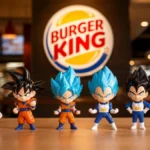
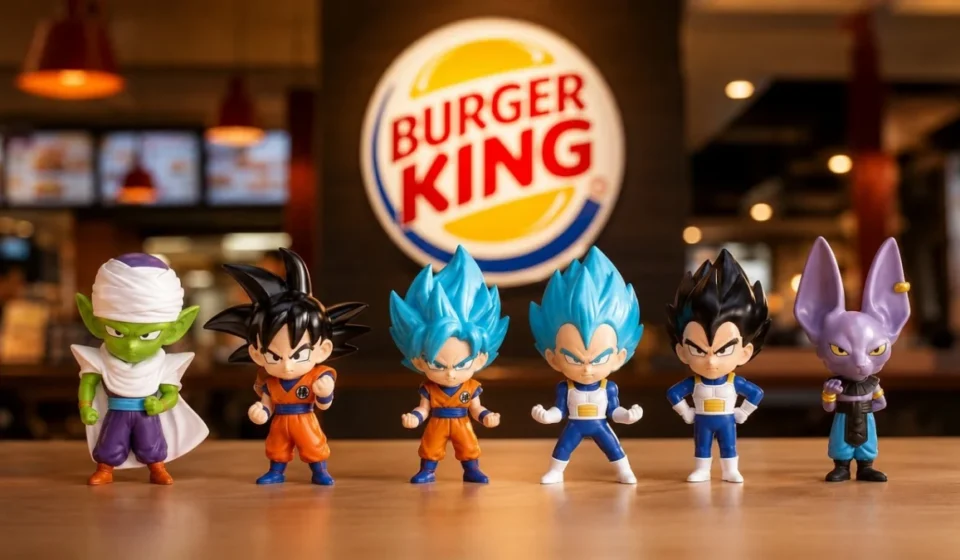
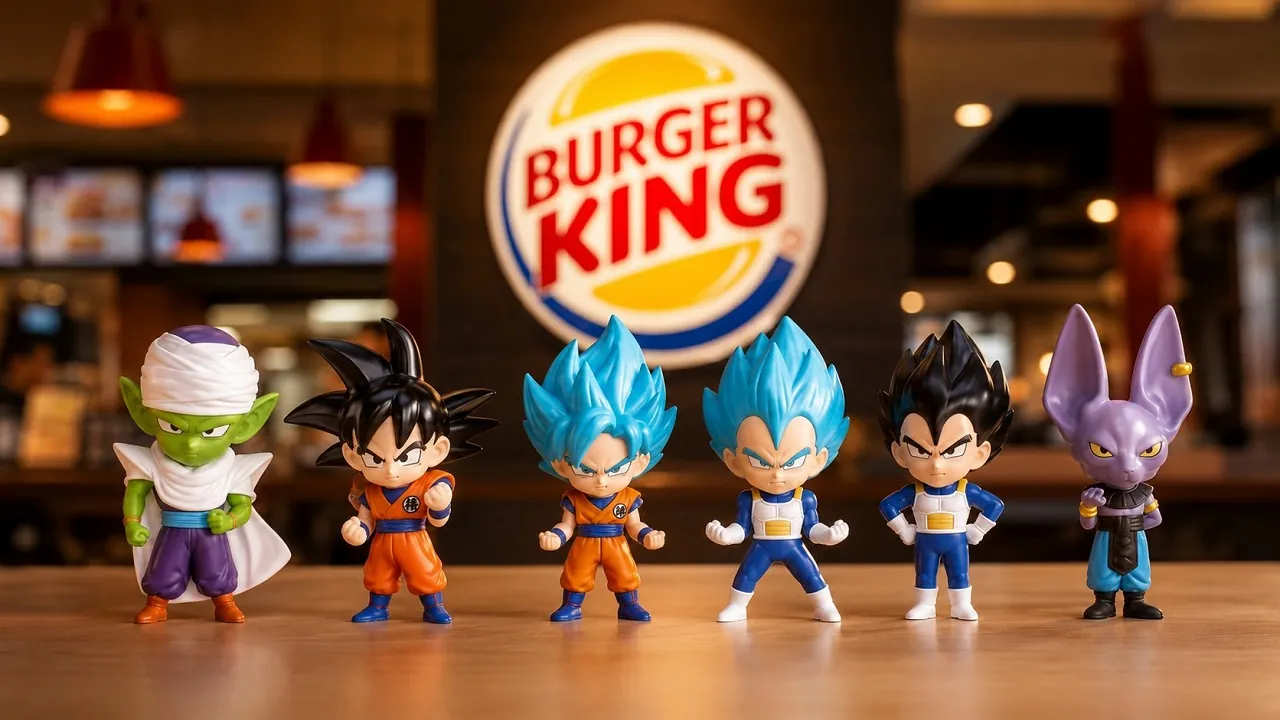
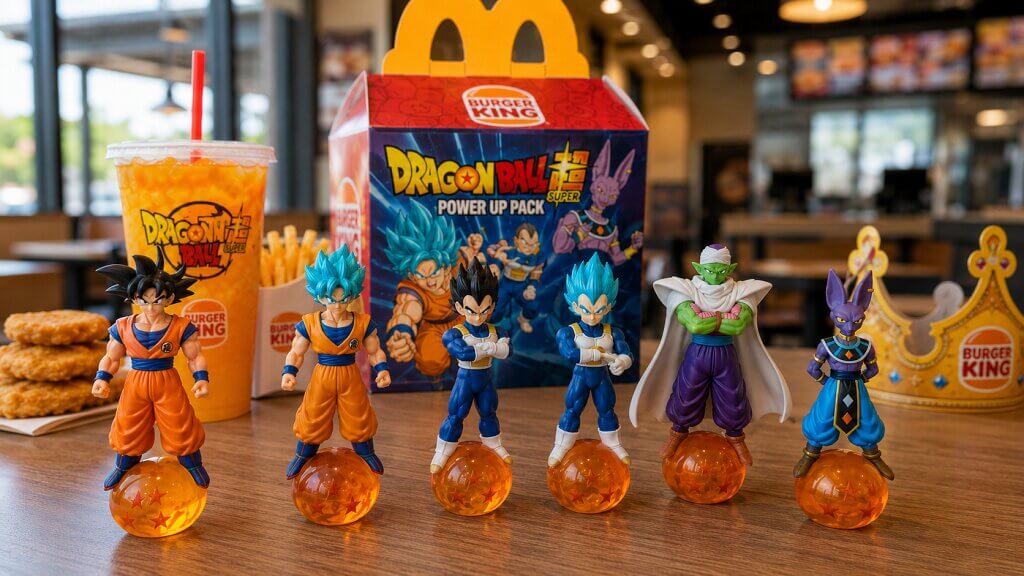
The promotional toy set consists of six plastic figures representing key characters from the Dragon Ball Super series:
- Goku (Base Form)
- Super Saiyan Blue Goku
- Vegeta (Base Form)
- Super Saiyan Blue Vegeta
- Piccolo
- Beerus (The God of Destruction)
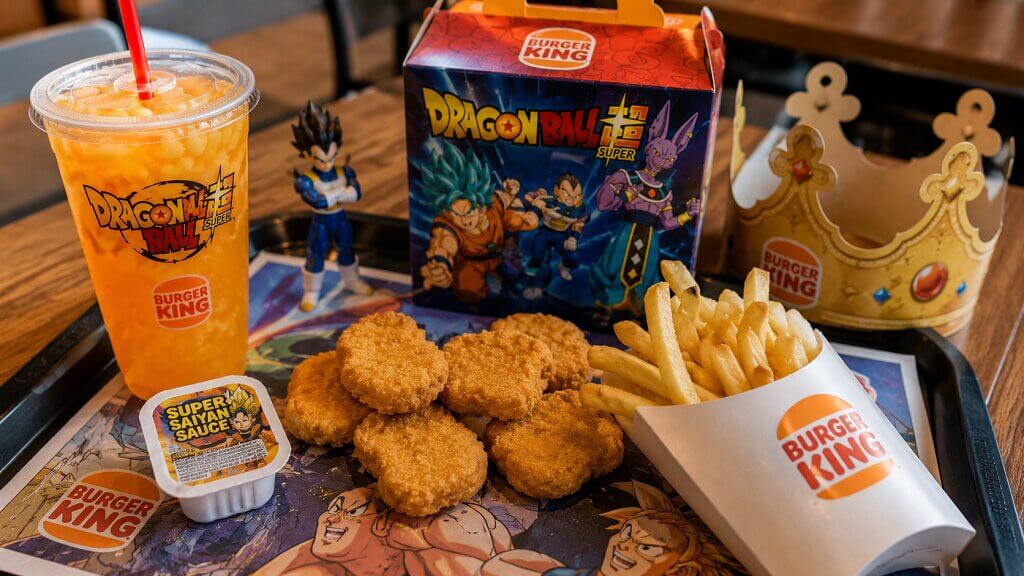
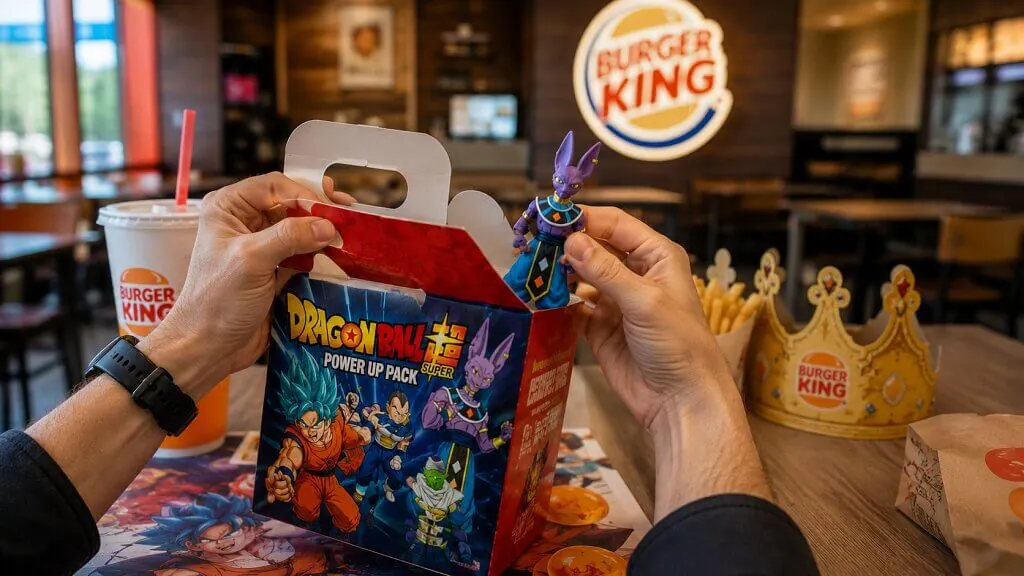
To complete the sensory experience, Burger King transformed its visual branding. Customers ordering the promotional meals receive food in custom-designed boxes and cups adorned with character artwork. Additionally, the chain’s signature paper crown has been redesigned with Dragon Ball Super graphics, offering a nostalgic novelty item that has quickly populated social media feeds.
Chronology: From Toonami to the Mainstream Drive-Thru
To fully appreciate the significance of a nationwide Dragon Ball promotion at a major American fast-food chain, one must look at the historical trajectory of the franchise’s presence in Western media.
+-----------------------------------------------------------------------------+
|                         HISTORICAL TRAJECTORY                               |
+-----------------------------------------------------------------------------+
| Late 1990s - Early 2000s:                                                   |
| Dragon Ball Z debuts on Cartoon Network's Toonami block. Merchandise is     |
| scarce, localized, and highly sought after by a niche fan base.             |
|                                                                             |
| 2015:                                                                       |
| Dragon Ball Super premieres in Japan, revitalizing the franchise with new   |
| transformations (Super Saiyan Blue) and characters (Beerus).                |
|                                                                             |
| 2018 - 2022:                                                                |
| Theatrical releases "Dragon Ball Super: Broly" and "Super Hero" achieve     |
| mainstream box office success in the United States.                         |
|                                                                             |
| September 1:                                                                |
| Burger King launches its nationwide Dragon Ball Super campaign, cementing   |
| the franchise's status as a mass-market commercial powerhouse.              |
+-----------------------------------------------------------------------------+
During the late 1990s and early 2000s, fans of Dragon Ball Z in the United States relied on syndication and Cartoon Network’s Toonami programming block to watch the series. Officially licensed merchandise was rare, often confined to specialty comic shops or import stores. Video game adaptations were inconsistent in quality, and toy lines had limited retail distribution.
The premiere of Dragon Ball Super in 2015, followed by the massive theatrical successes of Dragon Ball Super: Broly (2018) and Dragon Ball Super: Super Hero (2022), permanently altered this dynamic. The franchise proved it could generate hundreds of millions of dollars in global box office revenue, making it an incredibly attractive partner for blue-chip corporate advertisers.
The September launch represents the culmination of this multi-decade evolution: a transition from a foreign cult phenomenon to a premier marketing vehicle for one of the largest quick-service restaurant (QSR) chains in the world.
Supporting Data: Menu Composition and Merchandising Analysis
An analysis of the promotional menu reveals a calculated balance between thematic branding and operational feasibility. Quick-service restaurant promotions must be designed to scale nationwide without disrupting kitchen workflows, causing ingredient shortages, or requiring specialized staff training.
Culinary Design and Operational Efficiency
The food components of the Power Up Pack utilize existing high-volume inventory with minor, easily managed modifications:
- Super Saiyan Sauce: Rather than introducing a highly volatile, intensely spicy sauce that might alienate casual diners, Burger King developed a sweet, savory, and tangy teriyaki-style dipping sauce. While the "Super Saiyan" moniker suggests an intense, aggressive flavor profile, the actual sauce is a crowd-pleasing glaze. This choice minimizes waste while offering a thematic tie-in that pairs naturally with chicken nuggets.
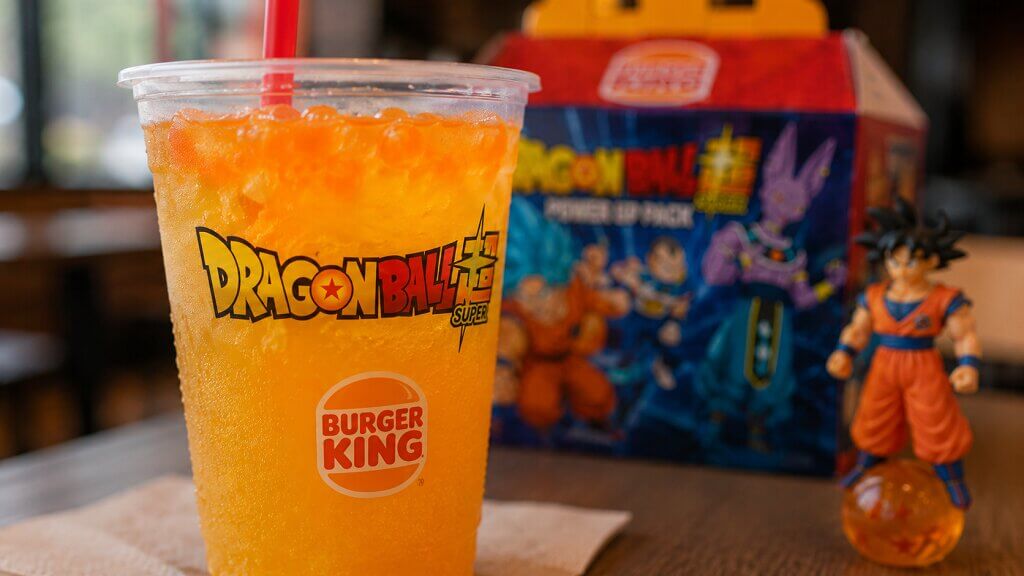
- Dragon Ball Burst Lemonade: This beverage is the most conceptually creative element of the menu. By combining a mango-peach lemonade base with orange-colored, mango-flavored popping boba, the beverage visually mimics the iconic, star-filled Dragon Balls. From an operational standpoint, adding popping boba to a standard beverage dispenser is highly efficient, requiring no complex kitchen preparation while delivering a distinct, premium aesthetic.
+-------------------------------------------------------------------------+
|                       MENU ITEM EVALUATION                              |
+-------------------------------------------------------------------------+
| Item: Super Saiyan Sauce                                                |
| - Flavor Profile: Sweet, savory, tangy teriyaki-style                   |
| - Operational Impact: Low (packaged dipping cup)                        |
| - Theme Alignment: Moderate (energetic name, classic Asian flavor)      |
|                                                                         |
| Item: Dragon Ball Burst Lemonade                                        |
| - Flavor Profile: Mango-peach with mango popping boba                   |
| - Operational Impact: Low-Medium (requires boba scooping)               |
| - Theme Alignment: High (orange boba visually mimics Dragon Balls)      |
+-------------------------------------------------------------------------+
Critical Analysis of the Collectible Figures
While the promotion has been widely praised by fans, the character selection in the six-toy lineup has drawn critique from collectors:
- The Over-Saturation of Goku and Vegeta: Out of six available slots, four are occupied by the franchise’s two central protagonists (two base forms and two Super Saiyan Blue variants). Critics and enthusiasts argue that dedicating 66% of the set to duplicates of Goku and Vegeta is a missed opportunity. Characters such as Golden Frieza, Future Trunks, or Android 17—who played a pivotal role in Dragon Ball Super’s Tournament of Power arc—would have added diversity and heightened the collectibility of the set.
- The Inclusion of Piccolo: Piccolo’s presence is highly regarded. Following his central role and new "Orange Piccolo" transformation in Dragon Ball Super: Super Hero, the character has enjoyed a resurgence in popularity. His inclusion acknowledges his enduring legacy as a fan-favorite character.
- The Synergistic Appeal of Beerus: The inclusion of Beerus, the God of Destruction, is a clever thematic choice. Throughout the series, Beerus is defined by his obsession with Earth’s culinary offerings, often sparing the planet from destruction in exchange for delicious food. Placing a Beerus figure inside a fast-food meal box is an inside joke that resonates deeply with dedicated fans of the show.
Official Responses: Corporate Strategy and Brand Synergy
The partnership represents a calculated win-win for both corporate entities, aligning with their respective long-term marketing goals.
Burger King’s Market Position
For Burger King, the collaboration is a strategic move to capture market share in the highly competitive QSR landscape, particularly among Gen Z and Millennial consumers. Competitors like McDonald’s have successfully leveraged anime-style marketing campaigns (such as the fictional "Waku Waku" and "W档" promotions, as well as partnerships with Yu-Gi-Oh! and Hello Kitty).
By securing an exclusive partnership with Toei Animation for the legendary Dragon Ball IP, Burger King positions itself as a culturally relevant brand capable of tapping into passionate fan communities.
In its official press release, Burger King emphasized the broad appeal of the campaign, noting that the Dragon Ball Super menu items were crafted to offer a fun, interactive dining experience. The company’s marketing team designed the "Power Up Pack" to encourage repeat visits, utilizing the blind-bag nature of the toys to drive sustained engagement throughout the month of September.
Toei Animation’s Brand Maintenance
For Toei Animation, the campaign keeps the Dragon Ball brand at the forefront of American pop culture during a transitional period for the franchise. With the television anime on hiatus and the franchise expanding through video games (such as Dragon Ball: Sparking! Zero) and web series (such as Dragon Ball Daima), a nationwide fast-food partnership maintains high brand visibility.
It ensures that the intellectual property remains part of the daily lives of millions of American families, reinforcing its status as an evergreen entertainment empire.
Implications: The Power of Nostalgia Marketing and the "Kidult" Phenomenon
The Burger King Dragon Ball Super promotion highlights a major trend in modern retail: the rise of the "kidult" consumer market.
+-----------------------------------------------------------------------------+
|                         THE "KIDULT" MARKET FACTOR                          |
+-----------------------------------------------------------------------------+
| Demographic:                                                                |
| Adults aged 18-45 who actively purchase toys, games, and collectibles       |
| associated with their childhood.                                            |
|                                                                             |
| Economic Impact:                                                            |
| Represents a multi-billion-dollar segment of the toy industry, often        |
| outspending traditional toy purchases for children.                         |
|                                                                             |
| Marketing Appeal:                                                           |
| Dual-generation engagement. Parents who grew up watching Dragon Ball Z now   |
| introduce their children to Dragon Ball Super, driving double sales.        |
+-----------------------------------------------------------------------------+
Historically, fast-food toy promotions were designed exclusively for young children. However, the toy industry has seen a massive influx of purchasing power from adults who collect action figures, trading cards, and memorabilia from their childhood. By tailoring this promotion to Dragon Ball Super—a franchise with a forty-year history—Burger King targets a dual demographic:
- The New Generation: Younger children who actively watch Dragon Ball Super on streaming platforms and enjoy the toys as standard meal-time premiums.
- The Legacy Collectors: Adults in their 20s, 30s, and 40s who experience a strong sense of nostalgia when receiving a fast-food toy. For these consumers, purchasing a Power Up Pack is an inexpensive, low-barrier way to participate in a franchise they have loved for decades.
The "blind bag" mechanic of the promotion—where each meal contains one random figure—directly capitalizes on the gamification of modern consumerism. The desire to collect all six figures, particularly coveted characters like Beerus or Piccolo, drives repeat business. It turns a simple lunch run into a mini-quest, encouraging consumers to share their hauls, trade duplicates, and discuss the campaign on social media platforms like Reddit, TikTok, and Instagram.
Furthermore, the simplicity of the promotion shows that fast-food chains do not need to overhaul their kitchens to execute successful collaborations. By combining familiar menu items (nuggets and fries) with a themed dipping sauce, a visually striking drink, and high-quality collectibles, Burger King has built a blueprint for future pop-culture partnerships.
Ultimately, the campaign proves that when nostalgia is paired with smart, operationally friendly product design, it can create a powerful marketing spark that resonates across generations.