















































The Quiet Giant: Insight Partners’ Devin Parekh on Navigating the AI Gold Rush and the Imperative of Liquidity

For 26 years, Devin Parekh has steered Insight Partners through the turbulent waters of the technology sector, transforming it into a $90 billion heavyweight investment firm. In an industry where venture capitalists often compete to be the loudest voices on X (formerly Twitter) or ubiquitous figures on the podcast circuit, Parekh and his firm have mastered the art of staying "quietly powerful." They operate on a simple philosophy: let the portfolio do the talking.
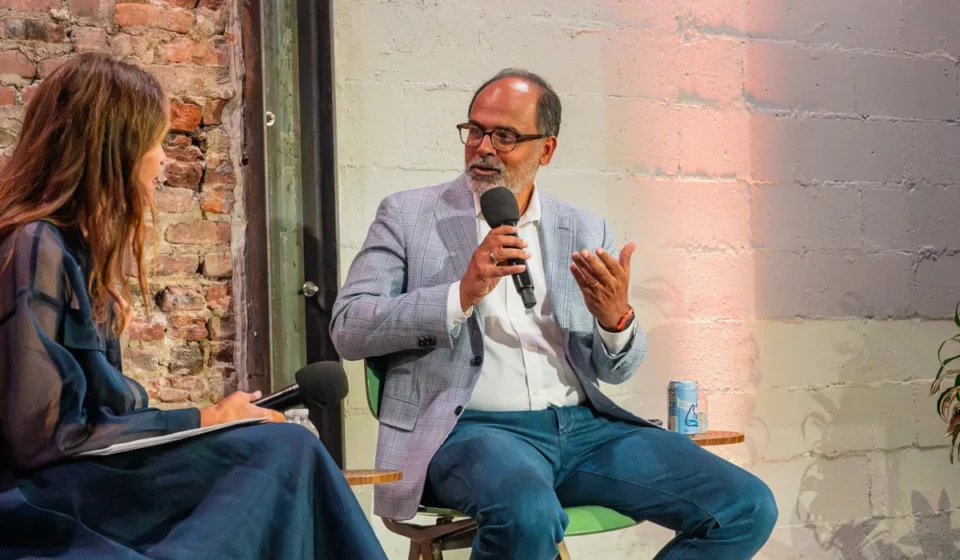
During a rare, candid sit-down at TechCrunch’s StrictlyVC event in New York, Parekh pulled back the curtain on the firm’s strategy, addressing the existential risks of artificial intelligence, the realities of deal-making, and the often-overlooked necessity of returning capital to investors in an era of unprecedented AI hype.
The AI Paradox: Risk vs. Opportunity
The discourse surrounding AI has reached a fever pitch, punctuated by high-profile departures from companies like Anthropic, where researchers have cited "existential risk" as a primary concern. Parekh, however, maintains a pragmatic, long-term perspective.
"Sure, there’s a risk some non-state actor gets access to an open-source model and creates a biological weapon," Parekh conceded. "But there’s an even higher probability we get a massive decrease in the time it takes to develop new drugs and cure diseases. I’ll take that bet."
As a board member at NYU Langone, Parekh sees the practical applications of AI in real-time. He highlights the ability of algorithms to sift through 50 million patient records to predict, with startling accuracy, the risk of heart attacks in seemingly healthy individuals. For Parekh, the macro-utility of AI—particularly in scaling healthcare amidst an aging global population—far outweighs the speculative hysteria of "doomer" narratives. He frames these risks as historical constants, comparing them to the early, disruptive phases of drone warfare.
Strategy and Scale: The Case for Diversification
With $90 billion under management, Insight Partners occupies a unique position in the venture ecosystem. Unlike firms that have gone all-in on the "frontier lab" AI narrative, Insight has remained steadfast in its diversified strategy.
"Every venture capitalist thinks they’re an expert on everything now—epidemiology during COVID, geopolitics during the Iran war," Parekh noted, offering a critique of the industry’s performative nature. "Our attitude has been: Let the portfolio do the talking. We have to communicate enough that people know who we are, but our performance should speak for itself."
The Temporal Shift in Investing
When asked about the split between early-stage, growth, and buyout strategies, Parekh emphasized that Insight’s approach is "temporal, not fixed." He noted that the firm has largely sidelined major buyouts since 2024, citing high interest rates and uncooperative debt markets as primary deterrents.
Instead, the firm has pivoted toward a more surgical approach to venture capital. "Valuations are rising at a pace we saw before, in 2021—and that didn’t end well," he warned. Parekh argues that because rounds are moving at breakneck speed, there is almost no time for "incremental data" to be gathered. Consequently, investors are paying higher prices without a proportional reduction in risk.
To mitigate this, Insight has shifted toward smaller, earlier-stage bets. By writing $20–$25 million checks rather than $500 million ones, the firm maintains the flexibility to double down on winners—a strategy that proved highly successful with companies like Wiz.
Geographic Nuance and the "Talent Density" Debate
The question of where to invest has become increasingly complex in the age of remote work. While Parekh acknowledges that talent has become "flat globally," he notes that specific verticals still demand proximity.
"AI infrastructure talent is genuinely concentrated in San Francisco," he said, noting that his own 23-year-old son—a VC himself—insisted on moving there to keep his finger on the pulse. However, vertical-specific AI, such as financial services (where firms like Ramp thrive), remains heavily concentrated in New York.
When pressed on why Insight lost out on the buzzy AI legal-tech company Legora—a deal that went to General Catalyst—Parekh was uncharacteristically modest. "I don’t know the specific reason, but I think they sold their value proposition better than we sold ours that time. It’s a big world; we don’t need to win every deal."
Managing Conflicts and the "Information-Sharing" Standard
Perhaps the most notable shift in venture capital is the willingness of firms to invest in direct competitors. Insight holds stakes in both OpenAI and Anthropic, a move that would have been considered a cardinal sin a decade ago.
Parekh explains that this is a function of the modern funding landscape. "Once you’re at a later stage, off the board, not driving governance, you’re just buying a great stock," he said. While the firm maintains strict information-sharing restrictions to prevent cross-contamination of proprietary data, Parekh notes that the sheer scale of capital required by these labs—often raising $30–$100 billion—has rendered traditional notions of "exclusivity" obsolete.
The Liquidity Imperative: Why DPI Matters
A recurring theme in Parekh’s commentary is the failure of many modern VC funds to return cash to their Limited Partners (LPs). He points to the recent industry trend of firms raising massive amounts of capital without generating a single exit.
"Many first- and second-time funds won’t raise a next fund because they didn’t prioritize liquidity," Parekh said. "I tell fund managers I advise: if Anthropic’s going to triple from here, fine—take your basis out anyway."
Insight has walked the walk, returning more than $20 billion to LPs over the last two years. Parekh maintains that DPI (Distributed to Paid-In Capital) is the ultimate metric of success. "Nobody complains about a 10x that stays a 10x, but if it drops to 5x, people ask why you didn’t sell."
The Road Ahead: IPOs and Market Correction
As the market prepares for the potential public listings of giants like Anthropic and OpenAI, Parekh remains cautious about the broader implications. He notes that the market’s ability to absorb massive, trillion-dollar-market-cap IPOs is a testament to the resilience of the financial system. However, he warns that the "double, double, triple, triple" growth rates that defined the last four years cannot be sustained indefinitely.
"Eventually, even these companies become normal-growth companies," he noted.
For founders currently sitting on "frothy" valuations, Parekh offers a simple, if blunt, piece of advice: "De-risk 10 or 20%." He encourages founders to ignore the assumption that current trends will continue unabated, reminding them that the world economy cannot simply grow at 50% every two months.
Conclusion: The Art of the Long Game
Whether it is through their patient cultivation of security companies like Armis—which they turned from a missed deal into a $7 billion exit—or their cautious, data-driven approach to AI infrastructure, Insight Partners continues to operate as a firm that prioritizes the long horizon.
As Parekh suggests, the boom-bust cycle of venture capital is a constant, and the firms that survive are those that resist the urge to follow the crowd, prioritize liquidity for their LPs, and recognize that in a world of hype, the most valuable asset remains a disciplined, balanced portfolio.