























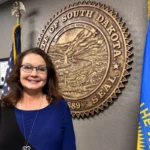




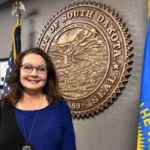






















After a quarter-century of defining the intersection of law, ethics, and journalism at the University of Minnesota’s Hubbard School of Journalism and Mass Communication, Jane E. Kirtley is stepping down. Her departure on May 25 marks the conclusion of a career that has served as a lighthouse for media law, steering the industry through decades of legal turbulence.
Kirtley, 72, leaves behind a legacy as the Silha Professor of Media Ethics and Law, a title she has held since 1999. For those navigating the complexities of the First Amendment, the Freedom of Information Act (FOIA), and the shifting sands of media litigation, her name has been synonymous with the defense of the Fourth Estate. As she prepares to transition into retirement, she leaves behind a profession she describes as being under existential threat, facing a confluence of legal weaponization, technological disruption, and a crisis of public trust.
A Career Dedicated to the First Amendment
Before ascending to the academic heights of the University of Minnesota, Kirtley spent 14 years as the executive director of The Reporters Committee for Freedom of the Press in Arlington, Virginia. It was there that she solidified her reputation as the nation’s preeminent watchdog for journalists. Prior to that, her legal acumen was honed through five years as an attorney at a prestigious firm spanning New York and Washington, D.C.
Her transition into academia was not merely a shift in professional focus, but a commitment to training the next generation of guardians. However, the decision to retire has been a long-gestating one. Kirtley first began considering the move in late 2019, following the retirement of her husband, Stephen Cribari, a law professor at Notre Dame.
The onset of the global pandemic in 2020, however, delayed her plans. As the university shifted to remote learning and the global landscape of travel—a personal passion for Kirtley—ground to a halt, she found little reason to depart. She revisited the idea of retirement over a year ago, only to hold back once more, accurately predicting that the political environment of a second Trump administration would present unprecedented challenges to media law.
Reflecting on the mortality of those who came before her, specifically her predecessor Don Gillmor—the founding director of the Silha Center who passed away in 2013 shortly after his retirement—Kirtley noted, "You just can’t take for granted you can keep doing the things you care about doing. I want to make sure I’m healthy enough to enjoy my retirement."
The Weaponization of the Law: A New Threat Landscape
In an exclusive interview regarding the state of American journalism, Kirtley painted a somber picture of the current legal landscape. Her primary concern is the increasingly overt weaponization of the legal system against independent media organizations.
"I’ve been doing media law since the 1980s," Kirtley explained. "I have observed many attacks on the press, but the biggest concern I have right now is the weaponizing of the law to go after the independent media. President Trump has been leading the charge on this."
While media organizations have faced adversarial relations with executive leadership in the past—from Richard Nixon’s hostility to the Reagan and Obama administrations’ own frictions—Kirtley notes that the current era is distinct. The shift from mere political rhetoric to actual litigation is a dangerous evolution.
The Fragility of New York Times v. Sullivan
Central to her concerns is the potential dismantling of the New York Times v. Sullivan libel standard. Established in 1964, the "actual malice" requirement has protected journalists from being crushed by litigation when reporting on public figures. For decades, legal scholars debated whether a conservative-leaning Supreme Court would ever overturn it. Kirtley now fears that the current court’s willingness to reverse long-standing precedents makes Sullivan vulnerable.
"Whether they would do so is anyone’s guess," she said. "But that threat represents the greatest risk to the stability of a principle that has served us so well for sixty years."
The Erosion of the Public Interest Model
Beyond the courtroom, Kirtley is deeply critical of the shift in media ownership. She observes that many modern outlets are no longer guided by the altruistic mission of serving the public, but by the pursuit of profit or the exertion of political influence.
"Whether it’s venture capitalists or the so-called ‘Silicon Valley bros,’ they don’t approach their operations in an altruistic way," she noted. While she acknowledges that media moguls of the past, such as William Randolph Hearst, also sought power and profit, she argues that they held a foundational understanding of the press’s role in a democratic society. Today’s owners, she contends, have abandoned that responsibility, contributing to a broader public distrust in legacy media.
The AI Crisis: "The Devil’s Tool"
Kirtley is famously skeptical of the integration of Artificial Intelligence into journalism. Her disdain for the technology is so profound that she cites it as a contributing factor to her retirement.
"I hate AI. To me, it’s the devil’s tool," she stated bluntly. "I don’t feel able to train my students in how to use it. I would feel complicit in a plot to undermine so many values that matter to me, like accuracy and critical thinking."
She expresses concern over newsrooms—such as the Cleveland Plain Dealer—that have opted to utilize AI to rewrite content. Kirtley argues that this process removes the essential human oversight provided by copy editors. "A.I. is not going to do any of that. It’s just going to process what you feed into it, which means the product that results is going to be imperfect."
While she acknowledges that organizations like The New York Times have implemented strict prohibitions against the use of generative AI by their freelancers, she worries that younger generations—who are "AI natives"—will find it increasingly difficult to navigate the ethical minefield of these tools.
The FCC and the Specter of Regulatory Retaliation
Kirtley also leveled sharp criticism at the Federal Communications Commission (FCC) under the leadership of Chairman Brendan Carr. She views the current commission’s focus on late-night entertainment and network criticism of the administration as a dangerous abuse of power.
"I’ve never seen anything so blatantly political in modern history as what Brendan Carr is doing now," Kirtley asserted. She argues that the FCC’s regulatory authority was never intended to be used as a tool for retaliatory action based on political viewpoint.
By questioning the "bona fide news" exemption for talk shows and late-night satire, the FCC is threatening to infringe upon the First Amendment protections that allow for political commentary and parody. "It goes beyond the First Amendment," she warned. "It also has to do with a violation of the Federal Communications Act of 1934. Congress could address this if it chose to."
Implications for the Future of Democracy
As Kirtley prepares to leave the classroom, her message to the next generation of journalists is one of both caution and resilience. Despite the pressures, the risks of arrest, the threat of legal retaliation, and the rise of AI-driven misinformation, she remains steadfast in her belief that journalism is vital.
The erosion of confidence in the press, she notes, has been a 40-year project—a "systematic attack" that has successfully siloed the American public into echo chambers where only information that reinforces existing biases is accepted. Documenting the truth is no longer enough when the very definition of truth is under siege.
Yet, even in this environment, Kirtley sees a flicker of hope in the students who still arrive at the university with a burning desire to hold power to account. The challenge for these future journalists will be to navigate a landscape where they are labeled as enemies, where their tools are compromised by algorithms, and where the legal protections that shielded their predecessors may soon be stripped away.
Jane Kirtley’s departure is more than a retirement; it is a signal that the protective wall around the First Amendment is losing one of its most vigilant guards. Her final assessment serves as a call to action for the profession: "They want to hold government and other powerful institutions to account. They want to provide the public with the information they need to make good, informed decisions. That necessity has never been higher."