






















































Fueling the Future: Stoke Space Secures $1 Billion to Challenge the Reusable Rocket Paradigm

In the high-stakes arena of the modern space race, the most critical propellant isn’t liquid oxygen or refined methane—it is capital. Stoke Space Technologies, the ambitious aerospace startup aiming to redefine orbital logistics, has officially secured a massive $1 billion Series E funding round. This milestone marks a pivotal moment for the company, providing the financial runway necessary to accelerate the development of its fully reusable rocket architecture and scale its production infrastructure.
The investment round was led by Point72 Ventures, the venture capital arm of billionaire Steve Cohen, alongside Spark Capital. The significant capital infusion also saw participation from a consortium of heavy-hitters, including General Innovation, Glade Brook Capital, US Innovation Technology, Washington Harbour Partners, Woven Capital, and Y Combinator. With this latest injection, Stoke Space’s total funding has climbed to approximately $2.3 billion, signaling strong institutional confidence in the startup’s technical roadmap.
The Holy Grail of Aerospace: Full Reusability
While the private space industry has been transformed by the reusable booster stages of SpaceX’s Falcon 9, the industry remains tethered to a partial-reusability model. To reach the next frontier of "low-cost space access," the sector must solve the problem of the second stage. Currently, the upper stages of almost every orbital rocket in operation are discarded after a single use, representing a massive loss of hardware and potential revenue.
Stoke Space is setting its sights on the "holy grail" of rocketry: a vehicle where both the booster and the payload-carrying second stage return to Earth, ready to be refueled and relaunched. It is a technical feat that has yet to be achieved by any commercial entity. While Elon Musk’s SpaceX is currently iterating on the Starship—a gargantuan, fully reusable system—Stoke is approaching the problem with a distinct engineering philosophy.
Solving the Thermal Re-entry Challenge
One of the primary hurdles in second-stage reusability is thermal management. As a rocket returns from orbit at hypersonic speeds, the atmospheric friction generates temperatures capable of melting most traditional materials. SpaceX has experimented extensively with ceramic tiles and various shielding configurations to protect the Starship’s belly.
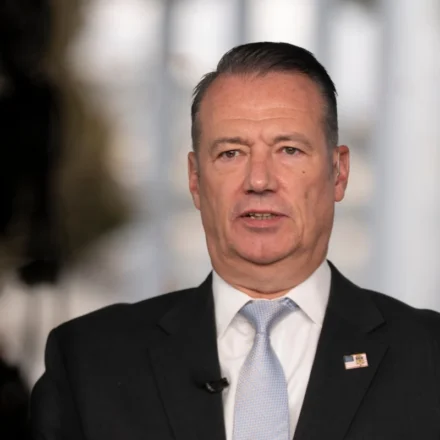
Stoke Space is taking a different path: active cooling. The company’s design utilizes super-cooled liquid hydrogen, which is circulated through the rocket’s thermal shielding during the intense heat of re-entry. CEO Andy Lapsa notes that this system has been exhaustively tested on the ground. "We can flow excess coolant—more than we think we need in order to overcool the surface of the vehicle—and take a conservative stance from that perspective in early flights," Lapsa explained. This "active" approach provides a safety margin that the company believes will be key to proving the reliability of their hardware.
Chronology: From Concept to Launchpad
Stoke Space’s journey has been defined by rapid, deliberate iteration. The company’s focus has moved from early engine development to the construction of a complete flight vehicle.
- The Development Phase: Over the past several years, the company focused on core engine and thermal shield technologies, moving away from theoretical designs to physical hardware.
- The Moses Lake Milestone: The company’s facility in Moses Lake, Washington, has become the proving ground for its hardware. Recent months have seen a series of successful structural and operational tests on the rocket’s first stage, moving the company closer to a fully integrated launch system.
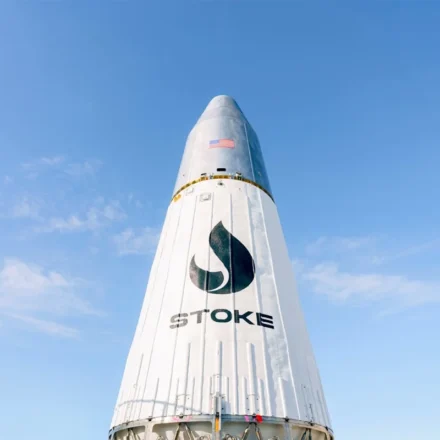
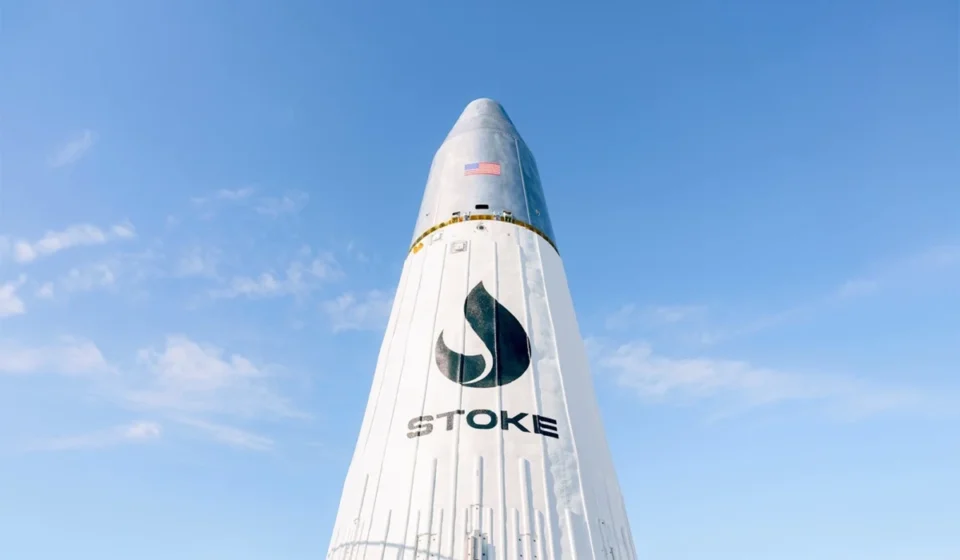
- The Pathfinder Era: The current roadmap culminates in the debut of "Nova Pathfinder," the company’s first orbital vehicle. Lapsa has set an ambitious but grounded target: an initial flight in early 2027.
- The Future Roadmap: Following the Pathfinder, the company is already developing the "Nova Block 2," a larger iteration of the design capable of delivering 15 metric tons to low-Earth orbit (LEO). The company aims to bring this heavy-lifter to market by 2029.
Supporting Data: Capacity and Market Positioning
The Nova Pathfinder is designed to carry three metric tons to LEO, a capacity that Lapsa believes will make it the most powerful debut vehicle of any U.S. rocket manufacturer. For comparison, the Falcon 9, which carries significantly more payload, is nearing the end of its projected lifecycle.
The timing of the Nova Block 2—the 15-metric-ton successor—appears strategically aligned with the potential retirement of the Falcon 9. While Musk has not provided a definitive sunset date for the Falcon, industry analysts suggest that as SpaceX pivots its resources entirely to Starship, a market gap may emerge for mid-sized, reliable, and cost-effective launch services.
Financial Context
To put the $1 billion round in perspective, SpaceX has spent well over $10 billion on the development of Starship over the last decade. While Stoke’s $2.3 billion total funding is a fraction of that, it represents a substantial commitment for a venture-backed startup. The efficiency of the development cycle will be the ultimate test of whether the company can bridge the gap between "funded" and "operational."
Official Responses and Strategic Vision
In an interview with TechCrunch, CEO Andy Lapsa emphasized that this capital is not just for R&D; it is for industrialization. "This round is really to scale," Lapsa stated. "To lay the infrastructure, to scale in production and flight frequency, and importantly to fund the development of the second generation vehicle."
Lapsa remains pragmatic about the inherent risks of the industry. "We have multiple Pathfinder vehicles in production, and we have confidence that we will bring Pathfinder to market and into orbit regardless of this round," he asserted. By emphasizing the existence of multiple units, he aims to reassure stakeholders that the company is shifting from a prototype shop to a production factory.
When questioned about the potential for picking up disgruntled or displaced customers as SpaceX focuses on its own internal Starship projects, Lapsa was diplomatic but firm. "It amplifies the mismatch between launch supply and demand for launch, there’s no question about that," he said. He views the entire space economy as a function of launch cadence: "Regardless of Falcon 9 retiring or not retiring, the space industry and the space economy scales exactly as fast as rockets get off the ground."
The Industry Implications: A New Era for Satellite Operators
The implications of Stoke Space’s success extend far beyond their balance sheet. Satellite operators and government agencies are currently facing a "launch bottleneck." As SpaceX pivots to its own Starlink constellation and other internal objectives, external customers are often left to pay a premium or wait in a queue for launch availability.
Stoke Space is positioning itself as a pure-play launch provider. Unlike SpaceX, Stoke has not announced plans to operate its own massive constellation of satellites. For a commercial satellite operator, this is a significant selling point: they are not competing with their launch provider for priority or orbital slots.
This creates a clear value proposition for the industry. If Stoke can successfully demonstrate the reusability of the second stage, it will theoretically drop the price of access to space significantly. This "low-cost access" is the catalyst required for a new wave of space-based applications—from advanced remote sensing and global internet connectivity to orbital manufacturing.
As Lapsa noted, "Now is the time to get moving… so that we can finally start deploying a lot of the constellations and applications that we aspire to as an industry but have been stuck on the ground."
With the capital secured and the engineering roadmap clear, the next two years will be the definitive test for Stoke Space. The company has moved past the phase of theoretical design and into the high-pressure environment of hardware integration. Whether they can navigate the technical challenges of active thermal cooling and stick the landing on their first orbital flight remains the industry’s most anticipated question. However, one thing is certain: with $1 billion in the bank, the "fuel" for the next revolution in rocketry is ready.