

































Where Beauty Meets Brutality: Inside the Cafesjian Art Trust Museum’s “Meet Me in the Forest”

The forest has long served as a literary and psychological archetype—a place of transformation, a site of hidden dangers, and a sanctuary for those who have nowhere else to go. This autumn, the Cafesjian Art Trust (CAT) Museum in Shoreview invites visitors to step into this metaphorical woodland with its latest major exhibition, "Meet Me in the Forest." Spanning painting, glass, ceramics, textiles, and immersive installation, the exhibition explores how artists utilize the natural world not merely as a backdrop, but as a crucible for processing memory, trauma, and the complexities of the human condition.
Running from September 3, 2026, to February 27, 2027, the exhibition is a testament to the power of nature as a lens for examining societal fractures. Through the vision of curators Jill Ahlberg Yohe and Linnea Seidling, the museum has assembled a collection that challenges the viewer to look past the surface of the "pastoral" to find the grit, history, and haunting beauty beneath.
The Architecture of Imagination: Exhibition Origins
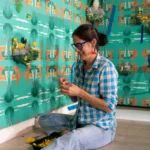
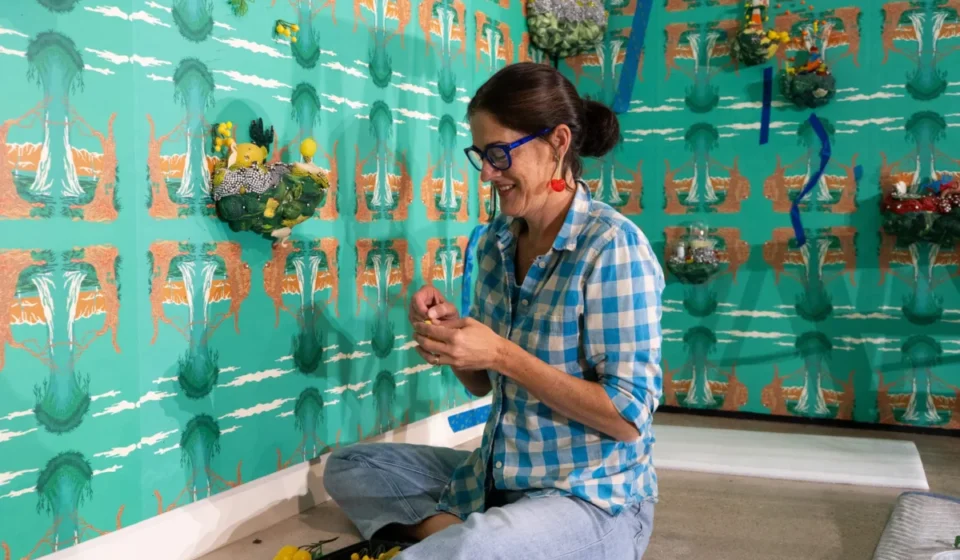
The installation process for "Meet Me in the Forest" was an exercise in precision and intentionality. Before a single piece of art was placed, the museum staff spent days drilling into the gallery walls, preparing the infrastructure to support complex, site-specific installations. Among these is Erica Rosenfeld’s "Welcome to Reverie Forest: Sanctuary for Strange Creatures" (2026), a work that required a meticulous, nest-like arrangement for the bizarre, hybrid beings Rosenfeld fashions from glass, found objects, and sculpture.
For Rosenfeld, the project is a long-gestating response to the American psyche of the mid-20th century. Having begun this body of work in 2017, she drew inspiration from the mass-market "paint-by-number" kits that surged in popularity during the McCarthy era. According to the artist, these kits—which depicted idyllic landscapes and cheerful animals—represented a "sugar-coated reality" designed to soothe a public anxiety-ridden by the era’s political witch hunts and the erosion of civil liberties. By reinterpreting these kits through a surrealist lens, Rosenfeld creates a "safe zone" for her hybrid, two-headed creatures, positioning the forest as a refuge from the rigid, often hypocritical, constraints of society.
A Chronology of Conflict and Shelter
The exhibition is structured to move the visitor through different thematic layers of the forest, moving from the personal to the political.
The Colonial and Political Shadow
The narrative thread of the forest as a site of historical trauma is most evident in the works of Kelly Sinnapah Mary and Pao Houa Her. In Sinnapah Mary’s 2023 work, "She taught me to listen to the wind," the viewer is initially drawn to an intimate, eroticized scene of figures amidst forest foliage. However, the mood shifts violently when the eye catches a looming white claw overhead—a chilling symbol of colonial violence. As a descendant of Tamil laborers in Guadeloupe, Sinnapah Mary uses the plantation forest as a dual site: it is a place of ancestral suffering, yet also a repository of the botanical knowledge that allowed her grandmother to maintain a connection to the land.
Similarly, Pao Houa Her’s "Other Pictures of Paradise" (2022–24) utilizes 3D lenticular technology to force a double vision. The work depicts jungle sites along the border of Laos and Thailand, where the artist’s family hid during the CIA-led "Secret War." When viewed from one angle, the jungle is a paradise of poppy flowers reaching for the sun. From the other, the light vanishes, replaced by the dark, claustrophobic reality of a war-torn landscape. It is a masterful manipulation of perspective, forcing the audience to confront the fact that one person’s sanctuary is often another’s site of historical terror.
The Maximalist and the Macabre
The curators have also leaned into the sensory potential of the gallery space. Ebony G. Patterson’s "…among the blades between the flowers…" serves as a centerpiece for the museum’s exploration of "visual abundance." Using a hand-cut, jacquard-woven photo tapestry heavily embellished with glitter, fabric, and beads, Patterson creates an environment that is as overwhelming as it is beautiful. Ahlberg Yohe notes that this maximalist approach is tactical; by seducing the viewer with exuberance, Patterson invites them to engage more deeply with the difficult histories of colonization that underpin her work.
Contrastingly, Kate Clements’ "Stain" (2022) introduces an element of visceral anxiety. A glasswork that appears both fragile and jagged, "Stain" is suspended by monofilament to cast long, unsettling shadows. Its textures mimic biological trauma—blood, scabs, and decay—reminding the visitor that the forest is also a place where nature breaks down and reconfigures itself. As co-curator Linnea Seidling explains, "It’s a layered viewing experience where it’s sparkly, colorful, and really beckoning. But then you look a little bit closer, and all of a sudden it becomes kind of terrifying."

Supporting Data: The Curatorial Perspective
The exhibition features five works recently acquired by the CAT Museum, signaling a strategic shift toward collecting pieces that bridge the gap between contemporary craft and socio-political commentary. The curators have curated a dialogue between disparate mediums, allowing the physical weight of ceramics to interact with the ephemeral nature of photography.
"They’re just so variable and layered," Ahlberg Yohe stated during a preview of the exhibit. By placing these works in proximity, the museum aims to show that the forest is not a static subject. Whether it is Amanda Michelle Smith’s ceramic piece "Trust Issues"—which explores the isolation of leaving a restrictive religious community—or the broader collection, the exhibition argues that the forest is a "realm where human creativity, activity, and memory happen."
Implications for the Viewer
"Meet Me in the Forest" is a challenging show because it refuses to let the viewer categorize the forest as a purely "good" or "bad" place. By curating a collection that balances the dark, historical realities of displacement with the creative freedom found in the "outsider" art tradition, the exhibition suggests that we carry our own internal forests with us.
For the museum, this is a significant step in establishing itself as a space for intellectual and emotional inquiry. The exhibition does not seek to provide a resolution to the traumas depicted in the art. Instead, it offers a space for the co-existence of opposites: beauty and terror, trauma and healing, the public facade and the private refuge.
Beyond the Museum Walls: A Call to Conservation
The conversation regarding our relationship with the land extends beyond the museum’s walls. In a complementary effort to keep the dialogue on nature alive, the Mississippi Park Connection is presenting a screening of the film "Out There: A National Parks Story" at the Parkway Theater in Minneapolis on September 14, 2026.
Directed by Brenden Hall, the film captures the personal, often spiritual connections that rangers, hikers, and photographers have with America’s national parks. In a time when these landscapes face unprecedented ecological and political threats, the film serves as a poignant, heartwarming reminder of why these spaces must be protected. While the museum exhibit looks at the forest as a psychological and historical metaphor, the film provides a grounded, cinematic look at the actual physical spaces that remain in need of our stewardship.
Exhibition Details and Logistics
For those planning to visit the CAT Museum, the opening reception is scheduled for Thursday, September 3, from 6 p.m. to 8 p.m. at 4600 Churchill Street, Shoreview. Tickets for the reception are priced at $39. The exhibition will remain open to the public through February 27, 2027.
Whether one is drawn to the technical mastery of the glass installations or the haunting historical narratives woven into the textiles, "Meet Me in the Forest" promises to be one of the most intellectually stimulating exhibitions of the year. It asks us to look closely at the "strange creatures" we hide in our own internal woods and invites us to find, even in the darkness, a place where we might finally be heard.