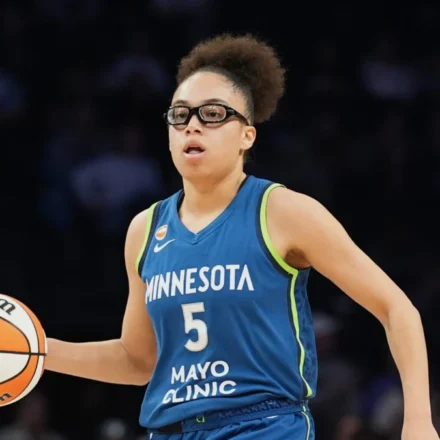

























































MINNEAPOLIS — In the high-stakes, itinerant world of the WNBA, the concept of a "home" is often fluid. For 31-year-old forward Nia Coffey, the professional journey has been defined by movement: five different teams in a ten-year career that began as the fifth overall pick in the 2017 draft out of Northwestern. Yet, as the 2026 season unfolds at Target Center, it has become increasingly clear that Coffey has finally found her professional rhythm—not just in the league, but in the specific, high-octane environment of the Minnesota Lynx.
For a player raised in the Twin Cities, the transition to the Lynx is more than just a roster move; it is a synthesis of talent, heritage, and tactical fit. As the league-leading Lynx (11-3) continue to dismantle opponents with an offensive efficiency that has seen them eclipse the 100-point mark four times in just 14 games, Coffey has emerged as the linchpin of their newfound versatility.
The Evolution of a Well-Traveled Talent
Coffey’s basketball pedigree is deeply embedded in Minnesota culture. Her father, Richard, was a distinguished paratrooper in the U.S. Army who carved out a legacy as a standout at the University of Minnesota before enjoying a stint in the NBA. Her brother, Amir, has spent seven seasons in the NBA, most recently with the Phoenix Suns. Nia herself is a product of the fabled Hopkins High School program—a suburban Minneapolis factory for elite talent that would later produce 2025 first-overall pick Paige Bueckers.
Despite her pedigree, Coffey’s professional trajectory was, for years, characterized by a struggle to find a definitive role. Prior to her arrival in Minnesota, she was largely viewed as a role player, having only once in her career maintained an average of more than seven points per game. Her journey through the league was one of adaptation, often shifting systems and expectations as she moved from franchise to franchise.
However, the 2026 season has marked a paradigm shift. With star forward Napheesa Collier currently sidelined following ankle surgery, the pressure on the rotation intensified. Coach Cheryl Reeve, tasked with rebuilding the squad’s identity following a series of departures due to free agency and the expansion draft, identified Coffey as the missing piece. The result has been a career-best campaign across the board: 26.4 minutes, 8.7 points, 5.9 rebounds, and 2.1 assists per game, bolstered by an elite 50% field goal percentage and a blistering 43.9% clip from beyond the arc.
A Stat-Sheet Masterclass: The Portland Performance
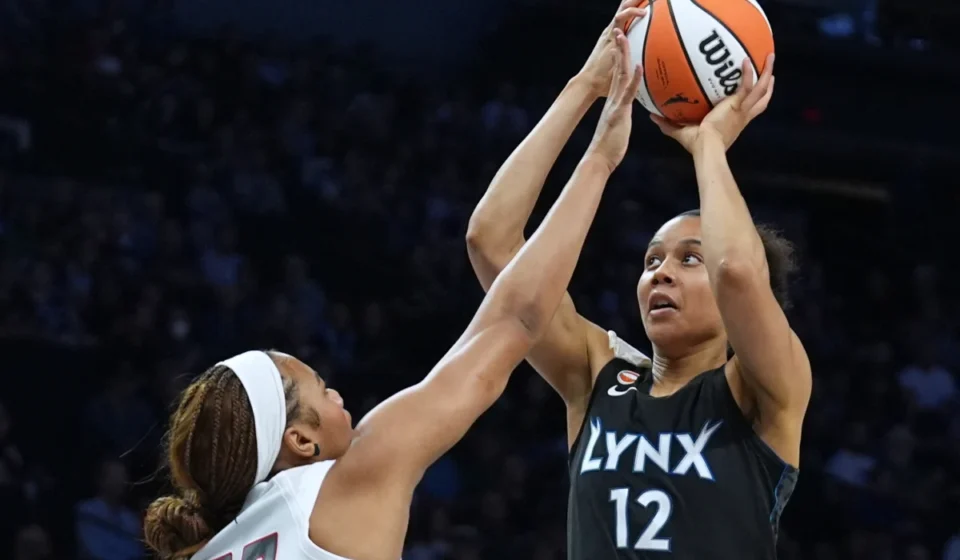
The true extent of Coffey’s growth was on full display during the Lynx’s dominant 107-74 victory over Portland on Monday. In a game where seven different Minnesota players reached double-digit scoring—a new franchise record—Coffey stood out as the engine of the operation.
She recorded 15 points, five rebounds, four assists, three steals, and three blocks. By reaching those specific statistical thresholds, she became only the fifth player in the history of the Lynx franchise to achieve such a versatile stat line in a single contest.
The crowd at Target Center was treated to a masterclass in efficiency during the first half, as Coffey drained three 3-pointers in the opening quarter before punctuating the first half with a high-IQ layup off an inbound pass to beat the buzzer. The performance was so complete that Coach Reeve, in a rare gesture of individual recognition, awarded the game ball to Coffey, signaling her transition from a role player to a cornerstone of the team’s championship aspirations.
Tactical Synergy: The Reeve-Coffey Dynamic
Central to Coffey’s success is her burgeoning relationship with head coach Cheryl Reeve. In professional sports, the relationship between a coach and a veteran player can often be transactional, but in the case of the Lynx, it has become symbiotic.
Reeve, known for her high standards and tactical rigor, has been effusive in her praise for Coffey’s defensive tenacity and, perhaps most notably, her receptivity. "Her level of compete, her ability to play so vertically, shot-blocking, rebounding — she gives you all that energy and sets the tone for us," Reeve remarked during the post-game press conference. "She’s such a big part of our defensive identity and our toughness, and then shooting the 3 as we’ve asked for."
Perhaps the most revealing insight into why the partnership is flourishing came when Reeve noted a unique attribute in the veteran forward. "There are so many things. I think what I appreciate about her — probably because I don’t get it from the rest of the starters — is she listens," Reeve said with a wry smile. "She really looks at you dead in your eye and receives the information and goes out there and does exactly what you’re asking her to do."
For her part, Coffey views the guidance as the missing ingredient in her decade-long career. "I like to do a good job, so you kind of have to know what they’re asking for," Coffey said. "She’s a great coach, and I’ve always known that from afar, so the fact that I can see it firsthand is really cool. I’m still learning a lot."
Implications for the WNBA Landscape
The resurgence of Nia Coffey is not merely a feel-good story for the Twin Cities; it has significant implications for the WNBA standings as the mid-season point approaches. The Lynx, despite losing several high-profile veterans in the offseason, have proven that their system is more resilient than the sum of its parts.
- Defensive Versatility: By leaning into Coffey’s "verticality" and shot-blocking, the Lynx have maintained a defensive edge that allows them to play small-ball without sacrificing interior protection.
- Offensive Depth: With seven players hitting double digits regularly, the Lynx have become a nightmare for opposing scouts. There is no singular focal point that a defense can simply shut down; rather, the team utilizes a "next-player-up" mentality that forces opponents to defend the entire floor.
- The "Homecoming" Effect: The chemistry Coffey brings to the court—fueled by her comfort in her home state—has provided a stabilizing presence for a roster navigating the absence of Napheesa Collier.
As the league moves toward the latter half of the schedule, the question for the Lynx will be how they integrate their star power back into this newly balanced machine. If the current trajectory holds, the coaching staff will not have to worry about a lack of production from the wings. Coffey has proven that she is no longer just a participant in the league; she is a catalyst.
Looking Ahead
For a player who spent ten years searching for the right fit, the current iteration of the Minnesota Lynx offers a rare window of opportunity. The culture in Minneapolis, characterized by high-intensity defense and selfless ball movement, has provided the perfect canvas for Coffey to paint the most productive basketball of her life.
"It feels good. I always loved how the Lynx played. It just felt weird because I was always on other teams," Coffey reflected. "I’m glad it was a possibility for me to be on this team. I love the way we play. I love our coaching staff and our players. It’s great. So I’m glad it worked out."
As the Lynx continue their push toward the playoffs, the story of Nia Coffey serves as a reminder that in professional sports, timing and environment are often just as important as raw talent. For now, the kid from the Twin Cities has finally come home, and the league is taking notice.