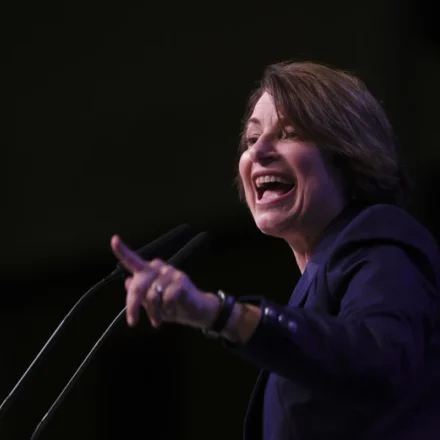






















































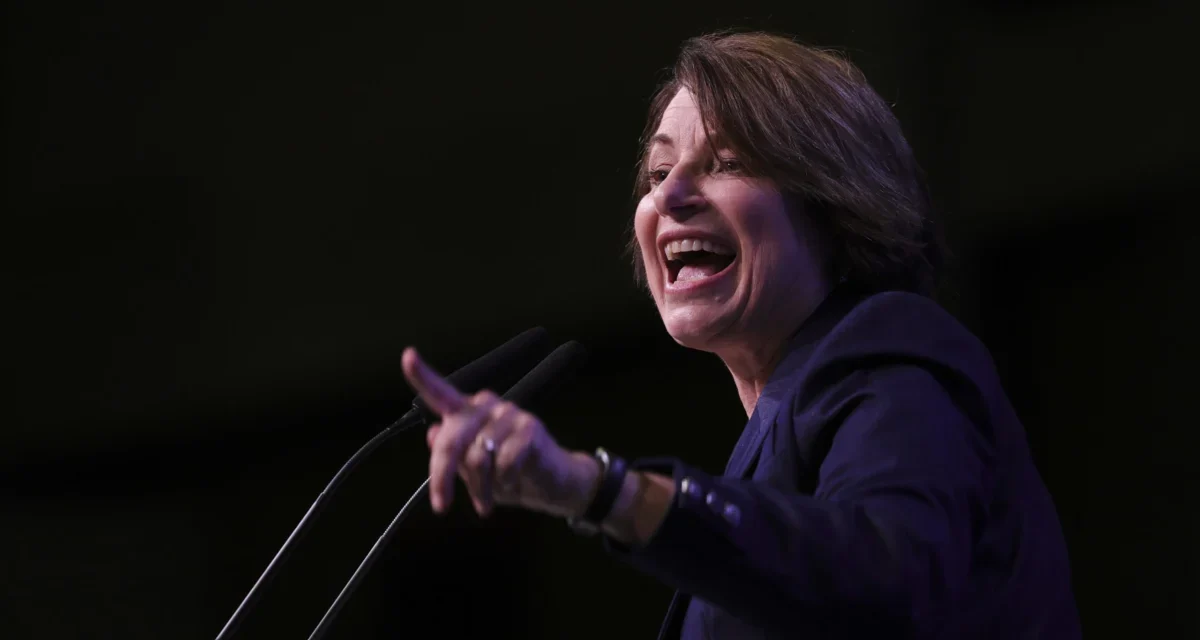




WASHINGTON D.C. / ST. PAUL, MN – In a significant shift reverberating through both state and national political landscapes, U.S. Senator Amy Klobuchar has announced her candidacy for Governor of Minnesota, stepping away from a distinguished career in the Senate to pursue the state’s top executive office. Her decision, coming after Governor Tim Walz unexpectedly declined to seek a third term, has immediately positioned her as the frontrunner for the Democratic-Farmer-Labor (DFL) nomination and a formidable contender in the general election, aiming to become the first woman to hold Minnesota’s governorship.
Klobuchar, 66, a political veteran with decades of public service, articulated her motivation with a blend of profound state loyalty and a pronounced dissatisfaction with the current trajectory. "I truly do love my job in the Senate," Klobuchar stated, "but I love my state more than any job, and I believe that we can get to a better place. I don’t like the status quo." Her declaration signals a campaign built on an urgent call for change and a promise of decisive leadership. "Patience is a virtue, but it’s one I don’t have," she added, underscoring her intent to initiate a rapid transformation of state government.
The Unexpected Opening and a Swift Decision
The pathway for Klobuchar’s gubernatorial bid opened abruptly in early January when Governor Tim Walz, after considerable speculation, reversed course and announced his decision not to run for a third term. Walz’s unexpected move gave Klobuchar just a single day’s notice, setting off a scramble within the DFL to find a viable successor to maintain the "blue" column in a crucial statewide race.
Klobuchar confirmed that she received urgent calls from both state DFL leaders and national Democrats, urging her to consider the gubernatorial run. While her preference, she said, was for Walz to "wait two weeks" before making his announcement, she herself took two weeks to formally file as a gubernatorial candidate, navigating the complex calculus of leaving a powerful Senate position.
"There were a lot of people in the Senate that made the case for me to stay there," Klobuchar acknowledged, highlighting the reluctance of her colleagues to see her depart. However, she believes the unique circumstances facing Minnesota compelled her decision. "I think people understood the unique moment we were in as a state and why I made that decision," she asserted.
This "unique moment" for Klobuchar is multifaceted. It stems from a combination of perceived federal legislative stagnation, a desire for more direct executive impact, and a deep concern over recent, high-profile tragedies within Minnesota. She cited "the horror of what has happened recently in Minnesota," including the murders of former Minnesota House Speaker Melissa Hortman and her husband, a mass shooting at Annunciation Catholic School, and the deaths of Renee Good and Alex Pretti during a federal operation, as critical factors influencing her decision. "I’ve always believed that we could get to higher ground, and it’s been one thing after another that’s made that hard in Minnesota," she lamented.
From Senate Gridlock to Executive Power
Klobuchar’s tenure in the U.S. Senate since 2007 has been marked by a steady rise through the ranks. A member of Democratic leadership, she currently holds the No. 3 spot as chair of the Steering and Policy Committee, a testament to her seniority, political acumen, and tireless work ethic. Yet, the allure of the governorship, particularly for a seasoned legislator, is often rooted in the ability to enact more direct and substantial change.
Senator John Hoeven, a Republican from North Dakota who has frequently collaborated with Klobuchar on regional issues, mused on her internal deliberation. "She had to weigh, ‘Do I stay and see how that plays out or do I go back to Minnesota?’" Hoeven’s observation hints at the inherent frustrations even senior senators face in a deeply divided Congress.
Tim Lindberg, a political science professor at the University of Minnesota Morris, elaborated on this sentiment. He suggested that Klobuchar may have experienced significant frustration with the closely divided Senate, where the filibuster rule often requires a supermajority of 60 votes to advance legislation, effectively impeding many initiatives. "Being governor allows her to be in a power position where she can do things and make big changes," Lindberg explained. This executive authority, coupled with the advantage of an open gubernatorial seat and her early entry into the race, which "eclipsed all other possible (Democratic) contenders," created an irresistible opportunity for Klobuchar.
Her strategy as a gubernatorial candidate is already taking shape. She plans to distance herself from the outgoing Governor Walz, signaling a fresh approach rather than a continuation of the previous administration. Central to her platform is a comprehensive 40-point plan aimed at reforming state government and "cracking down on any allegations of fraud." Furthermore, Klobuchar, known for her moderate stance and pragmatic approach, has already selected former Fergus Falls Mayor Ben Schierer as her lieutenant governor candidate, signaling an intent to build a broad, statewide coalition.
A Known Commodity: Policy, Bipartisanship, and Persistence
Amy Klobuchar is far from an unknown entity in Minnesota politics. Her public career spans decades, beginning as Hennepin County Attorney before her election to the Senate. A Yale Law School graduate and author of several policy books, she also mounted a bid for the White House, further cementing her national profile. Early in her career, her name recognition was partly attributed to her father, Jim Klobuchar, a prominent and much-admired sports and politics reporter for the Star Tribune. Today, she is unequivocally the most recognized Klobuchar in the state, a political heavyweight whose name at the top of the ballot is expected to significantly boost other DFL candidates.
Klobuchar’s political brand is characterized by her moderation, her willingness to confront powerful interests – from the pharmaceutical industry to tech giants – and her reputation as a tireless workaholic on Capitol Hill. While she acknowledges this trait can sometimes exhaust her staff, it has also distinguished her as a remarkably effective legislator capable of forging bipartisan agreements. "I’ve always focused on getting things done," she emphasized. "There’s this moment in time that is not going to be like any other where we’ve been facing hard things, and I want to make sure that we stay together as a state, despite the political divides and changing the status quo and not just accepting things and restoring people’s trust in our government again."
Her colleagues attest to her formidable work ethic and persuasive skills. Senator Tammy Baldwin, a Democrat from Wisconsin, who collaborated with Klobuchar on various regional issues, highlighted her meticulous preparation and innate ability to identify common ground. "When she’s trying to persuade a colleague on an issue, she’s really prepared," Baldwin noted. "She also has the instinct to know where an agreement can be forged." This capacity for bipartisan collaboration is a hallmark of Klobuchar’s Senate career.
Lindberg, the political science professor, describes Klobuchar’s bipartisanship as "politically palatable." He clarifies that she doesn’t simply embrace GOP initiatives but rather identifies and works with Republicans who share common interests, resulting in tangible legislative outcomes. A prime example is her partnership with Senator Ted Cruz, a Republican from Texas, which led to the "Take It Down Act." This landmark legislation criminalizes the non-consensual sharing of AI-generated intimate images and mandates social media platforms to remove such content within 48 hours. Klobuchar views it as a "model to take down other inappropriate things on platforms." She even leveraged her position as chairman of the Joint Congressional Committee on Inauguration Ceremonies, bringing her into close contact with then-First Lady Melania Trump, to successfully lobby President Donald Trump for his support of the bill during his second oath of office.
Beyond her legislative prowess, Klobuchar is renowned for her deep connection with Minnesota voters. Senator Baldwin marvels at her dedication: "She visits every single county in Minnesota every year. That means to me she knows every corner of the state, and she has her finger on the pulse." This grassroots engagement, coupled with her relentless work ethic – Hoeven once quipped she "probably gets no more than six hours of sleep" – paints a picture of a candidate intimately familiar with her state’s diverse needs.
The ‘Strongest DFL Statewide Candidate’
Klobuchar’s entry into the gubernatorial race has fundamentally reshaped the electoral landscape. Jacob Rubashkin of Inside Elections succinctly captured her political might, stating that her strength lies in "universal name ID and a track record of being the strongest DFL statewide candidate over the past decade." This immense recognition and proven electoral success provide a significant advantage.
Furthermore, Klobuchar possesses a formidable campaign infrastructure. "She has a nationwide fundraising base from her time in the Senate and presidential run, and an existing statewide infrastructure that she can redirect to her gubernatorial contest," Rubashkin added. Indeed, Klobuchar has already demonstrated this financial muscle, raising over $7 million in campaign cash, far outpacing her political rivals.
Her path to the general election, while expected to be clear, will first require navigating a primary challenge. In August, she is slated to face progressive challenger Kobey Layne for the DFL nomination. While Klobuchar is heavily favored, the primary will allow her to hone her message and energize her base.
Should she secure the DFL nomination, Klobuchar will face one of three Republicans vying for their party’s endorsement: House Speaker Lisa Demuth, former healthcare executive Kendall Qualls, or MyPillow CEO Mike Lindell. The Republican primary in August will determine her general election opponent.
Given the uncertainty of her Republican challenger, Klobuchar’s campaign has adopted a dual focus. She is actively campaigning against former President Donald Trump on a variety of issues, including what her campaign refers to as the "reflecting pool fiasco," and is also championing the DFL’s broader "affordability" mantra, addressing public concerns over rising prices for essential goods like oil and food. Interestingly, her appeals for campaign donations frequently highlight Lindell, whose personal allegiance to Trump and his false claims about the 2020 election have resulted in numerous lawsuits and multi-million dollar judgments, making him a more recognizable, albeit controversial, figure than the other GOP hopefuls.
Regardless of who emerges from the Republican primary, the GOP nominee will face an uphill battle. Republicans have not won a statewide seat in Minnesota in two decades, a testament to the DFL’s enduring strength and Klobuchar’s unparalleled popularity within the state.
The Clout Minnesota Stands to Lose
While Klobuchar’s gubernatorial bid promises a dynamic and potentially transformative era for Minnesota, her departure from the U.S. Senate carries significant implications for the state’s representation in Washington. If Klobuchar wins in November, it will be extraordinarily difficult for any appointed successor to replicate her seniority, influence, and the sheer legislative clout she has accumulated over nearly two decades.
Her benefits to Minnesota have been tangible, often translating into billions of federal dollars directed to the state. Senator Baldwin recalled working with Klobuchar to secure over $1 billion for the replacement of the 60-year-old Blatnik Bridge, a critical artery connecting Duluth, Minnesota, and Superior, Wisconsin. The project, initially greenlit by former President Joe Biden’s massive infrastructure bill, faced uncertainty after Trump’s second election. However, through strategic lobbying, the Democratic senators successfully secured the funds from Transportation Secretary Sean Duffy, who hails from northern Wisconsin, demonstrating Klobuchar’s ability to navigate complex political landscapes and leverage relationships.
Similarly, her collaborative relationship with Senator Hoeven was forged through joint efforts to secure federal funding for their states. They worked together on a $3.2 billion public-private partnership for a U.S. Army Corps of Engineers flood prevention project along the Red River, a massive undertaking that required "a lot of legislation," according to Hoeven. Their friendly rivalry filling sandbags during flood threats highlighted a shared dedication to their constituents that transcended partisan divides.
Hoeven, who served as North Dakota’s Republican governor before entering the Senate, offered a revealing perspective on the appeal of executive office. "Governor was the better job," he stated unequivocally. "I am deeply honored to be in the Senate, but as governor you can set your agenda and work with people to achieve it, and Amy would really like that." His words underscore the powerful draw of executive authority and the direct impact a governor can have, a stark contrast to the often-gridlocked environment of the U.S. Senate.
Klobuchar’s decision marks a pivotal moment for Minnesota. Her move from the legislative halls of Washington to the executive mansion in St. Paul promises a dynamic new chapter for the state, driven by her characteristic blend of urgency, experience, and a deep-seated commitment to her home. While Minnesota stands to gain a powerful and popular governor, it also faces the challenge of replacing a senator whose influence and ability to deliver for her constituents are, for now, unmatched. The coming months will determine whether Klobuchar can successfully translate her formidable national reputation into a transformative state leadership, fulfilling her promise to steer Minnesota to "higher ground."