

























































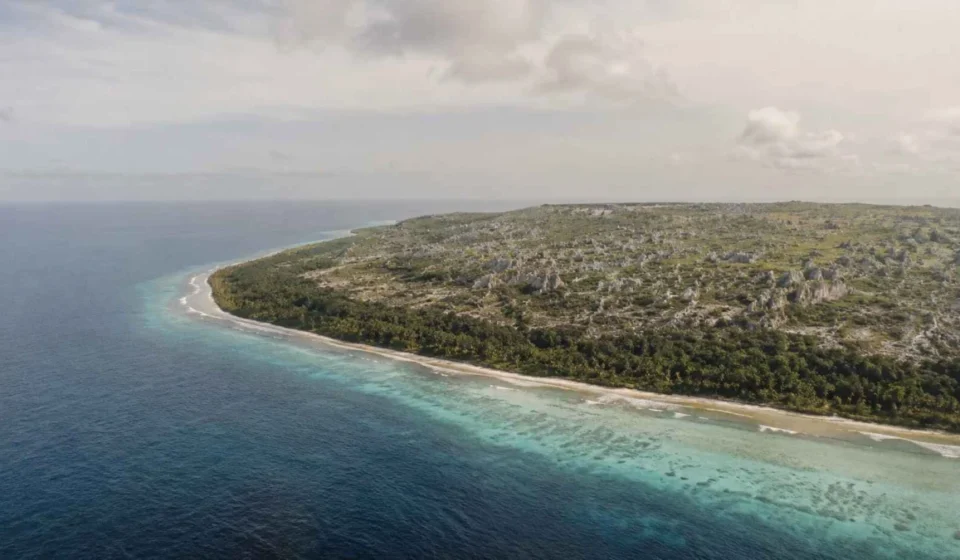

The Republic of Naoero, historically known to the international community as Nauru, has officially reclaimed its indigenous name. In a profound geopolitical and cultural assertion of sovereignty, one of the world’s smallest independent nations has discarded its anglicized moniker, aligning its international designation with the traditional language spoken by its people for millennia.
This historic transition is far more than a cosmetic rebranding; it represents a formal dismantling of colonial linguistic legacies and a celebration of indigenous identity. As the global community begins the complex administrative process of updating maps, treaties, and international databases, the change marks a pivotal chapter for a nation navigating the dual challenges of historical environmental degradation and the existential threat of climate change.
1. Main Facts: The Anatomy of a National Renaming
The transition from "Nauru" to the "Republic of Naoero" alters the country’s linguistic, administrative, and diplomatic footprint on the global stage.
Key Linguistic and Orthographic Changes
- Pronunciation: The traditional name is pronounced "Now-ero", a distinct departure from the anglicized, two-syllable "Now-roo" that has dominated international maps since the 19th century.
- Demonym: The citizens of the island, previously referred to internationally as Nauruans, are now formally designated as dei-Naoero.
- International Identifiers: The country’s official three-letter international code is transitioning from NRU to NRO.
Administrative and Diplomatic Recognition
- The United Nations: The transition has already secured formal recognition at the highest diplomatic levels. The United Nations officially updated its member-state registry, designating the country as the Republic of Naoero.
- Bilateral Alignments: Major regional partners—most notably Australia and New Zealand—have updated their foreign ministry portals. Similarly, the diplomatic missions of the United States and the People’s Republic of China in the Pacific have begun using the reclaimed name in official correspondence and digital directories.
2. Chronology: From Pre-Colonial Roots to Sovereign Decolonization
The evolution of the island’s name reflects its turbulent history of foreign exploitation, administrative handovers, and ultimate self-determination.
[Pre-Colonial Era]  Naoero used natively by indigenous Micronesian and Polynesian navigators.
       │
[1888]              Annexation by the German Empire; Western tongues struggle with "Naoero,"
       │            popularizing the simplified "Nauru."
       │
[1914–1968]         Joint administration by Australia, Great Britain, and New Zealand.
       │
[1968]              Nauru achieves independence, retaining the anglicized name internationally,
       │            though "Naoero" remains dominant in local parlance and national symbols.
       │
[May 2026]          Parliament passes a landmark constitutional amendment to formalize
       │            the name change.
       │
[June 26, 2026]     Formal notification is delivered to the United Nations.
       │
[Mid-2026]          International bodies, foreign ministries, and global media begin
                    the systematic transition to "Republic of Naoero."
The Origins of the Linguistic Shift
For centuries before European contact, the isolated coral island was known exclusively as Naoero by its twelve traditional clans. The term was deeply woven into oral histories, genealogies, and cultural practices.
When the German Empire annexed the island in 1888, European administrators and traders found the subtle three-syllable pronunciation of "Naoero" difficult to articulate. Over decades of colonial administration—which later transitioned to a joint British, Australian, and New Zealand trusteeship following World War I—the phonetically simplified "Nauru" became entrenched in Western cartography, maritime logs, and diplomatic treaties.
The Legislative Path to Reclamation
Though independence was achieved in 1968, the international usage of "Nauru" persisted, even as "Naoero" remained the default term in daily domestic speech and was proudly featured on the national coat of arms.
The political momentum to formalize the traditional name culminated in May 2026, when the parliament of the island nation passed a historic constitutional amendment.
Initially, the administration proposed a nationwide referendum to ratify the change. However, after extensive parliamentary debate, lawmakers determined that a public vote was unnecessary. Because "Naoero" was already enshrined in the country’s constitution, spoken daily by its citizens, and featured on national symbols, the government framed the transition not as a novel political policy requiring public approval, but as the restoration of an undeniable, pre-existing reality. By late June 2026, internal government documents had fully transitioned to the "Republic of Naoero," setting the stage for the formal notification sent to the United Nations on June 26, 2026.
3. Supporting Data: Geographic and Economic Realities
To understand the context of this name change, one must examine the unique geographic, demographic, and economic realities of the Republic of Naoero.
| Parameter | Metric / Detail |
|---|---|
| Land Area | ~21 square kilometers (8.1 square miles) |
| Population | Approximately 12,000 citizens |
| Geographic Location | Central Pacific, 42 km (26 miles) south of the Equator |
| Administrative Center | Yaren District (No official capital city exists) |
| Primary Economic Drivers | Phosphate mining (historical), regional processing, fisheries, and sovereign trust funds |
The Phosphate Boom and Environmental Scars
Naoero’s modern history is inextricably linked to its geology. For millennia, massive deposits of seabird guano accumulated on the island’s interior plateau, reacting with the marine limestone to create some of the richest phosphate reserves in the world.
Following independence in 1968, the newly formed republic nationalized the mining operations. Throughout the 1970s, phosphate exports generated staggering wealth, briefly elevating the country to one of the highest gross domestic products (GDP) per capita in the world. The government established a sovereign wealth fund, heavily subsidized public services, and invested in global real estate.
However, the economic miracle was short-lived. By the late 1990s, the primary high-grade phosphate reserves were virtually exhausted. Mismanagement of the national trust fund, coupled with bad real estate investments, plunged the country into a severe fiscal crisis.
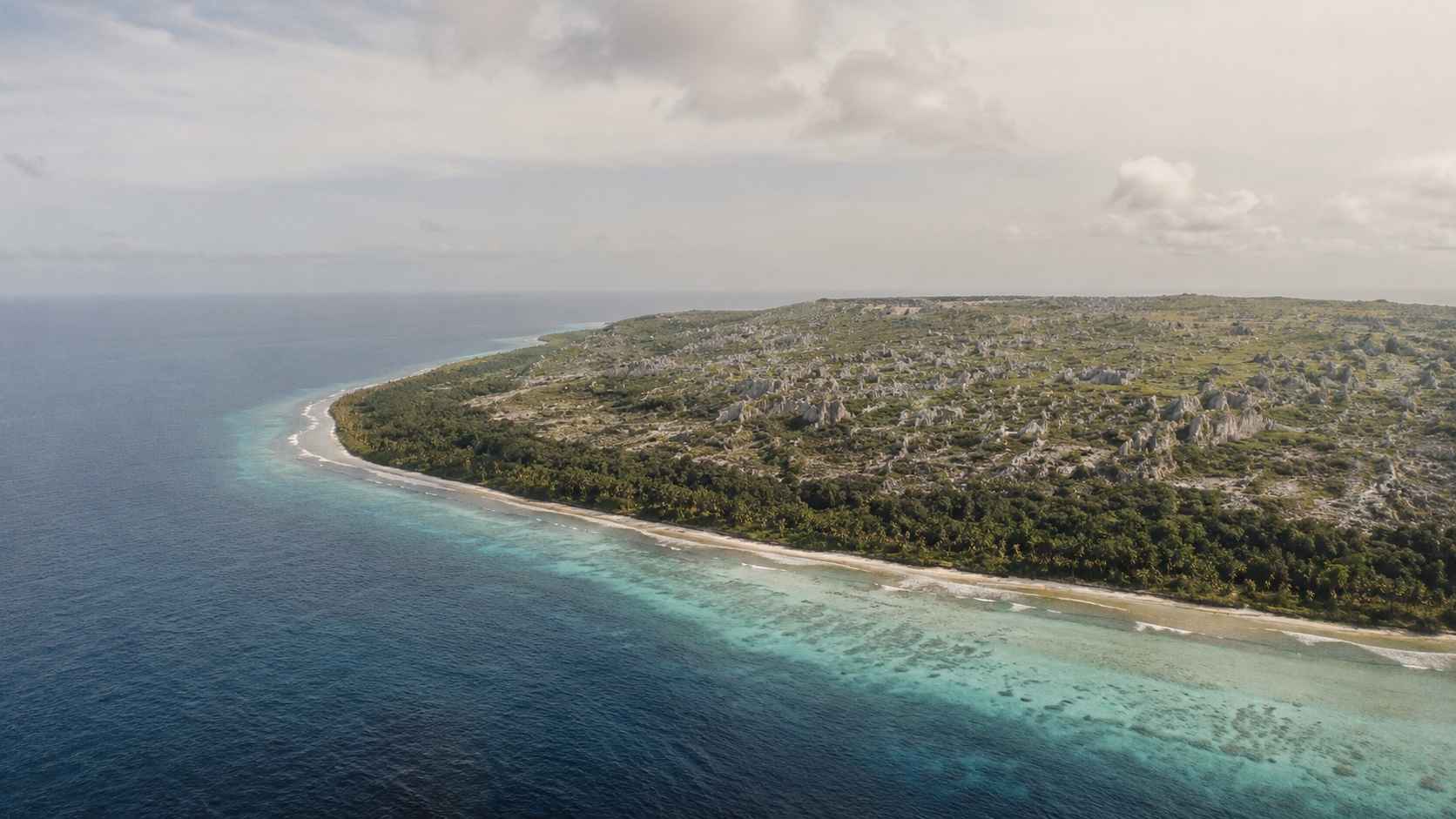
More devastatingly, decades of strip-mining left the island’s interior, locally known as "Topside," an ecological wasteland. Approximately 80% of the island’s landmass was stripped of its topsoil, leaving behind a jagged, uninhabitable labyrinth of tall limestone pinnacles. This environmental degradation severely restricted agricultural development, forcing the population to cluster almost exclusively along the narrow, low-lying coastal strip.
4. Official Responses: Leadership and Global Recognition
The reclamation of the traditional name has drawn powerful statements from domestic leadership and swift, structured responses from international partners.
The Domestic Perspective: President David Adeang
In announcing the finalization of the transition, President David Adeang emphasized that the move was an act of cultural restoration rather than a modern marketing campaign.
"Naoero is not a new name seeking acceptance by the people. It is the name given to us by our ancestors, preserved through generations of colonial occupation, and spoken daily in our homes. By requiring the world to use our true name, we are not creating a new identity, but reclaiming the one that was always ours."
— President David Adeang
President Adeang’s administration bypassed the planned referendum by arguing that voting on the name would imply that indigenous identity was up for debate. The parliamentary consensus was clear: the state was correcting a historical spelling error made by foreign visitors, not imposing a new administrative label.
International Diplomatic Adjustments
The response from global institutions has been remarkably swift, signaling a growing international respect for indigenous sovereignty.
- The United Nations: Following the official notification on June 26, 2026, the UN Secretariat updated its protocols. The country’s nameplate in the General Assembly and its listing on the official UN member-state portal were promptly changed to "Naoero."
- Regional Allies: Australia and New Zealand, which maintain deep geopolitical and historical ties to the island, immediately updated their respective departments of foreign affairs and trade. Both nations released statements welcoming the change as a positive step toward cultural preservation in the Pacific.
- Superpower Representation: Diplomatic missions from both Washington and Beijing adjusted their official communications, reflecting the highly competitive diplomatic environment of the central Pacific, where both global powers seek to maintain strong bilateral relations with Naoero.
5. Implications: Culture, Climate, and Global Systems
The transition to the Republic of Naoero carries deep symbolic weight, but it also triggers a wave of complex, long-term practical and geopolitical consequences.
Cultural De-colonialization in a Global Context
Naoero joins a growing list of sovereign nations that have asserted their linguistic independence by shedding colonial names.
[Colonial Name]          ──>   [Restored / Indigenous Name]
Ceylon                   ──>   Sri Lanka (1972)
Upper Volta              ──>   Burkina Faso (1984)
Swaziland                ──>   Eswatini (2018)
Turkey                   ──>   Türkiye (2022)
Nauru                    ──>   Naoero (2026)
Unlike some of these transitions, which required massive domestic campaigns to educate the public on a new name, the shift to Naoero is uniquely subtle. The local population never stopped using the name. The challenge lies not in convincing the dei-Naoero to adopt the name, but in training the rest of the world to pronounce and spell it correctly.
The Intersection of Climate Change and National Identity
The reclamation of the name Naoero comes at a critical juncture in the nation’s history, as it faces the existential threat of rising sea levels.
Because the interior "Topside" was decimated by phosphate mining, the vast majority of the population, critical infrastructure, roads, and government buildings are located on the narrow coastal fringe, which sits just a few meters above sea level. Rising oceans, coastal erosion, and increasingly severe tropical storms threaten to render these coastal areas uninhabitable within the century.
The government has launched the Higher Ground Initiative, an ambitious, long-term plan to rehabilitate the mined-out interior, level the limestone pinnacles, and systematically relocate the nation’s communities and infrastructure to higher ground. To fund this massive ecological and engineering undertaking, Naoero has turned to innovative financial mechanisms, including an investment-based citizenship program.
In this context, reclaiming the name Naoero is a rallying cry for national survival. It asserts to the global community that the dei-Naoero have a deep, historical right to their land, and that they intend to preserve both their culture and their physical territory against the encroaching tides of climate change.
The Logistics of a Global Database Update
While the diplomatic transition has been smooth, the practical, systemic updates required across global industries will take years to fully implement.
- Aviation and Maritime Records: The transition of the international three-letter code from NRU to NRO requires updates across the International Civil Aviation Organization (ICAO) and the International Air Transport Association (IATA). Flight paths, ticketing systems, and maritime registries must be meticulously adjusted to prevent administrative errors.
- Global Cartography and Digital Services: Tech giants, mapping services, and GPS databases must update their software. While digital maps can be updated instantly, physical atlases, educational textbooks, and globes will carry the name "Nauru" for years to come.
- Consular and Legal Documents: The reissue of passports, national identity cards, birth certificates, and land deeds under the "Republic of Naoero" represents a monumental bureaucratic task for the country’s civil service.
Ultimately, while the name "Nauru" will remain preserved in historical texts, archives, and the memories of the late 20th century, "Naoero" represents the path forward. By reclaiming their ancestral name, the dei-Naoero have anchored their sovereign future in the very language that has sustained them for generations.