






















































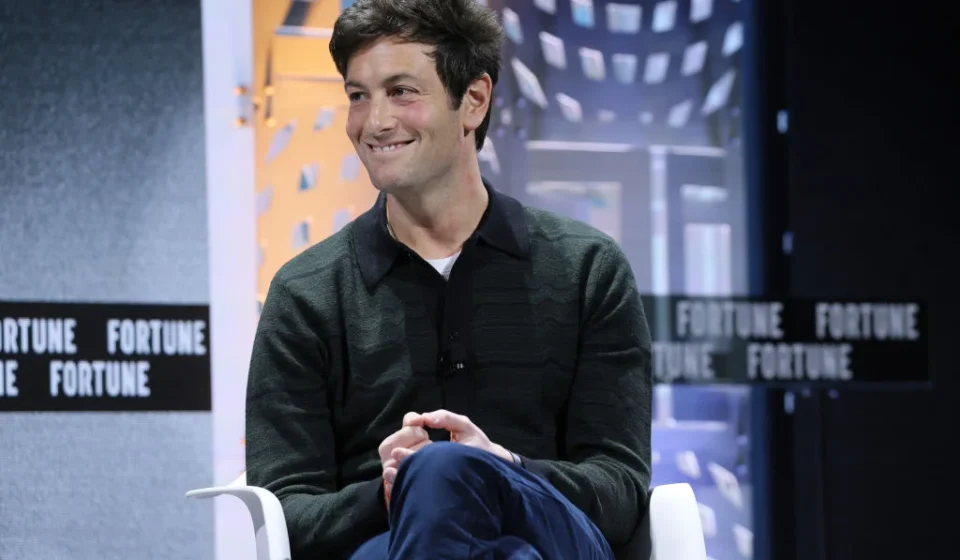

In a move that has sent ripples through the venture capital ecosystem, Joshua Kushner, the founder of the notoriously secretive, New York-based Thrive Capital, has broken his silence. In the firm’s first-ever formal investor letter—a document recently leaked to Bloomberg—Kushner didn’t just report on the state of his portfolio; he issued a stinging critique of the prevailing ethos that has dominated Silicon Valley for decades.
As the AI arms race intensifies, the gulf between traditional West Coast venture strategies and Thrive’s concentrated, thesis-driven approach has never been wider. While Silicon Valley firms scramble to capture the next "outlier," Kushner is advocating for a philosophy of restraint, deep conviction, and, perhaps most controversially, the transformation of incumbents from the inside out.
The Core Conflict: Concentration vs. "Spray-and-Pray"
At the heart of the debate is a fundamental disagreement over how to identify and nurture value. The traditional Silicon Valley model, famously championed by figures like Marc Andreessen, relies on the "outlier" theory. Under this framework, a firm makes a high volume of bets, fully anticipating that a majority will fail. The strategy relies on the statistical probability that one or two massive "home runs"—the next OpenAI or SpaceX—will generate returns sufficient to cover the losses of the entire portfolio many times over.
Kushner’s investor letter takes direct aim at this practice, which critics often label "spray-and-pray." He argues that such an approach is not merely inefficient; it is a symptom of a venture industry that has become fixated on "hyperincremental technological turns" rather than long-term, structural outcomes.
"It is difficult to overstate the magnitude of the opportunity," Kushner wrote regarding AI, before pivoting to a warning. "It would also be a grave error in our minds to let excitement weaken our investment discipline. Within Silicon Valley in particular, the industry can become fixated on hyperincremental technological turns rather than where the technology ultimately leads."
Thrive’s alternative is a strategy of extreme concentration. According to Bloomberg estimates, roughly 90% of Thrive’s capital is poured into its top 15 investments per fund. By narrowing its focus, the firm argues it can dedicate more time, capital, and energy to the companies it truly believes in, rather than spreading resources thin across a broad landscape of speculative ventures.
Chronology: A 15-Year Evolution to $60 Billion
To understand why Kushner’s critique carries such weight, one must look at Thrive’s trajectory over the last decade and a half. Since its inception, the firm has positioned itself as a bridge between the traditional financial hubs of New York and the technical innovation centers of the West Coast.
- 2010–2015: Establishing the Footprint: Thrive began as a nimble player, carving out a reputation for being an independent thinker in an industry often driven by herd mentality.
- 2022: The High-Stakes Bet: A pivotal moment occurred with the firm’s $516 million 2022 early-stage fund. By betting early on category-defining companies—specifically OpenAI, Anduril, and SpaceX—Thrive set the stage for explosive growth.
- December 2025: The Circular Synergy: In a move that blurred the lines between investor and operator, OpenAI took an ownership stake in Thrive Holdings, a firm spinout. This was not a passive investment; it established a strategic feedback loop where OpenAI would provide technical expertise and personnel to help Thrive’s portfolio companies implement AI-driven operational improvements.
- 2026: The Disclosure: The publication of the inaugural investor letter serves as a coming-out party for the firm, revealing $60 billion in assets under management (AUM) and an enviable track record of liquidity.
Data-Driven Performance: Does the "Thrive Way" Work?
While philosophical differences are interesting, the venture capital business is ultimately judged by the bottom line. On this front, Kushner’s numbers are difficult to ignore.
The firm reports a gross internal rate of return (IRR) across all its funds at 41%, with a net IRR of 33%. In the last 12 months alone, Thrive has returned more than $1 billion of liquidity to its investors. The 2022 early-stage fund is perhaps the strongest piece of evidence for the firm’s thesis: the fund, which deployed $516 million, was valued at more than $3.7 billion by June 2026.
Thrive Holdings, the firm’s operational arm, now oversees more than 70 businesses, supported by a dedicated team of 35 engineers. These companies are not just using AI for marketing; they are achieving measurable operational efficiency. Kushner cites an accounting platform within the portfolio that uses agents to produce tax returns 30% faster with 98% accuracy, and an IT services firm that has successfully offloaded 50% of its help desk tickets to AI agents.
Challenging the "Disruption" Mantra
Beyond portfolio concentration, Kushner challenges the foundational Silicon Valley belief that startups must exist solely to "disrupt" incumbents from the outside.
"Unlike many of our peers, our conviction was not only that these industries would be disrupted from the outside in but also that many would be transformed from the inside out," he writes.
This is the rationale behind Thrive Holdings. Instead of trying to kill an incumbent firm with a startup, Thrive frequently buys established entities and uses the combined power of OpenAI and its own internal engineering team to provide an "AI makeover." It is a strategy of integration rather than destruction—a pivot that reflects a more mature, perhaps more pragmatic, view of how technology reshapes the economy.
Implications for the Future of Venture Capital
The implications of Kushner’s letter are twofold. First, it highlights a growing trend of "institutionalized" venture capital. The ability to concentrate capital as Thrive does requires deep-pocketed LPs and a level of access that is rarely afforded to smaller, scrappy emerging funds. Critics might argue that Kushner’s path is paved by the immense privilege and access inherent in his background, making it an impractical model for the average VC founder.
Second, the letter serves as a wake-up call regarding the "AI bubble." As the industry faces a potential reckoning—following the post-pandemic lean years that saw countless failed startups and abandoned projects—Kushner’s warning about "hyperincrementalism" is timely.
"Not every fast-growing business is exceptional," Kushner notes. "And not every exceptional company is a great investment at every price. Our responsibility is to maintain those distinctions."
The Road Ahead: Liquidity and IPOs
The promise of "billions of dollars in additional liquidity" in the coming quarters suggests that Thrive is positioning itself for a wave of exits. While the firm remains coy about specific targets, the trajectory of its biggest holdings—SpaceX, which has already seen a partial exit, and the highly anticipated public debut of OpenAI—points to a firm that is moving from the "accumulation" phase to the "harvest" phase of its lifecycle.
Conclusion: A Shift in the Winds?
Whether or not the venture capital world shifts away from the "outlier" model remains to be seen. Firms like Andreessen Horowitz continue to deliver massive returns, proving that the traditional model remains highly effective at scale.
However, Joshua Kushner has successfully articulated a compelling, data-backed alternative. By prioritizing concentration over dispersion, and internal transformation over external disruption, Thrive Capital has positioned itself not just as an investor, but as an active architect of the AI-integrated economy. As the industry enters a more skeptical era of AI investing, the "Thrive Thesis" may well become the new standard for firms looking to separate true value from the noise of the hype cycle.