


















































Navigating the Spotlight: How Stephanie White is Balancing Championship Ambitions, Player Health, and the Caitlin Clark Phenomenon in Indiana

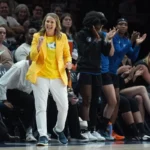
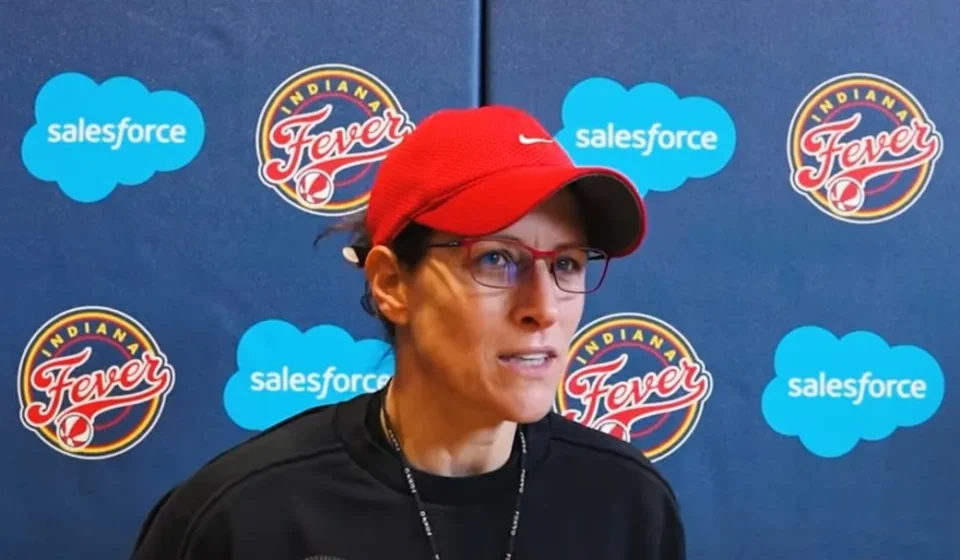
INDIANAPOLIS — In the modern landscape of professional women’s basketball, few roles carry as much strategic complexity and intense public scrutiny as head coach of the WNBA’s Indiana Fever. As of July 2026, Stephanie White finds herself at the center of this storm, managing a franchise caught between soaring external expectations, historic individual performances, and the delicate reality of player health.
Having returned to Indianapolis ahead of the 2025 season, White’s tenure has already redefined the standard for the franchise. After a resilient 2025 campaign that proved the team could survive—and thrive—amid severe injury crises, the 2026 season has presented a different set of challenges. Opponents have adjusted, the spotlight has intensified, and the coaching staff is forced to make difficult, often unpopular decisions to preserve their championship window.
Main Facts: The 2026 Campaign and the Workload Dilemma
The Indiana Fever enter the mid-season stretch of 2026 firmly in the playoff race, navigating an uneven but highly encouraging campaign. The team’s ceiling was put on full display recently during a thrilling 110-107 victory over the Seattle Storm, followed by a commanding 108-88 win against the New York Liberty.
The victory against Seattle was highlighted by a historic performance from second-year guard Caitlin Clark, who recorded 45 points and 10 assists. In doing so, Clark became the first player in WNBA history to record a game with over 40 points and at least 10 assists. White characterized the performance as simply "special," a sentiment echoed across the basketball world.
The Balancing Act of Player Rest
Despite these offensive explosions, the defining narrative of Indiana’s 2026 season is the health of its roster. White’s primary challenge has been managing the physical toll on her core players:
- Caitlin Clark: Dealing with recurring back issues after being limited to just 13 games during her 2025 rookie year.
- Aliyah Boston: Managing persistent inflammation in her right leg.
- Lexie Hull: Battling early-season hamstring tightness.
To combat a grueling schedule featuring frequent back-to-back games, White has adopted a conservative load-management strategy. During a July stretch against Los Angeles and Phoenix, White opted to alternate her stars rather than play both on consecutive nights. Clark played against the Sparks, while Boston was rested, reversing the roles for the following game.
While strategically sound, this approach has drawn frustration from fans who pay premium prices to see Indiana’s star-studded lineup, as well as scrutiny from the league office regarding injury reporting protocols.
Chronology: The Evolution of Stephanie White’s Basketball Journey
Stephanie White’s connection to Indiana basketball is deeply institutional, spanning over three decades as a high school phenom, collegiate champion, professional player, and championship-winning coach.
[1995] Named Indiana Miss Basketball / National Player of the Year (Seger HS)
  │
[1999] Led Purdue University to NCAA Championship; Won Wade Trophy
  │
[2000] Joined Indiana Fever as a player for their inaugural WNBA season
  │
[2012] Won WNBA Championship as Assistant Coach with Indiana Fever
  │
[2015] Led Fever to WNBA Finals as Rookie Head Coach
  │
[2023] Named WNBA Coach of the Year (Connecticut Sun)
  │
[2025] Returned to Indiana; Won Commissioner's Cup & reached Semifinals
  │
[2026] Currently navigating Fever playoff run amidst roster management challenges
The Indiana Roots (1991–1999)
Born in Danville, Illinois, and raised in West Lebanon, Indiana, White first gained national attention at Seeger High School. She scored 2,869 career points, once recording 66 points in a single contest, and was named Indiana Miss Basketball in 1995 alongside national Gatorade and USA Today Player of the Year honors.
She chose to stay in-state for her collegiate career, attending Purdue University. Under her leadership, the Boilermakers captured the 1999 NCAA National Championship with a 34-1 record. Personally, White averaged 20.2 points and 4.5 assists during her senior season, sweeping the Wade Trophy, the Honda Sports Award, and Big Ten Player of the Year honors. Off the court, she graduated with a degree in communications, earning Academic All-America honors and induction into Phi Beta Kappa.
Professional Playing and Early Coaching Career (1999–2014)
White was drafted into the WNBA in 1999 by the Charlotte Sting but was acquired by the Indiana Fever ahead of their inaugural season in 2000. She spent four seasons with the franchise before injuries forced her retirement in 2004.
She transitioned immediately into coaching, taking assistant roles at the collegiate level (Ball State, Kansas State, Toledo) and in the WNBA (Chicago Sky). In 2011, she returned to Indiana as an assistant under legendary head coach Lin Dunn, helping guide the Fever to their sole WNBA Championship in 2012.
Head Coaching Milestones (2015–Present)
- Indiana Fever (First Stint, 2015–2016): Promoted to head coach in 2015, White became the first rookie head coach in WNBA history to lead a team to the Finals, losing in five games to the Minnesota Lynx.
- Vanderbilt University (2016–2021): Left the WNBA for a five-year stint in the SEC, experiencing mixed results.
- Connecticut Sun (2023–2024): Returned to the WNBA, winning the 2023 Coach of the Year award after leading the Sun to a 27-13 record. Over two seasons, she compiled a 55-25 record with consecutive semifinal appearances.
- Indiana Fever (Second Stint, 2025–Present): Hired in November 2024, she took over a roster featuring Caitlin Clark and Aliyah Boston. Despite a catastrophic injury list in 2025 that sidelined Clark for most of the year, White coached the Fever to a 24-20 record, won the Commissioner’s Cup, and pushed the Las Vegas Aces to five games in the playoff semifinals.
Supporting Data: Statistical and Financial Context
The operational environment of the WNBA differs significantly from the NBA, particularly regarding financial transparency and roster regulations.
Stephanie White: Career Coaching Timeline and Milestones
| Years | Team | Position | Notable Achievements / Record |
|---|---|---|---|
| 2003–2004 | Ball State | Assistant Coach | Entry into coaching ranks |
| 2004–2005 | Kansas State | Assistant Coach | NCAA tournament experience |
| 2005–2007 | Toledo | Assistant Coach | Final mid-major collegiate role |
| 2007–2010 | Chicago Sky | Assistant Coach | Professional coaching debut |
| 2011–2014 | Indiana Fever | Associate Head Coach | Won 2012 WNBA Championship |
| 2015–2016 | Indiana Fever | Head Coach | 37-31 record; reached 2015 WNBA Finals |
| 2016–2021 | Vanderbilt | Head Coach | SEC collegiate coaching experience |
| 2023–2024 | Connecticut Sun | Head Coach | 55-25 record; 2023 WNBA Coach of the Year |
| 2025–Pres. | Indiana Fever | Head Coach | 2025 Commissioner’s Cup; 2025 Semifinals |
The Coaching Salary Transparency Gap
Unlike WNBA player contracts, which are governed strictly by the league’s collective bargaining agreement (CBA) and publicly tracked, coaching contracts remain entirely private.
While public speculation places White’s annual salary at approximately $500,000, neither the Indiana Fever nor the league has disclosed the financial terms or duration of her multi-year contract signed in November 2024. This lack of transparency contrasts sharply with the NBA, where coaching salaries are routinely publicized and analyzed.
Indicative of this financial reality, White noted after the Fever’s 2025 Commissioner’s Cup win—where players split a $500,000 prize pool—that coaches do not receive a cut of the bonus. Asked what she would have done with such a bonus, White practically responded that it would have gone straight into the college funds for her four sons.
Key Player Metrics (2026 Season)
- Caitlin Clark: Scored 45 points (on 29 minutes of play) against Seattle, demonstrating high-efficiency scoring post-injury rest.
- Aliyah Boston: Averaging 17.2 points and 8.7 rebounds through 22 appearances, serving as the physical anchor of the Fever’s half-court offense.
- Kelsey Mitchell: Earned Eastern Conference Player of the Week honors in July 2026, anchoring the offense during back-to-back rest cycles.
Official Responses: League Warnings and Coaching Philosophy
The Fever’s strict load-management strategies have occasionally put the organization at odds with league regulations.
WNBA Compliance Issues
Earlier in the 2026 season, the WNBA issued an official warning to the Indiana Fever regarding their injury reporting. The warning stemmed from an incident where Caitlin Clark was late-scratched shortly before tip-off without having been listed on the league’s mandatory pre-game injury report.
Under league rules designed to maintain competitive integrity and transparency for fans and sports betting partners, teams must update player statuses by designated deadlines.
White’s Strategic Defense
In response to external criticism and league warnings, White has remained resolute in prioritizing long-term physical sustainability over short-term compliance.
"We learned the hard way in 2025 what happens when you run out of healthy bodies at the wrong time," White remarked during a July media availability. "Our goal isn’t just to make the playoffs; it’s to have our best players healthy enough to win when we get there. If that means making hard, unpopular decisions in July, we are going to make them."
This philosophy has been embraced by the locker room. When White announced during a practice that veteran guard Kelsey Mitchell had won Eastern Conference Player of the Week, the team responded with enthusiastic celebration, signaling strong internal chemistry despite the external pressures surrounding the team’s lineup changes.
Implications: The Long-Term Outlook for Indiana and the WNBA
The strategic decisions made by Stephanie White and the Fever front office in 2026 carry significant implications for both the franchise and the broader league.
1. The Normalization of Load Management in the WNBA
As the WNBA transitions to longer regular seasons and higher physical demands, the league is experiencing the same friction over player rest that has challenged the NBA for a decade. White’s willingness to rest star players on back-to-backs despite ticket-holder backlash suggests that franchise priorities are shifting toward postseason longevity over regular-season attendance.
2. The Blueprint for Coaching Star-Studded Rosters
White has demonstrated that a coach can manage high-profile personalities and unprecedented media coverage without letting it fracture locker room chemistry. By building a system in 2025 that won without Clark, White established tactical authority. In 2026, she is using that leverage to protect her players from physical burnout, establishing a blueprint for future coaches who will inherit highly scrutinized rookie stars.
3. Personal and Professional Alignment
On a personal level, White’s tenure in Indiana highlights the growing emphasis on work-life balance for high-level coaches. Based in Nashville with her partner, ESPN reporter Lisa Salters, and their blended family of four sons, the move from Connecticut to Indianapolis dramatically reduced White’s travel demands. The proximity allows her to balance the demands of a high-pressure WNBA job with her family life, alongside her secondary role as a television analyst for ESPN and the Big Ten Network.
As the 2026 season enters its final stretch, the success of White’s calculated caution will be judged by the postseason. If the Fever arrive in September healthy and primed for a deep run, White’s conservative July management will be viewed as a masterclass in modern coaching. If they falter, the questions surrounding her lineup choices will only intensify. For White, however, the choice remains clear: protect the players, trust the system, and play for the championship.