
























































Statutory Defiance in Albert Lea: A Deep Dive into the Battle Over Local Control and Cannabis Licensure

In a move that has sent shockwaves through Minnesota’s burgeoning legal cannabis industry, the Albert Lea City Council has officially entered a state of open defiance against Minnesota’s statutory mandates. By a narrow 4-3 vote, the council rejected the registration of "The Smoking Tree," a dispensary that was poised to become the city’s first legal cannabis retail outlet. The decision, made during a contentious meeting on Monday, represents a significant escalation in the ongoing tension between local municipal autonomy and the centralized authority of the state’s Office of Cannabis Management (OCM).
As the state of Minnesota prepares for the full-scale rollout of its retail cannabis market, the situation in Albert Lea serves as a high-stakes litmus test for the limits of "local control." While the city’s leadership frames the denial as a principled stand against state overreach, legal experts and city staff warn that the move could trigger a cascade of litigation and catastrophic financial penalties that could cripple the city’s general fund.
Main Facts: The Collision of Local Policy and State Mandate
The central conflict in Albert Lea revolves around the interpretation of Minnesota Statute 342, the comprehensive law passed by the state legislature in 2023 to legalize and regulate recreational cannabis. Under this framework, while cities and counties are granted the authority to enact "reasonable" zoning ordinances—such as keeping dispensaries away from schools or parks—they are explicitly prohibited from banning cannabis businesses entirely.
Furthermore, the law established a "minimum registration" requirement. Local governments must approve at least one cannabis business for every 12,500 residents. For a city the size of Albert Lea, which has a population hovering around 18,000, the law dictates that the city must register at least two dispensaries.
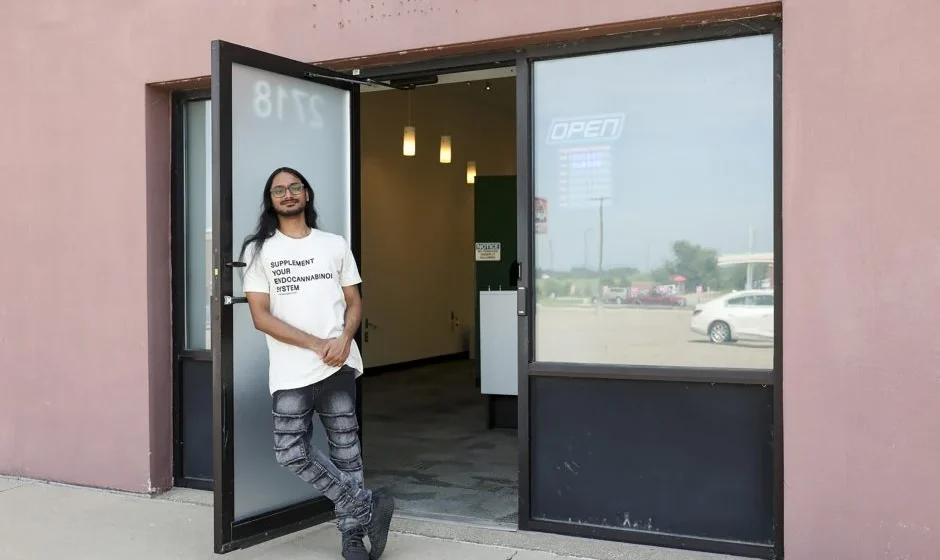
The Smoking Tree, owned by entrepreneur Jacob Schlichter, appeared to have cleared every hurdle required by the state. Schlichter had already secured his state-level licensure and passed a rigorous inspection by the OCM in June, making him the first micro-retail cannabis applicant in Minnesota to do so. The final step was a local registration with the city—a step that city staff and legal counsel described as a ministerial formality rather than a discretionary choice.
However, the council’s majority opted to ignore the recommendation of their own attorney and city manager. The denial has left the business in a state of legal limbo, the owner contemplating a lawsuit, and the city facing the prospect of losing hundreds of thousands of dollars in state aid.
Chronology: The Road to the Council’s Rejection
The path to Monday’s dramatic vote began shortly after the Minnesota Legislature legalized adult-use cannabis in May 2023. Like many municipalities across the state, Albert Lea spent months crafting local ordinances to prepare for the new industry.
- May 2024: The Albert Lea City Council approved a local ordinance detailing how cannabis businesses would be registered. The ordinance established a "first-come, first-served" system based on the timestamp of an applicant’s OCM licensure.
- June 2024: Jacob Schlichter’s business, The Smoking Tree, became the first micro-retailer in the state to pass a licensing inspection. This milestone positioned Albert Lea to be a pioneer in the state’s retail rollout.
- July 18, 2024: City staff confirmed that Schlichter had completed all local registration requirements. His application was vetted for zoning compliance and met every metric established by the city’s own May ordinance.
- Late July 2024: The registration was placed on the City Council’s "consent agenda" for the Monday meeting. In municipal governance, the consent agenda is reserved for routine, non-controversial items that are expected to pass without debate.
- Monday, July 2024: In a surprise move, the item was pulled from the consent agenda for individual discussion. Despite explicit warnings from the City Attorney regarding the illegality of a denial, the council voted 4-3 to reject the registration.
Jacob Schlichter, who had planned a "soft opening" for the following Tuesday, found his business shuttered before it could open its doors. "The law is the law," Schlichter remarked following the vote, expressing disbelief that a city would willingly invite a lawsuit it is almost certain to lose.
Supporting Data: The Financial and Legal Stakes
The defiance shown by the Albert Lea City Council is not merely a political statement; it is a high-risk financial gamble with taxpayer money. During the meeting, City Manager Ian Rigg and City Attorney Joel Holstad provided the council with a grim breakdown of the potential consequences.
The Litigation Cost
Attorney Joel Holstad was blunt in his assessment of the city’s legal standing. He noted that if the city attempted to block a business that met all state and local criteria, the State of Minnesota would likely intervene.
- Defense Costs: Holstad estimated that a "legitimate defense" of the city’s position would cost at least $100,000 in legal fees.
- Probability of Success: He described the chance of the city prevailing in court as "highly unlikely," given the clear language of the state statute.
The Local Government Aid (LGA) Penalty
The most significant financial threat involves the city’s Local Government Aid (LGA). Albert Lea is heavily dependent on state funding to maintain its infrastructure and public services.
- Total LGA: The city receives approximately $6 million in LGA annually.
- Budget Impact: This funding accounts for roughly one-third of the city’s total general fund revenue.
- Non-Compliance Penalty: City Manager Ian Rigg highlighted a scenario where the state could impose a 5% penalty on LGA for non-compliance with state law. This would result in an immediate $300,000 loss to the city budget—equivalent to the cost of several police officers or significant road repair projects—before a single dollar is spent on legal defense.
Official Responses: A House Divided
The debate within the council chambers revealed a deep ideological rift between those who prioritize fiscal and legal responsibility and those who view the issue as a fight for the soul of local governance.
The Opposition: "A Matter of Principle"
Mayor Rich Murray and Councilor Larry Baker led the charge against the registration. Their arguments focused less on the merits of Schlichter’s specific business and more on their resentment of the state’s legislative process.
"I do not like the way the state Legislature and the governor has rammed this down our throats with very little say in the process, all because they’re hungry for more revenue," Mayor Murray stated. He argued that the city should have the right to maintain "zero" cannabis businesses if that is what the leadership desires.
Councilor Baker echoed these sentiments, framing the vote as a stand against the erosion of local power. "We need to speak up, and this is just a point where I’m going to start speaking up," Baker said. He expressed a "slippery slope" concern, suggesting that if the city doesn’t resist cannabis mandates today, the state might take away local zoning control over high-rise developments in residential areas tomorrow.
The Pragmatists: "The Illusion of Choice"
On the other side of the dais, Councilors Brian Anderson, Jason Howland, and Reid Olson argued that the council’s hands were legally tied.
Councilor Anderson pointed out the futility of the gesture, noting that the city was operating under the "illusion of choice." He argued that since the business had already met state requirements, the council’s role was merely to facilitate the law. "I think it’s up to me sitting up here to do the responsible thing and actually say that this is going to happen whether we want it to or not," Anderson said. "I think we need to embrace it and make the best of it."
City Manager Ian Rigg, while sympathetic to the desire for local control, reminded the council of their administrative duty. "Local control is important… but until it’s restored or it’s preserved, we do have our orders," Rigg told the council.
Implications: A Precedent for the State
The rejection of The Smoking Tree’s registration carries implications that extend far beyond the city limits of Albert Lea. It sets a precarious precedent for the Minnesota Office of Cannabis Management as it attempts to stand up a multi-billion dollar industry.
1. The Threat of "Regulatory Patchwork"
One of the primary goals of the Minnesota cannabis law was to avoid a "patchwork" of conflicting local regulations that would make it impossible for businesses to operate. If Albert Lea is successful in its defiance—or if the legal battle drags on for years—it may embolden other conservative-leaning municipalities to follow suit, effectively creating "cannabis deserts" in defiance of state law.
2. Economic Impact on Small Entrepreneurs
Jacob Schlichter’s experience highlights the vulnerability of small business owners in this new market. Micro-retailers, often local residents putting their life savings into their ventures, are caught in the crossfire of inter-governmental feuds. If local councils can arbitrarily deny licenses that have already been vetted by the state, the perceived risk of entering the Minnesota cannabis market will skyrocket, potentially driving out all but the most well-funded corporate entities.
3. The Burden on the Taxpayer
Ultimately, the citizens of Albert Lea are the ones who bear the risk. If the city loses $300,000 in LGA and spends $100,000 on a lost cause in court, the shortfall will have to be made up through property tax increases or cuts to essential services. The "principled stand" of the four council members could result in a $400,000 bill for a community that is already navigating tight fiscal waters.
4. State Intervention
The Office of Cannabis Management has been granted broad powers to ensure the success of the legal market. This incident may force the OCM or the Minnesota Attorney General’s office to take aggressive legal action against Albert Lea to signal to other cities that the state’s mandates are not optional.
As of this week, Jacob Schlichter is weighing his legal options. He expressed a profound reluctance to sue his own city, noting that he would prefer to spend his resources on his business rather than on litigation. However, with his investment on the line and the city council standing firm in its defiance, the courtroom may be the only place left to decide the future of cannabis in Albert Lea. The eyes of the state are now on this small city, waiting to see if the "law of the land" will prevail over the "principle of the local."