
























































Funding Impasse Grips Washington: Economic and Social Impacts of the 2025 Federal Government Shutdown

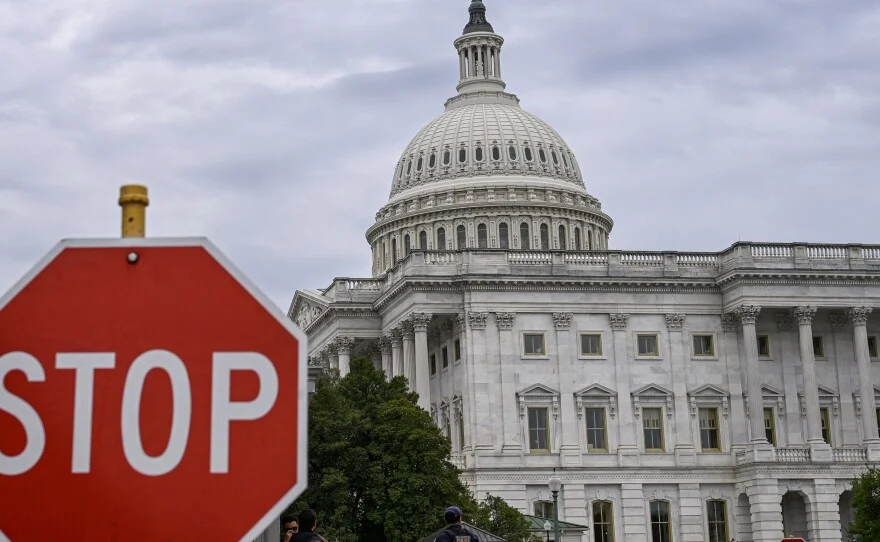
WASHINGTON — The United States federal government has entered a partial shutdown, triggering a widespread suspension of non-essential public services, disrupting the livelihoods of hundreds of thousands of civil servants, and casting a shadow over the nation’s economic outlook. The funding lapse, which occurred after Congress failed to pass timely appropriations and the President declined to sign a continuing resolution, has exposed deep ideological divisions on Capitol Hill regarding federal spending levels and healthcare policy.
As federal agencies implement emergency contingency plans, the shutdown threatens to disrupt everything from routine taxpayer assistance to national parks, while injecting fresh volatility into the financial markets.
Main Facts of the 2025 Funding Impasse
A federal government shutdown occurs when Congress fails to enact annual appropriations bills or a temporary stopgap funding measure—known as a continuing resolution (CR)—before the current funding cycle expires. Without legislative authority to obligate federal funds, executive agencies are legally required to halt most operations.
The Legal Mechanism: The Antideficiency Act
At the heart of federal shutdown operations is the Antideficiency Act (codified at 31 U.S.C. §§ 1341, 1342). This 19th-century statute, as amended, strictly prohibits government officials from making expenditures or involving the government in any contract or obligation before an appropriation has been made, unless authorized by law.
The law provides narrow exceptions, permitting agencies to continue activities necessary for the safety of human life or the protection of property. Under this framework:
- Excepted Employees: Personnel deemed critical to safety and security—such as air traffic controllers, federal law enforcement officers, and active-duty military—must report to work but do not receive pay until the shutdown ends.
- Furloughed Employees: Non-excepted personnel are legally barred from working, accessing their government communications, or performing any official duties. They also do not receive pay during the lapse, though historically, and by statutory mandate, they are compensated retroactively once funding is restored.
To manage the current transition, agencies are relying on emergency guidance issued by the Office of Management and Budget (OMB) and the Office of Personnel Management (OPM), utilizing contingency plans updated for the fiscal year 2026 cycle.
Chronology of U.S. Government Shutdowns
The current funding gap is part of a modern political pattern that emerged in the late 20th century. While minor funding gaps occurred prior to 1980, federal agencies historically continued routine operations under the assumption that Congress would eventually pass appropriations.
This practice changed dramatically in 1980 and 1981, when Attorney General Benjamin Civiletti issued landmark legal opinions stating that the Antideficiency Act required a near-complete shutdown of agency operations during a funding lapse. Since 1976, there have been approximately twenty funding gaps of varying durations, but only a handful have resulted in widespread, multi-day agency closures.
Historical Precedents and Key Milestones
Over the past three decades, major shutdowns have been triggered by disputes over landmark legislative policies and macroeconomic targets:
| Year | President | Duration (days) | Primary Issue |
|---|---|---|---|
| 1995–1996 | Bill Clinton | 21 | Balanced budget levels and Medicare premiums |
| 2013 | Barack Obama | 16 | Implementation and funding of the Affordable Care Act (ACA) |
| 2018–2019 | Donald Trump | 35 | Funding for a southern border wall (longest in U.S. history) |
| 2025 | Donald Trump | Ongoing | Stopgap funding duration and ACA premium tax credits |
The current 2025 shutdown stems from intense disagreements over the scope of stopgap funding and health policy, specifically whether to extend the enhanced Affordable Care Act (ACA) premium tax credits. These subsidies, which significantly lowered insurance premiums for millions of Americans, are set to expire, creating a high-stakes legislative battle just ahead of the annual ACA open enrollment period beginning on November 1.
Supporting Data and Economic Impact
The economic and operational ramifications of the shutdown are accumulating rapidly, affecting hundreds of thousands of workers and reducing national economic output.
Macroeconomic Cost of Shutdown (Weekly):
[====================================] $7 Billion Lost Output
[==] 0.1% to 0.2% GDP Growth Reduction
The Labor Force Toll: Furloughs and Unpaid Labor
The Congressional Budget Office (CBO) estimates that approximately 750,000 federal employees could be furloughed daily during the shutdown. This represents a massive disruption to the federal workforce, forcing hundreds of thousands of civil servants to suspend their duties indefinitely.
Among the hardest-hit agencies is the Internal Revenue Service (IRS). The agency has furloughed roughly 34,000 employees—representing approximately 46% of its total workforce. This mass reduction has severely constrained the IRS’s administrative capacity, shuttering taxpayer assistance hotlines, slowing down the processing of paper tax returns, and delaying critical audits and administrative appeals.
The Judicial Interdiction on Layoffs
Adding to the administrative turmoil, the administration sought to initiate mass Reduction-in-Force (RIF) layoffs across several executive agencies during the shutdown. Proponents argued these layoffs were necessary to permanently downsize the federal bureaucracy. However, a federal judge intervened, issuing an injunction that blocked the administration from executing these mass layoffs.
The court ruled that utilizing a temporary funding lapse to bypass standard civil service protections and permanently eliminate career positions violated statutory civil service guidelines. This judicial intervention has preserved the employment status of thousands of workers, though they remain furloughed without pay.
Macroeconomic Consequences
Independent financial analyses suggest that the ongoing shutdown is imposing a measurable drag on the broader U.S. economy:
- S&P Global Ratings estimates that the shutdown trims real Gross Domestic Product (GDP) growth by 0.1 to 0.2 percentage points for each week it persists.
- EY-Parthenon estimates indicate that the disruption translates to roughly $7 billion in lost economic output per week.
This economic damage stems from several factors: the sudden cessation of federal contractor payments, lost productivity within federal agencies, and reduced consumer spending by federal employees and contractors who are temporarily without income.
Official Responses and the Political Standoff
The path to resolving the shutdown remains blocked by deep divisions within a politically fractured Congress.
         [U.S. CONGRESSIONAL STANDOFF]
                    │
     ┌──────────────┴──────────────┐
     ▼                             ▼
 [HOUSE OF REPRESENTATIVES]     [SENATE]
 Speaker Mike Johnson           Majority Leader John Thune
 (Pushes GOP stopgaps/riders)   (Resists health program cuts)
     ▲                             ▲
     │                             │
     └──────────────┬──────────────┘
                    ▼
           [DEMOCRATIC LEADERS]
     Hakeem Jeffries & Chuck Schumer
     (Oppose cuts to ACA subsidies)
Congressional Leadership Divided
In the House of Representatives, Speaker Mike Johnson has insisted on advancing conservative-backed stopgap measures. These proposals couple temporary government funding with policy riders aimed at reducing spending on social programs and blocking the extension of the ACA premium tax credits. House Minority Leader Hakeem Jeffries has led a unified Democratic caucus in opposing these measures, arguing that they unfairly target essential healthcare programs and harm working-class families.
In the Senate, Majority Leader John Thune and Minority Leader Chuck Schumer remain at loggerheads. The Senate leadership is struggling to find a compromise on the duration and scope of a continuing resolution that can secure the 60 votes required to clear procedural hurdles.
The Seating Dispute and Executive Posturing
The political atmosphere in Washington has been further strained by a high-profile dispute over the seating of lawmakers. Speaker Johnson’s decision to delay swearing in Representative Raúl Grijalva has drawn fierce condemnation from House Democrats, who have threatened legal action to compel the Speaker to seat the Arizona lawmaker. Democrats argue that withholding the oath of office disenfranchises voters and is being used to marginally alter the voting math on crucial spending bills.
Implications and Future Outlook
As the impasse continues, the long-term consequences of the shutdown are beginning to materialize across multiple sectors.
The Healthcare Cliff: ACA Open Enrollment
The most immediate and critical policy implication of the shutdown involves the upcoming Affordable Care Act (ACA) open enrollment period, scheduled to begin on November 1. The political battle over the enhanced premium tax credits has created deep uncertainty for state insurance exchanges and millions of consumers.
CHRONOLOGY OF A CRITICAL HEALTHCARE DEADLINE:
Mid-October: Government shutdown begins over spending levels & ACA subsidies.
Late October: Administrative adjustments to subsidy calculators stall.
November 1: ACA Open Enrollment begins amid policy uncertainty.
State-run marketplaces and federal administrators warn that it may already be too late to adjust subsidy calculators without major systemic disruptions. If the enhanced tax credits are allowed to expire or remain in legislative limbo as enrollment begins, millions of enrollees could face sharp increases in their monthly premiums, potentially leading to a drop-in coverage rates and instability in the individual insurance market.
Broader Public and Administrative Fallout
Beyond healthcare and federal workers, the shutdown’s ripple effects are expanding daily:
- National Parks and Cultural Institutions: While some parks remain partially accessible with limited staff, trash accumulation, lack of emergency services, and the closure of visitor centers have forced restrictions at several major sites.
- Small Business and Housing Loans: The processing of Small Business Administration (SBA) loans and Federal Housing Administration (FHA) mortgages has slowed significantly, delaying closings and disrupting commercial transactions.
- Long-Term Recruitment: Federal human resources experts warn that repeated shutdowns and threats of mass layoffs damage the federal government’s reputation as a stable employer, making it increasingly difficult to recruit and retain top-tier talent in critical fields like cybersecurity, engineering, and public health.
With both parties dug into their positions and the economic costs mounting, the pressure is building on congressional leaders to find a compromise. Whether Washington can bridge its ideological divide before the November 1 healthcare deadline remains the central question hanging over a stalled federal government.