


























































It is a trope as tired as the game of basketball itself: the narrative of the "mellowing" veteran coach. When a leader known for volcanic sideline intensity, tactical rigidity, and a refusal to suffer fools reaches the twilight of their career, observers are quick to project a softer exterior. They look for fewer technical fouls, fewer locker-room tirades, and a more diplomatic approach to the officiating crew.
But to apply the "mellowed" label to Cheryl Reeve, the Minnesota Lynx head coach and president of basketball operations, is to fundamentally misunderstand the engine that has driven the most successful career in WNBA history. Reeve—the daughter of an Air Force family, a product of the hard-nosed basketball culture of South Jersey and Philadelphia—has not softened; she has merely evolved. The intensity that defines her remains as sharp as a scalpel, even as she approaches her 60th birthday this September.
The Standard of Excellence: Uncompromising Accountability
Reeve’s coaching philosophy is anchored in a singular, non-negotiable principle: accountability. Whether it is a seasoned veteran or a practice player, the standard remains identical. This was on full display following a recent 101-93 victory over the expansion Portland franchise. Despite the win, Reeve was not in a celebratory mood. During a postgame ceremony honoring Naismith Hall of Famer Sylvia Fowles, Reeve veered off-script to deliver a stinging critique of her current roster, suggesting that the retired legends in the building could have defended better than the active players on the floor.
For a team boasting the league’s best record at 20-6, such public admonishment might seem harsh. However, for Reeve, it is a necessary corrective. "Cheryl is going to be honest," says All-Star guard Courtney Williams, now in her third season under Reeve’s tutelage. "She’s going to coach you hard, and if you’re built for it, you’re built for it. The ones that aren’t, they can’t play for Cheryl because she’s a straight shooter. I’m a straight shooter too, so it works out."
Williams highlights that Reeve’s brilliance lies in her consistency. "She has one of the greatest basketball minds I’ve ever been around. She holds everyone accountable—from the best player to the staff, to the ball kids. She really just has a standard, and she wants everyone to be at that standard."
A Chronology of Grit: From Philadelphia to the Pinnacle
Reeve’s journey to the top of the professional basketball mountain was anything but linear. A middle child with brothers, she cut her teeth in the competitive environment of Philadelphia, earning both a bachelor’s degree in computer science and an MBA from La Salle University while navigating the complexities of the early women’s professional landscape.
Her path was paved with rejection and instability. She spent nine seasons as an assistant coach across three different organizations—two of which, the Cleveland Rockers and the Charlotte Sting, folded under the weight of the league’s early financial struggles. During this period, family members often encouraged her to leverage her academic credentials and step away from the precarious world of professional coaching. She refused.
The breakthrough came in 2010 when she landed the head coaching job with the Minnesota Lynx, thanks in part to the recommendation of Bill Laimbeer, her former boss with the Detroit Shock. At the time, the Lynx were a franchise characterized by mediocrity, having reached the playoffs only twice in their first 11 years of existence.
Reeve’s entrance shifted the culture immediately. "I felt like I could come in here with a different expectation than maybe what they had in the past," Reeve recalled. "The goal for them was to make the playoffs. And I just didn’t feel like that bar was high enough. Being in the playoffs should be something that happens every year. The goal is to win a championship."
The early days were rocky—the team opened 2-9 in her inaugural season—but her insistence on defensive discipline eventually took root. Coupled with the acquisition of Maya Moore as the No. 1 overall pick in 2011, Reeve’s vision materialized into a dynasty. The Lynx secured four championships and six Finals appearances in a seven-year span.
Supporting Data: The Numbers Behind the Legend
Reeve’s statistical resume is peerless. On July 8, she secured her 380th regular-season victory, a rugged 86-80 road win in Connecticut that propelled her past Mike Thibault to become the winningest coach in WNBA regular-season history.
Her total dominance is reflected in her expansive list of accolades:
- WNBA Coach of the Year: Four-time recipient.
- Executive of the Year: Two-time recipient (reflecting her dual role).
- All-Star Head Coach: Five-time selection.
- Total Championships: Six (four with the Lynx, two as an assistant in Detroit).
Beyond the hardware, her longevity is the most striking statistic. In a league where coaching turnover is notoriously high—exemplified by the departure of Sandy Brondello from championship-winning teams—Reeve has maintained a decade-and-a-half of consistent excellence. With 14 playoff appearances in 16 full seasons, the Lynx have become a perennial powerhouse, even during transition years.
The Evolution of the Teacher
While the intensity remains, Reeve acknowledges that her methodology has shifted to accommodate the changing nature of the modern athlete. She is more cognizant of the difference between "fixable" errors and natural growing pains.
"The coach that Lindsay Whalen played for is very different than the coach Olivia Miles is currently playing for," Reeve noted. Today’s Reeve allows for more grace during the developmental phases of a rookie’s career—a patience that would have been unthinkable during the height of the Lynx dynasty.
This evolution also includes a greater focus on emotional intelligence. Reeve has been candid about past moments where her sharpness crossed the line, referencing an incident with Courtney Williams last season that she felt "broke the player’s spirit." The ability to recognize this, admit to it, and reconcile with the player is perhaps the most significant indicator of her growth as a leader.
Implications: The Legacy of a G.O.A.T.
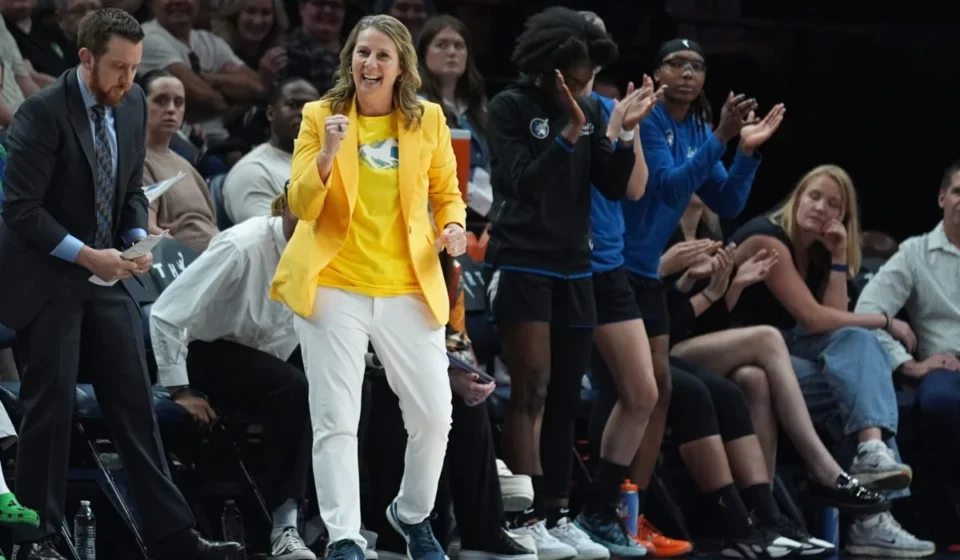
The impact of Cheryl Reeve extends beyond the lines of the basketball court. She has become a vocal advocate for social justice, using her platform to speak on women’s rights and broader societal issues. Her T-shirts, worn beneath her blazer during postgame press conferences, serve as a visual manifesto for her values.
For peers like Sandy Brondello, Reeve represents the gold standard. "Cheryl’s the G.O.A.T.," Brondello says. "She’s one of the coaches I admire in this league. I have so much respect for her, what she does and how her teams compete. Just the toughness of her teams, the way she prepares them, how they play. It’s a credit to the identity she wants them to play with."
As Reeve eyes her future, which will inevitably include a Naismith Basketball Hall of Fame induction, her focus remains laser-sharp on the present. She is not chasing history for the sake of her own legacy; she is chasing it for her players. "Courtney Williams has never won a championship," Reeve said, her voice betraying a familiar, fierce desire. "I want it for them. Every day."
The "mellow" narrative may persist in sports columns, but those who know the Lynx organization know the truth: Cheryl Reeve has not mellowed. She has simply mastered her craft to the point where she can demand perfection with more precision, more wisdom, and more impact than ever before. The standard has not changed; it has only been raised.