





















































Shadows Over the Cubbies: How Minneapolis Child Care Centers Survive an Era of Uncertainty

This report was produced by The Hechinger Report, a nonprofit, independent news organization focused on inequality and innovation in education.
MINNEAPOLIS — On a frigid February afternoon, the routine at a Spanish-immersion child care center in Minneapolis felt deceptively normal. Toddlers, bundled in oversized, puffy winter coats, wrestled with mittens and hats as their parents arrived for pickup. But behind the scenes, the atmosphere was thick with a quiet, persistent tension.
In an office tucked down the hallway, the center director’s husband sat transfixed by a wall of monitors. He wasn’t watching for unauthorized visitors or security breaches; he was scanning the perimeter for any sign of U.S. Immigration and Customs Enforcement (ICE) vehicles. Since the launch of the federal "Operation Metro Surge" in January, his daily routine has shifted from his own career to volunteering as a sentry, ensuring the safety of the staff who power the early education system.
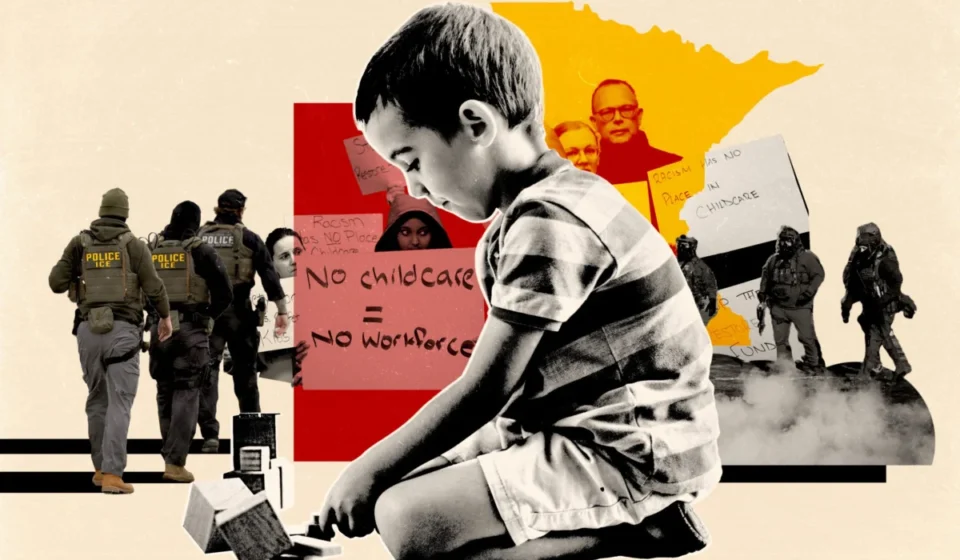
The center, like many others across the Twin Cities, has become a microcosm of a national crisis. As aggressive federal immigration enforcement sweeps through Minnesota, the people responsible for the next generation are living in fear, forcing communities to construct elaborate, grassroots networks of mutual aid just to keep the lights on and the classrooms open.
The Anatomy of a Crisis: Chronology of the Surge
The current instability facing Minnesota’s child care sector did not emerge in a vacuum; it was the product of a rapid, highly publicized campaign fueled by social media misinformation and federal policy shifts.
November 2025: Rumors began to circulate among immigrant communities in Minneapolis. Employees at various child care facilities reported that federal agents were detaining individuals, even those possessing legal status. The climate of fear became immediate and palpable. Teachers, fearing they would be unable to navigate the nuances of an immigration stop due to language barriers, began restricting their movements, venturing out only for work.
December 26, 2025: The situation escalated dramatically when Nick Shirley, a 23-year-old right-wing influencer, released a YouTube video alleging widespread fraud in Somali-run day care centers. The video, which contained numerous debunked and misleading claims, went viral. It was amplified by prominent political figures, including Vice President JD Vance and Attorney General Pam Bondi, turning the local child care system into a national flashpoint.
January 2026: The Trump administration responded to the viral claims by freezing federal child care payments for low-income families in Minnesota. Shortly after, on January 5, the administration cited the Shirley video as justification to deploy 2,000 additional ICE and Border Patrol agents to Minnesota, ballooning the total enforcement presence to 3,000 officers—a force larger than the combined police departments of Minneapolis and St. Paul.
January 7, 2026: Tragedy struck when ICE agent Jonathan Ross shot and killed Renee Macklin Good, a local resident acting as a volunteer observer. The death sent shockwaves through the community, forcing the center featured in this report to shutter its doors for six days.
Supporting Data: A System Under Siege
The vulnerability of the child care industry is not just anecdotal; it is a structural reality. According to data from the American Immigration Council, one in five workers in the child care field nationwide are immigrants. In metropolitan hubs like the Twin Cities, that percentage is often significantly higher, making the workforce particularly susceptible to the ripple effects of federal enforcement actions.
The financial fallout of the administration’s funding freeze was immediate. An estimated 23,000 children in Minnesota rely on federal subsidies for their daily care. When the funds were halted, businesses were plunged into a liquidity crisis, unable to pay rent or staff salaries. While a federal judge ordered the funds unfrozen in February while legal challenges proceed, the damage to the infrastructure—and the trust of the families—remains severe.
At the center featured in this report, the fear resulted in the withdrawal of 12 children, forcing management to lay off staff members even as they struggled to keep the doors open.
Grassroots Resistance: The "Abuelitas" and the Volunteer Network
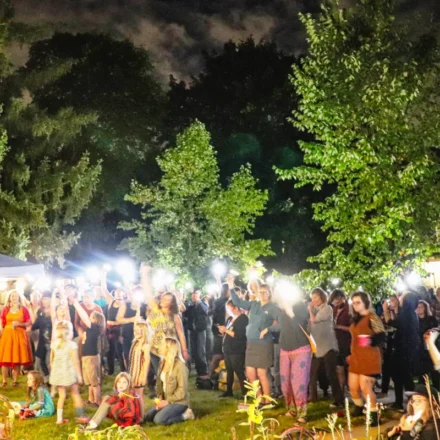
As the threat of detention loomed, a makeshift resistance emerged. The most visible manifestation of this is the volunteer driver network. Many of these volunteers, largely retirees in their 70s, have been affectionately dubbed the "abuelitas" by staff, despite having no personal family connection to the children attending the center.

"I’m just doing what I can do," said Sarah, a 71-year-old volunteer who has become a regular fixture. "I obviously feel less vulnerable than they would be. I’m white, I’m 71. I think I would not be treated like they might be treated."
The organization required to sustain this is immense. Some 60 volunteers, many commuting from the suburbs, operate in shifts to transport staff to and from their homes. They are coached in strict protocols: keep windows cracked, do not lie, and demand to see a warrant signed and dated by a judge.
For the volunteers, the risk is real. Many turn off location services on their smartphones to avoid digital tracking, and some express deep, quiet anxiety about the polarization of their own social circles. Sarah noted that at a recent book club meeting, peers openly discussed the view that "they don’t belong here" or that enforcement was only targeting "criminals."
"It’s really disheartening that people can interpret the same situation so differently," she said. "I was a teenager during the Civil Rights Movement, and this feels like a similar moment for our generation to stand up against oppression."
Implications: The High Cost of Survival
The strain on these centers has forced directors to act as crisis managers, human resources coordinators, and security liaisons. Lily Crooks, a director in St. Paul, organized a fundraiser that secured $5,000 for Lyft gift cards, allowing parents and employees to avoid bus stops—a favorite target for ICE surveillance.
"You literally have to have a good network to survive," Crooks said. "It’s amazing to see people sticking up for their neighbors, but it’s bleak realizing there isn’t a government entity coming to help."
For the workers themselves, the psychological toll is profound. One employee, identified only as P., described the experience of working in a country that claims to be a "safe harbor" while living in constant fear. "I’m free," she said, using air quotes. "But I can’t do anything. It’s very hard."
Despite the official declarations that "Operation Metro Surge" is winding down, the reality on the ground feels different. Crowdsourced monitoring sites like IceOut report that agents have become stealthier, shifting their focus toward suburban areas rather than the urban core.
Conclusion: The Meaning of Resistencia
As the sun sets over Minneapolis, the word resistencia takes on a weight that transcends its literal translation. For Diana, the director of the child care center, it represents a blend of resistance and endurance.
"In Spanish, we use that word a lot," Diana explained. "It means that you don’t give up, you keep fighting. We are going to get through it. This is going to pass."
While some staff members have begun to test the waters, choosing to drive themselves to work again, the culture of the center has been permanently altered. The daily "radio check" to ensure everyone has arrived safely is a reminder of the fragility of the current peace.
The child care system in the Twin Cities has survived, but it has been forced to evolve into something more than a place of learning. It has become a fortress of community solidarity, a testament to what happens when neighbors decide that the safety of the most vulnerable is worth the risk of their own comfort. As the national spotlight shifts elsewhere, the volunteers and staff in Minneapolis remain, waiting for the next day, hoping that everyone makes it through.