











































Minnesota’s Political Crossroads: Tumultuous Conventions Reignite Calls for Systemic Reform

WASHINGTON – The echoes of last weekend’s contentious DFL and GOP state party conventions continue to reverberate across Minnesota, sparking a renewed and urgent debate among Democrats and Republicans alike: Is it time to dismantle the state’s century-old method of selecting political candidates and replace it with a more inclusive, primary-centric approach? The recent gatherings, marked by internal strife, surprising upsets, and a notable discrediting of the endorsement process, have pushed this perennial discussion to the forefront of Minnesota’s political consciousness.
Minnesota’s modern system of caucuses and endorsing conventions, established in 1922, is deeply steeped in tradition and inextricably woven into the fabric of the state’s political culture. However, this historical legacy increasingly positions Minnesota as an anomaly in American politics. Only eight other states, including California and Michigan, currently employ similar mechanisms for endorsing or nominating candidates at state party conventions, making Minnesota’s process a distinct outlier in an era dominated by direct primary elections.
The recurring issues stemming from Minnesota’s nominating conventions have often led to calls for reform. Now, with the raw memories of last weekend’s events fresh in mind, the momentum for change appears to be building. Proposals range from abolishing endorsing conventions altogether to advancing the state’s primary election, currently slated for August 11, to an earlier date, perhaps in June. Implementing such significant changes would necessitate the crucial approval of both state parties and the Legislature, a political lift that has historically proven challenging. Yet, the pressure for reform is mounting, driven by a complex array of factors that question the very efficacy and democratic integrity of the current system.
A Century of Tradition Under Scrutiny
The core of the burgeoning discontent lies in the perceived disconnect between the convention delegates and the broader electorate. Political analyst Blois Olson, publisher of TheDailyAgenda.com, articulates a central criticism: "Party endorsements do not produce the most electable candidates." This sentiment is echoed by many who observe the system, arguing that the delegate selection process inherently empowers activists on the far right and far left, granting them an outsized influence on candidate selection.
Jessica Shaten, a DFL delegate from South Minneapolis, candidly expressed her frustration. "What the endorsement process has become is a way for extremist candidates to take control of their parties," she stated, highlighting a concern that these highly motivated, often ideologically purist delegates, do not accurately reflect the nuanced preferences of millions of Minnesota voters. Shaten, like many advocating for change, believes that the crucial decision of selecting favored candidates should ultimately rest with the broader voting public in a primary election. Her proposed solution: "Let all the voters choose, then the parties could endorse those nominees at a (post-primary) convention," thereby preserving a role for party validation while prioritizing voter choice.
The numbers underscore this disparity. While approximately 1,200 delegates attended the DFL convention and 2,000 the GOP’s event this year, these figures represent a minuscule fraction of Minnesota’s more than 3.8 million registered voters. These statewide delegates are themselves chosen through a cascading process of sub-caucuses at local and congressional district levels. While these initial caucuses may draw larger attendance, the overall pool of participants remains a small, self-selecting group, further fueling the argument that the current system does not genuinely represent the mainstream political will of the state.
The Tumultuous Weekend: A Chronology of Discontent
The immediate catalyst for the reinvigorated debate was the dramatic unfolding of events at both the Republican and Democratic state conventions, each marred by internal divisions and strategic maneuvers that underscored the vulnerabilities of the endorsement system.
The Republican Reckoning in Duluth
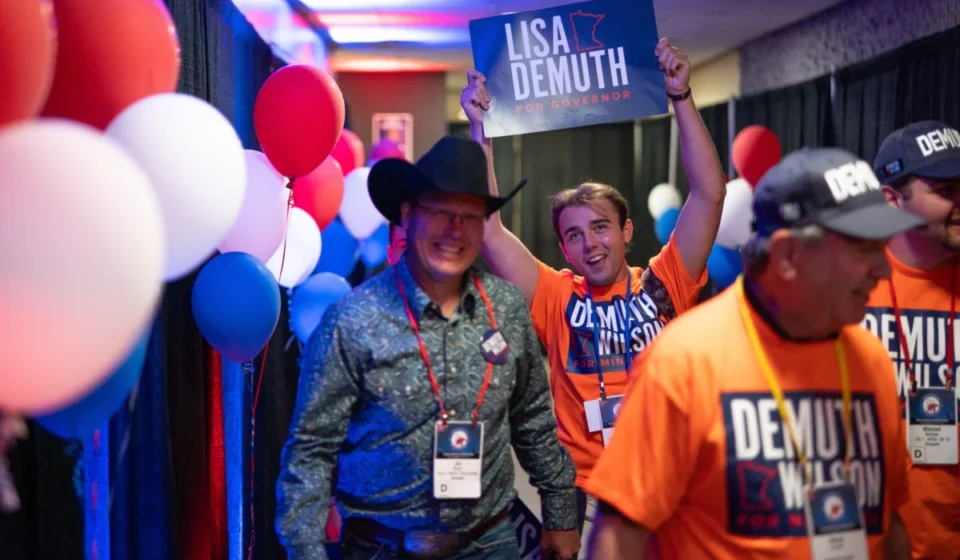
The Republican Party convention in Duluth was particularly tumultuous, punctuated by widespread distrust and procedural irregularities. Delegates were unsettled when GOP officials announced "anomalies" in a crucial round of balloting for the gubernatorial endorsement. In a surprising turn, businessman Kendall Qualls, widely seen as running to the right of state House Speaker Lisa Demuth, surged ahead. Qualls ultimately secured the party’s endorsement, a victory that signaled a preference for a more conservative candidate within the party’s activist base.
The U.S. Senate race saw an even more pronounced rejection of a mainstream candidate. Former sportscaster Michele Tafoya, a candidate actively supported by the National Republican Senatorial Committee (NRSC), was decisively spurned by delegates. Instead, they overwhelmingly cast more than 60% of their votes for former Navy SEAL Adam Schwarze. Like Qualls, Schwarze is considered more conservative and openly aligned with the "MAGA" faction of the Republican Party, indicating a clear ideological tilt among the convention-goers.
Tafoya, anticipating such an outcome or perhaps simply unwilling to cede her campaign, had already declared her intention to bypass the endorsement and proceed directly to a primary challenge. The balloting snafu, however, added another layer of complexity. In an unprecedented move, the Minnesota Republican Party decided on Monday night to release all candidates from the endorsement process. This decision effectively freed Demuth, who had previously pledged to abide by the endorsement, to continue her campaign into the primary alongside Qualls. Mike Lindell, the CEO of MyPillow, also confirmed his intent to stay in the race, setting the stage for a potentially bruising multi-candidate primary. The events in Duluth starkly illustrated a defeat for moderation and a clear victory for the party’s more conservative, activist wing.

DFL’s Divisions in Rochester
While less procedurally chaotic, the DFL convention in Rochester also highlighted deep internal divisions and the strategic limitations of the endorsement process. In a high-profile race for retiring Senator Tina Smith’s seat, Representative Angie Craig (D-2nd District), generally considered the more moderate candidate, found herself losing ground to Lieutenant Governor Peggy Flanagan in the battle for delegate support. Recognizing the uphill battle, Craig made the strategic decision to skip the DFL convention entirely and move directly to the primary, a calculated risk designed to appeal to a broader base of Democratic voters beyond the convention’s more progressive delegates.
Even for the popular and widely respected Senator Amy Klobuchar, who secured the DFL endorsement for governor, the convention was not without its ideological tensions. Despite her strong showing, approximately 30% of the delegates cast their votes for 26-year-old progressive Kobey Layne, signaling a significant appetite for more left-leaning policies even within the party’s establishment. This vote, though not overturning Klobuchar’s endorsement, served as a potent reminder of the internal ideological fault lines that permeate both major parties in Minnesota.
In both parties, the weekend’s outcomes effectively devalued the weight of the endorsements. Hard-fought primary battles are now inevitable for Smith’s Senate seat in both parties and for the governorship on the Republican side. These developments underscore the growing irrelevance of the convention endorsement as a definitive stamp of party unity or an uncontested path to the general election.
Supporting Data: Why the Current System Falls Short
The arguments for reforming Minnesota’s candidate selection process are not merely anecdotal; they are supported by political analysis and historical patterns.
The "Outsized Influence" of Delegates
As Jessica Shaten articulated, the current system disproportionately empowers a small, highly motivated segment of the electorate. The process of becoming a delegate, while technically open, requires a significant investment of time and commitment, often appealing most strongly to individuals with strong ideological convictions. This self-selection creates a delegate pool that is frequently more ideologically extreme than the average party voter, leading to endorsements that may not resonate with the broader public. Blois Olson’s assertion that endorsements "do not produce the most electable candidates" stems from this observation. Candidates favored by a passionate, hyper-partisan base at a convention may struggle to appeal to the swing voters and independents crucial for winning a statewide general election.
The Republican Dilemma: Abiding vs. Winning
Hamline University political science professor David Schultz points to a critical difference in how the endorsement process impacts the two major parties, particularly hurting Republicans. Historically, DFL candidates have shown a greater willingness and ability to bypass party endorsements and succeed in primaries. Governors Tim Walz and former Governor Mark Dayton are prominent examples of DFL politicians who flouted the endorsement process, won their party’s primary, and subsequently secured general election victories.
In contrast, GOP candidates who choose not to abide by the party endorsement have often faced severe repercussions from Republican voters in a primary, frequently leading to their defeat. This "punishment" dynamic, Schultz argues, can paradoxically harm the Republican Party by preventing potentially more electable candidates from advancing. "Since they haven’t won a statewide election in 20 years, there are probably enough people in the Republican Party who are saying, ‘If we keep doing this and we keep losing, maybe we should do something else,’" Schultz observed, highlighting the strategic imperative for the GOP to reconsider a system that appears to be contributing to their electoral struggles.
The "Summertime Blues" of an August Primary
Beyond the convention system itself, Minnesota’s primary election date is another point of contention. Currently scheduled for August 11, Minnesota finds itself in a minority of states that select their nominees so late in the year. Thirty-one states hold their primaries before the end of June.
This late primary date presents several disadvantages. Many voters are on vacation in August and are less engaged with politics, leading to depressed voter turnout compared to primaries held earlier in the year. Secretary of State Steve Simon, while a member of the state House, testified in 2017 about these very issues, advocating for a June primary. He argued that an earlier date would find more Minnesotans available and attentive to vote, and would also provide a longer, more robust general election period for candidates to introduce themselves and their platforms to the electorate. The "summertime blues" of an August primary, therefore, contribute to a less engaged and potentially less representative primary outcome.
Official Responses and Perspectives on Change
The push for reform is met with a mix of cautious acknowledgment, staunch defense, and strategic silence from within the parties.

Party Leadership’s Silence
Significantly, Minnesota Republican Party Chairman Alex Plechash and Democratic Party Chairman Richard Carlbom both declined requests to comment for this story. Their silence might indicate the highly sensitive nature of the debate, with both parties likely navigating internal discussions and political calculations regarding the future of their nominating processes. Any public statement at this juncture could be perceived as taking a side in a contentious intra-party debate.
Voices from the Convention Floor
Delegates who participate in the current system offer nuanced perspectives. Jason Franzen, a long-time GOP delegate and supporter of Kendall Qualls, acknowledged the archaic nature of the endorsement process but defended its "small ‘d’ democratic" spirit. Despite his support for the current system, Franzen predicted that calls to end the process "would continue to persist, and perhaps gather strength." He added a pragmatic note: "And if that’s what people in Minnesota want, well, that’s fine," suggesting a grudging acceptance of potential change if public sentiment demands it.
Frank Long, another seasoned delegate and party activist from Watertown Township, who supported Adam Schwarze, also confirmed the increased discussion about changing the process at the GOP convention, particularly among legislative colleagues of Lisa Demuth. However, Long strongly advocated for the existing system, arguing that delegates who rise through the caucus structure possess a superior understanding of voter preferences compared to the "small group of people who are recruiting and funding candidates" in a primary system. This highlights a fundamental tension: the belief that dedicated party activists are better arbiters of electability than the broader, less engaged primary electorate.
The Warning of "Blowback"
Blois Olson, the political analyst, cautioned against underestimating the resistance to change. He predicted "blowback" from powerful, organized groups that actively field delegates and benefit from the current system, including labor unions and hardline ideological organizations. These groups leverage the caucus/convention system to exert significant influence over party platforms and candidate selection. Eliminating the endorsement process would undoubtedly diminish their power, making them formidable opponents of reform.
Olson also noted that while such changes would "weaken the power of state parties," this weakening would be "in a limited way." Parties could still retain influence by focusing on drafting new bylaws, developing platforms, and formulating strategies, even if they no longer formally endorse candidates before a primary. This suggests a potential evolution of the parties’ roles, shifting from gatekeepers of nominations to organizers and ideological standard-bearers.
Implications: Challenges, Risks, and the Path Forward
The path to reforming Minnesota’s candidate selection process is fraught with political complexities and significant hurdles.
The Legislative Lift
Any change to the primary election calendar or the formal role of party endorsements would require legislative action. The Legislature would need to pass a new law to establish a revised election calendar, a task that has been attempted before in Minnesota without success. One major obstacle, as Professor David Schultz pointed out, lies with the legislators themselves. With an earlier June primary, lawmakers, who are often still in session in mid-May during an election year and might face special sessions, would have a severely compressed timeframe to campaign for their own re-election. Furthermore, moving the primary date would necessitate adjusting approximately a dozen other election deadlines, creating a domino effect that adds to the logistical and political complexity.
Impact on Party Dynamics and Voter Engagement
While change carries risks, it also offers potential benefits. A June primary, as advocated by former Secretary of State Simon, could boost voter turnout by engaging citizens before the traditional summer vacation season. A longer general election campaign period, free from the shadow of late primaries, could allow for more in-depth candidate vetting and public discourse.
However, moving away from endorsing conventions would fundamentally alter the dynamics of Minnesota’s political parties. While it might reduce the influence of ideological extremes and potentially lead to more moderate, broadly appealing candidates, it could also diminish the role of grassroots activism and party building that the current system encourages. The tension between empowering dedicated party activists and ensuring broader voter participation is a central dilemma. Parties would need to redefine their purpose and value proposition if candidate selection moves entirely to primaries, potentially focusing more on voter registration, issue advocacy, and grassroots organizing rather than candidate anointing.
Ultimately, the debate over Minnesota’s unique political process reflects a larger struggle within American democracy: how to balance party integrity and ideological purity with broad voter participation and electability. The tumultuous conventions of last weekend have forced this conversation to a critical juncture. Whether Minnesota’s political establishment can overcome historical inertia and deeply entrenched interests to forge a new path remains an open question, but the pressure for systemic reform has never been more palpable. The state stands at a crossroads, contemplating a future where its political culture might finally align more closely with the national norm, or choose to steadfastly uphold its distinct, century-old traditions, for better or worse.