

























































By Investigative Staff
WAYNESBORO, Miss. — Tucked into the quiet, pine-forested southeast corner of Mississippi, the town of Waynesboro is a place defined by its rhythms of agriculture and community. Home to approximately 20,000 residents, the county is characterized by sprawling farmland and a slow-paced lifestyle. However, beneath this pastoral facade lies a harrowing public health crisis that has largely escaped national attention.
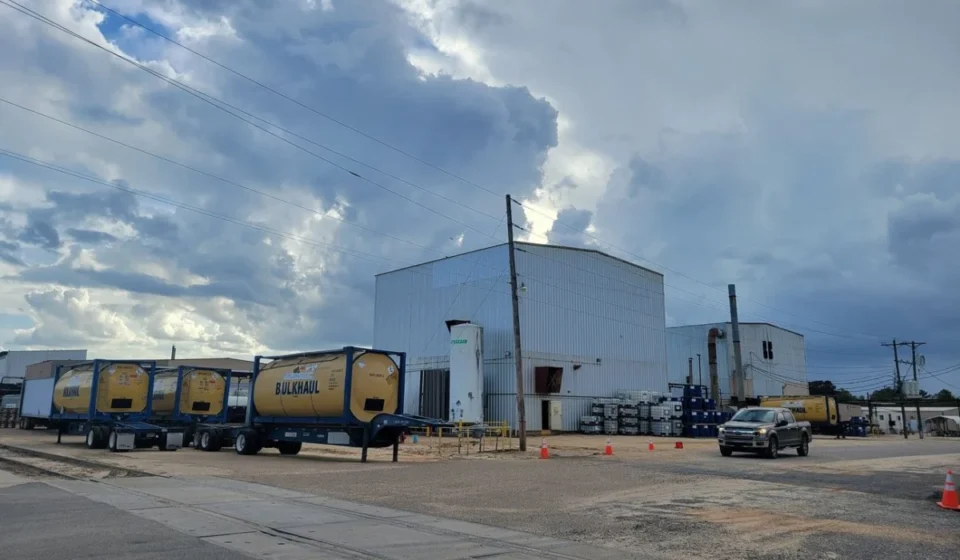
Wayne County holds a grim distinction in the United States: it is the epicenter of paraquat processing, housing a Sipcam Agro plant that serves as the nation’s largest single emitter of the toxic herbicide. Simultaneously, the county is witnessing a surge in Parkinson’s disease, with mortality rates placing it in the top 7% of all U.S. counties reporting such deaths between 2018 and 2024. As the world’s fastest-growing and incurable neurodegenerative condition, the rise of Parkinson’s in a community situated downwind from an industrial chemical giant is prompting scientists, environmental advocates, and affected families to ask a devastating question: Is the air they breathe fueling an epidemic?
The Chemical Profile: "One Sip Can Kill"
Paraquat dichloride, commonly known as paraquat and marketed most notably as Gramoxone, is a synthetic, broad-spectrum herbicide that has been in use since the 1960s. While it is an effective tool for clearing large swaths of land—often used in the production of soybeans, corn, and cotton—it is also one of the most lethal substances in the agricultural arsenal.
The Environmental Protection Agency (EPA) has long warned that "one sip can kill." Its toxicity is so absolute that it is frequently utilized in suicides, particularly in developing nations; in Samoa, for example, paraquat has been the primary tool for 70% of suicides for decades. Despite being banned in more than 70 countries, including the entire European Union, China, and Brazil, the United States continues to permit its widespread use. Even for those tasked with applying the chemical, the use of Personal Protective Equipment (PPE) provides only partial protection, as inhalation and dermal absorption remain constant risks.
A Chronology of Conflict and Contamination
The history of paraquat is a narrative of corporate dominance, scientific warnings, and systemic regulatory failure.
- 1950s: Researchers at Imperial Chemical Industries (ICI), a predecessor to the agrochemical giant Syngenta, identify that paraquat poses significant adverse effects on the human nervous system and brain tissue.
- 1960s: Paraquat enters the commercial market, heralded as a revolutionary weed killer.
- 2006–2017: Usage of paraquat in the U.S. more than triples. The EPA attributes this surge to the rise of glyphosate-resistant weeds, forcing farmers to turn to more aggressive, older chemical alternatives.
- 2013: Ashton Pearson Sr., a Mississippi native and former farmhand who spent his youth spraying herbicides, is diagnosed with Parkinson’s disease at the age of 58.
- 2015: The Sipcam Agro plant in Waynesboro begins operations, quickly becoming a significant source of local industrial activity.
- 2023: Under new management, the Waynesboro facility’s airborne emissions of paraquat spike dramatically. The Mississippi Development Authority provides tax credits to the facility to support expansion.
- March 2026: Syngenta announces it will cease the production of paraquat, citing competition from cheaper generic formulas rather than health concerns.
- Present Day: While major players like Syngenta exit the market, smaller, less-scrutinized facilities across the American South and Midwest are poised to absorb the production vacuum, likely increasing local exposure.
Supporting Data: The Correlation of Exposure and Disease
The scientific evidence linking paraquat to Parkinson’s disease is extensive and compelling. A 2024 study published in the International Journal of Epidemiology reaffirms that paraquat inhalation causes the destruction of dopamine-producing neurons in the brain—a hallmark mechanism of Parkinson’s disease.
The data from Wayne County is particularly alarming. While the national average mortality rate for Parkinson’s is 11.5 per 100,000 people, and Mississippi’s state average is 12.2, Wayne County’s mortality rate sits at a staggering 21.5.
Furthermore, the environmental footprint of the Waynesboro facility is difficult to ignore. In 2024 alone, the plant reported "fugitive emissions" totaling over 47,000 pounds of paraquat into the local atmosphere. To put this into perspective, this volume is enough to treat an agricultural tract larger than the city of Atlanta. These are not planned releases; they are unintended leaks occurring in a town where hundreds of households—predominantly Black families—reside within a one-mile radius of the plant.
Kimberly Terrell, a research scientist with the Environmental Integrity Project, notes that these emission levels far exceed what would be expected of a "major source" of toxic pollution. "They are significant," Terrell emphasizes, noting that the absence of federal regulations on paraquat air emissions leaves communities like Waynesboro in a regulatory vacuum.

Official Responses and Regulatory Silences
The regulatory framework governing paraquat is fragmented and, according to critics, toothless. Because paraquat is not classified as a "hazardous air pollutant" by federal standards, the EPA and state agencies like the Mississippi Department of Environmental Quality (MDEQ) have not set binding maximum emission thresholds.
When questioned about the Waynesboro plant, MDEQ spokesperson Jan Schaefer confirmed that the department is aware of the facility and has an "open enforcement action" regarding alleged air violations. However, the agency stopped short of detailing the nature of these violations or the potential for remediation, stating only that leaks would be evaluated as more information becomes available.
For residents like Jannette Holifield, whose husband, Martin Montelongo, passed away in 2025 after years of working at the plant, the bureaucracy feels like an abandonment. Montelongo’s death was officially attributed to a heart attack, but Holifield remains convinced that his chronic, worsening cough and lung issues—linked by researchers to long-term paraquat exposure—were the primary culprits. He was only 63.
Implications: The Future of Agricultural Regulation
The political climate surrounding paraquat remains polarized. While the EPA has recently initiated a "reassessment" of the herbicide’s safety—a move that some officials have framed as part of the "Make America Healthy Again" (MAHA) movement—advocates remain skeptical.
The concern is that while the rhetoric of federal agencies shifts, the actual legislative mechanisms are moving toward deregulation. Language recently introduced in the federal Farm Bill would pre-empt state-level laws, effectively stripping states of their power to impose stricter regulations on pesticides than the federal government. This would effectively kill current bills in states like Illinois, Iowa, and New York that seek to ban or restrict paraquat.
Furthermore, the "revolving door" between the agrochemical industry and federal oversight bodies continues to pose a conflict of interest. The presence of former Syngenta executives in high-ranking advisory positions within the U.S. Department of Agriculture creates a barrier for those seeking to prioritize public health over agricultural convenience.
A Call for Change
Ashton Pearson Sr., now leading a support group for those living with Parkinson’s, views the situation with a mixture of grief and indignation. "There is absolutely no doubt in my mind that we’re all victims of our environment," Pearson says. He recalls building coal-fired power plants in his youth, where safety protocols prevented the dispersal of toxic fly ash. He finds it incomprehensible that a company can legally vent tens of thousands of pounds of a neurotoxic herbicide into the air where children breathe and families grow gardens.
"They ought to have scrubbers in their equipment that prevent that," he argues. "We weren’t allowed to just run that up the chimney and disperse it into the environment."
As the scientific consensus solidifies around the dangers of paraquat, the case of Wayne County serves as a microcosm of a broader national failure. It is a story of environmental injustice where the health of vulnerable populations is traded for the efficiency of industrial farming. Whether the movement to ban paraquat succeeds will depend on whether policymakers choose to listen to the data—and the people—or to the lobbyists who continue to insist that this chemical is indispensable. For the residents of Waynesboro, the wait for an answer is literally a matter of life and death.