




























While national headlines have recently been captured by the aesthetic and environmental struggles of Washington, D.C.’s Lincoln Memorial Reflecting Pool—now choked by persistent algae blooms ahead of the nation’s 250th anniversary—regulators in Minnesota are engaged in a far more complex, multi-decade battle. In the “Land of 10,000 Lakes,” the challenge is not just the maintenance of a single reflecting basin, but the stewardship of thousands of interconnected water bodies that form the backbone of the state’s identity, economy, and ecology.
The Minnesota Pollution Control Agency (MPCA) has recently released its 2026 draft list of “impaired waters,” a biennial report mandated by the federal Clean Water Act. As the public comment period remains open through July 22, the report serves as a stark reminder that even in a state defined by its pristine water, the threats of sediment, bacterial contamination, and nutrient runoff remain pervasive.
The Scope of the Challenge: Data from the 2026 Impaired Waters List
Every two years, Minnesota is legally required to identify waters that fail to meet specific quality standards. The 2026 draft list is a comprehensive—and at times, sobering—inventory of the state’s aquatic health.
The report identifies 2,979 individual water bodies, including lakes, rivers, streams, and wetlands, that are currently classified as impaired. When accounting for multiple pollutants within single bodies of water, the state is monitoring a total of 6,410 distinct impairments.
Breakdown of Primary Pollutants:
- Aquatic Life Impairments: Affecting fish populations and macroinvertebrate health, these account for 32% of all listed impairments.
- Mercury: A long-standing issue in Minnesota, mercury contamination accounts for 27% of the list, highlighting the persistent challenges of atmospheric deposition and bioaccumulation.
- Bacteria: Pathogens and high bacterial counts, which often limit recreational use and public health safety, represent 15% of the total.
- Nutrients and Sediment: Excessive phosphorus and nitrogen, which serve as the primary fuel for the types of algae blooms currently plaguing the Lincoln Memorial Reflecting Pool, remain a top priority for remediation efforts.
The comparison to the Lincoln Memorial is instructive. In Washington, the algae crisis is driven by a combination of shallow water depths (1.5 to 2.5 feet), the use of Potomac River water, and heat retention from a blue-painted basin. In Minnesota, the triggers are often more diffuse—agricultural runoff, urban stormwater, and climate-induced warming—making them significantly more difficult to manage on a landscape scale.
A Chronology of Conservation: From Individual Efforts to Watershed Stewardship
The trajectory of water quality management in Minnesota has shifted significantly over the last several decades. For many years, the MPCA focused on a “water-body-by-water-body” approach. While this allowed for concentrated efforts on specific lakes or river segments, it often failed to address the broader systemic issues causing the pollution in the first place.
In 2007, the agency adopted a more holistic, scientific framework known as the “watershed approach.” By shifting the focus to 80 major watersheds, the state now collaborates with local partners, soil and water conservation districts, and tribal nations to manage the entire drainage basin.
Milestones in Minnesota Water Policy:
- 1992: The inception of the state’s formal impaired waters program.
- 2007: The official transition to the “watershed approach,” allowing for comprehensive resource management rather than isolated intervention.
- 2008: Minnesota voters pass the Clean Water, Land and Legacy Amendment, a landmark constitutional change that dedicated a 0.375% sales tax to water and land conservation.
- 2026: The current cycle, which proposes the removal of 45 water bodies from the impaired list—a record-breaking achievement for the state.
Success Stories: The Case of Riley Lake
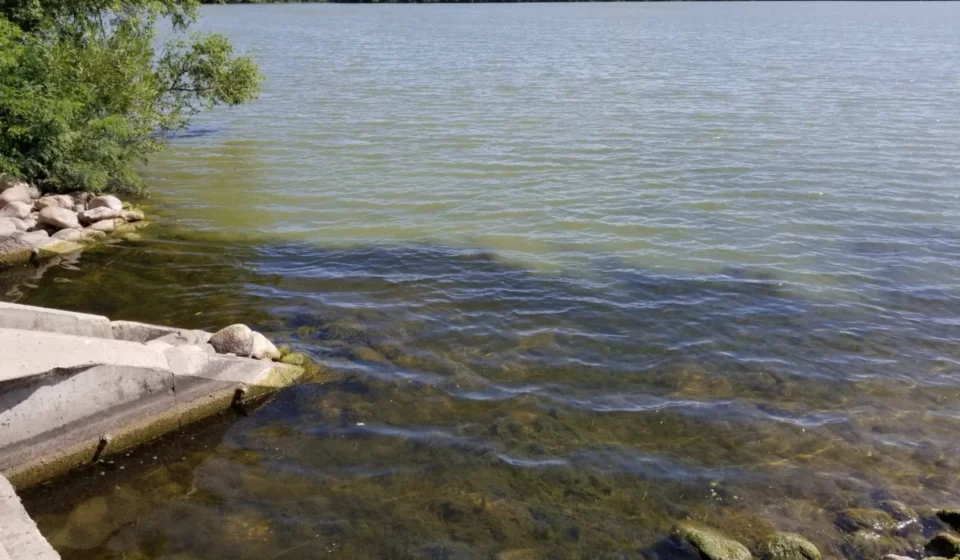
While the sheer number of impaired waters can be daunting, success is possible. Riley Lake, located on the border of Chanhassen and Eden Prairie, stands as a prime example of what happens when data-driven restoration meets sustained local investment.
For years, Riley Lake suffered from degraded water quality and invasive species. The restoration, led by the Riley Purgatory Bluff Creek Watershed District, was a multi-stage project that required biological, chemical, and mechanical interventions.

“We began the process with the University of Minnesota in which we studied the migratory and reproductive patterns of common carp,” said Terry Jeffery, the district administrator. By suppressing the carp population, the district was able to stabilize the lakebed vegetation. Following this, crews removed invasive Eurasian water milfoil and curly-leaf pondweed. The final step involved the application of alum—a chemical treatment that binds with phosphorus in the water, starving the algae of the nutrients it needs to bloom. Today, Riley Lake has been officially removed from the impaired list, serving as a blueprint for other districts.
Official Responses and Bureaucratic Complexity
The language of water management is often shrouded in technical terminology. The “TMDL” (Total Maximum Daily Load) is perhaps the most critical term for the public to understand. A TMDL is effectively the “pollution budget” for a body of water—the maximum amount of a specific pollutant that a stream or lake can assimilate while still meeting state water quality standards.
To date, Minnesota has completed 205 EPA-approved TMDL projects. These are not merely studies; they are actionable roadmaps for restoration. The state’s 2026 report to Congress outlines the progress of these projects and underscores the necessity of continued federal-state cooperation.
However, the MPCA faces a delicate balancing act. While the 2026 draft list adds 46 new impairments, it also removes over 100. This net progress, while positive, underscores the fact that Minnesota’s water quality is a moving target. As climate patterns shift and land use intensifies, new stressors emerge, necessitating a constant, agile regulatory response.
Implications for the Future: Funding and Civic Engagement
The sustainability of Minnesota’s water quality efforts is inextricably linked to the Clean Water Fund. Between 2024 and 2025, the state legislature appropriated $318 million to water resource activities, with $48 million specifically allocated to the MPCA for protection efforts.
Unlike many other states that rely solely on federal grants, Minnesota’s self-funded model—born from the 2008 constitutional amendment—provides a degree of financial insulation. However, the scale of the challenge remains immense.
How the Public Can Participate:
The MPCA is currently in the midst of a series of virtual public meetings. These sessions are essential for ensuring that local knowledge is incorporated into the statewide list. For many residents, these meetings represent a rare opportunity to bridge the gap between bureaucratic data and the lived experience of fishing, swimming, and drinking from local waters.
Conclusion: A Long-Term Commitment
The challenges faced by Minnesota’s water managers are a microcosm of the global struggle to balance industrial and agricultural development with environmental health. While the algae at the Lincoln Memorial provides a vivid, immediate image of urban water management failure, the quiet, persistent work being done across Minnesota’s thousands of lakes and streams is perhaps the more vital story.
By utilizing a watershed approach, investing in sustainable funding models, and applying scientific rigor to local problems, Minnesota continues to demonstrate that while water quality is fragile, it is not beyond repair. The 2026 impaired waters list is not just a list of failures—it is a roadmap for restoration, requiring the sustained attention of both regulators and the citizens who rely on the state’s most precious natural resource.