

























































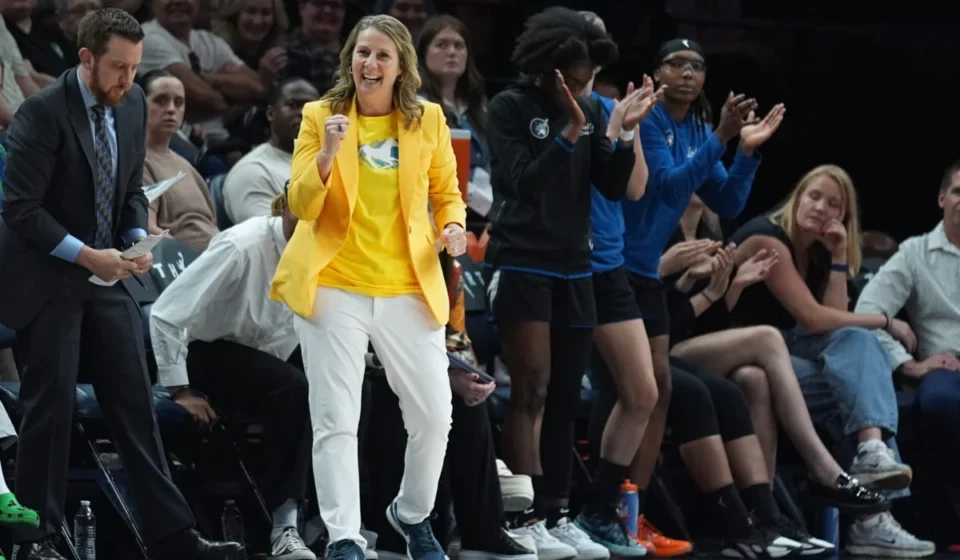

It is a common trope in sports journalism: the narrative that a veteran coach, once defined by a volatile temper and relentless intensity, has finally “mellowed” with age. It is a convenient shorthand for progress, often implying a softening of edges or a retreat from the demanding standards that built their legacy. But for Cheryl Reeve, the mastermind behind the Minnesota Lynx dynasty and the most successful coach in WNBA history, such a label is not only inaccurate—it is a misunderstanding of her fundamental nature.
Reeve, who approaches her 60th birthday this September, remains the same fierce competitor who arrived in Minneapolis nearly two decades ago. While she has evolved as a leader, mother, and wife, the core of her identity—an uncompromising pursuit of excellence—remains etched into the foundation of the Lynx organization.
The Standard of Excellence
Reeve’s philosophy is simple: she demands the absolute best from her players, her staff, and herself. She is the rare coach who refuses to hide her frustrations, whether she is lambasting officials to protect her players—as seen in her infamous ejection and subsequent $15,000 fine during last year’s semifinals—or publicly calling out her team for a lack of defensive effort.
A prime example occurred just recently. Following a 101-93 victory over the expansion Portland franchise, the Lynx celebrated the legacy of Hall of Famer Sylvia Fowles. Amidst the festivities, Reeve offered a biting critique of her current roster, suggesting that the retired legends in attendance could have played better defense than the active players had that evening. It was a jarring, honest, and quintessentially "Reeve" moment, delivered despite the Lynx holding the league’s best record at 20-6. For Reeve, the scoreboard is secondary to the process; if the defensive metrics dip below 40%, the standard has been breached, regardless of the win-loss column.
"Cheryl is going to be honest," says All-Star guard Courtney Williams, who is in her third season under Reeve’s tutelage. "She’s going to coach you hard, and if you’re built for it, you’re built for it. The ones that aren’t can’t play for Cheryl because she’s a straight shooter. She has one of the greatest basketball minds I’ve ever been around. She holds everyone accountable—from the best player to the ball kids. She has a standard, and she wants everyone at that level."
A Chronology of Grit: From La Salle to the Summit
Reeve’s path to the pinnacle of basketball was far from linear. A product of the South Jersey/Philly basketball ecosystem, she was a standout student-athlete at La Salle University, where she earned both a bachelor’s degree in computer science and an MBA. During her formative years, her family often questioned her devotion to the fledgling WNBA, gently suggesting she leverage her education in more stable industries.
She persisted, toiling for nine years as an assistant coach across three different franchises, two of which ultimately folded. Her break came in 2010 when, at the recommendation of Bill Laimbeer, the Lynx organization—which had only reached the playoffs twice in its first 11 seasons—took a gamble on her.
From her first interview, Reeve signaled a shift in culture. "I felt like I could come in here with a different expectation than what they had in the past," she recalled. "The goal for them was to make the playoffs. I didn’t feel like that bar was high enough. Being in the playoffs should be an expectation. The goal is to win a championship."
The early days were harrowing. A 2-9 start in her inaugural season led to scathing criticism from fans and media alike. During a particularly dismal loss, she famously told the press her team was simply "a bad basketball team." While the comment reportedly caused anxiety for the ticket sales department, it marked the beginning of a total organizational reset. By 2011, bolstered by the addition of superstar Maya Moore, the team captured its first of four championships under her tenure.
The Evolution of a Leader
While her intensity remains, the "evolution" in Reeve’s coaching style is one of discernment. She has become more adept at identifying which player deficiencies are developmental and which are permanent. She is more willing to let a young talent like point guard Olivia Miles navigate the growing pains of a rookie season—mistakes she might have punished with a benching a decade ago.
"The coach that Lindsay Whalen played for is very different than the coach Olivia Miles is currently playing for," Reeve noted during a recent press conference. This shift is not a softening; it is a refinement of her pedagogical approach.
Yet, the sharp tongue remains. Reeve is famously self-aware, even admitting that she occasionally crosses the line. She recently shared that she once said something to Courtney Williams that "broke her spirit," a moment of vulnerability she clearly regretted. For their part, the players seem to understand that these moments are born from a desperate, singular desire to see them succeed. "I want it for them," Reeve says of her players, particularly those who, like Williams, have yet to taste a championship. "Every day."
Supporting Data: The G.O.A.T. Resumé
The numbers substantiate her status as a titan of the game. On July 8, Reeve secured her 380th regular-season victory, surpassing Mike Thibault to become the winningest coach in WNBA history. Her resume is a staggering collection of hardware:
- Six-time WNBA Champion (four as head coach, two as an assistant).
- Four-time WNBA Coach of the Year.
- Two-time WNBA Executive of the Year.
- Five-time All-Star Head Coach.
- Women’s Basketball Hall of Fame inductee (2024).
Beyond the accolades, the respect she commands from her peers is perhaps the most telling metric. Sandy Brondello, head coach of the New York Liberty, refers to Reeve as the "G.O.A.T." of the coaching ranks. "I have so much respect for her, what she does and how her teams compete," Brondello said. "It’s a credit to the identity she wants them to play with."
Implications: The Legacy Beyond the Court
Reeve’s influence now extends well beyond the lines of the basketball court. In an era where professional coaches are often treated as interchangeable parts, her 17-year tenure in Minnesota is an anomaly, a testament to the stability provided by ownership and her own adaptability.
She has also become a prominent voice for social progress. Whether wearing shirts advocating for women’s rights or investing in local sports like the Minnesota Aurora, Reeve uses her platform to challenge the status quo. This, she notes, is simply part of the maturation process. "With age comes a little more wisdom around what you can do better," she says.
As she moves toward the inevitable call from the Naismith Basketball Hall of Fame, Reeve shows no signs of slowing down. She remains the same person who, in 2010, walked past a security guard who didn’t know his place, signaling to everyone in the Target Center that the era of mediocrity was over.
The "mellowed" narrative may persist in the headlines, but those who work with her know the truth: Cheryl Reeve has not mellowed. She has simply perfected the art of holding the world to the impossible standard she set for herself on day one.