



























WASHINGTON D.C. – A seemingly innocuous issue – the construction of data centers – has rapidly emerged as an unexpected flashpoint in the 2026 midterm elections, particularly putting Republicans in a precarious political position. President Donald Trump’s unequivocal endorsement of these facilities, coupled with his derisive characterization of opposing communities as desiring to be "backwards and poor," has created a significant challenge for GOP candidates navigating increasingly vocal local opposition. The friction between national strategic imperatives, championed by Trump, and mounting grassroots concerns over environmental impact and local autonomy is redefining political battlegrounds across the nation, with Minnesota serving as a microcosm of this evolving electoral landscape.
The "Backwards and Poor" Stigma
President Trump has consistently championed data centers as vital engines of economic growth and crucial infrastructure in the burgeoning global artificial intelligence (AI) arms race. This week, in a post on Truth Social, he doubled down on his pro-development stance, referring to data centers as the "Golden Goose" of modern industry. His rationale is rooted in the belief that robust data infrastructure is the cornerstone of America’s strategic competition with China in AI and emerging technologies.
"The only reason that communities throughout the U.S.A. should not want Data Centers is if they want to end up being backwards and poor," Trump declared, a statement that has reverberated through political discourse, drawing a stark line in the sand for those considering the merits of these massive facilities. This rhetoric, while clear in its intent to galvanize support for technological advancement, has inadvertently alienated segments of the electorate who perceive it as dismissive of legitimate local concerns.
A Rapidly Evolving Campaign Issue
What began as localized zoning debates has, with surprising speed, escalated into a defining issue of the 2026 midterm elections. Across the political spectrum, voters are increasingly expressing reservations about the proliferation of data centers, turning a once niche topic into a mainstream campaign staple.
A recent Economist/YouGov Poll underscored the breadth of this opposition, revealing that more than half of Americans surveyed viewed data centers as "bad," while only a mere 20% considered them beneficial. The survey highlighted a significant partisan divide, with 61% of Democrats expressing negative views on data center construction, arguing it is detrimental to the country. While Republicans showed slightly less unified opposition, a substantial 39% of GOP respondents still saw new data center construction as negative, compared to 31% who viewed it favorably. This data indicates that despite Trump’s strong pro-development rhetoric, a considerable portion of his own party’s base shares the concerns of their Democratic counterparts, leaving many Republican candidates in a tough spot as they try to reconcile national party messaging with local sentiment.
The Resource Drain and Job Question
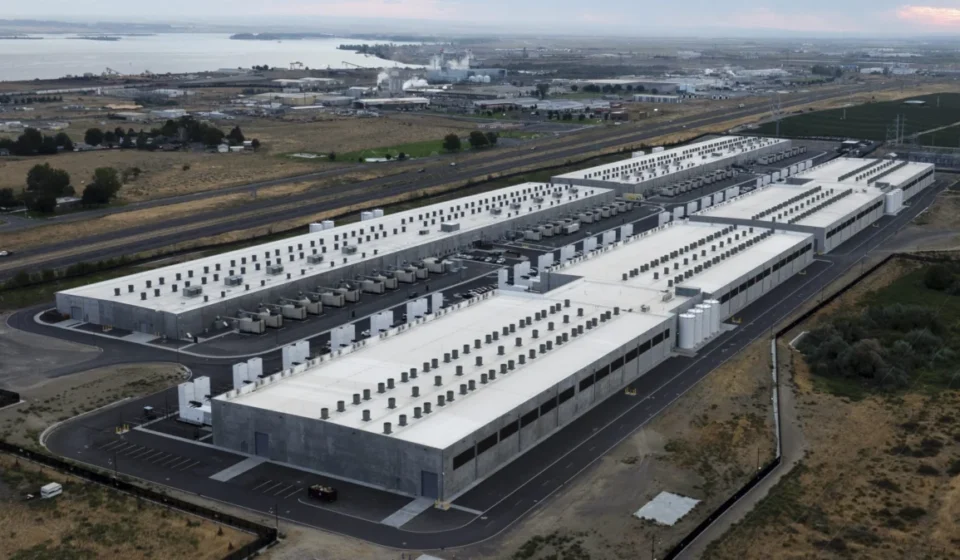
The backlash against data centers is multifaceted and deeply rooted in practical concerns. These facilities are notoriously resource-intensive, consuming colossal amounts of electricity and, crucially, water for their cooling systems. In an era of increasing climate awareness and resource scarcity, these demands raise significant environmental alarms. Local communities often fear the strain on existing infrastructure, the potential for increased utility costs, and the long-term ecological footprint.
Economists have further complicated the narrative by determining that the job creation touted by proponents is largely limited to short-term construction phases. While these temporary roles garner the support of trade unions, the promise of sustained, high-paying local jobs post-construction often falls short. Once operational, data centers require a relatively small, highly specialized workforce, leading many communities to question whether the substantial environmental and infrastructural costs truly justify the limited enduring economic benefits. The disparity between the promised "boom" and the perceived reality fuels public skepticism, transforming abstract economic arguments into tangible local grievances.
Minnesota Republicans Divided: Navigating the Local-National Divide
The reverberations of Trump’s assertive stance are particularly evident in Minnesota, where Republican leaders find themselves wrestling with a complex calculus of party loyalty, national strategic interests, and pressing local concerns. The state, home to several proposed data center projects, showcases the delicate tightrope act many GOP figures are forced to perform.
Embracing the "Golden Goose": Representative Tom Emmer’s Stance
Representative Tom Emmer, R-6th District, a prominent member of the U.S. House leadership, immediately aligned himself with President Trump’s position. Emmer’s enthusiastic endorsement underscores the national security argument, framing data center development as critical to maintaining America’s technological edge.
"President Trump is absolutely spot on," Emmer declared in a post on X. "Communist China and our adversaries would love it if the United States was asleep at the wheel and stopped innovating and developing AI and emerging tech. Thanks to President Trump’s work, the USA will be a digital LEADER!" His statement reflects a top-down, national-interest perspective, prioritizing geopolitical competition and technological supremacy above localized environmental or social concerns. For Emmer, the choice is clear: embrace the "Golden Goose" or risk falling behind global rivals.
The Call for Local Control: Representative Brad Finstad’s Nuance
In stark contrast to Emmer’s wholehearted embrace, Representative Brad Finstad, R-1st District, articulated a more nuanced position, emphasizing the importance of local autonomy and comprehensive understanding. Finstad’s district in southern Minnesota is a hotbed of proposed data center activity, forcing him to engage directly with the practical implications of these developments for his constituents.
Finstad acknowledged the broader significance of AI technology, stating, "the discussion around AI technology is one our country needs to have." However, he quickly pivoted to the local perspective: "Data centers, like those proposed in southern Minnesota, can play an important role in our economic future and national security, but the decision about whether a data center is right for a particular community should be made by the people and local leaders who know their communities best, not handed down by Washington through a blanket, one-size-fits-all approach that treats every community the same."
He further stressed the critical need for transparency, asserting that communities must have "a full understanding of the energy demands, environmental impacts, job creation, and potential tax benefits of a proposed data center." Finstad called upon companies proposing these projects to "have a responsibility to be fully transparent about the scope of any short- or long-term impacts," thereby enabling local leaders and residents to make truly informed decisions. This position reflects a traditional Republican emphasis on local control and responsible governance, creating a clear philosophical divergence from Trump’s more centralized directive.
A Balanced Approach: State Senator Eric Pratt’s Perspective
State Senator Eric Pratt, a Republican vying for the seat of retiring Rep. Angie Craig, echoed Finstad’s sentiment, pushing back against Trump’s sweeping dismissal of communities reluctant to host data centers. Pratt advocates for a "balanced approach to data center development that puts local communities at the center of the conversation while recognizing the growing importance of domestic technology infrastructure."
Pratt affirmed the strategic value of these facilities, stating, "Data centers are becoming an important part of our economy, our technology infrastructure, and our national security." Yet, he immediately qualified this, adding, "But that does not mean every proposed project belongs in every community, or that concerns from the people who live nearby should ever be brushed aside." His statement seeks a middle ground, acknowledging the macro-level benefits while staunchly defending the micro-level right of communities to self-determination. Significantly, Pratt also voiced his opposition to blanket moratoriums on data center construction, urging Minnesota to "resist an all-or-nothing approach," advocating instead for a project-by-project assessment based on local suitability and community consent.
Battleground Minnesota: Data Centers at the Forefront of Local Races
The ideological schism within the Minnesota GOP is not merely academic; it is manifesting directly in the heated electoral contests across the state, particularly in districts where data center proposals loom large. The issue has become a potent rallying cry for Democratic challengers, who are actively leveraging public sentiment to galvanize their base and attract swing voters.
Proposals in the GOP’s Backyard: A Localized Challenge
Several proposed data center projects are situated squarely within Republican-held congressional districts, intensifying the political pressure on incumbents. Pine Island, Faribault, and North Mankato fall within Rep. Finstad’s southern Minnesota district. Hermantown is located in Rep. Pete Stauber’s 8th District, and Monticello is in Rep. Emmer’s district. These localized battles force Republicans to choose between national party alignment and constituent demands, often with significant electoral consequences. The proximity of these projects to the homes and lives of voters ensures the issue remains highly visible and deeply personal.
Democratic Challengers Seize the Narrative
As November’s elections draw nearer, Democratic candidates are seizing the initiative, planting clear flags against unchecked data center development. They are actively proposing and implementing moratoriums, advocating for stricter regulations, and condemning practices that obscure transparency.
Matt Little, the Democratic rival challenging State Sen. Eric Pratt for Angie Craig’s seat, has pledged to champion moratoriums on data center construction and to ban non-disclosure agreements (NDAs) that developers often impose on local officials. These NDAs have become a particular point of contention, as they effectively shield crucial details about proposed projects from public scrutiny, fueling distrust and suspicion within communities.
Similarly, Jake Johnson, Rep. Brad Finstad’s Democratic challenger, made headlines in August by joining a protest against a proposed data center in Pine Island. "I was proud to stand with the people of Pine Island to say that we don’t want this data center here until we know for sure that it will actually benefit our people and our communities," Johnson stated. He subsequently released a detailed "plan for stopping data center exploitation" in Minnesota, outlining policies aimed at protecting local resources and ensuring genuine community benefits.
Meanwhile, Trina Swanson, a Democrat running against Rep. Stauber on the Iron Range, lives in close proximity to a proposed data center in Hermantown. Her personal experience has fueled her vocal condemnation of NDAs signed by Hermantown officials, the perceived lack of regulation on data center developments, and the heavy water usage and potential for increased energy costs. "I want guardrails in place," Swanson asserted. "I want to understand how we’re going to prioritize our people over corporations like Google that paid zero dollars in federal taxes last year." Her critique highlights a broader theme of corporate accountability and local resource protection against powerful tech giants.
Even Google, a major player in the data center industry, has engaged in a "charm offensive" in communities like Pine Island, offering funding for schools and sponsoring local events such as the city’s cheese festival. While intended to foster goodwill, these efforts are often viewed with skepticism by residents and opposition candidates, who see them as attempts to sugarcoat potentially negative impacts.
Legislative Gridlock and Industry Lobbying
The political fervor surrounding data centers has also played out in the Minnesota State Legislature. In 2025, lawmakers did approve some basic regulations for the industry. However, more ambitious efforts to impose tougher rules, mandate specific water permits, and ban local non-disclosure agreements failed to pass in 2026. This legislative inertia is largely attributed to aggressive lobbying campaigns by industry groups, eager to maintain an environment conducive to rapid expansion, and surprisingly, by labor unions, who prioritize the short-term construction jobs these projects provide. This dynamic further complicates the political landscape, pitting environmental and community advocates against powerful economic interests.
The issue’s growing prominence is perhaps best exemplified by Grant Hauschild, a DFL state senator representing Hermantown, who dedicated his first televised campaign ad to data centers. Hauschild touted the regulations considered by the state Legislature and pledged to continue advocating for greater industry oversight. His ad concluded with a direct appeal to voters: "I don’t work for data centers, I work for you," a clear message intended to distinguish him from perceived corporate influence.
The "Quiet Boom" in Political Advertising
The rising significance of data centers in electoral campaigns is further corroborated by AdImpact, a firm tracking trends in political advertising. AdImpact has noted a "quiet boom" in data center-related ads, indicating that candidates across the spectrum are recognizing the issue’s potency with voters. While the majority of the financial outlay for these ads originates from Democratic campaigns, a noteworthy 26% are funded by Republicans. Crucially, most of these Republican-funded ads are from candidates opposing the construction of local data centers, illustrating the deep internal divisions and the pressure faced by GOP candidates on the ground. This trend underscores the fact that, irrespective of national party directives, local opposition to data centers is a bipartisan concern that candidates cannot afford to ignore.
The Broader National Context and Future Outlook
The political battles unfolding in Minnesota are not isolated incidents but rather symptomatic of a broader national reckoning with the rapid expansion of digital infrastructure. The data center dilemma encapsulates fundamental tensions at the heart of modern development: economic opportunity versus environmental sustainability, national strategic imperatives versus local autonomy, and the demands of the digital age versus the preservation of community character.
The Energy-AI Nexus
At the core of this debate is the profound and rapidly escalating demand for artificial intelligence. AI, while promising transformative advancements, is incredibly compute-intensive, requiring vast arrays of servers running 24/7. This directly translates into an insatiable appetite for electricity, and consequently, for new data centers to house these operations. The push for AI leadership, as articulated by President Trump and echoed by figures like Rep. Emmer, creates immense pressure for rapid data center deployment. However, this national imperative directly clashes with local grids already strained by growing energy demands and environmental concerns about carbon footprints and water usage. The "energy-AI nexus" will continue to be a defining challenge, forcing difficult trade-offs between technological progress and ecological responsibility.
Community Autonomy vs. National Imperatives
The debate also highlights a classic American tension between centralized authority and local self-determination. Trump’s "backwards and poor" comment, while aiming to spur development, inadvertently frames a national strategic goal as superior to local community wishes. Conversely, the stances of Finstad and Pratt, advocating for local control and transparency, reflect a deeply ingrained American principle that communities should have the ultimate say over what develops within their borders. As the federal government increasingly emphasizes the strategic importance of AI and associated infrastructure, the friction with local land-use decisions is likely to intensify, potentially leading to calls for federal guidelines or even preemption in certain cases.
The Path Forward
Looking ahead, the data center debate is unlikely to dissipate. The demands of AI will only grow, ensuring continued pressure for new facilities. This will necessitate a more sophisticated and transparent approach from developers and policymakers alike. There may be a growing push for innovations in cooling technologies, renewable energy integration for data centers, and more robust impact assessments that genuinely weigh long-term community costs against perceived benefits.
Politically, candidates will continue to grapple with this issue. Republicans, in particular, will need to navigate the divergent pressures from their national leader and their local constituents. The "quiet boom" in political advertising suggests that data centers will remain a key wedge issue, potentially swaying elections in districts where proposed projects have stirred strong local emotions. The ultimate resolution will likely involve a complex tapestry of state-level regulations, local zoning decisions, and, perhaps, a more refined national strategy that better balances technological ambition with environmental stewardship and community well-being. The midterms of 2026 are proving to be a critical proving ground for how America chooses to build its digital future.