


















































In the heart of Minneapolis, the All My Relations Gallery has become a vibrant nexus of contemporary Native American expression. The current exhibition, "Sakowin Synergy," serves as more than just a display of visual art; it acts as a profound dialogue between generations, styles, and the enduring resilience of the Oceti Sakowin—the Seven Council Fires of the Dakota, Lakota, and Nakota nations. Spearheaded by South Dakota-based artist Ray "Rock Boy" Janis, the exhibition highlights a collaborative spirit that bridges the gap between traditional ledger art and modern, pop-culture-infused aesthetics.
The Core of the Exhibition: Mentorship as Collaboration
At its heart, "Sakowin Synergy" is a testament to the power of artistic mentorship. Ray Janis, a rising voice in the Indigenous art scene, has curated a collection that intentionally dismantles the solitary nature of the artist’s studio. By inviting his friend Sheldon Starr and established legends of the craft—Dwayne "Chuck" Wilcox and Jim Yellowhawk—into his creative process, Janis has created a visual manifestation of communal wisdom.
The cultural lineage represented in the show is significant. Yellowhawk, hailing from the Itazipco Band of the Cheyenne River Sioux Tribe, joins Wilcox, Starr, and Janis, who are all Oglala Lakota, to create a multi-generational tapestry of expression. The exhibition title itself, "Sakowin Synergy," serves as a nod to the historical alliance of the Oceti Sakowin, suggesting that the strength of the people—and their art—is found in their collective unity.
Chronology of a Creative Evolution
The genesis of this exhibition was not an overnight occurrence but rather the result of years of community building and institutional support.

- 2020: The foundation for this collaboration was laid when Ray Janis and Sheldon Starr participated in an emerging artist cohort through a partnership with the Hennepin Theatre Trust. This initiative provided the professional framework for them to refine their voices.
- 2022: All My Relations Gallery hosted a group exhibition featuring both Janis and Starr, signaling to the art world that these two artists were significant contributors to the contemporary landscape.
- Early 2026: The original opening for "Sakowin Synergy" was scheduled for January. However, in an act of solidarity and community responsibility, the exhibition was postponed. The gallery pivoted to become a hub for mutual aid in direct response to the impact of Operation Metro Surge, illustrating the institution’s commitment to the community over commercial timelines.
- July 9, 2026: The exhibition finally opened to the public, featuring a celebratory atmosphere complete with refreshments from the adjacent Pow Wow Grounds coffee shop, marking a triumphant return to artistic focus after a period of intense community mobilization.
Ledger Art: A Historical Foundation for Modern Expression
A defining feature of the exhibition is the use of ledger art—a tradition that carries the weight of 19th-century history. Originally, ledger art emerged when Native artists, facing a scarcity of traditional materials like buffalo hides, began using the pages of bookkeeping ledgers provided by traders and government agents to document their experiences, battles, and cultural traditions.
In "Sakowin Synergy," this medium is transformed. The piece "Rez Boys Boogie" (2026) serves as the primary exemplar of this evolution. On a long, rectangular canvas, the four artists have synthesized their distinct styles into a cohesive whole. The work depicts a pow wow circle viewed from a bird’s-eye perspective. Janis, who orchestrated the collaboration, contributed the central circle and the atmospheric sky elements, while Starr integrated complex, geometric bat imagery.
The inclusion of Yellowhawk and Wilcox—both seasoned pow wow dancers—adds a layer of authenticity to the work. Each man painted himself as a dancing figure on the perimeter of the circle. The composition is masterfully unified; despite the four distinct stylistic fingerprints, the dancers appear to frame the world, poised at the threshold of the sacred circle. As Janis noted, this collaboration was historic for the group, as it marked the first time Yellowhawk and Wilcox—despite their long-standing professional and personal relationship—worked together on the same physical canvas.
Supporting Data: Blending the Old and the New
Angela Two Stars, the director of All My Relations Gallery, has been instrumental in framing the context of this exhibition. She describes the project as a deliberate collision of artistic ideologies.

"Wilcox and Yellowhawk have been like mentors to the younger artist generation," Two Stars explains. "They have the old-school style, whereas Janis and Starr are more contemporary and digital. The show is kind of blending those together, using their work to speak to the influences of each other."
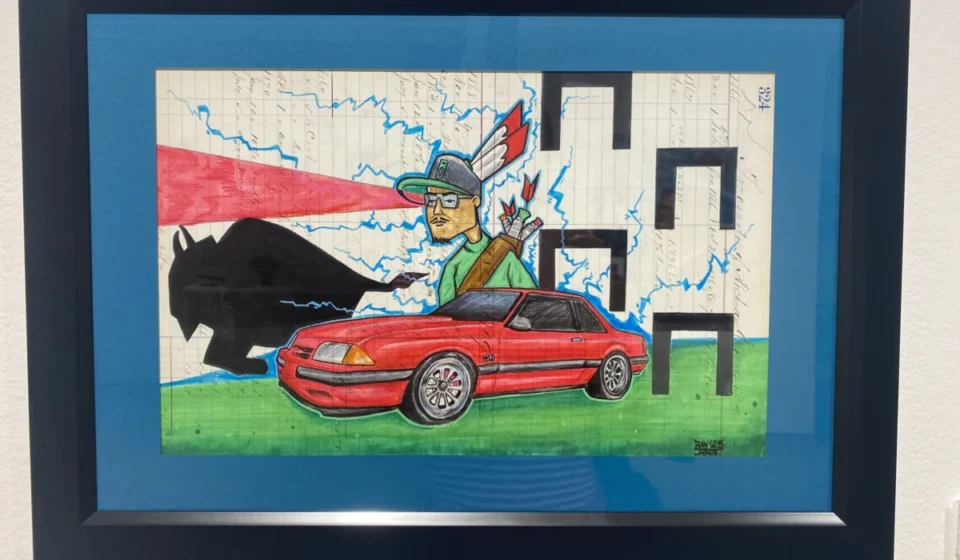
This synthesis is evident in the specific aesthetic choices made by the artists. While Wilcox and Yellowhawk utilize a more traditional, figurative approach that emphasizes storytelling and historical documentation, Janis and Starr incorporate what critics have described as "superhero motifs." This juxtaposition serves to update the narrative of Indigenous identity, suggesting that modern heroes, fast cars, and comic-book aesthetics are just as much a part of the contemporary reservation experience as the ancient traditions that preceded them.
Official Perspectives: The Catalyst of Heroism
The spark for this collaboration was ignited when Jim Yellowhawk encountered a piece of Janis’s work that featured a character from "The Fantastic Four." The recognition of a common pop-culture language between an elder and a younger artist provided a bridge that led to an invitation for collaboration.
For Janis, this was a transformative moment. "I was like, ‘For real?’ It’s one of my heroes growing up in the art world," he recounted. This sentiment underscores the egalitarian nature of the exhibition. In the gallery space, the hierarchical structures of the "master and apprentice" model are replaced by a horizontal, peer-to-peer exchange of ideas.

Implications: The Future of Indigenous Art in the Twin Cities
The social implications of "Sakowin Synergy" extend far beyond the walls of the All My Relations Gallery. By engaging in activism and then returning to the canvas to explore themes of identity, the artists demonstrate that art is not a departure from the "real world," but an extension of it.
Janis’s painting "Tatanka O’sni," currently on display, serves as a poignant example of this intersection. The painting, an anti-ICE (Immigration and Customs Enforcement) statement, depicts a bison in shades of icy, electric blue. The animal appears to be charging through a field of diagonal lines, breaking through ice—a visual metaphor for the strength of the spirit against cold, institutional barriers.
This show stands as a cornerstone in a broader summer and autumn season for Twin Cities arts. Alongside other notable exhibitions—such as the exploration of identity in "Queering Indigeneity" and the historical inquiry of "Merciless: Indigenous Lands Since 1776"—"Sakowin Synergy" contributes to a vibrant, necessary conversation.
The exhibition is open to the public through September 5, 2026. It serves as a reminder that the "Seven Council Fires" of the Oceti Sakowin are not merely a historical entity, but a living, breathing, and constantly evolving alliance. Through the work of Janis, Starr, Wilcox, and Yellowhawk, the past is not merely remembered; it is actively renegotiated, painted, and propelled into a bold, vibrant future. The synergy displayed here is a call to action for other artists to find strength in their lineage, to embrace the mentors who paved the way, and to continue the essential work of telling their own stories on their own terms.