





















































The Silicon Prairie of Power: How Minnesota Became the Unlikely Epicenter of the Microgrid Revolution

Northeast of the I-494 and Highway 100 interchange in Bloomington, Minnesota, stands a building that defies traditional Midwestern corporate aesthetics. Clad in red and blue, the structure resembles a futuristic sailboat or perhaps a robotic sentry standing at attention. While its exterior captures the imagination, the activity inside is what truly commands respect within the global energy sector. This is the headquarters of Open Access Technology International (OATI), a firm whose servers and engineers quietly coordinate the flow of electricity across the vast majority of North America’s high-voltage transmission lines.
But OATI is no longer just managing the macro-grid. It is at the forefront of a movement to decentralize power through microgrids—self-contained energy systems that can operate independently of the traditional utility hardware. As climate change increases the frequency of extreme weather and aging infrastructure faces mounting pressure, Minnesota has emerged as a global hub for this "resilience technology," leveraging a decades-long history of electrical engineering to secure the future of the American power supply.
Main Facts: A Billion-Dollar Powerhouse in the North
Minnesota’s dominance in the energy sector is often overshadowed by the software giants of Silicon Valley or the oil titans of Texas. However, the state’s footprint in "IT-related electrical equipment" is massive, with the Minnesota Department of Employment and Economic Development (DEED) reporting $2.3 billion in exports for this category last year alone.
The state’s microgrid ecosystem is anchored by several key entities:
- OATI (Bloomington): Provides the software and AI-powered "GridMind" solutions that synchronize solar arrays, batteries, and cogeneration plants.
- Syncris (Minneapolis): Specializes in modular, "stackable" hardware designed to simplify microgrid development for industrial and humanitarian use.
- Microgrid Initiatives: A consultancy focusing on project management for state, local, and tribal microgrid deployments.
- The Center for Microgrid Research at the University of St. Thomas: A nationally recognized academic hub providing hands-on training for the next generation of electrical engineers.
- University of Minnesota: Currently collaborating with Midwestern partners to harden microgrids against cyber threats through advanced cybersecurity research.
A microgrid, at its core, is a local energy grid with control capability, which means it can disconnect from the traditional grid and operate autonomously. This "islanding" capability is essential for hospitals, data centers, and rural communities during outages.
Chronology: From Industrial Giants to Specialized Software
Minnesota’s path to becoming a microgrid leader was not accidental. It is the result of a century of industrial evolution.
The Era of Industrial Giants (1950s–1990s)
According to Michael Burr, founder and director of Microgrid Initiatives, the state’s current success is rooted in the long-standing presence of multinational corporations. Companies like Honeywell, Siemens, IBM, Eaton, and Johnson Controls established massive operations in the Twin Cities. These firms focused on power electronics, building automation, and energy controls, creating a deep pool of specialized labor and institutional knowledge.
The Software Pivot (Mid-1990s–2010s)
In the mid-1990s, OATI was founded, initially focusing on the software necessary to manage the increasingly complex buying and selling of electricity across state lines. As the U.S. power market deregulated, OATI’s software became the industry standard. Simultaneously, firms like Hunt Technologies in Pequot Lakes began pioneering advanced metering infrastructure (AMI), which allowed utilities to communicate with individual homes and businesses.
The Resilience Era (2015–Present)
As extreme weather events—ranging from record-setting heatwaves in the Midwest to hurricanes in the South—became more frequent, the focus shifted from efficiency to resilience. In the last decade, Minnesota firms have pivoted toward Distributed Energy Resource Management Systems (DERMS). These systems allow for the orchestration of thousands of "grid-edge" devices, such as electric vehicle (EV) chargers, home batteries, and rooftop solar panels.
Supporting Data: The Technology of Decentralization
The shift toward microgrids is driven by two technological breakthroughs: AI-driven orchestration and modular hardware.
AI and DERMS
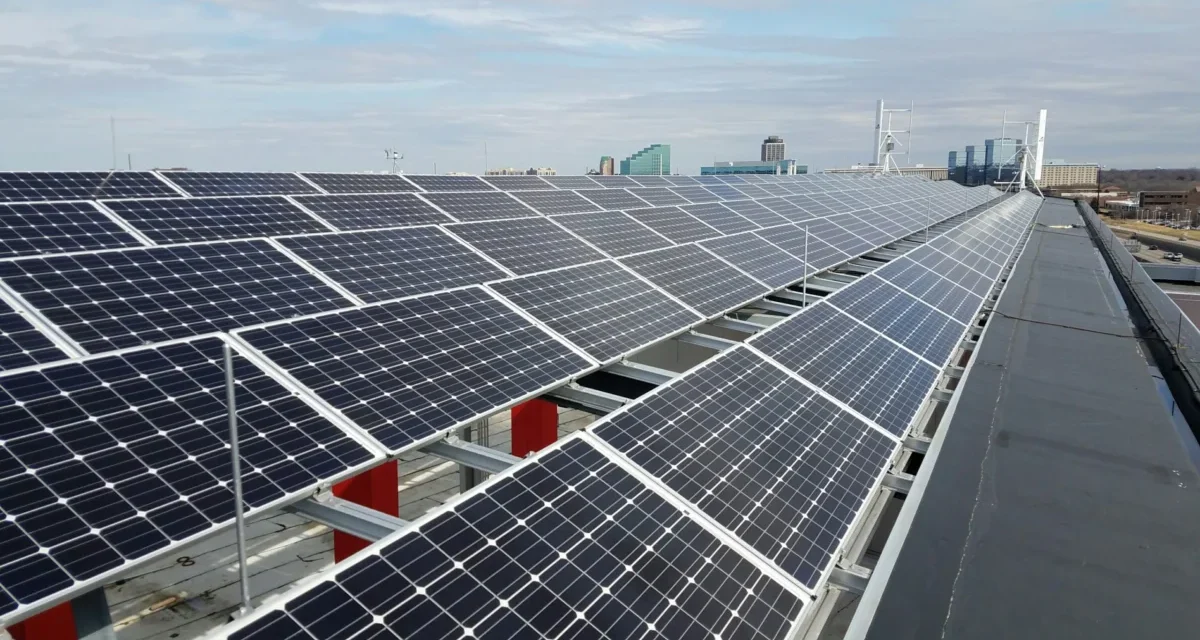
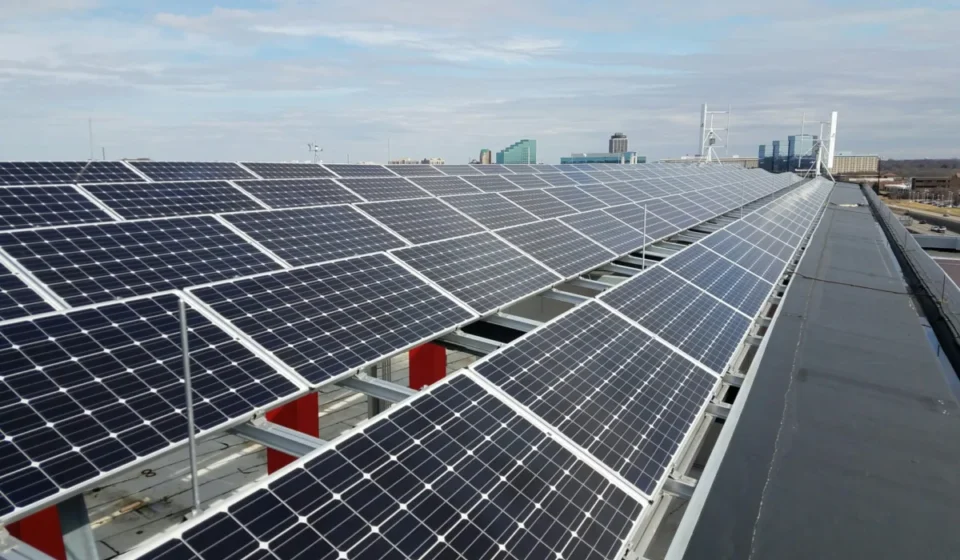
OATI’s headquarters serves as a living laboratory for its proprietary platform. The building is powered by a mix of solar panels, batteries, an onsite cogeneration plant, and emergency diesel generators. When the main grid fails, OATI’s AI-powered software instantly balances these sources to keep the data center online. This software is now being scaled for use by more than 150 electric cooperatives across the country, including 24 members of the Dairyland Power Cooperative in Wisconsin and Minnesota.

The "Lego Block" Approach to Hardware
One of the primary barriers to microgrid adoption has been the high cost of custom engineering. Minneapolis-based Syncris is attempting to solve this through modularity. Greg Mowry, Syncris co-founder and former director of the Center for Microgrid Research, developed a "stackable" inverter.
Inverters are the "brains" of an energy system, converting the Direct Current (DC) from solar panels into the Alternating Current (AC) used by appliances. "Today, every site is a highly custom solution with lots of engineering design," says Zach Edmond, Syncris COO. "Our technology is more like a Lego block. If you need more power, you can add more units." This modularity reduces costs and allows businesses to expand their microgrids as their needs grow.
Official Responses: Tribal Sovereignty and Federal Support
The deployment of microgrids has become a point of intersection for energy policy and social justice. In Minnesota, tribal nations are leading the way, using microgrids to achieve "energy sovereignty."
Tribal Initiatives
In 2024, the Biden administration’s Department of Energy (DOE) awarded significant grants to Minnesota tribes:
- Red Lake Nation: Received $3.15 million for solar- and battery-powered microgrids.
- White Earth Nation: Received $1.75 million to establish a solar-powered resilience hub at a community school.
David Heim, OATI’s Vice President and Chief Strategy Officer, notes that these projects provide more than just electricity. "The mere fact that they’re planning onsite power generation gives them a seat at the table," Heim explains. "They can say to the utility: ‘We’d love for you to sponsor this project, but in return, you have to give us some concessions.’"
Federal Continuity
Despite shifting political winds in Washington, federal support for microgrids remains steady. The DOE recently announced $8 million in grants for 14 remote communities in Alaska, Nevada, and South Dakota. This suggests that the value of grid resilience is increasingly viewed as a matter of national security rather than a partisan environmental issue.
Implications: The Future of the "Grid Edge"
As Minnesota continues to export its microgrid expertise, the implications for the broader U.S. economy and environment are profound.
Addressing the "Grid Edge"
Many of the most significant benefits of microgrids are felt at the "grid edge"—the rural areas at the end of distribution lines. In these locations, voltage fluctuations can degrade sensitive industrial equipment over time. Zach Edmond of Syncris notes that one customer was losing hundreds of thousands of dollars annually due to power quality issues they didn’t even realize were caused by the grid. Microgrids smooth out these fluctuations, extending the life of machinery and reducing operational costs.
Climate Adaptation
With hurricane-force "microbursts" and extreme heat becoming the new normal in Minnesota, the state’s work in microgrids offers a blueprint for climate adaptation. In North Carolina, OATI partnered with a cooperative to build a "cottage community" of 31 homes that can withstand frequent power disruptions. The success of this project—which now supports 300 homes—demonstrates that microgrids are no longer just for critical military bases or hospitals; they are becoming viable for residential neighborhoods.
Economic Resilience
For Minnesota, the microgrid industry represents a bulwark against rising electricity prices and the economic toll of power outages. By manufacturing inverters and developing software locally, the state is insulating its economy from global supply chain disruptions while leading a multibillion-dollar global market.
The "sailboat" building in Bloomington is more than just an architectural curiosity; it is the command center for a new era of energy. As the centralized power model of the 20th century gives way to the distributed, resilient systems of the 21st, Minnesota’s "Silicon Prairie" of power is ensuring that when the main grid goes dark, the lights in the North stay on.