









































The Architecture of Resistance: How Twin Cities Performance Art is Confronting Historical Trauma

In an era defined by political instability and the persistent echoes of systemic violence, the stages of the Twin Cities have become laboratories for reckoning. From the intimate, haunting domesticity of Marcie R. Rendon’s Sweet Revenge to the expansive, body-centric interrogations of Moriah Evans and the collective, chorus-driven resilience of Ananya Dance Theatre, local artists are rejecting passive entertainment. Instead, they are delivering a potent, uncompromising series of performances that examine how the ghosts of history—and the violence of the present—shape our contemporary reality.
The Haunting Echoes of ‘Sweet Revenge’
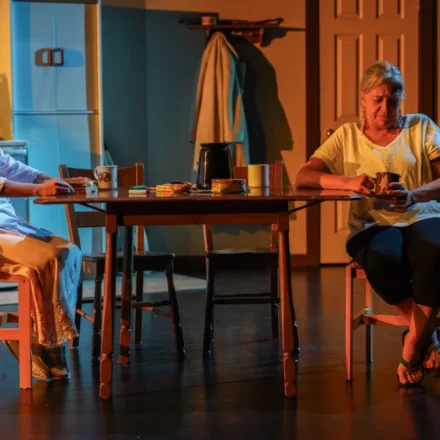
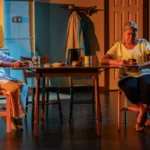
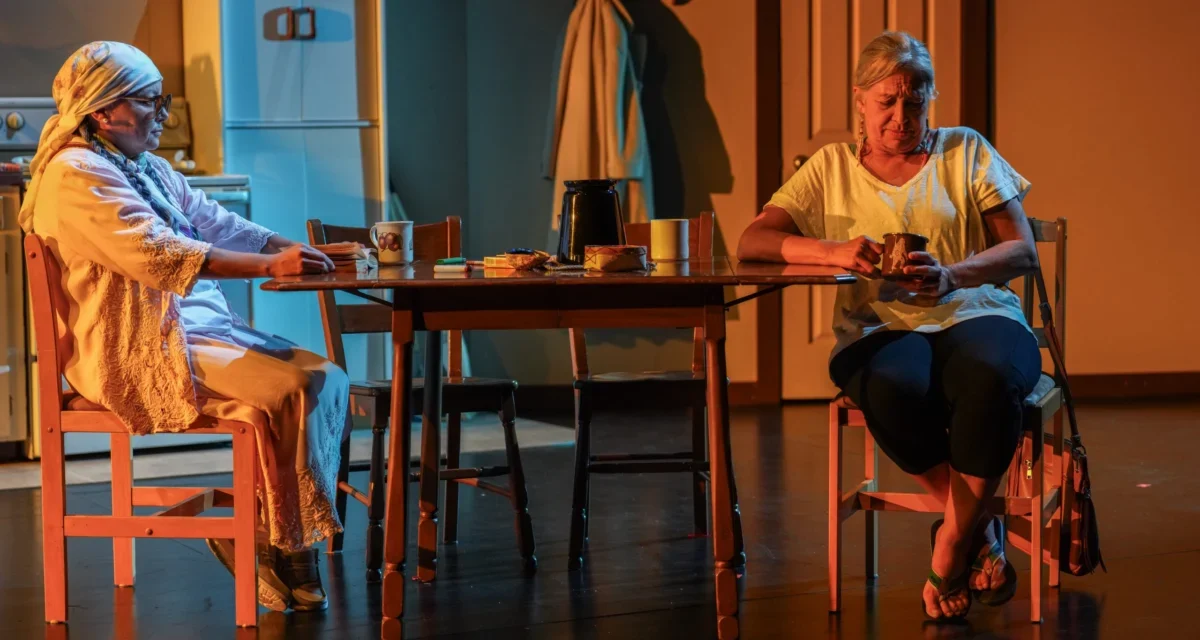
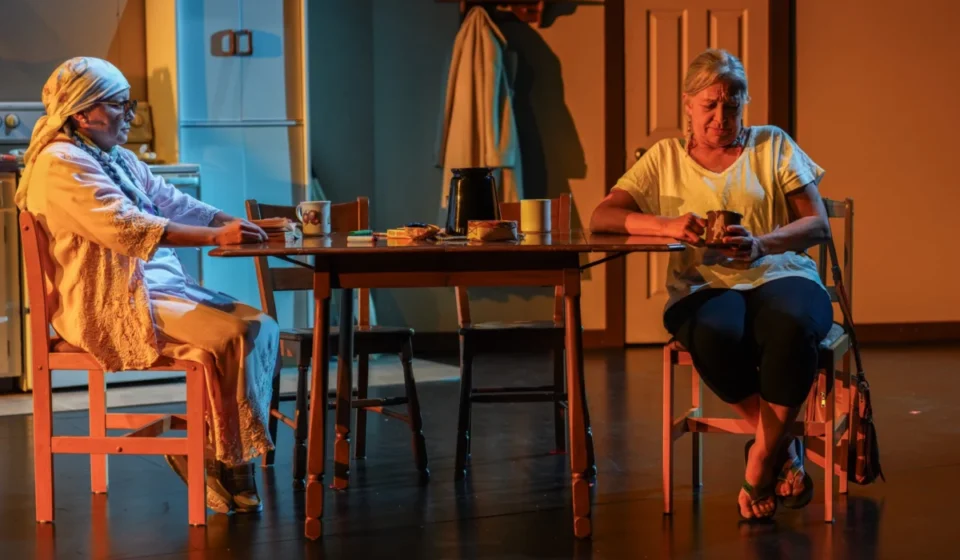
The core of Marcie R. Rendon’s Sweet Revenge, currently playing at the Red Eye Theater, is a singular, agonizing plea for autonomy. In a moment of raw exhaustion, the protagonist, Maggie, confronts her mother, Granny Josephine (played by Oogie Push), with a line that resonates far beyond the stage: “I’m so tired of your rage controlling me.”
It is a rebuke, certainly, but it is also a desperate petition for freedom. Maggie, portrayed with a grounding, no-nonsense confidence by Fern Renville, understands the cyclical nature of trauma—specifically the kind passed down through generations of Native families impacted by American Indian boarding schools. These institutions were designed with the explicit, genocidal intent to sever children from their language, their culture, and their inherent sense of self. In Rendon’s hands, this trauma is not a distant historical footnote; it is a tangible, suffocating presence in the living room.
A Narrative of Urban Resilience
The production, directed by Sequoia Hauck and presented by the Mni Giizhik Theatre Ensemble and Exposed Brick Theatre, weaves a complex tapestry of urban Native life. Maggie is a woman who has seemingly curated a life of stability; she provides spiritual and cultural care to her community while raising two grandchildren. However, her peace is constantly punctured by the recurring, jaunty tune of an ice cream truck that passes her home every half hour.
This auditory intrusion serves as a brilliant, if painful, symbol of the "childhood bliss" and innocence stolen from generations of Native youth. For Maggie and Granny Josephine, the music is not a treat—it is a trigger, causing genuine physical anguish. The narrative takes a dark, genre-bending turn as ice cream truck drivers begin to turn up dead throughout the neighborhood. Detective John Wiisagi-Mitigomizh (Brian B. Joyce) enters the fray, bringing with him both a criminal investigation and an evolving, cautious romance with Maggie.
While the play’s opening nights exhibited the "rough edges" of a new production—including minor staging logistics and some pacing hurdles—the core of the work remains vital. The production’s visual language, specifically the ghostly, ethereal shadow puppetry designed by Ches Cipriano, successfully bridges the gap between the mundane realities of urban life and the ancestral weight that Maggie carries.
The Geography of Rage: Moriah Evans at the Walker
If Rendon’s play explores trauma through the lens of family, choreographer Moriah Evans tackles it through the physical architecture of the institution itself. Her recent work at the Walker Art Center, titled with an unpronounceable string of symbols—[¦/+^%<>&¬£¥$&@!!!!^^^]*—is an explicit engagement with the "geography of rage."

Surveillance and Subversion
Evans’ piece functioned as a site-specific inquiry into the nature of performance spaces. The work began outdoors, with dancers clad in high-visibility fluorescent rain gear navigating the Walker’s campus. From the perspective of the audience, watching from balconies or through glass, the dancers appeared to be at the mercy of the wind and the environment.
However, the tone shifted abruptly upon moving inside the theater. The dancers’ movements transitioned from fluid and natural to rigid and militaristic. The performance space was transformed into a site of surveillance. By utilizing both structured improvisation and meticulously choreographed sequences, Evans turned the proscenium stage into an instrument of patriarchal control. The dancers collapsed, screamed, and counted bodies, forcing the audience to witness the physical exhaustion that accompanies resistance.
In a post-show talkback, Evans was direct: “I often think choreography is a violent project.” Her work effectively dismantled the illusion of the stage as a neutral space, framing it instead as a site where state-sponsored violence—referenced through the invocation of names like Renee Good and George Floyd—is either codified or resisted.
Collective Healing: The Ananya Dance Theatre
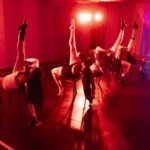
While Evans focuses on the dismantling of structures, Ananya Dance Theatre’s Prem (Love: An Occupation) looks at the mechanics of survival. Ananya Chatterjea’s choreography, presented in collaboration with director Dipankar Mukherjee, treats the stage not as a container for individual character arcs, but as a space for a collective, Greek-chorus-style response to catastrophe.
The Politics of Community
Prem is a visceral reaction to the current sociopolitical climate, drawing clear lines to the 2020 uprisings and the federal immigration crackdown, Operation Metro Surge, which saw significant state-sponsored force deployed against local immigrant communities.
The movement in Prem is cyclical, moving from grief to resistance and, ultimately, to a hard-won joy. A pivotal moment occurs when performer Mankwe Ndosi sings, “We make the future together,” and “no one is coming to save us because we are the ones that we need.” This is not merely a lyrical choice; it is the thematic heartbeat of the show.
The implications here are profound. In a world where official narratives are often wielded by police and state propaganda to silence dissent, Prem acts as a counter-narrative. It insists that community resistance is not just an abstract ideal, but a physical practice—a way of moving through space together that refuses to be broken by external force.

Implications: The Necessity of a Point of View
The surge of socially conscious, trauma-informed art in the Twin Cities suggests a profound shift in the local cultural landscape. We are living through a period of extreme saturation—not just of information, but of violence. Whether it is the legacy of boarding schools in Sweet Revenge, the institutional violence of the proscenium in Evans’ work, or the systemic attacks on immigrant communities in Prem, these creators are responding to a common question: How do we live when the structures around us are designed to fail us?
The common thread is the rejection of neutrality. Each of these performances takes an uncompromising stance. They suggest that the "instability of our times" is not an excuse for retreat, but a mandate for creative clarity.
Critical Reflections
While these productions offer beauty and moments of profound catharsis, they also challenge the audience’s capacity for hope. When an artist like Ananya Chatterjea presents a vision of community resilience in the face of ongoing shootings, killings, and authoritarian threats, the audience is forced to confront the gap between the beauty of the performance and the grim reality of the streets outside.
Yet, as noted in the dialogue within these works, the realization that "no one is coming to save us" is not necessarily a signal for despair. Rather, it is a call to agency. By documenting the history of state violence and the endurance of the human spirit, these artists are performing an act of public record-keeping.
Final Performance Information
For those looking to engage with these works, the following opportunities remain:
- "Sweet Revenge": Playing at the Red Eye Theater (2213 Snelling Ave., Minneapolis) through Saturday, Oct. 17. Tickets range from $0 to $35. More information is available at redeyetheater.org.
- "PREM | Love: An Occupation": Playing at the Southern Theater (1420 S. Washington Ave., Minneapolis) through Saturday, Oct. 17. Tickets range from $0 to $50. More information is available at southerntheater.org.
As the Twin Cities theater scene continues to evolve, these performances stand as a testament to the power of art to not only mirror the tensions of our current moment but to offer a path—however fraught—toward collective understanding and, ultimately, resistance.