
























































The Paraquat Papers: Inside the Decades-Long Corporate Campaign to Keep a Parkinson’s-Linked Pesticide on U.S. Fields

This investigative report is based on original documentation published by The New Lede.
For over four decades, a global consensus has steadily crystallized around the dangers of paraquat, one of the world’s most widely used herbicides. Since 1983, when Sweden became the first nation to issue a ban, more than 70 countries have followed suit, citing mounting evidence that the chemical is not only acutely toxic but also linked to the development of Parkinson’s disease. Even China, the industrial home of paraquat manufacturer Syngenta, halted the use of the pesticide a decade ago after independent government studies revealed unacceptable safety risks.
Yet, in the United States, the story has played out differently. Despite years of scientific research linking paraquat to the incurable neurological disorder, the U.S. Environmental Protection Agency (EPA) has consistently greenlit its use on millions of acres of farmland. Now, a massive cache of 3,700 pages of internal corporate records—uncovered through litigation—reveals how and why the U.S. remains one of the last major markets for the chemical. The documents paint a picture of a calculated, multi-decade strategy to suppress scientific warnings, influence research, and circumvent the disclosure requirements mandated by federal law.

The Discrepancy: What the EPA Knew vs. What Syngenta Hid
Under the Federal Insecticide, Fungicide, and Rodenticide Act (FIFRA), manufacturers are legally required to report any "unreasonable adverse effects" of their products to the EPA. However, court records and deposition testimony suggest that Syngenta systematically withheld critical internal data from regulators.
Among the concealed information were detailed analyses regarding the chemical’s permeability. Internal documents show that the company possessed data on how quickly paraquat could be absorbed through the skin and into the bloodstream, as well as how mixing the pesticide with surfactants—a common agricultural practice—significantly accelerated that absorption. Despite the company’s internal awareness of these risks dating back to the 1970s, this data was not shared with the EPA.
Instead, while withholding adverse findings, Syngenta actively promoted studies designed to affirm the product’s safety. Internal emails reveal a company culture that prioritized "regulatory defense" over transparency. In one notable instance, a 2016 study, which company insiders internally described as "invaluable in supporting our work," was used to bolster their narrative with the EPA while ignoring the "3 years of work" that had gone into the effort to ensure the result favored the company’s interests.

A Chronology of Strategy and Secrecy
The history of paraquat’s survival in the U.S. market is not a product of chance, but of strategic intervention.
- 1983: Sweden bans paraquat, setting off a wave of global regulatory action.
- 2000–2018: While dozens of nations move to restrict the chemical, U.S. usage triples, transforming the country into a primary hub for Syngenta’s "blockbuster" product.
- 2001: Internal strategy documents reveal a clear objective: "steer the focus of serious research away from paraquat and on to other agents."
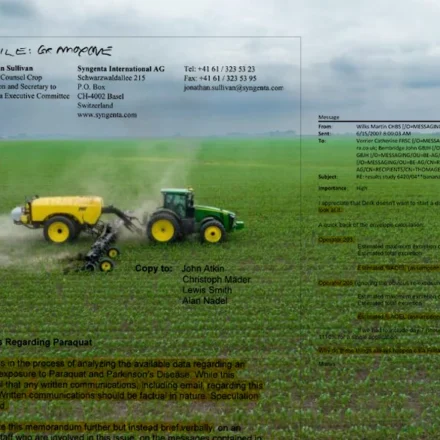
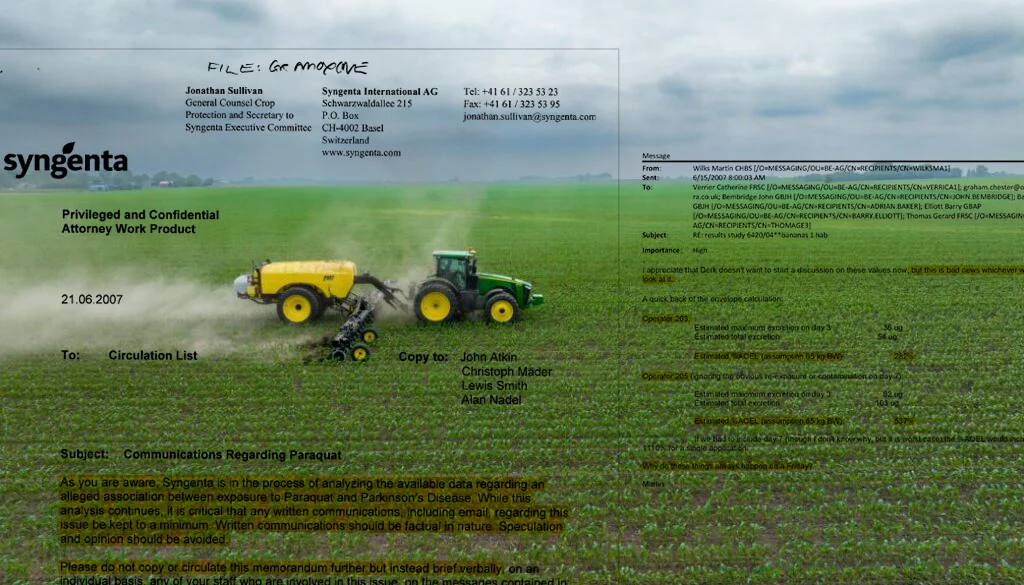
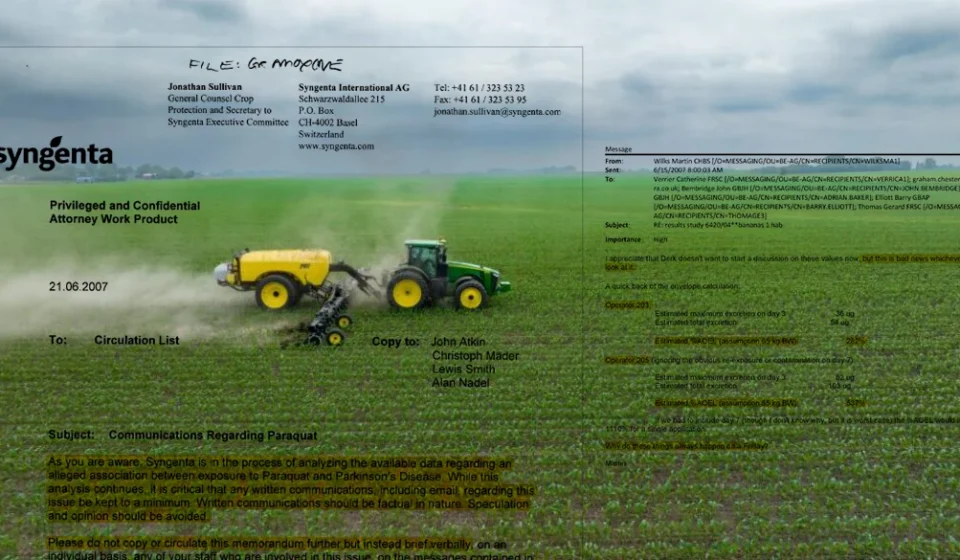
- 2007–2008: The company adopts a policy of "verbal-only" communication for sensitive topics, with executives explicitly warning staff against putting discussions about risk mitigation strategies in writing.
- 2011: Syngenta coordinates with third-party researchers—most notably Jack Mandel of the contract research firm Exponent—to publish reviews that cast doubt on the link between pesticides and Parkinson’s, often under the guise of "independent" research.
- 2015–2016: Upon learning that the Chinese government was conducting independent, uninfluenced toxicity studies, Syngenta executives expressed "alarm" at the "stealth nature" of the research, as it prevented them from influencing the outcome.
- 2021: Facing mounting litigation, Syngenta pays at least $187 million in an initial settlement, though the company admits no liability.
- 2026: Amidst growing pressure from states like Vermont and California, Syngenta announces it will cease global production of paraquat, citing "market factors" rather than health concerns.
The Architecture of Influenced Science
One of the most concerning revelations from the "Paraquat Papers" is the degree to which the company manufactured the scientific evidence used to defend its product. The company’s strategy involved identifying outside researchers to author papers that were then edited and refined by Syngenta staff.
In a 2011 email, scientists discussed a paper on Parkinson’s risk factors. They noted that communication with the lead author, Jack Mandel, should "ideally occur verbally" because "we cannot be seen to try to influence." Despite this, the company provided grants and support for these "independent" reviews, which were then used to dismiss government-funded research, such as the 2011 Farming and Movement Evaluation (FAME) study that found a clear, significant association between paraquat and Parkinson’s.

When Syngenta’s own internal analysis of the FAME study confirmed the researchers’ findings, the document was marked as "Attorney-Client Work Product" and never disclosed to the EPA.
Official Responses and Regulatory Failures
The EPA’s stance remains a point of intense contention. The agency has repeatedly stated that there is "no clear link" between paraquat and Parkinson’s, relying on an "extensive database of information." When confronted with the newly released court records, an EPA spokesperson stated the agency "cannot speculate on how this additional information would impact EPA’s assessment," but insisted that any failure by a company to report adverse data is a "direct violation of federal law."
Critics, however, argue that the agency’s reliance on company-provided data is a fundamental flaw in the American regulatory system. Wendy Wagner, a law professor at the University of Texas, notes that when companies withhold data, it leaves "a lot of holes in our regulatory system with pretty obvious consequences for public health."

Syngenta continues to deny any wrongdoing. In a formal statement, a company spokesperson asserted that the firm has "never knowingly failed to provide regulators with relevant and required information" and that the withheld data was either irrelevant to U.S. regulatory oversight or had been superseded by other findings.
The Human and Legal Implications
The consequences of this regulatory gap are now being litigated in over 10,000 lawsuits across the United States. Plaintiffs, many of whom are farmers or agricultural workers suffering from Parkinson’s disease, allege that their illnesses are a direct result of chronic exposure to the chemical.
The legal battle has shifted the burden of proof onto the individuals suffering from the disease, while the companies responsible for the product have spent years constructing a defense built on skepticism and corporate-funded research. As Tim Fort, a professor of Business Law & Ethics at Indiana University, noted in an expert report for the plaintiffs, "Syngenta has substituted its own judgment for what is submittable… undermining the capacity of the EPA to regulate paraquat’s safety all while Syngenta claims that the product is safe because of an EPA process which it systematically undermines."

The implications reach far beyond the courtroom. The case of paraquat serves as a cautionary tale about the "frailties of the EPA" and the influence of corporate interests on public health policy. As states like California and Vermont take unilateral action to ban the substance, federal lawmakers are facing increasing pressure to address the systemic failures that allowed a known neurotoxin to remain in use long after the rest of the world had moved on.
For thousands of families, the "Paraquat Papers" provide the long-sought explanation for why they were not warned, why the science was obscured, and why, for decades, their health was treated as a secondary concern to the commercial survival of a corporate "blockbuster." As the legal process continues, the documents serve as a stark reminder that when transparency is treated as a strategic liability, the cost is often paid in human lives.