






















































Data Centers Emerge as Unexpected Midterm Battleground, Putting Minnesota Republicans on a Tightrope

WASHINGTON D.C. – A seemingly niche technological infrastructure, the data center, has rapidly escalated into a potent political flashpoint, profoundly reshaping the landscape of the upcoming midterm elections. At the heart of this unexpected electoral battle lies President Donald Trump’s provocative dismissal of communities opposing these facilities, branding them as desiring to be "backwards and poor." This incendiary rhetoric has placed a number of Minnesota Republicans, already grappling with grassroots opposition to proposed data center projects in their districts, in a precarious political bind.
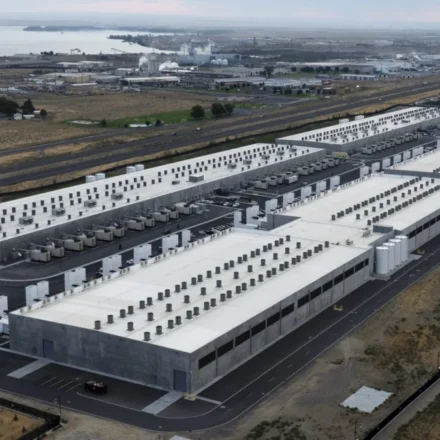
Across the nation, and particularly in Minnesota, data centers are no longer just utilitarian structures housing the digital backbone of the internet; they have become potent symbols of conflicting priorities: technological advancement versus local environmental sustainability, national security imperatives versus community autonomy, and corporate interests versus residential quality of life. The burgeoning demand for artificial intelligence (AI) infrastructure has intensified this debate, pushing it from local zoning meetings to the national political stage, challenging traditional party lines and forcing candidates to articulate nuanced positions on an issue that has quickly risen to the forefront of American concerns.
The Rise of a Political Flashpoint
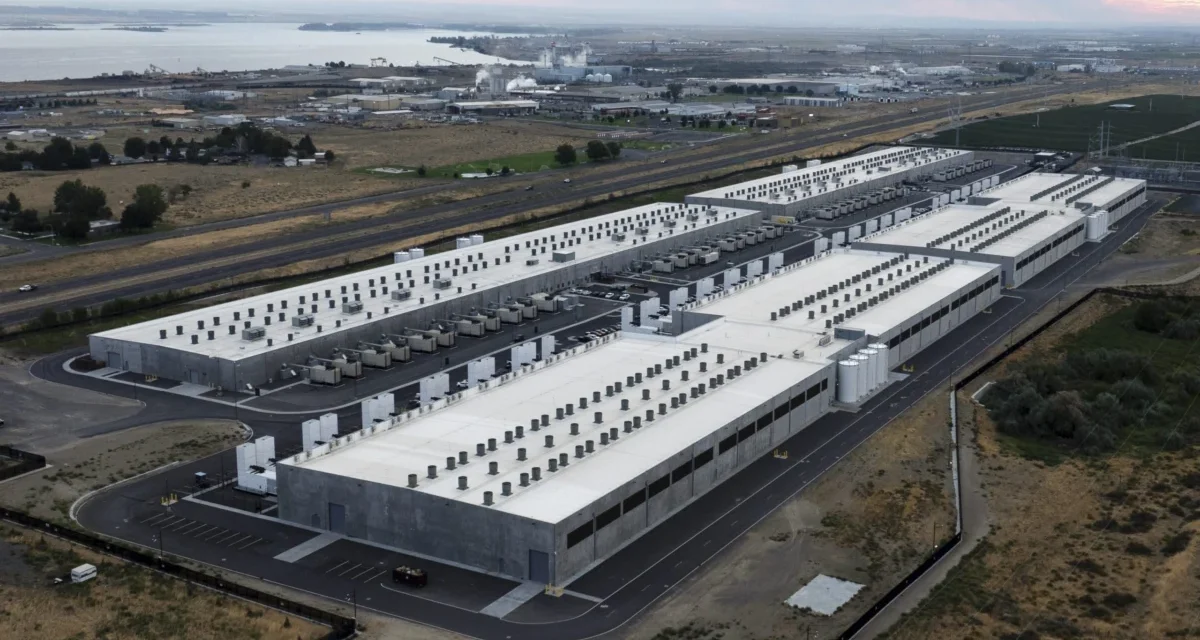
The rapid proliferation of data centers, driven by the insatiable demands of cloud computing, streaming services, and now, the burgeoning field of artificial intelligence, has transformed these previously obscure facilities into major points of contention. While often touted by proponents as engines of economic growth and vital components of national digital infrastructure, their significant environmental footprint and perceived limited local benefits have ignited widespread community resistance.
Public Opinion Shifts: A recent Economist/YouGov Poll, conducted between August 28-31, 2026, underscored the depth of public skepticism. The survey revealed that a striking 55% of Americans view data center construction negatively, labeling it "bad," while only 20% considered it a "good thing." This sentiment cuts across the political spectrum, albeit with varying intensity. Democrats were particularly critical, with 61% expressing a negative view. Crucially, a substantial 39% of Republican respondents also viewed new data center construction as detrimental, compared to 31% who saw it favorably, indicating a significant split within the GOP base. This data highlights a fundamental disconnect between the enthusiasm of some political leaders and the reservations of the electorate.
Environmental and Economic Concerns: The backlash against data centers is rooted in concrete concerns. These facilities are notoriously resource-intensive, consuming gargantuan amounts of electricity – often equivalent to small cities – and vast quantities of water, primarily for cooling purposes. The energy demands place immense strain on local grids and often lead to increased carbon emissions, while water consumption can exacerbate drought conditions and strain municipal resources in already parched regions.
Economists and local activists alike have also challenged the narrative of widespread job creation. While data center construction projects undeniably generate a significant number of short-term jobs for skilled trades, winning the support of powerful trade unions, the long-term operational footprint is remarkably lean. Modern data centers are highly automated, requiring a relatively small number of highly specialized technicians to maintain their complex systems. This disparity between temporary construction booms and limited permanent employment opportunities often leaves communities feeling shortchanged, bearing the environmental burden without reaping sustained economic benefits.
A President’s Stance and its Ripple Effect
President Donald Trump, in a recent post on his Truth Social platform, unequivocally positioned himself as a staunch advocate for data center development. Dubbing them the "Golden Goose," Trump articulated a strategic rationale for their proliferation, directly linking their construction to the critical AI arms race between the United States and China. "The only reason that communities throughout the U.S.A. should not want Data Centers is if they want to end up being backwards and poor," Trump declared, his words echoing a long-standing political tactic of framing opposition as anti-progress.
This uncompromising stance, while clear in its intent to champion technological dominance, immediately sent shockwaves through the political landscape, particularly for Republican candidates navigating complex local dynamics. For many, aligning fully with Trump’s rhetoric risks alienating a significant portion of their constituents who are actively campaigning against data center proposals in their backyards.
Embracing the Message: One prominent Minnesota Republican, Rep. Tom Emmer, who represents the 6th Congressional District and holds a leadership position within the U.S. House, wasted no time in fully endorsing the president’s message. In a post on X (formerly Twitter), Emmer affirmed, "President Trump is absolutely spot on." He further elaborated on the national security implications, stating, "Communist China and our adversaries would love it if the United States was asleep at the wheel and stopped innovating and developing AI and emerging tech. Thanks to President Trump’s work, the USA will be a digital LEADER!" Emmer’s swift and complete alignment highlights a segment of the Republican Party that prioritizes national strategic imperatives and technological competitiveness above all else, seeing data centers as indispensable tools in this geopolitical contest. His district, incidentally, includes Monticello, a community with its own proposed data center project.
Minnesota Republicans Divided: Navigating Local vs. National Imperatives
While Emmer’s endorsement was unambiguous, other Minnesota Republicans have adopted a more nuanced and cautious approach, reflecting the deep divisions within the party and the potent local opposition to data center projects. These leaders recognize the national importance of technological infrastructure but simultaneously emphasize the paramount right of local communities to self-determination regarding development within their borders.
Rep. Brad Finstad’s Call for Local Control: Rep. Brad Finstad, representing the 1st Congressional District in southern Minnesota, articulated a position that sought to balance national strategic needs with local autonomy. While acknowledging that "the discussion around AI technology is one our country needs to have" and that "Data centers, like those proposed in southern Minnesota, can play an important role in our economic future and national security," Finstad firmly asserted that "the decision about whether a data center is right for a particular community should be made by the people and local leaders who know their communities best, not handed down by Washington through a blanket, one-size-fits-all approach that treats every community the same."
In an emailed statement, Finstad stressed the critical importance of transparency and comprehensive understanding for local decision-makers. He insisted that communities must have a "full understanding of the energy demands, environmental impacts, job creation, and potential tax benefits of a proposed data center." Furthermore, he placed the onus on developers, stating that "the companies proposing these projects have a responsibility to be fully transparent about the scope of any short- or long-term impacts," thereby enabling local leaders and residents to make truly informed decisions. This approach resonates deeply with conservative principles of local governance and individual liberty, offering a counter-narrative to Trump’s more top-down, national-interest-driven stance.
State Senator Eric Pratt’s Balanced Approach: State Senator Eric Pratt, a Republican currently vying for the seat of retiring Rep. Angie Craig, echoed Finstad’s emphasis on community involvement while still acknowledging the strategic value of data centers. Pratt explicitly pushed back against Trump’s dismissive remarks, advocating for "a balanced approach to data center development that puts local communities at the center of the conversation while recognizing the growing importance of domestic technology infrastructure."
In a statement, Pratt elaborated, "Data centers are becoming an important part of our economy, our technology infrastructure, and our national security. But that does not mean every proposed project belongs in every community, or that concerns from the people who live nearby should ever be brushed aside." While demonstrating sensitivity to local concerns, Pratt also indicated his opposition to outright moratoriums on data center construction, arguing that "Minnesota should resist an all-or-nothing approach." His position reflects a pragmatic attempt to find common ground, acknowledging the inevitability of technological advancement while advocating for robust local engagement and safeguards.
The Battleground: Data Centers in GOP Strongholds
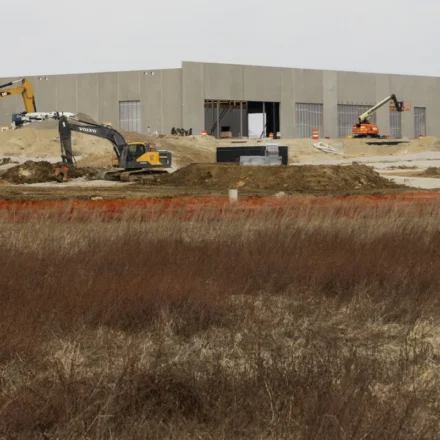
The political tightrope walk for many Minnesota Republicans is further complicated by the geographic reality of data center proposals. A significant number of these projects are slated for communities within Republican-held congressional districts, transforming these areas into unexpected battlegrounds for the midterm elections.
For instance, Pine Island, Faribault, and North Mankato, all sites of proposed data center developments, fall within Rep. Brad Finstad’s 1st District. Hermantown is located in Rep. Pete Stauber’s 8th District, and as previously noted, Monticello is in Rep. Tom Emmer’s 6th District. This concentration of projects in traditionally conservative areas has galvanized local opposition, creating a potent issue for Democratic challengers to seize upon.
The groundswell of local resistance has manifested in various forms, from organized community protests to citizen-led advocacy groups. A particularly contentious aspect of many data center proposals has been the use of Non-Disclosure Agreements (NDAs) by developers, compelling local officials to secrecy regarding project details. This practice has fueled public distrust, with critics arguing that it shields crucial information about environmental impacts, resource demands, and potential community benefits from public scrutiny, undermining transparent governance.
In Pine Island, for example, Google, a major player in the data center industry, has engaged in a calculated "charm offensive" to win over the community. This has included promises of significant funding for local schools and sponsorships of popular community events, such as the town’s annual cheese festival. While these gestures are intended to foster goodwill and demonstrate corporate responsibility, they are often viewed with skepticism by residents concerned about the long-term impacts of the proposed facilities.
Democratic Challengers Seize the Narrative
Recognizing the potent political energy generated by data center opposition, Democratic candidates across Minnesota have rapidly moved to "plant flags" on the issue, making it a central plank of their campaigns as the November elections draw near. They are actively proposing and supporting moratoriums, advocating for stricter regulations, and condemning practices perceived as detrimental to local communities.
Matt Little and the Fight for Transparency: Matt Little, the former Lakeville Mayor and Democratic rival to State Sen. Eric Pratt, has made data center accountability a cornerstone of his campaign. Little has publicly pledged to fight for moratoriums on new data center construction and to ban the use of non-disclosure agreements, arguing that these measures are essential to restore transparency and empower local residents. His platform resonates with a desire for greater public oversight and a rejection of corporate secrecy in local development decisions.
Jake Johnson’s Grassroots Mobilization: In the 1st District, Democratic challenger Jake Johnson joined a prominent protest against a proposed data center in Pine Island in August. Johnson articulated his solidarity with local residents, stating, "I was proud to stand with the people of Pine Island to say that we don’t want this data center here until we know for sure that it will actually benefit our people and our communities." Johnson has gone further, releasing a comprehensive "plan for stopping data center exploitation" in Minnesota. While specific details vary, such plans typically advocate for stricter environmental impact assessments, mandatory community benefit agreements (ensuring local revenue sharing and tangible advantages), and enhanced local regulatory authority to prevent perceived corporate overreach.
Trina Swanson’s Focus on Corporate Accountability: Trina Swanson, the Democrat challenging Rep. Pete Stauber in the 8th District, lives in close proximity to a proposed data center in Hermantown, giving her firsthand insight into community concerns. Swanson has been a vocal critic of the NDAs signed by Hermantown officials, the perceived lack of robust regulations governing data center developments, and the significant water usage and potential for increased energy costs associated with these facilities. "I want guardrails in place," Swanson declared, emphasizing her desire for robust oversight. She further articulated a clear philosophical stance: "I want to understand how we’re going to prioritize our people over corporations like Google that paid zero dollars in federal taxes last year." Her critique connects the local data center debate to broader themes of corporate accountability and tax fairness.
Grant Hauschild’s Legislative and Campaign Efforts: State Senator Grant Hauschild, a DFL representative for Hermantown, has also been a leading voice on the issue. Data centers were the subject of his first televised campaign advertisement, a significant indicator of the issue’s salience. In his ad, Hauschild highlighted legislative efforts to impose regulations on the industry, reassuring constituents that he is actively working to address their concerns. His campaign slogan, "I don’t work for data centers, I work for you," directly challenges the perception that politicians are beholden to corporate interests, aiming to position him as a champion of local residents.
Legislative Standoff and Lobbying Power
The legislative arena in Minnesota has mirrored the broader political tensions surrounding data centers. In 2025, the state legislature managed to approve a limited set of regulations targeting the industry. These typically included basic environmental guidelines, some tax incentive frameworks, and perhaps rudimentary transparency requirements.
However, more ambitious efforts to impose tougher rules, mandate comprehensive water permits, and ban local non-disclosure agreements faced insurmountable opposition during the subsequent legislative session. These crucial measures, aimed at providing stronger environmental protections and greater public transparency, ultimately failed. This legislative stalemate underscores the formidable lobbying power exerted by industry groups, such as various tech associations and data center alliances, who argue that excessive regulation could stifle innovation and drive development elsewhere. Furthermore, the persistent support from labor unions, keen to secure lucrative construction contracts, has added another layer of complexity, often creating unlikely alliances that successfully block stricter oversight. This dynamic highlights the challenge of balancing diverse stakeholder interests in the face of rapid technological expansion.
The "Quiet Boom" in Political Advertising
The rising prominence of data centers as a campaign issue is clearly reflected in political advertising trends. AdImpact, a firm that tracks political advertising data, has identified a "quiet boom" in data center-related ads across the country. While the majority of the money spent on these ads originates from Democratic campaigns, a significant 26% of data center ads are funded by Republicans. Interestingly, most of these Republican-funded ads are deployed by candidates who are actively opposing the construction of local data centers, demonstrating the populist appeal of this issue even within the GOP base.
These advertisements often frame the debate in stark terms. Democratic ads frequently emphasize environmental degradation, excessive resource consumption, and the erosion of local control by powerful corporations. They highlight the potential for increased utility costs for residents and the limited long-term job benefits. Conversely, Republican ads opposing data centers often focus on property rights, community autonomy, and the rejection of outside mandates, aligning with a broader anti-establishment sentiment. The ads in favor of data centers, more often from pro-development groups or national figures like Trump, tend to emphasize national security, technological leadership, and broad economic benefits, often downplaying local impacts.
Broader Implications and Future Outlook
The evolving debate over data centers in Minnesota is a microcosm of a larger national and even global reckoning with the rapid expansion of digital infrastructure. It encapsulates fundamental tensions between the imperatives of a hyper-connected, AI-driven future and the pressing need for sustainable, community-centric development.
The issue is poised to remain a potent force in American politics, particularly as the demand for AI processing power continues its exponential growth. Communities across the country will increasingly grapple with the environmental footprint, resource demands, and localized economic impacts of these facilities. The political fallout in Minnesota, with its clear divisions within the Republican Party and the concerted efforts of Democratic challengers, offers a preview of how this issue will likely shape future elections.
The long-term implications are profound. How local communities navigate these proposals will determine not only their environmental health and economic future but also the very nature of their autonomy in an increasingly centralized technological landscape. The ability of political leaders to craft balanced approaches that genuinely address both national strategic needs and the legitimate concerns of their constituents will be a defining challenge of the coming decade. The "Golden Goose" of AI may be laying golden eggs, but the communities where these eggs are hatched are demanding a much clearer understanding of the costs.