
















































Introduction: A Departure from the Script
In the world of professional sports, optics are everything. Last year, when Minnesota Lynx star Napheesa Collier sat down for her end-of-season media availability, she arrived with a prepared, multi-page statement. That address, which sharply criticized league leadership and officiating, served as a catalyst for national discourse during a tense period of collective bargaining negotiations.
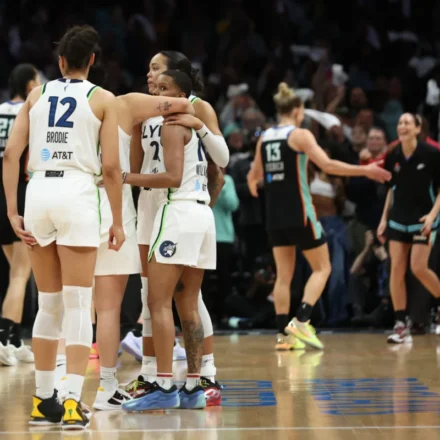
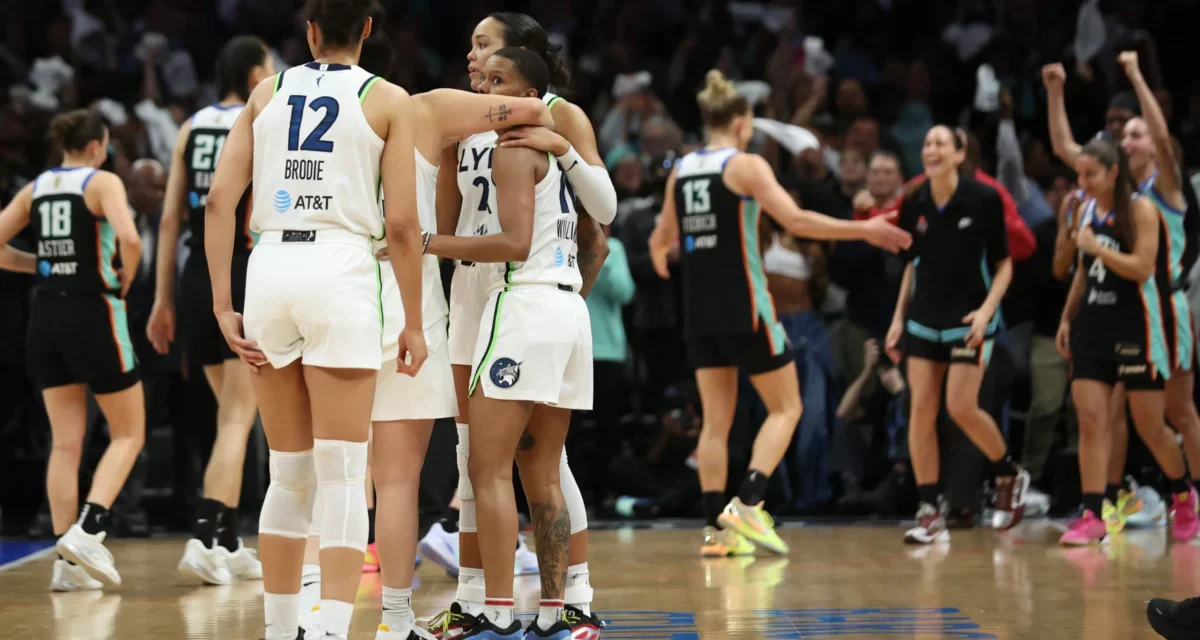
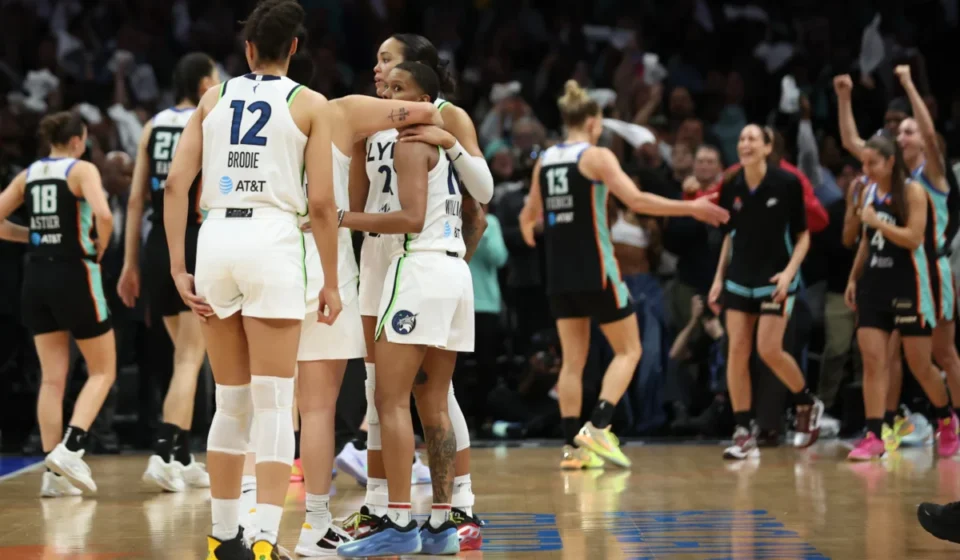
This year, however, the script was absent. Just 48 hours after the top-seeded Lynx were unceremoniously swept out of the playoffs by the eighth-seeded New York Liberty, Collier walked into the familiar confines of the Mayo Clinic Square practice facility empty-handed. The atmosphere was somber, heavy with the weight of a premature exit and the lingering questions surrounding the future of the league’s most prominent franchise cornerstone.
As a key member of the WNBA Players Association and a centerpiece of the Minnesota organization, Collier’s every word is scrutinized. With her contract status again at a crossroads, the silence of her notes spoke volumes about the uncertainty facing both her and the team she has called home for eight seasons.
Chronology: From Dominance to Disarray
The 2026 season was intended to be a coronation for the Lynx. After finishing the regular season with a stellar 33-11 record—the best in the league for the second consecutive year—Minnesota appeared poised for a deep postseason run. Coach and President of Basketball Operations Cheryl Reeve, fresh off securing a record-breaking fifth WNBA Coach of the Year award, had seemingly mastered the art of roster construction.
However, the cracks began to show mid-summer. A 99-86 loss to the New York Liberty on July 3 served as the inflection point, signaling a shift in the team’s defensive identity. Throughout the first half of the season, the Lynx were a defensive juggernaut, holding 10 of their first 19 opponents under 40 percent shooting. In their final 25 games, they reached that benchmark only twice.
The team’s struggles were compounded by an inability to close games. The Lynx dropped seven home contests, a statistic that drew audible frustration from the coaching staff. In five of those losses, Minnesota entered the fourth quarter with either a lead or a tie, highlighting a systemic failure to execute under pressure. The team stumbled into the playoffs, losing four of their last six games, ultimately setting the stage for their historic collapse against the Liberty.
The two-game sweep by New York was unprecedented. Under the current 1-to-8 seeding format introduced in 2022, no top-seeded team had ever been eliminated by an eighth seed. The Lynx were outmatched in size, skill, and depth, leading for less than four minutes in Game 1 and failing to lead at all in Game 2.
Supporting Data: The Anatomy of a Flawed Roster
The statistical disparity in the playoffs was stark. The New York Liberty, anchored by the 6-4 Breanna Stewart and the 6-6 Jonquel Jones, exploited Minnesota’s lack of interior presence. The Liberty effectively neutralized the pick-and-roll tandem of rookie sensation Olivia Miles and veteran Natasha Howard, a strategy that had been the heartbeat of the Lynx offense all season.

The matchup between Collier and Stewart was particularly illustrative of the Lynx’s current dilemma. Over the two-game series, Stewart outscored Collier 55-26. While Collier maintained that she gave everything she had, she acknowledged that she was not at 100 percent health.
Furthermore, the team’s lack of depth was exposed. Key contributors like Dorka Juhász and Emma Čechová, who were expected to provide critical size and frontcourt support, were sidelined by long-term injuries. The result was a rotation that was perpetually undersized and overextended. As Cheryl Reeve noted, "We like our roster a lot, but we have a flawed roster in some ways. There are some matchups that are going to get to us."
Official Responses: The Uncertainty of the Offseason
The media session was defined by the ambiguity surrounding Collier’s next move. When asked directly about her future in Minnesota, Collier remained non-committal. "Honestly, I haven’t even thought about that," she stated. "We lost less than 48 hours ago, and we didn’t expect to be here at all, so I really haven’t had any time to decompress."
While she expressed love for the organization and her teammates, the pragmatism in her tone was palpable. This caution is understandable; after two catastrophic ankle injuries in recent years, Collier’s career longevity is a top priority. She understands that this upcoming contract decision is not merely about basketball, but about her long-term physical health and career goals.
Cheryl Reeve’s stance was one of professional grace. She declined to pressure her star player, acknowledging that the decision lies entirely with Collier. "Phee knows the care, the love, all the things that have been poured into her," Reeve said. "This is a Phee decision, and it’s probably more than basketball. Sometimes you stay, and sometimes you go, because maybe there’s something—I don’t say better, but maybe better for her."
Reeve’s perspective reflects a mature understanding of modern player agency. If Collier chooses to move on, the organization will have to pivot, but the bridge remains intact.
The Path Forward: Strategic Shifts and Roster Rebuilding
As the Lynx look toward the 2027 season, the question of identity is paramount. The "small-ball" approach that brought them back to prominence is clearly reaching its expiration date in a league trending toward increased size and physicality.
Tactical Adjustments
Collier’s own reflections suggest she is contemplating a transition in her game. She noted that she is looking forward to refining her perimeter skills and three-point shooting—a move that would allow her to play the small forward position more effectively. When asked if she would be open to moving to the wing to help the team win a championship, her response was definitive: "I would go wherever a coach wants to put me."

Recruitment and Personnel
Reeve faces a daunting task in the offseason. Finding players who possess the rare combination of size, shooting ability, and defensive versatility is the league’s most competitive endeavor. "The things that we need, they don’t grow on trees," Reeve admitted. "We’re not the only team that would like to have size that shoots 3s, and can pass, defend, and rebound."
The front office must balance these needs against a constrained salary cap. With existing obligations to veterans like Courtney Williams and Kayla McBride, the Lynx must hunt for undervalued talent—players who are willing to sacrifice salary for the opportunity to contribute to a championship-caliber culture.
Implications: A Franchise at the Crossroads
The 2026 season will be remembered as a year of "what-ifs." Despite the disappointment of the early playoff exit, the Lynx remain a destination for top-tier talent, largely due to the culture fostered by Reeve and the high caliber of play provided by the likes of Collier and Miles.
However, the margin for error has shrunk significantly. The league’s competitive landscape is shifting, and the Lynx can no longer rely on the strategies of the past. For Collier, the decision to remain in Minnesota will depend on the team’s ability to prove they can retool their frontcourt and return to title contention. For the team, the priority is to provide a compelling vision for a post-rebuild era.
Ultimately, the silence of the players during the post-game interviews regarding specific roster needs highlights a singular reality: the burden of the rebuild rests on the shoulders of the front office. As guard Courtney Williams aptly put it, "I ain’t the G.M., bossman. Let them do their job, and I do mine."
The coming months will be a test of patience, strategy, and negotiation. Whether the Lynx can maintain their status as a perennial contender will be determined not just by the players they sign, but by the fundamental questions they ask themselves about how they want to play the game of basketball. For now, the city of Minneapolis waits, as the franchise prepares to navigate one of its most critical offseasons in recent history.