























































The Fragile Anchor: Rural Minnesota Schools Face an Identity Crisis in the Shadow of Consolidation

On a sun-drenched, late-summer morning in Hibbing, Minnesota, the rhythmic creak of swing sets and the soft laughter of toddlers define the atmosphere at the Greenhaven Elementary School playground. Dave Benz, a local resident, watches closely as his daughter, Sabrina Weberg, guides his twin granddaughters, Maya and Lucy, through their first tentative steps toward the climbing structure. The girls are approaching their third birthday, a milestone usually celebrated with excitement. But for the adults present, the mood is tempered by a looming sense of finality.
Out in front of the school, a large, stark yellow "For Sale" sign serves as a grim marker of the times. In March, faced with a crushing $2 million budget deficit, the Hibbing School Board made the painful decision to shutter Greenhaven.
"Yeah, it was a sad one," Benz admits, gesturing toward the building. His sentiment reflects a broader, agonizing reality playing out across the Iron Range and beyond. For rural communities, schools are not merely buildings; they are the heart of local identity. When a school closes, residents often feel as though a vital part of their community’s soul has been extracted, leaving behind a void that no amount of economic policy can easily fill.
The Financial Pressure Cooker
Across Minnesota, the narrative is painfully consistent. School districts are operating within a "pressure cooker" of fiscal instability. State funding, which is inextricably linked to enrollment numbers, is failing to keep pace with the rising costs of inflation, mandates, and the basic maintenance of aging infrastructure.
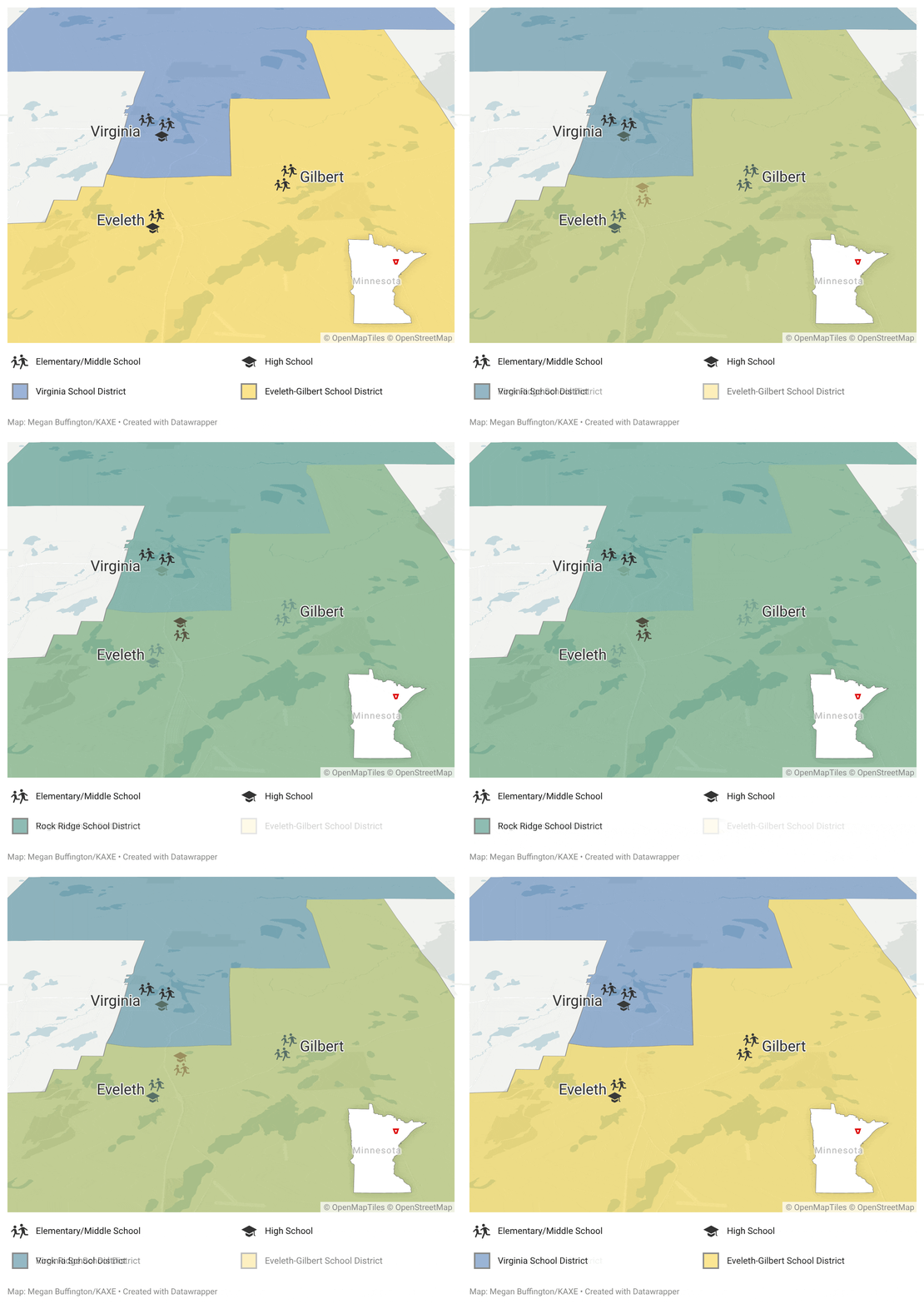
"It’s death by a thousand paper cuts," says Noel Schmidt, superintendent of the Rock Ridge school district. Schmidt, who spearheaded the merger between the Virginia and Eveleth-Gilbert districts, argues that many rural schools are waiting too long to act. The math is relentless: when student populations dwindle, the overhead for essential services—superintendents, principals, custodians, and specialized support staff—remains fixed, even as the revenue to pay for them evaporates.
In the 1990s, Minnesota experienced a seismic shift when one-fifth of its rural school districts vanished through consolidation. Over 150 districts merged in an attempt to stabilize finances, typically at the cost of closing local campuses. While the rate of consolidation has slowed in the last decade, the underlying issues—declining populations and aging facilities—are flaring up once again, forcing a new generation of leaders to reckon with the necessity of change.

A Chronology of Change
The transformation of the educational landscape on the Iron Range did not happen overnight. It is the result of decades of slow, demographic decline.
- The 1990s Era: Rural Minnesota underwent its first major wave of consolidation as farming communities struggled with the economic realities of the time, resulting in the loss of over 150 districts.
- The 2020s Reality: The current wave is driven by the post-pandemic economic environment, where state funding lags behind inflation and rural populations continue to shift toward urban centers.
- The Rock Ridge Precedent: In 2022, the consolidation of Virginia and Eveleth-Gilbert was hailed by some as a model for the future. The construction of a state-of-the-art high school replaced three aging, inefficient buildings.
- The Present Day: Districts like Hibbing are now making the difficult decisions that their neighbors faced years ago, as they attempt to stave off insolvency by shedding underutilized assets like Greenhaven Elementary.
Supporting Data: The Cost of Stagnation
The argument for consolidation is almost always rooted in the disparity between what a small, isolated district can offer versus a merged one. At the Rock Ridge campus, the modern amenities are starkly different from those found in the older buildings they replaced.
"We have a grand piano in the cafeteria. Nobody else does that," says Superintendent Schmidt. The school features a career academy model with specialized shop spaces, including a 3-ton crane, designed to prepare students for the modern workforce.
Conversely, the data from districts that failed to consolidate often shows a grim trajectory. John Uhan, school board chair for Rock Ridge, recalls the final years of the Eveleth-Gilbert district: "The incoming kindergarten class was only 29 kids. A century-old boiler needed major repairs. Roofs needed replacing. It was looking awfully dire."
For Uhan, the consolidation was a "no-brainer." He points to a superior curriculum catalog, increased athletic success, and the sheer breadth of opportunity provided by the academy model as evidence that the merger was not just a survival tactic, but an upgrade.
Official Perspectives: Navigating the Emotional Divide
Paul Peltier, who leads the Range Association of Municipalities and Schools (RAMS), occupies a unique space in this debate. A former educator who "bounced" between four different schools as a child, he understands the personal toll of consolidation.

"We felt like we were bounced around. But we were just Balsam boys," Peltier recalls. "Communities and families anchor themselves in their school, and schools owe it to them to make sure they are custodians and stewards of that identity."
Peltier emphasizes that the "Range" culture is distinct, shaped by a deep history of mining and immigration. In this context, identity is not just a word; it is a weight. When a town like Eveleth loses its school, the loss is visceral. Mayor Adam Roen of Eveleth admits that while the new opportunities at Rock Ridge are undeniable, the loss of the district building in the heart of the town has left a void. "When you take the school district out, I think you take a piece of that identity away," he says.
However, leaders like Schmidt and Uhan argue that the "stewardship" of identity now requires the courage to move forward. Uhan, who lives just two blocks from where the former school once stood, maintains that tearing down old, inefficient buildings has actually provided space for new development. "We got a very proud history, and people like hanging on to that," Uhan says. "I like embracing the new."
Implications for the Future
The path forward is fraught with political and social friction. As the state government faces its own budgetary challenges, the financial incentives for consolidation that once existed have largely vanished. This leaves local districts to navigate the "pressure cooker" on their own, often with minimal guidance from a legislature that many local leaders feel has become apathetic to the needs of rural Minnesota.
The implications are clear:
- Educational Equity: Larger, consolidated districts can offer broader curriculums and modern facilities, but they risk distancing students from their local communities.
- Economic Impact: Schools serve as economic engines; when they close, local businesses lose a central hub of activity, and the town’s ability to attract young families is significantly diminished.
- Identity Evolution: Communities are being forced to redefine themselves. As seen in the Eveleth Community Center—built from the remnants of a former school addition—towns are attempting to repurpose physical spaces to maintain a sense of gathering and history.
The ultimate challenge, as Steve Giorgi, a veteran of the Mountain Iron-Buhl consolidation, notes, is moving past the "emotional past" toward the "reality that what the kids need is different."

As Dave Benz watches his granddaughters play on the final, fading days of the Greenhaven playground, he represents a constituency that is caught between the past they cherish and the reality they must endure. "It might have to happen in order to grow and be stronger," Benz says of consolidation, though he admits his bias—he would prefer the familiar walls of his local school to stand forever.
For Minnesota, the question remains whether the state will step in to help rural districts manage this transition, or if the "death by a thousand paper cuts" will continue until the next school sign, in the next small town, is painted with the words "For Sale."
This reporting is part of a collaboration with the Institute for Nonprofit News’ Rural News Network and Big Local News at Stanford University, with data journalist Cherry Salazar’s analysis helping anchor the reporting. Six nonprofit newsrooms were involved: BenitoLink, KAXE, Mat-Su Sentinel, Mississippi Today, Oxford Free Press, and The Texas Tribune. Support from the Walton Family Foundation made this project possible.