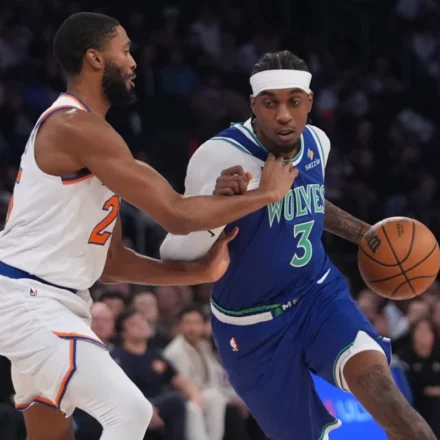





















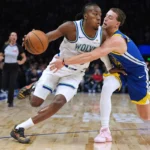






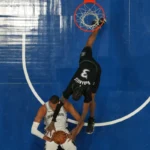


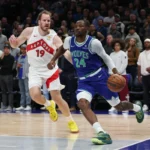
















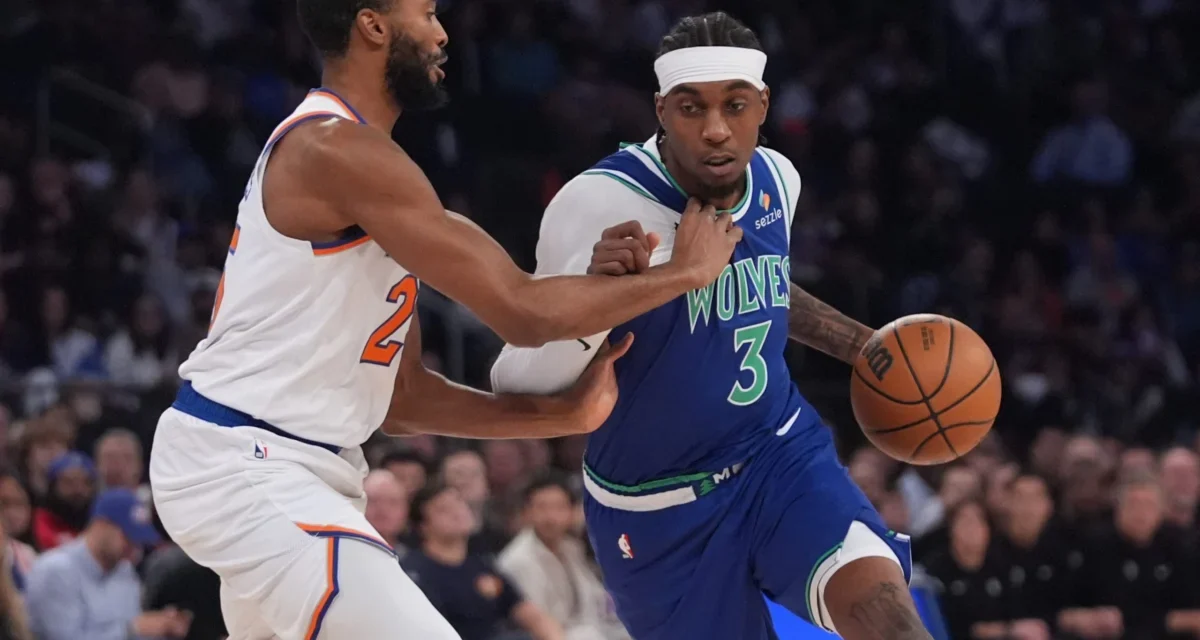



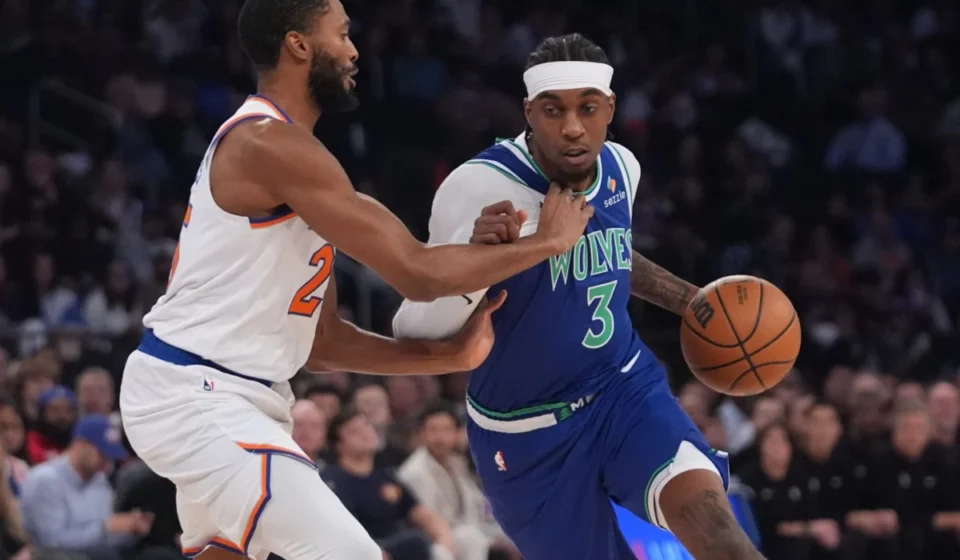

The Minnesota Timberwolves have officially transitioned from the league’s perennial “laughingstock” to one of the NBA’s most compelling, high-wire acts. As the franchise enters its fifth season under the tandem of President of Basketball Operations Tim Connelly and head coach Chris Finch, the team is no longer playing it safe. In an era where the NBA is increasingly dominated by the towering presence of figures like Victor Wembanyama and the established juggernauts of the Oklahoma City Thunder and San Antonio Spurs, Minnesota is opting for a radical, high-octane redesign.
The Connelly-Finch Philosophy: A History of Audacity
When Tim Connelly took the reins in May 2022, his inaugural promise was simple: “This place has an unbelievably special core. I’m here not to mess it up.”
Forty-four days later, he did exactly what he promised not to do—or, at least, what appeared to be a total demolition of the status quo. By trading a treasure trove of draft capital and rotation players for Rudy Gobert, Connelly defied the league’s “space-and-pace” gospel. He bet on a twin-tower lineup with Karl-Anthony Towns that many analysts dubbed an analytical disaster. Yet, two years later, that gamble propelled the Wolves to the Western Conference Finals.
Now, Connelly is pivoting again. This past summer, he executed a complete reversal, clearing out his power-forward depth—including mainstays Julius Randle and Naz Reid—to acquire passing virtuoso LaMelo Ball. In a league gravitating toward gargantuan lineups, Minnesota is doubling down on speed, playmaking, and backcourt dynamism.
The 2026-27 Roster: High Ceiling, Uncharted Floor
The decision to move away from the continuity of the 2025 roster was not made lightly. After back-to-back postseason exits at the hands of the Thunder and the Spurs, the front office faced a crossroads. To run the same roster back for a third year would have been, in the eyes of the organization, a failure of imagination.

The Backcourt Engine: Edwards and Ball
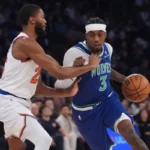
The centerpiece of this new era is the pairing of Anthony Edwards and LaMelo Ball. The statistical potential is staggering. Last season, Edwards’ efficiency suffered when he was forced to be both the primary creator and the primary target. His catch-and-shoot three-point percentage (49.6%) was significantly higher than his pull-up percentage (35.3%), yet he was forced into a high-usage role that minimized his efficiency.
With Ball, the Timberwolves have acquired a master of the transition game. Ball’s ability to initiate offense without a “gather” step and his willingness to launch deep, floor-spacing shots will fundamentally alter the defensive attention paid to Edwards. If the two can synchronize their usage, Minnesota believes they can field one of the most efficient—and aesthetically pleasing—offenses in the league.
Frontcourt Challenges: The Kuminga and Beringer Experiment
The departure of Randle and Reid has created a vacuum. Jonathan Kuminga and Joan Beringer are now thrust into roles that arguably exceed their current resumes. While Kuminga possesses elite athletic upside, his consistency remains a question mark. Similarly, while Beringer’s offensive activity—particularly on the offensive glass—is a bright spot, his defensive inexperience is a clear liability in a league that punishes weak rim protection.
The Defensive Dilemma: Can They Keep Their Identity?
For the Timberwolves to contend, they must maintain a top-10 defense. Historically, this has been an automatic byproduct of having Rudy Gobert on the floor. However, at age 34, Gobert can no longer be expected to do it alone.
The team lacks the “beef” they previously enjoyed with Randle to help absorb contact against opposing bigs. This places an immense burden on Jaden McDaniels, who is emerging as the team’s defensive anchor. Coach Chris Finch is expected to employ a “fly-around” defensive scheme—using active, aggressive perimeter rotations to disrupt entry passes—and potentially utilizing a zone defense when Gobert heads to the bench to minimize the defensive drop-off.

Supporting Data and Rotation Analysis
- The Sixth Man Factor: Ayo Dosunmu and TJ Shannon Jr. are expected to lead a high-tempo second unit. If Dosunmu can maintain his trajectory, he could emerge as a legitimate Sixth Man of the Year candidate.
- The Depth Chart: The bench is a mix of high-upside youth and defensive specialists like Jaylen Clark. However, the lack of a seasoned backup point guard remains a concern; while Bones Hyland offers offensive spark, he may be targeted defensively by larger wings.
- The X-Factors:
- Health: Can Gobert log 65-70 games?
- Integration: How quickly can Kuminga and Beringer adapt to their load-bearing roles?
- The "Wait and See": The status of Donte DiVincenzo, who is recovering from Achilles surgery, will be a vital storyline heading into the spring.
Implications: A Tiered Western Conference
The consensus among league observers is that the Western Conference is currently a two-horse race. Both the Thunder and the Spurs possess star power that arguably supersedes Anthony Edwards, coupled with deeper, more cohesive rosters.
Minnesota currently sits in a second tier alongside the Denver Nuggets. With the NBA’s new rules effectively curbing tanking, every game carries added weight, making the path to a high seed more grueling than ever. Projections suggest a 46-to-47 win season, a total that would reflect a team in transition rather than a finished product.
The Strategy: Retooling vs. Rebuilding
The defining characteristic of the Connelly-Finch era is the refusal to rebuild. They are a team that is constantly “retooling.” Even when experiments fail, the organization has shown a willingness to pivot at the trade deadline to correct imbalances.
For the fourth consecutive season, the Timberwolves enter the year with the expectation of winning a playoff series as a lower seed—a feat the franchise had never achieved prior to the current regime. While the path to the NBA Finals through OKC and San Antonio remains a daunting “chasm,” the organization is leaning into the volatility.
Official Outlook: A Calculated Risk
While critics may point to the lack of interior depth as a fatal flaw, the organization views this as a necessary trade-off for offensive versatility. The team’s identity has shifted from a rigid, heavy-footed defensive unit to a fluid, perimeter-oriented squad that demands more from its role players.

“The floor of this team is lower,” one insider noted, “but the ceiling is higher.” That increased ceiling is the ultimate motivator for a franchise that has spent decades in the wilderness and is now, for the first time in its history, legitimately comfortable living on the edge.
As the season tips off, the Timberwolves represent a fascinating case study in modern NBA management: they are a team that has decided that being predictable is a greater risk than being bold. Whether this gamble results in a championship ring or a mid-season reshuffle, one thing is certain: the Minnesota Timberwolves are officially appointment viewing.