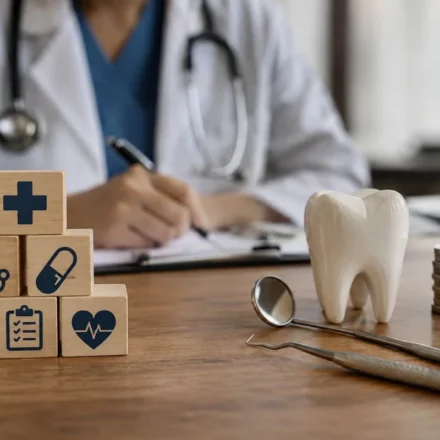





























































If a patient develops an infection in their finger, a visit to an urgent care clinic, diagnostic bloodwork, and a prescription for antibiotics are typically covered under standard medical insurance, subject to standard copays or deductibles. However, if that same bacterial infection originates a few inches away—inside a molar—the financial and administrative reality changes dramatically. The patient may face out-of-pocket costs reaching hundreds or thousands of dollars for a root canal and crown, or be forced to opt for a full extraction.
For tens of millions of Americans, dental insurance operates as a completely separate financial product. It carries its own monthly premiums, distinct provider networks, strict annual benefit maximums, and complex rules regarding which procedures qualify for coverage. Even individuals with premium commercial medical plans frequently discover that essential restorative dental procedures are entirely excluded from their primary healthcare coverage.
This structural disconnect is not an accident of modern corporate bureaucracy; it is the result of nearly two centuries of institutional, educational, and legal separation between dentistry and general medicine.
Main Facts: The Structural Divide in American Healthcare
The fundamental difference between medical and dental coverage lies in their underlying financial and underwriting philosophies.
+-----------------------------------------------------------------------------------+
|                            MEDICAL vs. DENTAL INSURANCE                           |
+--------------------------------------------------+--------------------------------+
| Medical Insurance                                | Dental Insurance               |
+--------------------------------------------------+--------------------------------+
| Designed for catastrophic financial protection   | Designed as a fee-for-service  |
|                                                  | maintenance cap                |
| Has an Out-of-Pocket Maximum (ACA protected)     | Has an Annual Benefit Maximum  |
|                                                  | (often $1,000–$1,500)          |
| Unlimited financial coverage after deductible    | Patient pays 100% of costs     |
| and out-of-pocket max are met                    | after benefit cap is reached   |
+--------------------------------------------------+--------------------------------+- Medical Insurance is designed primarily to protect against catastrophic, unpredictable financial loss. Under federal regulations, qualified medical plans must establish an annual out-of-pocket maximum. Once a patient meets this threshold through deductibles and coinsurance, the insurer pays 100% of covered essential health services for the remainder of the policy year.
- Dental Insurance functions more like a fee-for-service maintenance plan with a hard financial cap. Rather than capping what the patient spends, standard dental policies cap what the insurer will pay. Once an annual limit—frequently between $1,000 and $1,500—is reached, the policyholder assumes full financial responsibility for all subsequent care until the plan year resets.
This operational framework creates significant friction when complex oral health issues arise. While severe tooth infections can spread to the jaw, neck, or bloodstream—sometimes escalating into life-threatening medical emergencies—routine medical insurance policies routinely disclaim coverage for the dental care needed to treat the underlying source of the infection.
Chronology: Over 180 Years of Institutional Separation
The division between medical and oral healthcare in the United States developed through a series of key historical milestones:

1840                     1940s–1950s               1965                      2010
 Institutional Split      Commercial Expansion      Federal Exclusion         Affordable Care Act
 Dental college opens     Employer benefits grow;  Medicare/Medicaid exclude  Pediatric dental mandated;
 in Baltimore separately  dental carved out separately.  routine adult dental care. adult dental excluded.
1840: The Institutional Split in Baltimore
The foundational rift between dentistry and medicine occurred in 1840. Horace Hayden and Chapin Harris, two pioneering dentists, sought to establish formal dental training within the medical school at the University of Maryland. The university’s faculty rejected the proposal, viewing dental work as a mechanical trade rather than a scientific branch of medicine.
In response, Hayden and Harris founded the Baltimore College of Dental Surgery—the world’s first independent dental school. This event established a precedent: dentistry developed its own academic curricula, professional associations, degree structures (DDS and DMD), and state licensing boards completely separate from medical doctorates (MD and DO).
Mid-20th Century: Commercial Expansion and Employer Benefits
As employer-sponsored health insurance expanded rapidly following World War II, commercial insurers modeled their plans around physician and hospital services. When dental benefits began emerging decades later, insurance companies treated dental care as an optional "carve-out" product. Because dental care consisted largely of predictable, recurring maintenance (cleanings, basic fillings) rather than rare catastrophic events, insurers structured dental plans with low annual maximum caps to control financial exposure.
1965: Federal Codification via Medicare and Medicaid
When Congress enacted Title XVIII (Medicare) and Title XIX (Medicaid) of the Social Security Act in 1965, lawmakers codified this historical separation into federal health policy. To limit the initial budget of the Medicare program, routine dental exams, cleanings, fillings, and extractions were explicitly excluded from Medicare Part A and Part B coverage. While state Medicaid programs were given latitude to offer adult dental benefits, such coverage remained optional for states and continues to fluctuate based on state budgetary decisions.
2010: The Affordable Care Act Framework
The passage of the Patient Protection and Affordable Care Act (ACA) reinforced the historical divide for adult populations. The ACA mandated that individual and small-group health plans cover ten categories of "Essential Health Benefits" (EHBs). While pediatric dental care was designated as an essential benefit, adult dental care was left off the list. Consequently, qualified health plans offered on state and federal exchanges are required to offer dental benefits for children, but coverage for adults remains optional and largely reliant on standalone policies.
Supporting Data: Plan Architectures, Financial Caps, and International Models
The Coinsurance Structure of Standard Dental Benefits
Standard commercial dental insurance typically divides care into three tier-based categories, using what is commonly known as a 100/80/50 coverage model:

| Category of Care | Representative Services | Typical Plan Coverage | Typical Patient Coinsurance |
|---|---|---|---|
| Preventive Care | Cleanings, routine exams, select X-rays | 100% | 0% |
| Basic Procedures | Simple amalgams/composite fillings, basic extractions | 80% | 20% |
| Major Procedures | Crowns, bridges, root canals, dentures, implants | 50% | 50% |
| Orthodontics | Braces, clear aligners | 0%–50% (often child-only) | 50%–100% |
| Cosmetic Care | Teeth whitening, elective veneers | 0% (Excluded) | 100% |
Under this model, a patient requiring a $1,200 crown may face a 50% copay ($600), assuming they have not exhausted their annual benefit limit on prior treatments earlier in the year.
The Stagnation of Annual Maximums
One of the most notable economic aspects of dental insurance is the stagnation of annual benefit limits. In the 1970s, a standard annual maximum for a dental policy was approximately $1,000 to $1,500. Five decades later, despite substantial inflation in the cost of healthcare services, rent, materials, and clinical technology, many standard employer-provided dental plans maintain annual maximums in that exact same range.
Dental Plan Annual Caps vs. Adjusted Cost Value (1970s vs. Present)
+--------------------------------------------------------------------------+
| 1970s Benefit Cap: $1,000 - $1,500                                       |
| [======================================================================] |
|                                                                          |
| Present-Day Standard Cap: $1,000 - $1,500 (Unadjusted)                   |
| [======================================================================] |
|                                                                          |
| Present-Day Inflation-Adjusted Equivalent Value (Approx. $7,000+)         |
| [======================================================================]========> |
+--------------------------------------------------------------------------+
Had these annual maximums adjusted for inflation alongside medical insurance coverage caps, today’s annual dental limits would exceed $7,000 per year. Because these caps have remained static, patients requiring extensive restorative care absorb a much higher proportion of their treatment costs out-of-pocket today than policyholders did fifty years ago.
Comparative International Model: Norway
The division between oral and general medical coverage is not unique to the United States. Many nations with universal, publicly funded healthcare systems maintain similar structural separations for adult dental care.
In Norway, for example, the public health system (Helsenorge) covers hospitalizations, general practitioner visits, and specialized medical care. However, adult dental care remains largely privately funded.
- Children and Youth: Children up to age 18 receive fully subsidized public dental treatment, and young adults aged 19 to 26 receive discounted rates.
- Adult Population: Adults over 26 generally pay out-of-pocket for private dental clinics (such as Tannlege Team and independent practices) for standard procedures including checkups, fillings, and crowns.
- Targeted Exceptions: The Norwegian Health Economics Administration (HELFO) provides reimbursement only for specific severe medical conditions, such as rare medical disorders, severe periodontitis, oral cancer rehabilitation, or trauma.
This international example illustrates that even under single-payer or highly regulated public health systems, governments often separate adult dental services to control total tax-funded health expenditures.

Official Responses and Policy Guidelines
Centers for Medicare & Medicaid Services (CMS) Directives
The official positioning of the federal government regarding Medicare dental coverage remains closely tied to statutory limits, though subtle regulatory shifts have occurred in recent years.
Under current CMS guidelines, Original Medicare (Parts A and B) explicitly excludes routine dental care. However, CMS has clarified narrow circumstances where Medicare Part A or Part B will pay for dental-related services if they are inextricably linked to the clinical success of an otherwise covered medical procedure:
                       CMS MEDICARE DENTAL COVERAGE CRITERIA
                                         |
     +-----------------------------------+-----------------------------------+
     |                                                                       |
[EXCLUDED COVERAGE]                                                [ELIGIBLE COVERAGE]
Routine exams, cleanings, standard                                 Dental exams & treatment required prior to:
fillings, extractions, crowns, dentures.                           • Heart valve replacements
                                                                   • Organ transplants
• Head & neck cancer radiation treatments- Pre-operative dental exams and clearings prior to major heart valve replacements or organ transplants to eliminate potential sources of systemic infection.
- Oral examinations prior to radiation therapy for head and neck cancers.
- Treatment of oral complications directly resulting from jaw fracture reconstructions or tumor resections.
In these instances, CMS recognizes that untreated oral pathogens pose an immediate threat to the medical outcome. However, once the primary medical procedure is completed, routine ongoing dental maintenance returns to excluded status.
Public Health Perspectives: CDC and AMA
Public health organizations have increasingly drawn attention to the logical gaps caused by this policy split.
The Centers for Disease Control and Prevention (CDC) highlights that oral health is a critical component of overall systemic health. CDC surveillance data shows that untreated dental decay affects over 1 in 4 adults in the United States, with untreated periodontal disease disproportionately impacting low-income and minority populations.
An analysis published in the AMA Journal of Ethics examined the historical legacy of the medical-dental split, noting that the separation of dental care from medical benefit structures reinforces socioeconomic disparities. The journal highlighted that while medical insurance acts as a shield against catastrophic disease costs, the absence of comparable dental protection leads many lower-income individuals to delay routine care, turning preventable dental caries into emergency conditions.

Systemic Implications: Clinical Consequences and Economic Realities
The Oral-Systemic Health Connection
Modern medical research confirms that the human mouth cannot be clinically isolated from the rest of the body. Chronic oral inflammation and untreated dental infections have documented systemic implications:
                       SYSTEMIC IMPACT OF ORAL PATHOGENS
                                       |
    +----------------------------------+----------------------------------+
    |                                  |                                  |
[Diabetes Mellitus]            [Cardiovascular System]            [Severe Infection]
Severe periodontitis impairs   Oral bacteria enter bloodstream,   Local abscesses can escalate
glycemic control; managing     contributing to vascular           to jaw osteomyelitis, airway
gum inflammation improves      inflammation and arterial          compromise, or systemic
HbA1c levels. plaque buildup. sepsis.- Diabetes Mellitus: The relationship between periodontal disease and diabetes is bidirectional. High blood sugar increases the risk and severity of gum infections, while severe periodontal inflammation hinders glycemic control. Clinical trials indicate that treating gum disease can lead to measurable improvements in HbA1c levels.
- Cardiovascular Disease: Bacteria from chronic oral infections can enter the bloodstream (bacteremia), contributing to endocarditis in vulnerable patients and exacerbating systemic arterial inflammation.
- Acute Medical Escalation: An untreated tooth abscess can progress into severe deep-neck space infections (such as Ludwig’s angina), osteomyelitis of the jaw, or systemic sepsis, requiring emergency hospital admission, airway management, and high-dose intravenous antibiotics—costs that are ultimately borne by medical insurance systems.
The Emergency Room Dilemma
The exclusion of routine dental coverage yields a significant economic anomaly within hospital emergency departments (EDs).
Every year, hundreds of thousands of uninsured or underinsured patients presenting with severe tooth pain visit hospital emergency rooms. Because most hospital EDs lack on-call dental staff or specialized operatory equipment, physicians can typically only prescribe pain medications and oral antibiotics to manage immediate symptoms.
THE EMERGENCY ROOM DENTAL PARADOX
+-----------------------------------------------------------------------------------+
| Patient with Severe Toothache -> Visits Emergency Department                      |
|                                                                                   |
| Hospital ED Medical Plan Coverage:                                                |
| Covers ER physician consult, pain medication, antibiotics.                        |
| Cost: Hundreds to thousands of dollars in hospital bills.                         |
|                                                                                   |
| Result: Underlying dental issue (caries/abscess) is NOT treated.                  |
| Patient is discharged -> Infection recurs -> Patient returns to ER.              |
+-----------------------------------------------------------------------------------+
This cycle results in high hospital billings charged to medical programs without delivering definitive dental resolution—a process that costs the US healthcare system billions of dollars in avoidable expenditures.
Strategic Considerations for Consumers
Given the structural realities of separate insurance frameworks, individuals navigating employee benefit plans or individual marketplaces must carefully manage their oral healthcare expenditures:
- Calculate Total Out-of-Pocket Exposure: When selecting a dental plan during open enrollment, compare the total annual premium cost against the policy’s annual benefit maximum. If a plan costs $600 per year in premiums but caps total payouts at $1,000, the maximum net financial benefit provided by the insurer is $400 per year.
- Request Written Pre-Treatment Estimates: Prior to undergoing major restorative procedures (such as crowns, bridges, or root canals), patients should ask their dental practice to submit a formal pre-treatment estimate to their dental insurer. This document outlines the exact fee schedule, expected plan contribution, and remaining patient financial responsibility.
- Explore Alternative Delivery Models: For individuals lacking adequate commercial dental coverage, alternative options include:
- Federally Qualified Health Centers (FQHCs): Community health centers that offer comprehensive dental services charged on a sliding fee scale based on household income.
- Dental School Clinics: Accredited dental university clinics where pre-doctoral students and residents provide high-quality care under the direct supervision of licensed faculty dentists at significantly reduced rates.
- In-House Membership Plans: An increasing number of private dental practices offer direct-to-consumer annual wellness plans, which bundle preventive cleanings, exams, and X-rays with flat discounts on restorative work, bypassing third-party insurance administration completely.
Conclusion: The Path Forward for Policy Integration
The separation of dental and medical insurance remains one of the most persistent structural anomalies in modern healthcare. Rooted in 19th-century educational decisions and reinforced by mid-20th-century federal legislation, this divide continues to impose substantial out-of-pocket costs on patients and creates administrative barriers to comprehensive care.

While clinical evidence increasingly demonstrates the deep interconnections between oral health and systemic well-being, merging these two financial systems faces significant legislative, financial, and institutional resistance. Expanding comprehensive adult dental benefits across Medicare, Medicaid, and commercial health plans would require substantial initial capital outlays from employers, insurers, and taxpayers.
Until policy reform aligns healthcare financing with human anatomy, patients must navigate two distinct insurance systems to preserve both their physical and oral health—evaluating benefit caps, calculating true out-of-pocket risks, and ensuring that healthcare planning accounts for every aspect of their well-being.