


















































The Crossroads of a Dynasty: Napheesa Collier and the Minnesota Lynx Face an Uncertain Offseason

The Minnesota Lynx, a franchise synonymous with WNBA excellence, find themselves at a profound turning point. Following a swift, stunning first-round playoff exit at the hands of the New York Liberty, the organization—and its cornerstone, Napheesa Collier—must navigate a period of introspection that threatens to reshape the team’s identity.
One year removed from a media session defined by sharp, pointed critiques of league leadership, Collier arrived at the Mayo Clinic Square practice facility last Thursday with a different demeanor. There were no notes, no manifesto, and no demands. Instead, there was the heavy, somber silence of a championship contender that had been unceremoniously dismantled.
The Weight of Expectation: A Season in Review
The 2026 season for the Minnesota Lynx was, by nearly every statistical measure, a success—until it wasn’t. Under the stewardship of Cheryl Reeve, who captured her record-setting fifth WNBA Coach of the Year award, the Lynx secured the No. 1 seed with a stellar 33-11 record. The team had successfully navigated the complexities of a new Collective Bargaining Agreement, which had sent the league into a frenzy of roster movement and salary cap gymnastics.
However, the late-season cracks were evident to those paying close attention. After dominating the league’s defensive metrics for the first half of the year, the Lynx began to falter. The defensive intensity that had been a hallmark of the Reeve era—keeping opponents under 40% shooting—became a rarity. In their final 25 games, the Lynx achieved that defensive benchmark only twice.
The team’s decline was not a sudden collapse but a gradual erosion. Losses at home, particularly in the fourth quarter where the team squandered leads, signaled a lack of closing power. A four-game losing streak to close the regular season saw the Lynx stumble into the playoffs with momentum entirely in the wrong direction.
Chronology of a Disappointing Postseason
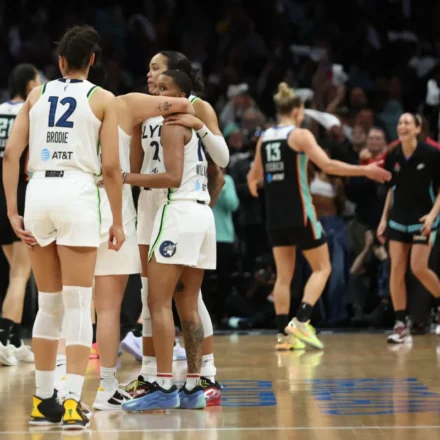
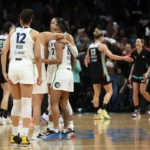
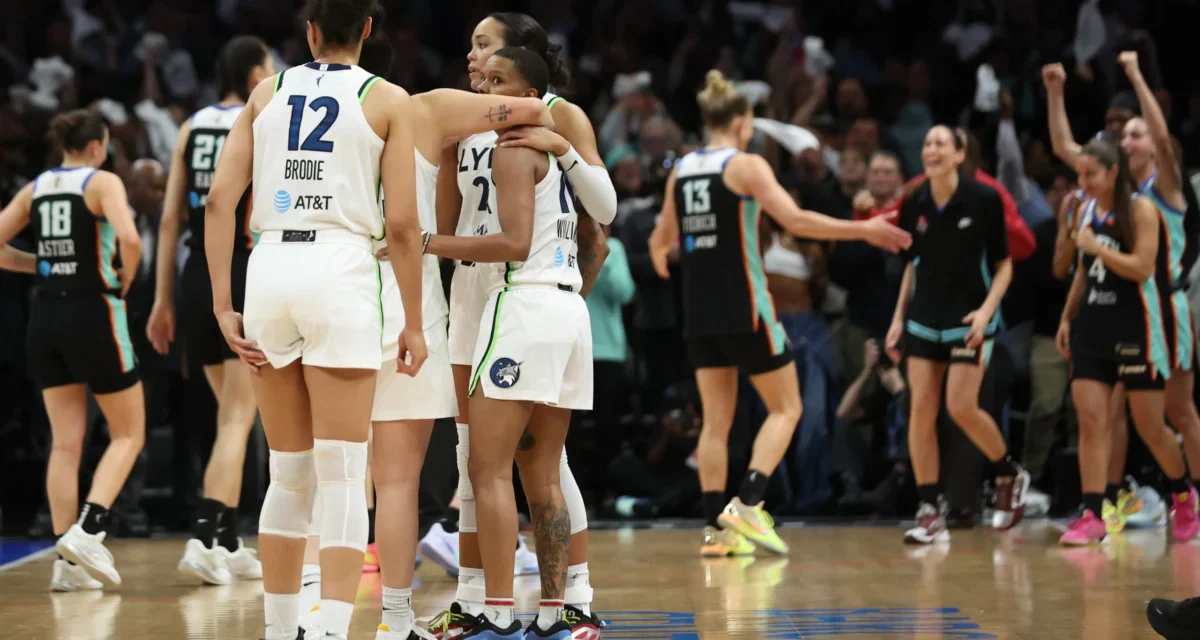
The collision with the New York Liberty in the opening round of the 2026 playoffs served as a harsh reality check. As the No. 8 seed, New York entered the series as an underdog, but they possessed the physical profile—led by Breanna Stewart and Jonquel Jones—that the undersized Lynx were ill-equipped to handle.
- Game 1: The Liberty controlled the pace from the opening tip. Minnesota, which had relied on the dynamic pick-and-roll duo of Olivia Miles and Natasha Howard all season, found their bread-and-butter offense completely neutralized by the Liberty’s length. The Lynx held the lead for less than four minutes of the entire contest.
- The Statistical Gap: Over the course of the two-game sweep, the disparity in talent and size was glaring. Breanna Stewart effectively dismantled the Lynx defense, outscoring Collier 55-26 across the two matches.
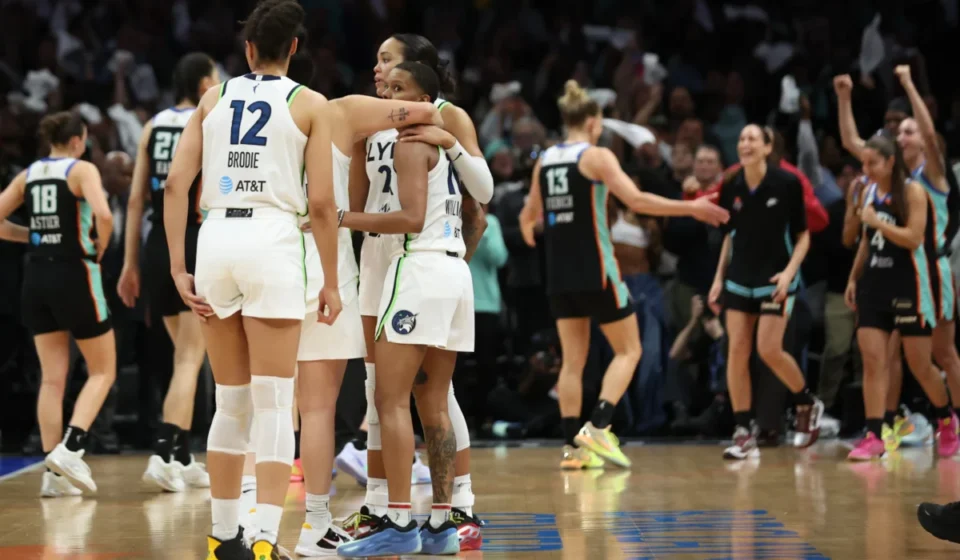
- Game 2: The final defeat was emphatic. For the first time in franchise history, the Lynx suffered back-to-back postseason losses by margins of 15 points or more. The "No. 1 vs. No. 8" matchup, which had been designed to provide the top seed an advantage, instead highlighted the widening gap between the league’s elite and the rest of the pack.
Official Responses: The Silence of the Star and the Pragmatism of the Coach
The post-series media availability was defined by the ambiguity surrounding Napheesa Collier’s future. Having signed a one-year deal following her recovery from catastrophic ankle surgeries, Collier is once again the center of league-wide speculation.

"Honestly, I haven’t even thought about that," Collier told reporters when asked about her impending free agency. "We lost less than 48 hours ago, and we didn’t expect to be here at all, so I really haven’t had any time to decompress."
While skeptics on social media were quick to interpret her measured tone as a sign of an imminent departure, her teammates and coaching staff remained grounded. Cheryl Reeve, ever the realist, addressed the situation with the candor that has defined her tenure as president of basketball operations.
"Phee knows exactly what exists here," Reeve noted. "She knows the care, the love, all the things that have been poured into her. This is a Phee decision, and it’s probably more than basketball. If she lands on being here, great. If there’s something better for her, that’s life."
Reeve’s philosophy is clear: she has built an environment of trust, but she understands that in the modern WNBA, the personal and professional ambitions of a superstar may eventually require a change in scenery.
The Tactical Dilemma: Size, Speed, and Skill
The most pressing question for the Lynx is how to evolve in a league that is trending toward increased length and athleticism. The current roster, while high-functioning, is fundamentally flawed against opponents like the Liberty.
During her post-season debrief, Collier hinted at a personal evolution. She expressed a desire to work on her perimeter game and three-point shooting during the off-season. When asked if she would be willing to shift to the small forward position to accommodate a larger frontcourt, her answer was immediate: "I would go wherever a coach wants to put me. So, yes."
This admission opens the door for a total tactical overhaul. If the Lynx are to compete for a fifth championship, they need to address their lack of interior presence. However, as Reeve pointed out, such players are rare commodities.

"The things that we need, they don’t grow on trees," Reeve said. "We’re not the only team that would like to have size that shoots 3s, and can pass, defend and rebound."
The search for a "hidden gem"—an underappreciated veteran willing to take a team-friendly deal—is now the primary objective for the front office. With the financial commitments already in place for stars like Courtney Williams and Kayla McBride, the margin for error is razor-thin.
Implications for 2027 and Beyond
The implications of this offseason reach far beyond roster construction. The Minnesota Lynx are at risk of losing their status as an automatic championship contender if they fail to adapt to the league’s physical shift.
- The Retention Challenge: Securing a long-term commitment from Collier is the highest priority. If she chooses to stay, the organization has a foundation; if she leaves, the Lynx must immediately pivot to a rebuilding phase.
- Addressing the "Something": As veteran guard Courtney Williams succinctly put it, "I ain’t the G.M., bossman. Let them do their job, and I do mine. But it’s something. We need something." That "something" is the missing link—a defensive anchor or a versatile forward who can bridge the gap between the team’s current undersized identity and the physical requirements of modern playoff basketball.
- The Cultural Test: Cheryl Reeve’s ability to manage this transition will be the ultimate test of her legacy. After years of sustained success, the current staff must prove they can innovate in a league where parity is becoming the norm.
The 2026 season ended in disappointment, but the narrative of the Lynx is far from finished. Whether through the return of injured players like Dorka Juhász and Emma Čechová, or through aggressive recruitment in the free-agent market, the front office has a clear directive. The dynasty is not dead, but it is certainly wounded.
As the league enters the winter months, all eyes in Minnesota will be on the front office and their star forward. The questions are no longer about the team’s ability to play together—the chemistry remains strong—but about their ability to grow together. For a franchise that has set the standard for success in the WNBA, the only acceptable outcome for 2027 is a return to the top, regardless of what it takes to get there.