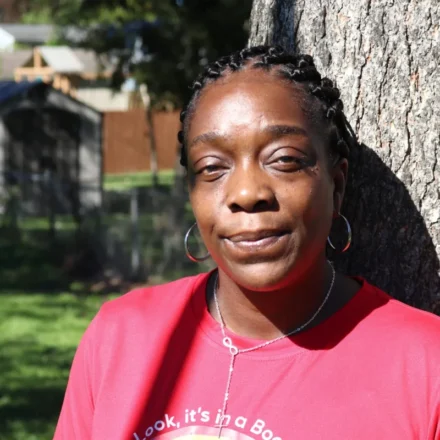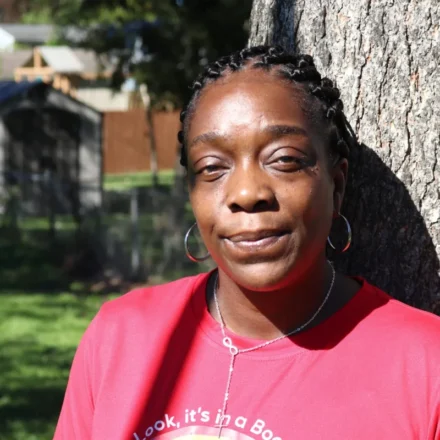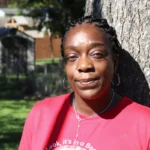




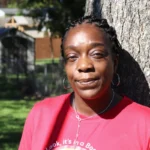












































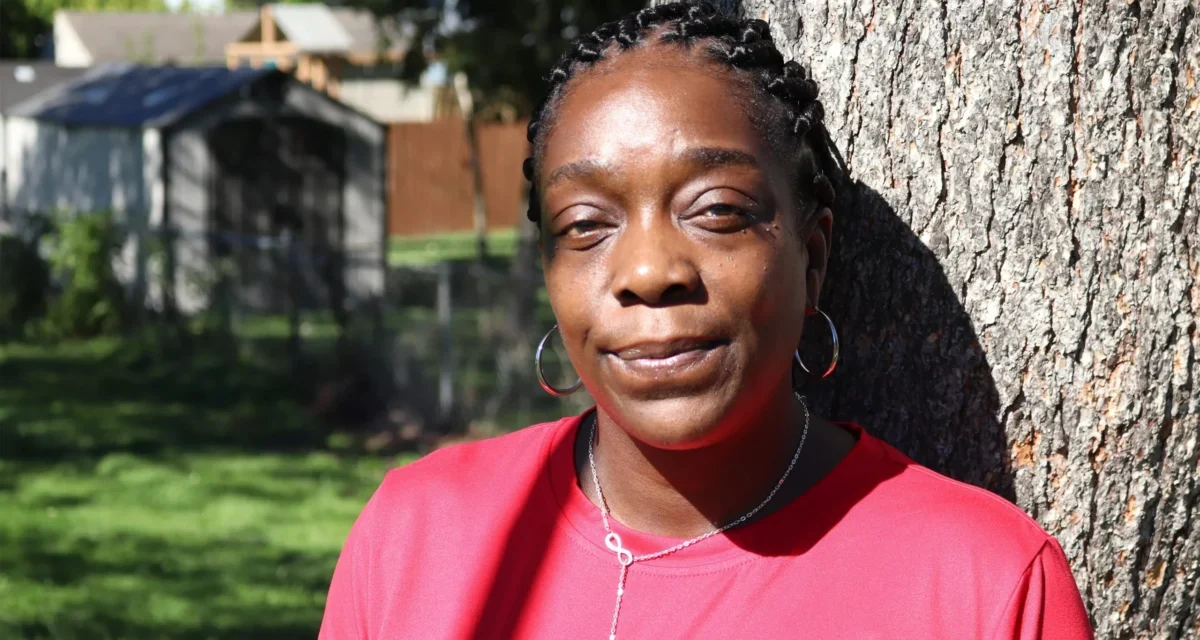



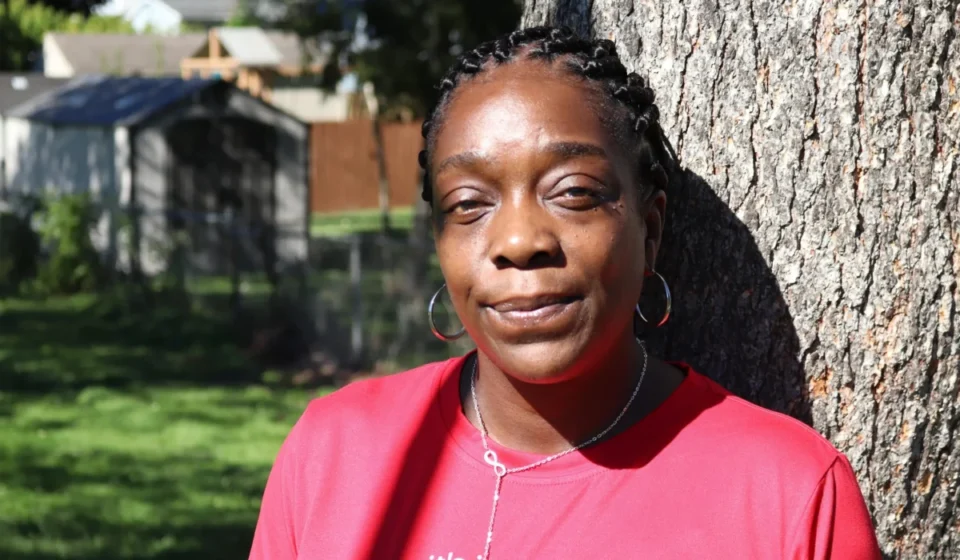

LANSING, Mich. — For Christina Starks-Clay, the math of modern American healthcare has become a brutal, daily ritual. Standing in line at a September town hall in Michigan’s capital, the early childhood special education paraprofessional pulled out her smartphone to reveal a digital receipt. It was a screenshot of a $1,000 cashier’s check—money she had withdrawn from her bank that very morning to chip away at her son’s mounting dental bills.
Despite having what she considers "good" dental insurance, she was still staring down a remaining balance of $389. Weeks earlier, her own routine cleaning had set her back $600. For Starks-Clay, these aren’t just line items; they are the tangible costs of a system that she believes is failing working-class families. "I’m like, ‘Tina, OK, you were in a position for this moment to do this,’" she said, reflecting on the psychological toll of paying for basic health maintenance. "A lot of people couldn’t do what I had to do today. I couldn’t do it. But I did it. So I need to hear: How are you going to make this better for everyone?"
Starks-Clay is one of thousands of Michiganders turning to U.S. Senate candidate Abdul El-Sayed, a Democrat who has made "Medicare for All" the bedrock of his campaign. In a state that has become a flashpoint for the nation’s healthcare anxieties, the promise of a single-payer system is no longer just a progressive rallying cry—it is a lifeline for voters who feel increasingly abandoned by the status quo.
The Human Cost: A State in Financial Distress
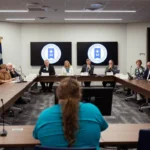
The line for El-Sayed’s town hall stretched for blocks under the intense September sun, mirroring the breadth of the crisis. Conversations among the attendees were marked by a grim consistency: tales of medical bankruptcy, spiraling deductibles, and the agonizing choice between medicine and meals.
One attendee, a professor emeritus at Michigan State University, voiced fears for his grandchildren, whose parents are struggling to meet a $9,000 insurance deductible. Others in the crowd, including healthcare workers, shared harrowing anecdotes of patients who leave clinics without filling prescriptions because the cost is prohibitive.
The atmosphere reached a fever pitch when El-Sayed took the stage. The crowd, well-versed in his platform, chanted the mantra that has defined his political identity: "Money out of politics! Money in your pocket! Medicare for All!"
For many, the urgency is driven by a stark reality: the Affordable Care Act (ACA), while successful in reducing the uninsured rate in the decade following its 2010 passage, is now facing systemic rollbacks. According to data from the Urban Institute, up to 355,000 Michiganders are projected to lose Medicaid coverage by 2028 due to recent policy shifts. When combined with the expiration of federal tax subsidies and a 20% average hike in individual marketplace premiums in Michigan, the sense of security provided by the ACA has begun to evaporate.
Chronology of a Shifting Landscape
The evolution of the "Medicare for All" debate has been cyclical, gaining significant traction during the 2016 and 2020 presidential primaries. However, experts note that the current environment is unique.
- 2010–2020 (The ACA Era): The nation saw the uninsured rate cut nearly in half, with protections established for preexisting conditions and the expansion of Medicaid across 40 states and the District of Columbia.
- 2021–2024 (The Reversal): Under the current political climate, including the impacts of the "One Big Beautiful Bill Act," many of those gains have been eroded. The Urban Institute notes that Michigan, specifically, has seen steep enrollment drops in ACA plans as costs have ballooned.
- 2025–Present (The Election Cycle): Healthcare has transitioned from a policy debate into a primary electoral issue. With fewer than half of Americans now reporting that they can afford their healthcare costs, candidates like El-Sayed are using "Medicare for All" as a shorthand for fundamental, systemic change.
The Data Behind the Debate
Support for a government-run healthcare system is at its highest point in over a decade. A recent KFF health tracking poll indicates that two-thirds of Americans favor expanding the government program that currently covers seniors. However, pollsters caution that "Medicare for All" remains a nebulous concept for many. While the traditional definition involves a federal, single-payer system that would largely displace private insurance, public opinion is highly sensitive to the framing of the policy.
"When we ask people what they want to hear from candidates in regard to healthcare, it’s a plan to bring down healthcare costs," says Ashley Kirzinger, director of survey methodology at KFF.
The economic debate, however, remains contentious. Critics often cite the estimated $4 trillion annual price tag for a universal system. Conversely, proponents point to recent research, including a preprint study from Yale University, suggesting that while the implementation of Medicare for All would require significant federal investment—estimated at $4.2 trillion—it could ultimately save the U.S. economy approximately $1 trillion in total healthcare spending by reducing administrative bloat and curbing pharmaceutical price gouging.
Official Responses and Political Maneuvering
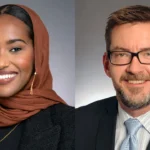
The Republican response, led by former Michigan congressman and Senate candidate Mike Rogers, frames "Medicare for All" as an existential threat to personal choice and fiscal stability. Rogers has publicly challenged the feasibility of the plan, arguing that the transition would force millions of Americans off their existing private insurance plans.
"If the government’s going to give you something, they have to take it away from someone else," Rogers stated during a press conference announcing his health platform. His campaign, which focuses on market-based solutions, contends that the massive tax increases required to fund a single-payer system would be a burden on the working class.
Jonathan Oberlander, a professor at the University of North Carolina-Chapel Hill who specializes in the politics of healthcare reform, notes that the political effectiveness of this argument lies in its ability to incite fear. "It doesn’t matter if the fears that they’re spreading are actually accurate," Oberlander explained. "Politically, what matters is if they can scare people."
The Psychological Toll: Personal Narratives
Beyond the numbers and the partisan rhetoric lie the lives of those like Cindy Lou Coolich. A boisterous retiree, Coolich spent years helping others navigate the labyrinthine insurance system until she was struck by a bout of sepsis that left her disabled.
She described the slow, painful dissolution of her life: the loss of her 15-acre horse farm, the depletion of her savings, and the eventual reliance on a $900 monthly Social Security check. Her current stability, she noted with dark irony, came only after the death of her ex-husband, which allowed her to claim his social security benefits.
"So now I’m doing quite well!" she laughed, though the bitterness in her tone was palpable. "But to me, it hardly seemed like the mark of a functioning healthcare system that someone had to die for things to get better."
Stories like Coolich’s and Starks-Clay’s represent a broader disenchantment with the status quo. For many, the debate over "Medicare for All" is not about the complexities of legislative policy; it is about the morality of a system that permits such suffering.
Implications for the Future
As the election approaches, the feasibility of a complete overhaul of the U.S. health system remains low. Even if a proponent like El-Sayed were to win, the legislative hurdles—including powerful lobbying interests and a divided Congress—suggest that a radical shift is unlikely in the short or medium term.
"It’s still America," said Thomas "Jermaine" Carey, a Detroit-based activist. "You still have super PACs, the lobbyists that control everything."
Despite the skepticism, the movement persists. For candidates like El-Sayed, the focus is on maintaining the momentum of the base and keeping the issue at the forefront of the national conversation. Whether "Medicare for All" is a realistic legislative goal or a "shiny object" of progressive politics, its prominence in the current cycle reflects a populace that is tired of waiting for incremental changes.
Ultimately, the healthcare debate in Michigan is a microcosm of a larger American struggle: the search for a system that balances individual responsibility with the collective need for security. Until that balance is struck, voters like Christina Starks-Clay will continue to stand in line, clutching their receipts, waiting for a promise of change to become a reality.