















































Echoes of Resistance: Twin Cities Performance Art Confronts the Architecture of Trauma

In an era defined by political instability and the persistent, jagged edges of systemic violence, the Twin Cities theater and dance scene has emerged as a critical laboratory for cultural survival. As the societal landscape shifts under the weight of historical grievances and contemporary crises, local creators are increasingly turning to the stage not merely for entertainment, but as a site for interrogation. Three recent major productions—Marcie R. Rendon’s Sweet Revenge, Moriah Evans’ immersive performance at the Walker Art Center, and Ananya Dance Theatre’s Prem—collectively suggest that in the face of institutionalized erasure, the most radical act is to maintain a decisive, uncompromising point of view.
The Haunting Legacy of Erasure in Sweet Revenge
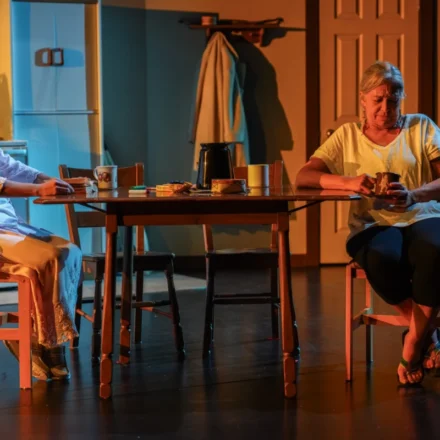
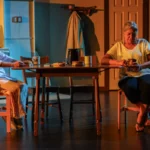
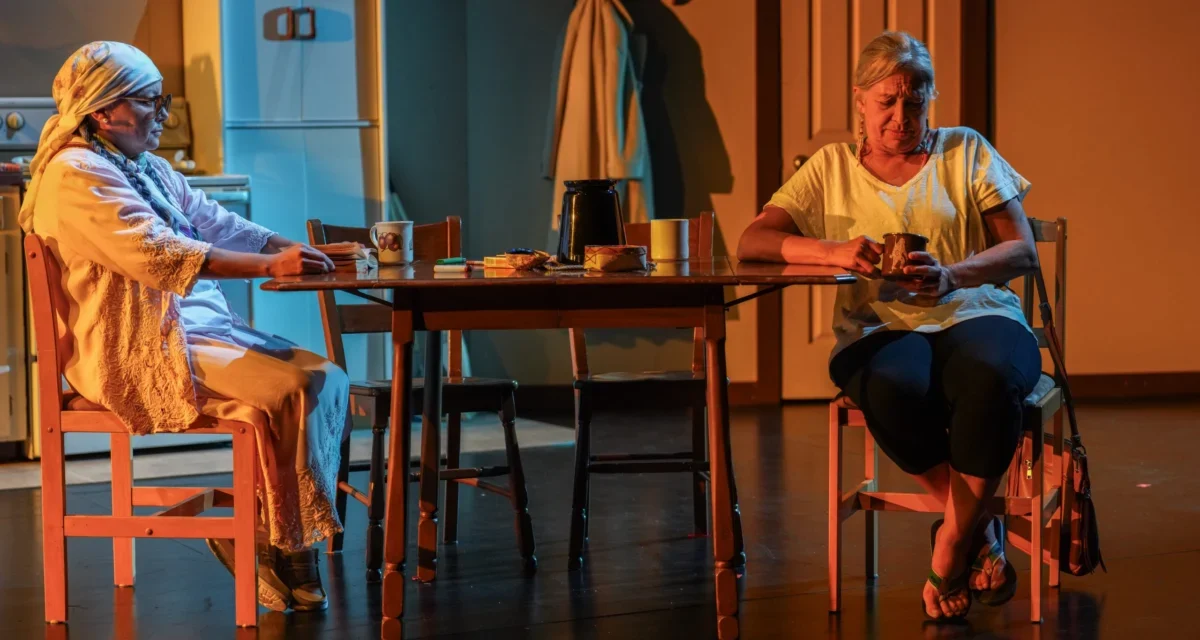
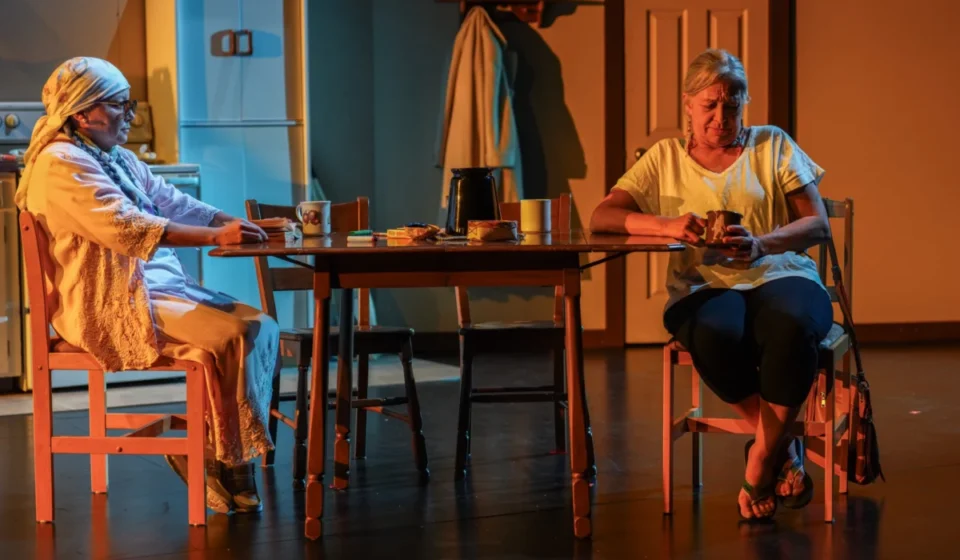
At the heart of Marcie R. Rendon’s Sweet Revenge, currently playing at the Red Eye Theater, lies a visceral struggle against the intergenerational transmission of trauma. The production, presented by the Mni Giizhik Theatre Ensemble and Exposed Brick Theatre, serves as a poignant exploration of the American Indian boarding school system—a state-sponsored project designed to systematically strip Native children of their language, culture, and familial bonds.
The central conflict is anchored in the domestic life of Maggie (played with sharp, grounded confidence by Fern Renville). Maggie is a woman who has carved out a space of stability and cultural stewardship, raising two grandchildren while operating a business providing spiritual care. Yet, her world is constantly encroached upon by a ghostly, rhythmic haunting: an ice cream truck that circles her home every thirty minutes. Its cheerful, jingle-laden tune is not a source of childhood delight, but a trigger of profound physiological distress for both Maggie and her mother, Granny Josephine (Oogie Push).
This recurring sound is a potent metaphor for the "stolen whimsy" of Native childhoods. Rendon uses this tension to illustrate how the violence of the past manifests in the present, specifically in the strained, often explosive relationship between mother and daughter. In one of the play’s most vulnerable moments, Maggie cries out, "I’m so tired of your rage controlling me." It is a line that functions as both a rebuke of the past and a desperate plea for a future untethered from the trauma that defined her mother’s generation.
Directed by Sequoia Hauck, the play avoids the trap of monolithically portraying the urban Native experience. Instead, it offers a nuanced, at times humorous look at the internal politics of the community. We see this in the portrayal of three social-service professionals who, overwhelmed by their careers, attempt to outsource their cultural responsibilities to Maggie—paying for ready-made prayer ties they intend to pass off as their own. It is a sharp observation of the performative nature of modern identity, balanced by Maggie’s smart, protective, and sometimes cynical responses to these requests.

The Geography of Rage: Moriah Evans at the Walker
While Sweet Revenge finds its power in the intimacy of the living room, choreographer Moriah Evans’ recent work at the Walker Art Center, titled }[¦/+^%<>¬£¥$&@!!!!^^^]{, took the confrontation with institutional power into the architectural sphere. The title itself, an unpronounceable string of symbols common in comic strips to denote an expletive, set the tone for a piece that viewed the theater not as a temple of art, but as a "violent project."
Evans utilized the entirety of the Walker’s campus, beginning with dancers clad in fluorescent rain gear performing on the exterior hills and rooftops. The performance was a study in contrasts: outdoors, the dancers moved with a wind-swept, organic freedom. However, as the piece transitioned into the interior of the theater, the movement became rigid, militaristic, and confined.
In a post-show discussion, Evans explicitly linked the proscenium stage to patriarchal structures, arguing that the traditional theater space serves as an instrument of surveillance and containment. Through choreographed exhaustion, repeated anxious vocalizations, and the explicit "counting of bodies," the dancers challenged the audience to reconsider the space they occupied. The work invoked the shadows of state-sponsored violence—specifically referencing the deaths of George Floyd and Renee Good—transforming the theater into a site of collective memory rather than passive observation.
Collective Healing: Ananya Dance Theatre’s Prem
If Evans’ work focused on the deconstruction of oppressive architecture, Ananya Dance Theatre’s Prem (Love: An Occupation) focuses on the architecture of community survival. Under the artistic direction of Ananya Chatterjea and director Dipankar Mukherjee, Prem presents a cycle of grief, resistance, and joy, responding directly to the trauma of the 2020 uprisings and the federal immigration crackdowns, such as Operation Metro Surge, that have targeted the Twin Cities in recent years.
Prem moves away from traditional character-driven storytelling, opting instead for a structure reminiscent of a Greek chorus. The dancers do not represent individuals so much as they represent a collective body navigating catastrophe. The production features a powerful refrain from guest artist Mankwe Ndosi: "We make the future together; no one is coming to save us because we are the ones that we need."

This sentiment captures the core tension of the current moment. There is a palpable sense of exhaustion among many communities regarding the efficacy of institutional change. As the production asks, if the systems designed to protect are, in fact, the source of the violence, where does one turn? The answer offered by Prem is internal and horizontal: the community is the only reliable safety net.
Implications: The Art of the Uncompromising Point of View
The surge in performance art that addresses state violence and historical trauma in the Twin Cities is not a coincidence; it is a direct response to a social contract that many feel has been breached.
- The Problem of Representation: As seen in Sweet Revenge, there is an ongoing struggle to depict the "urban Native" experience without relying on tropes. The production’s minor logistically rough edges—such as the reliance on store-bought sandwiches rather than on-stage food preparation—highlight the challenges of creating "domestic realism" in a theater space that is fundamentally stripped of resources.
- The Limits of Hope: In Prem, the ending is arguably almost "too hopeful" for the current political climate. The juxtaposition of the performance’s call for communal joy against the backdrop of ongoing violence against immigrants creates a dissonance that the audience is left to reconcile on their own.
- The Institutional Critique: Both Evans and Rendon force a confrontation with the "spaces" of our lives. Whether it is the boarding school system (Rendon) or the proscenium stage (Evans), these works argue that we cannot heal from violence until we identify the physical and structural manifestations of that violence.
A Call for Decisive Action
The professional consensus among critics and observers is that these productions signal a turning point for Twin Cities theater. By refusing to soften their messages, creators like Rendon, Evans, and Chatterjea are demanding that audiences move beyond the comfort of "entertainment" and into the discomfort of "engagement."
The logistical hurdles noted in the opening of Sweet Revenge—such as the repetitive, math-defying deaths of the ice cream truck drivers—do not detract from the production’s emotional weight. Instead, they serve as a surrealist reminder of the relentless, often absurd nature of trauma. When the cycle of violence is institutional, the response must be equally persistent.
Ultimately, these three works offer a mirror to the current state of American society. They reflect a public that is tired of the "rage" of the past and the "surveillance" of the present. As we navigate the remainder of the performance season, the lesson remains clear: when the world feels increasingly unsafe, the most vital art is that which creates a space for us to acknowledge our collective vulnerability, while simultaneously organizing the strength to survive it together. No one is coming to save us; we are, as the artists insist, the ones we have been waiting for.