























































By [Your Name/Journalistic Staff]
The landscape of professional football—a multi-billion-dollar juggernaut defined by competitive parity, the high-stakes drama of the free-agency market, and the complex intersection of labor law—was fundamentally reshaped by a single man sitting in a Minneapolis courtroom. U.S. District Judge David Doty, a towering figure in both the legal community and the annals of sports history, passed away on Saturday at the age of 96, just three days shy of his 97th birthday.
His death, announced by the District of Minnesota, marks the end of a career that spanned nearly four decades on the federal bench. While Judge Doty presided over thousands of civil and criminal cases, his enduring legacy is inextricably linked to the NFL. He was the judicial steward who dismantled the league’s restrictive labor practices in the early 1990s, effectively ushering in the era of modern free agency and laying the foundation for the sport’s meteoric rise to cultural and financial dominance.
A Lifetime of Service and Integrity
Before he became the arbiter of the NFL’s internal power struggles, David Doty was defined by his commitment to service. Born in 1929, Doty’s early life was marked by the rigor of the United States Marine Corps, where he served for six years. This military discipline would later translate into his courtroom demeanor—a blend of down-to-earth kindness and an unyielding, occasionally stern, commitment to procedure.
After his service, Doty pursued a legal education at the University of Minnesota, graduating in 1961. He spent the next 26 years in private practice, honing the legal acumen that would eventually catch the eye of President Ronald Reagan, who appointed him to the federal bench in 1987. Doty achieved senior status in 1998, a milestone that did not slow his productivity; remarkably, he continued to handle a full docket of cases until only a few months before his passing.
Chief U.S. District Judge Patrick Schiltz eulogized Doty as a man of profound humility. "Judge Doty devoted his entire professional life to serving others—as a Marine, as a lawyer who served not only clients but his community in many ways, and as a U.S. District Judge for nearly four decades," Schiltz noted. "He treated everyone—from the guy who shined his shoes to Justices of the U.S. Supreme Court—the same way: with kindness and compassion."
The 1992 Ruling: Dismantling "Plan B"
To understand the NFL as it exists today, one must look at the legal battlefield of the late 1980s and early 1990s. Following a 1987 player strike that crippled the league’s regular season, the NFL Players Association (NFLPA) launched a series of legal challenges against the league’s restrictive labor rules. Judge Doty was the man assigned to navigate this minefield.
At the time, the NFL operated under a system known as "Plan B," which allowed teams to protect 37 players from free agency, essentially tethering athletes to their clubs and suppressing wages. It was a restrictive, owners-first environment that left little room for player autonomy.
Doty’s judicial journey in this arena was gradual. Initially, he urged both the league and the union to return to the bargaining table, even siding with the NFL in early motions to prevent the mass exodus of players to the open market. However, by 1990, his stance had shifted. He granted players the right to pursue individual antitrust claims against the league, a decision that signaled the beginning of the end for the status quo.
The climax arrived in 1992. Following a landmark trial that lasted three months, a jury of eight women struck down the league’s restrictive free agency system. Following that verdict, Judge Doty issued a series of rulings that favored the players, effectively stripping the owners of their unilateral power. The pressure forced the league to negotiate in earnest, leading to the 1993 collective bargaining agreement (CBA)—a watershed moment that introduced a true free-agency system balanced by a salary cap to control rising payrolls.
Chronology of Influence: From the Gridiron to the Bench
- 1987: David Doty is appointed to the U.S. District Court by President Ronald Reagan.
- 1987–1989: Doty begins presiding over labor litigation between the NFL and the NFLPA following the 1987 strike.
- 1990: Judge Doty issues a critical ruling allowing players to pursue antitrust litigation, weakening the "Plan B" restriction.
- 1992: A jury strikes down the NFL’s restrictive "Plan B" system. Doty subsequently rules in favor of players seeking unrestricted free agency.
- 1993: The landmark CBA is signed, introducing modern free agency and a salary cap, fundamentally changing the league’s economic model.
- 1998: Doty assumes senior status but continues to serve as a primary judicial authority for ongoing NFL-related labor disputes.
- 2008: Doty rules in favor of quarterback Michael Vick, preventing the Atlanta Falcons from recouping $16 million in bonuses following Vick’s dogfighting conviction.
- 2015: Doty rules in favor of Adrian Peterson, overturning a league-imposed suspension related to child abuse charges, citing an improper retroactive application of discipline.
- 2026: Judge David Doty passes away at 96, leaving behind a legacy of judicial oversight that spanned the most transformative years of professional football.
The Arbiter of Discipline and Dollars
Even after the 1993 agreement stabilized the league’s labor model, Judge Doty remained the "go-to" judge for the NFL’s most contentious disputes. Because he had deep institutional knowledge of the 1993 CBA and its subsequent amendments, he held jurisdiction over matters that the league’s internal arbitration processes could not resolve.
His rulings often served as a check on the immense power of the NFL Commissioner’s office. In 2008, when the Atlanta Falcons attempted to reclaim $16 million in signing bonuses from Michael Vick after the quarterback’s incarceration for a dogfighting operation, Doty ruled in Vick’s favor. He determined that the league’s contracts could not be interpreted in a way that allowed for such retroactive clawbacks, reinforcing the sanctity of player contracts.
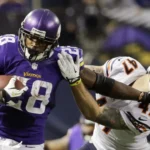
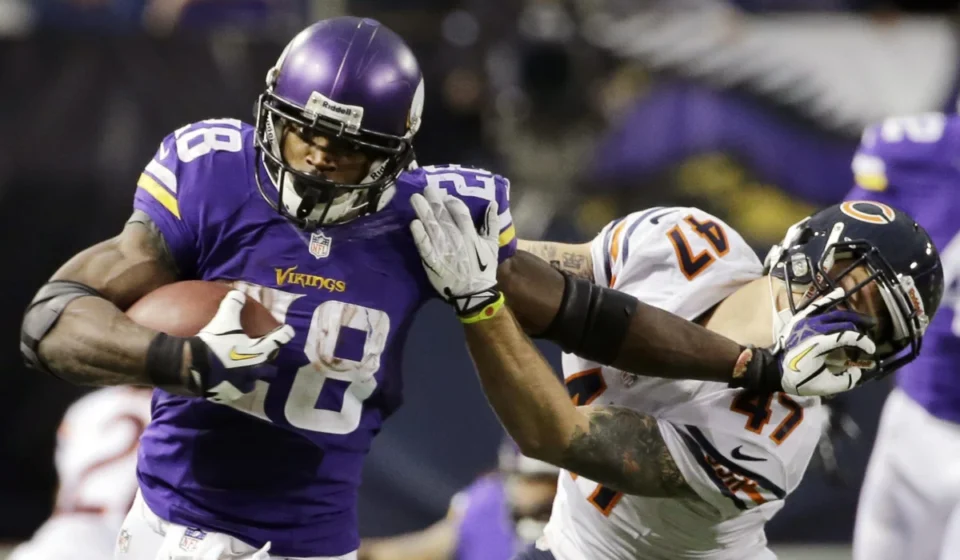
Similarly, in 2015, Doty sided with Minnesota Vikings star Adrian Peterson. After the NFL suspended Peterson indefinitely following a child abuse case, the NFLPA appealed the decision. Doty ruled that the league had unfairly applied new disciplinary policies retroactively, handing a rare defeat to the NFL’s disciplinary apparatus.
While he was a frequent thorn in the side of the league office, he was not a "union judge." In 2012, he denied a motion to reopen the 1993 agreement during a high-profile collusion case, showing that his allegiance was to the law—and the specific language of the contracts—rather than a predetermined outcome.
Implications: The "Doty Era" and the Modern NFL
The legacy of Judge David Doty is written in every blockbuster free-agency signing, every salary cap adjustment, and every contract dispute that reaches the headlines today. By forcing the NFL into a structured, negotiated labor environment, he helped the league evolve from a collection of loosely organized teams into a cohesive, highly profitable entertainment conglomerate.
The "competitive parity" that the NFL prides itself on—the idea that any team can go from worst to first in a matter of seasons—is a direct result of the economic constraints and freedoms established in the post-1993 landscape. Without Doty’s intervention, the league might have remained an insular, feudal system, susceptible to the very labor unrest that threatened to destroy it in the late 1980s.
"The league has lost a giant," said one legal observer familiar with the cases. "He didn’t just rule on cases; he defined the rules of the game."
As the football world reflects on the passing of Judge Doty, it is clear that his impact will be felt for generations. He was the impartial arbiter who understood that for a sport to grow, the power between those who play and those who profit must remain in a state of delicate, legal equilibrium. Even as the players change and the technology of the game advances, the structural framework established in Judge Doty’s courtroom remains the bedrock of the most popular sport in America.