




















































The High-Octane Culture War: How Transportation Policy Became a Battlefield for American Masculinity

By [Your Name/Journalistic Desk]
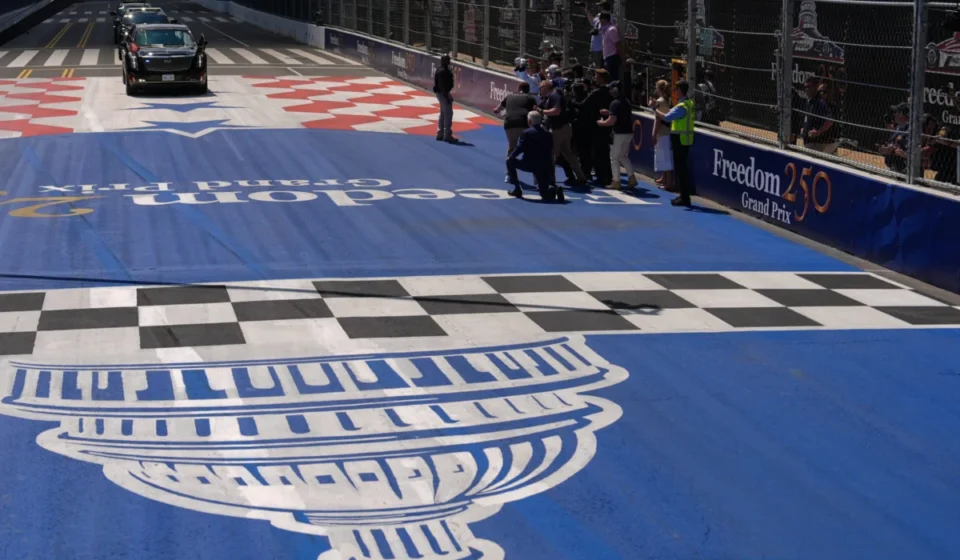
The air in Washington, D.C., during the third weekend of August 2026 did not smell of the usual humid Potomac breeze; it smelled of high-octane fuel and burning rubber. The inaugural "Freedom 250 Grand Prix," an IndyCar street race that tore through the heart of the National Mall, was billed with the provocative tagline: "Freedom doesn’t ring, it revs!"
While the roar of engines served as the soundtrack for the weekend, the event was more than a sporting spectacle. It was a physical manifestation of a growing political movement that frames the American automobile not merely as a mode of transportation, but as a core pillar of national identity and traditional masculinity. This event, championed by Transportation Secretary Sean Duffy, underscores a deepening cultural divide in the United States—one where bike lanes, pedestrian safety, and sustainable transit are increasingly viewed as "anti-American" threats to the status quo.
The Intersection of Power and Performance
The Freedom 250 is the latest in a series of displays of "political theater" that emphasize a specific, aggressive form of masculinity. In recent months, the nation has witnessed UFC fighters trading blows on the White House lawn and fitness-based "face-offs" between Cabinet members, such as the widely publicized push-up and pull-up challenges involving Secretary Duffy, Defense Secretary Pete Hegseth, and HHS Secretary Robert F. Kennedy Jr.
For many, these displays are a performative rejection of the previous administration’s focus on equity and climate-conscious infrastructure. Transportation Secretary Sean Duffy has become the face of this pivot. A former reality television star turned political operator, Duffy has leaned into a nostalgia-fueled vision of American life—one where the open road is the ultimate domain of the man, and anything that restricts that freedom is considered an affront.
A Historical Retrospective: The Road to "Petro-Masculinity"
To understand the current political landscape, one must look at the historical design of the American transportation system. According to Nicole Roach, co-founder of Women in Urbanism Canada, the modern car has been designed with a male-centric perspective since its inception. This bias extends beyond the aesthetics of design; even crash-test safety protocols have historically prioritized the male physique, often leaving women more vulnerable in accidents.
"Since the 1960s, automotive advertising has been a masterclass in psychological targeting," Roach explains. "Companies—especially those marketing trucks and performance cars—have weaponized the messaging of freedom, domination over the environment, and raw power. They built a bridge between the ego and the vehicle."
This phenomenon, dubbed "petro-masculinity" by Virginia Tech scholar Cara Daggett, describes the inextricable link between fossil fuels, traditional gender roles, and the political right. Daggett argues that traditional masculinity has been historically anchored to the breadwinner model—a system sustained by a steady, cheap flow of oil and a society built around car-centric suburbia. When that model is threatened by sustainability mandates, it triggers a "reactionary defense."

The Policy Shift: From Sustainability to "Suburban Supremacy"
The transition from the Biden administration to the second Trump administration marked a radical shift in how federal transportation funds are allocated. Under former Secretary Pete Buttigieg, the Department of Transportation emphasized climate resilience and the democratization of travel. Buttigieg’s personal habit of commuting by bicycle became a symbol of this shift, drawing sharp ridicule from President Trump and his allies.
In contrast, Secretary Duffy’s tenure has been defined by the active dismantling of these priorities. Shortly after taking office in January 2025, Duffy implemented new guidance that prioritized federal transportation grants for communities with marriage and birth rates higher than the national average. Critics, including the Urban Institute, argue that this policy essentially funnels taxpayer money into affluent, predominantly White suburbs, effectively punishing urban centers and low-income neighborhoods that rely on public transit or cycling.
"It’s a signal," says urbanist and author Leslie Kern. "By prioritizing these specific types of suburban developments, the policy reinforces the idea that the ‘ideal’ American life is a private, family-centered existence away from the ‘chaos’ of the city. It is a spatial reinforcement of the traditional housewife-and-breadwinner dynamic."
The War on "DEI Bike Lanes"
Perhaps the most visceral component of this culture war is the ongoing assault on cycling infrastructure. Duffy has repeatedly labeled bike lanes as "DEI (Diversity, Equity, and Inclusion) projects," framing them as a waste of federal resources that prioritize the "woke" agenda over the efficiency of the American driver.
The chronology of these cuts is telling:
- January 2025: Secretary Duffy issues new guidelines redirecting transportation funds.
- September 2025: The DOT cancels multiple grants for pedestrian and bicycle safety projects, citing that they are "hostile to vehicles."
- July 2026: The DOT removes critical safety data from its website—data previously used by city planners to identify high-risk intersections—and officially halts funding for ongoing bike lane projects.
Duffy’s rhetoric on platforms like X (formerly Twitter) has been blunt: "They used YOUR MONEY for DEI bike lanes and climate change. THAT’S OVER."
The Disconnect: Expert Data vs. Political Rhetoric
While the political narrative suggests that bike lanes are the enemy of the driver, the data paints a different picture. Tara Goddard, an assistant professor at Cal Poly who researches car culture, argues that the anti-bike movement is "punishing care."
"It’s pathologizing the idea of caring for one another," Goddard says. "If you are concerned about the environment, or if you want to make a street safer for a child to walk to school, that is coded as ‘weak.’ But the evidence is clear: when you include bike and pedestrian infrastructure, congestion actually decreases, small businesses see higher foot traffic, and safety outcomes improve for everyone—drivers included."

Furthermore, the scale of the investment is minuscule compared to highway spending. "We are talking about fractions of a penny on the dollar," Goddard adds. "The idea that these projects are in competition for road space is a false dichotomy."
Implications for Public Safety
The consequences of this shift are not merely political; they are deadly. The United States has seen a 75% increase in pedestrian and cyclist fatalities since 2009. Researchers increasingly attribute this rise to the "super-sizing" of vehicles—the shift toward massive SUVs and trucks, which have larger blind spots and are significantly more lethal in collisions.
New York City Mayor Zohran Mamdani has been one of the few high-profile officials to openly challenge this trend. Mamdani, who has introduced legislation to charge higher registration fees for oversized, heavy vehicles, views the current car-centric trend as a public health crisis. "The industry is pushing larger and larger vehicles, explicitly tying them to notions of masculinity," Mamdani noted during a recent public address. "It has a direct link to the higher likelihood of killing children and people on our streets."
Public Sentiment and the Road Ahead
Despite the heated rhetoric from the federal government, the American public remains largely at odds with the current administration’s stance. A 2025 YouGov survey found that 75% of U.S. adults support the inclusion of bike lanes in their communities, with a significant portion expressing a desire for more.
For many Americans, the bicycle is not a symbol of an "agenda," but a practical, affordable tool for daily life. Nicole Roach notes that when cities invest in safe cycling, the beneficiaries are the most vulnerable: children, the elderly, people with disabilities, and low-income workers. "That is exactly why they connect it to DEI," Roach explains. "Because the moment you make a city accessible to people who don’t own a $60,000 truck, you are inherently promoting a more inclusive society."
As the dust settles from the Freedom 250 Grand Prix, the image of Secretary Duffy revving a Ram pickup truck remains a powerful symbol of the current administration’s priorities. It is a image that resonates deeply with a specific base, promising a return to a version of America that is loud, fast, and fueled by the past. Yet, as road fatalities continue to climb and the infrastructure gap widens, the nation faces an increasingly urgent question: Can the American dream of freedom be defined by more than just the roar of an engine?
For now, the culture war continues to be fought on the pavement, with the future of American mobility hanging in the balance.