























































In the quiet, forest-dappled landscape of Wayne County, Mississippi, a silent crisis is unfolding. Home to approximately 20,000 residents, this rural community—like many across the American South—is defined by its relationship with the land. However, for the people of Waynesboro, the soil that sustains their economy may be inextricably linked to a devastating neurodegenerative trend.
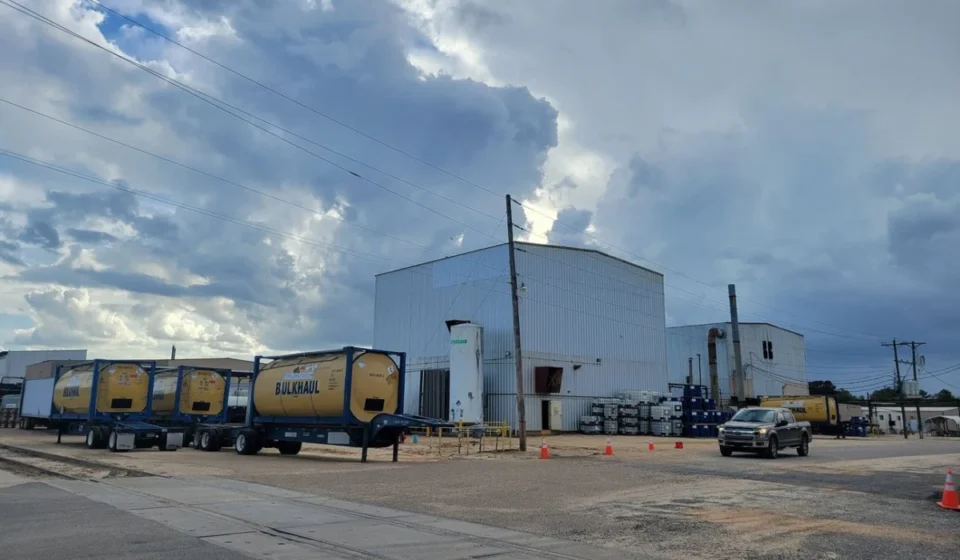
Wayne County sits in the top 7% of all U.S. counties for Parkinson’s disease-related deaths between 2018 and 2024. Simultaneously, it serves as the host to a Sipcam Agro facility that processes paraquat dichloride, a highly toxic herbicide. While industry giants like Syngenta have begun to pivot away from the chemical, the reality on the ground is that production is not vanishing; it is merely migrating, concentrating in vulnerable communities that lack the federal protections necessary to mitigate the risks of toxic air emissions.
The Science of a Silent Killer
Paraquat is a potent, non-selective herbicide that has been banned in over 70 countries, including the entire European Union, China, and Brazil. Known for its lethal efficiency—the EPA warns that "one sip can kill"—it is frequently used as a tool for suicide in regions where it remains readily available.
Beyond its immediate toxicity, scientific consensus has increasingly identified paraquat as a significant environmental trigger for Parkinson’s disease. When inhaled or ingested, the chemical travels to the brain, where it selectively kills dopaminergic neurons. A landmark 2024 study published in the International Journal of Epidemiology reinforced what many independent researchers have argued for decades: exposure to paraquat significantly elevates the risk of developing Parkinson’s, a condition for which there is currently no cure.
The danger is not limited to those handling the chemical. Research suggests that even living in proximity to fields where paraquat is applied—or near facilities where it is formulated—is associated with a marked increase in neurodegenerative and oncological risks, including thyroid cancer and childhood leukemia.
A Chronology of Chemical Dependence
The story of paraquat in the United States is a narrative of escalating reliance. Introduced in the 1960s by a predecessor to Syngenta, the chemical became a staple of industrial agriculture. Its use in the U.S. tripled between 2006 and 2017, a surge largely driven by the widespread evolution of glyphosate-resistant "superweeds." As the efficacy of Roundup waned, farmers turned to the cheaper, more aggressive paraquat to clear massive tracts of land, particularly for soybean, corn, and cotton production.
- 1950s: Researchers at Imperial Chemical Industries (a Syngenta predecessor) identify the chemical’s adverse effects on brain tissue and the nervous system.
- 2006: The Port of New Orleans imports 14 shipments of paraquat concentrate.
- 2015: The Sipcam Agro facility in Waynesboro, Mississippi, begins operations.
- 2016: Import shipments through the Port of New Orleans reach 144 annually.
- 2023: Sipcam Agro takes over the Waynesboro plant, coinciding with a massive spike in reported fugitive air emissions.
- 2025: Import volume surges to 449 shipments, averaging more than one per day.
Despite this timeline of growth, Syngenta announced in early 2026 that it would cease production of the herbicide, citing market competition from generic manufacturers. However, this corporate exit is not a victory for public health; rather, it has cleared the stage for other facilities to ramp up production, effectively decentralizing the risk while maintaining the same total volume of poison circulating through the Mississippi River corridor.
The Waynesboro Emissions Spike: A Case Study in Regulatory Failure
The most alarming development in recent years is the staggering increase in airborne emissions from the Waynesboro plant. Under the previous operator, Odom Industries, annual paraquat emissions were estimated at around 500 pounds. By 2022, that number rose to 1,500 pounds. In 2023, following the takeover by Sipcam Agro, the facility reported "fugitive emissions"—unintentional leaks during the industrial process—that pushed the total volume to over 47,000 pounds by 2024.
This volume is extraordinary. To put it in perspective, the Waynesboro plant released nearly as much paraquat into the air in a single year as the largest agricultural user in California—the J. G. Boswell Co.—used across its entire farming operation.
Despite the obvious health implications, the Mississippi Department of Environmental Quality (MDEQ) faces a regulatory vacuum. Paraquat is not classified as a "hazardous air pollutant" under federal law, meaning there is no maximum emission threshold. While the MDEQ has confirmed an "open enforcement action" regarding the plant, they have remained tight-lipped, citing legal constraints. For the residents of Waynesboro, most of whom live within a mile of the facility, the lack of federal oversight is a source of profound betrayal.

Voices from the Frontline
For Ashton Pearson Sr., a lifelong Mississippian diagnosed with Parkinson’s in 2013, the environmental link is not a theoretical debate; it is a lived reality. A retired mechanical engineer who spent his youth around agricultural spray rigs, Pearson now leads a support group for those suffering from the disease.
"We’re all dying off," Pearson says, reflecting on his childhood friends who shared his proximity to the fields. He expresses disbelief that a modern facility would be allowed to disperse such chemicals into the air without high-grade containment, such as the scrubbers required for industrial power plants. "We weren’t allowed to just run that up the chimney and disperse it into the environment," he notes, pointing to the disparity between how power generation and chemical production are regulated.
The human cost is further illustrated by the story of Jannette Holifield, whose husband, Martin Montelongo, worked at the Waynesboro plant for years. After struggling with a persistent, worsening cough, Montelongo passed away in 2025 at age 63. While his death was officially recorded as a heart attack, the link between chronic paraquat inhalation and lung scarring—a condition known to cause respiratory failure—casts a long, suspicious shadow over his passing.
Implications for Public Health and Policy
The situation in Waynesboro is a microcosm of a broader, systemic failure. Environmental justice advocates point out that such facilities are disproportionately located in marginalized communities, where lower life expectancies can mask the long-term impact of toxic exposure.
The political landscape, however, remains volatile. While 13 states have introduced legislation to ban or restrict paraquat, progress is frequently stalled in committees. Furthermore, there is growing concern that federal-level attempts to address the issue will be undermined by the "revolving door" of industry influence. The inclusion of language in the federal Farm Bill that would pre-empt state-level regulations poses a direct threat to the ability of local governments to protect their own citizens from chemical hazards.
Andi Fristedt, executive vice president with the Parkinson’s Foundation, remains steadfast: "The most important thing is pushing the EPA to ban paraquat. They could end paraquat use tomorrow." The current EPA’s promise to "reassess" the safety of the chemical has been met with both cautious hope and deep skepticism. While the "Make America Healthy Again" (MAHA) movement claims to support the removal of chemical threats, critics worry that the rhetoric may not translate into substantive policy changes that challenge the powerful agricultural lobby.
Conclusion: A Call for Accountability
The science is clear: paraquat is an environmental neurotoxin that carries a heavy, incurable price for those exposed to it. As production shifts from major corporations to smaller, less-scrutinized facilities, the risk to rural communities like Waynesboro only grows.
The residents of these "sacrifice zones" are demanding more than just oversight; they are demanding a complete prohibition of a chemical that, as recent studies have shown, can be removed from agriculture without sacrificing productivity. Until the EPA takes definitive action to ban paraquat, the residents of Waynesboro—and hundreds of other towns across the American heartland—will continue to breathe in the consequences of a system that prioritizes convenience and cost over human life.
The path forward requires a unified approach: strict, science-based federal regulation, the closure of regulatory loopholes that allow for massive "fugitive emissions," and a recognition that the right to clean air is not a privilege, but a fundamental necessity for every citizen, regardless of their zip code.