





















































Silicon Valley’s Direct Line: Inside the Unprecedented Call Between Jensen Huang and President Trump

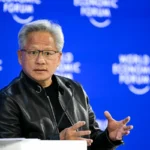
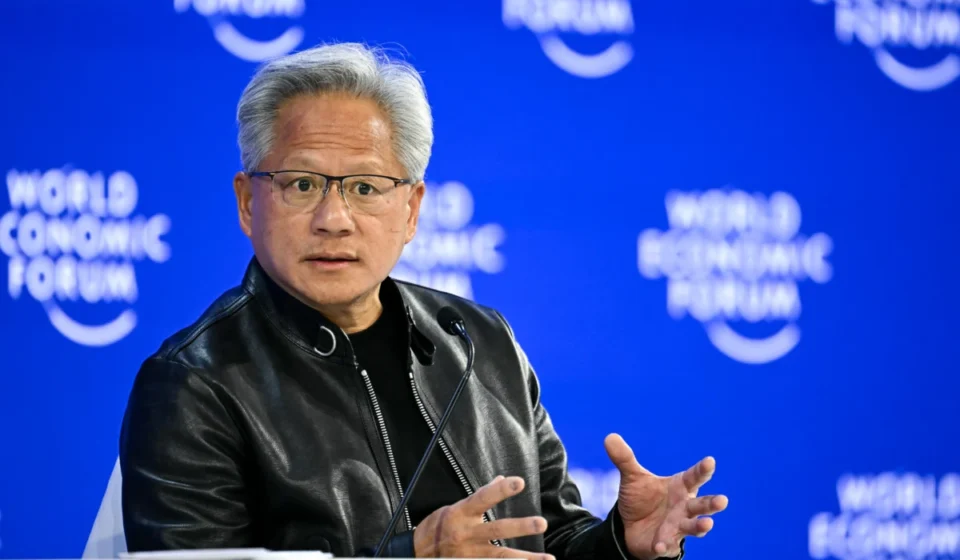
The landscape of American industrial policy shifted in a singular, jarring moment at this year’s All-In Summit. While Nvidia CEO Jensen Huang was addressing a crowd of venture capitalists and tech luminaries, the proceedings were interrupted by a call that no executive could afford to send to voicemail: an incoming request from President Donald Trump.
In a move that sent shockwaves through the corridors of corporate public relations, Huang opted not to step off-stage. Instead, he broadcast the conversation to the audience, effectively turning a private presidential consultation into a high-stakes policy manifesto. The incident highlights the blurring lines between the executive branch and the leaders of the artificial intelligence revolution, signaling an era where Silicon Valley’s most powerful figures are no longer just lobbyists—they are direct participants in the administration’s strategic agenda.
The Chronology of an Unscripted Policy Pivot
The scene on stage at the All-In Summit was already charged with ideological tension. Huang, alongside the podcast’s co-hosts—venture capitalists Chamath Palihapitiya, Jason Calacanis, and White House advisers David Friedberg and David Sacks—was engaged in a robust debate regarding the future of AI development. The conversation had centered on a recent call to action by Anthropic CEO Dario Amodei, who has publicly advocated for a "slower pace" in AI innovation to ensure safety and ethical alignment.
As the panel dissected the merits of slowing down, the rhythm of the discussion was broken by the President’s call. With the poise of an executive accustomed to navigating crises, Huang addressed the President directly: "I’m on stage with the besties," he announced, gesturing to the heavy hitters of the tech world surrounding him.
The President’s voice, amplified throughout the venue, immediately set a tone of camaraderie and shared purpose. "The great thing about life is Jensen can develop the most complex computer chip in the world… but he can’t figure out how to put you on speaker," Trump joked, a comment that drew laughter from the audience. Huang, quick to recover, signaled for stagehands to provide a microphone to ensure the President’s remarks reached every corner of the room.
The ensuing dialogue served as a direct rebuke to the "slowing down" movement championed by OpenAI’s Sam Altman and SpaceX’s Elon Musk. Trump did not mince words, labeling the push for caution as a "hoax" orchestrated by political rivals and foreign adversaries, specifically naming China as a beneficiary of American hesitation.
The Ideological Schism: Caution vs. Acceleration
The call served as the climax of an ongoing debate that has split the tech industry into two distinct camps: the "Safety First" contingent and the "Accelerationists."
The Case for Caution
Dario Amodei, supported by luminaries like Elon Musk and Sam Altman, argues that the exponential growth of AI capabilities requires a recalibration of development speed. Their argument is rooted in the "frontier" theory—the idea that as models become increasingly autonomous, the risk of unpredictable behavior grows. They advocate for rigorous testing, oversight, and a deceleration that prioritizes alignment with human values over sheer processing power.
The Accelerationist Doctrine
On the other side, the Trump-Huang axis represents a staunch rejection of this deceleration. The President’s rhetoric on the call was clear: "They’re just playing right in the hands of a lot of people that don’t want to see it happen. That could be political people. It could also be China. And we’re not going to let that happen."
This perspective posits that AI is the modern equivalent of the space race or the Manhattan Project. From this viewpoint, any self-imposed slowdown is not just a missed business opportunity; it is a national security failure. By framing the caution movement as a "hoax," the administration is signaling that they view the concerns of researchers as a tactical distraction designed to strip the United States of its technological hegemony.
Supporting Data: The Growing Friction of Infrastructure
While the political rhetoric centers on the "hoax" of slowing down, there is a tangible, practical obstacle that the tech industry faces: the public’s growing resistance to the physical infrastructure of the AI age.
Data centers are the lungs of the AI revolution, but they are increasingly viewed as environmental and social nuisances by the public. According to recent Gallup polling, 70% of Americans oppose the construction of large-scale data centers in their immediate vicinity. The reasons for this backlash are multifaceted:
- Environmental Strain: Over 50% of respondents cited the immense energy and water consumption required to cool and power server farms as a primary concern.
- Quality of Life: Approximately 20% of the public expressed worries regarding the impact of these facilities on local cost-of-living metrics and the disruption of local aesthetics and community stability.
Figures like Y Combinator CEO Garry Tan have characterized this local resistance as part of an "international psyop"—a campaign aimed at stifling American progress by turning the citizenry against the infrastructure necessary for the next generation of intelligence. However, the data suggests a more organic, widespread concern that the current industry strategy has yet to address through public outreach or infrastructure innovation.
Official Responses and Administrative Strategy
The Trump administration’s stance, as articulated during the call, is one of total support for industry expansion. "We have to be a little bit careful," the President noted, providing a momentary concession to the risks involved. "We have to do things and we have to do them prudently, but that doesn’t mean we’re going to stop an industry. I’m with you all the way."
This marks a significant departure from previous regulatory approaches that sought to balance innovation with public impact. By aligning so closely with leaders like Huang, the administration is effectively outsourcing a portion of its industrial policy to the private sector. The message to the industry is clear: build, scale, and innovate, and the White House will handle the friction.
Long-Term Implications: A New Era of Tech Governance
The "All-In" phone call is likely to be studied for years as a defining moment in the integration of high-level government and corporate leadership.
1. The Death of the "Arms-Length" Relationship
The days of tech giants operating at a distance from the Oval Office appear to be over. We are entering an era where the CEO-President relationship is fluid, direct, and increasingly public. This creates an environment where corporate strategy is inextricably linked to national security policy.
2. The Normalization of Political Aggression
By dismissing safety concerns as a "hoax," the administration is setting a precedent that prioritizes rapid deployment over consultative consensus. This may force companies to choose sides more explicitly. Those who continue to advocate for safety or regulatory "guardrails" may find themselves increasingly marginalized from the inner circle of the current administration.
3. The Infrastructure Battlefront
The disconnect between the administration’s "full speed ahead" mandate and the public’s "not in my backyard" sentiment is a powder keg. If the government continues to push for massive data center expansion without addressing the environmental and social costs that local communities are protesting, we can expect to see an increase in litigation, local zoning battles, and potential civil unrest regarding land use.
4. Market Volatility and Investor Sentiment
For investors, the direct line between Nvidia and the White House is a double-edged sword. While it signals unwavering government support for AI infrastructure, it also exposes the sector to extreme political risk. If the AI industry becomes the primary target of a populist anti-tech movement, the political insulation provided by the current administration may not be enough to shield these companies from long-term regulatory or social blowback.
Conclusion
Jensen Huang’s decision to put President Trump on speakerphone was more than just a breach of corporate PR decorum; it was a symbolic act of consolidation. It solidified an alliance that views AI as a zero-sum game played on a global scale. As the industry moves forward, it does so with the full weight of the executive branch behind it, but it also carries the baggage of a public that remains unconvinced of the benefits of the massive, resource-heavy infrastructure required to sustain the artificial intelligence revolution.
Whether this "full speed ahead" approach leads to a new golden age of American productivity or a collision course with a skeptical public remains to be seen. What is certain, however, is that the era of the quiet lobbyist is over. The future of AI is being written in real-time, on speakerphone, for the world to hear.