





















































Education in the Shadow of Enforcement: Minnesota Schools Struggle Amidst Operation Metro Surge

The routine rhythm of the school day—the morning bus stop, the playground chatter, the walk home—has been shattered for thousands of students across Minnesota. In the wake of “Operation Metro Surge,” a federal immigration enforcement initiative, classrooms have emptied, playgrounds have gone silent, and a profound, pervasive terror has taken hold of families who now view the simple act of attending school as a high-stakes gamble with their future.
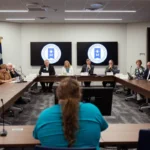
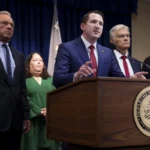
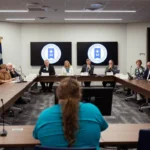
At a recent Senate Education Finance Committee hearing, the first of several planned to address the crisis, educators, superintendents, and advocates painted a harrowing picture of an educational system in distress. The testimonies revealed that the fear of detention has triggered a mass exodus from in-person learning, with parents keeping children home or transitioning to online education to avoid potential encounters with federal agents near school zones.
The Human Toll: A Generation Living in Fear
The testimonies provided to the committee were not merely statistics; they were visceral accounts of childhoods interrupted by state-sanctioned instability. Amy Hewett-Olatunde, an English as a second language teacher in St. Paul Public Schools, offered a sobering assessment of the emotional landscape. “We are watching a generation of St. Paul children, and children across this entire country, lose their childhoods to a fear that no child should know,” she told lawmakers. At the peak of the surge, nearly 7,000 students in her district were absent.
The trauma manifests in various forms. In some households, children are learning from behind drawn curtains, whispering during virtual lessons for fear of being overheard. In others, the school day ends in heartbreak; one student returned home to find her parents missing, having been taken into custody by immigration officials while she was in class. Another high schooler was detained at a bus stop and held for five days with virtually no contact with his family.
These accounts are not isolated incidents but represent a systemic disruption of the educational environment. From elementary students walking to the bus under the watchful, anxious eyes of parents to the logistical nightmare of coordinating emergency parental authority forms, the school experience has become inextricably linked to the existential threat of family separation.
Chronology of a Crisis: How Operation Metro Surge Changed the Landscape
The escalation of tension began as Operation Metro Surge intensified its footprint in Minnesota. While the operation aims to enforce immigration law, its execution has brought federal agents into the immediate vicinity of sensitive educational sites.
In recent weeks, the situation reached a boiling point for several districts:
- Mid-January: Reports began circulating of increased federal vehicle presence near suburban school districts.
- Three Weeks Ago: Fridley Public Schools experienced a particularly alarming incident when six ICE vehicles circled a roundabout in front of Hayes Elementary School, effectively barricading students from safely crossing the road to enter the building.
- Recent Weeks: Teachers and social workers reported instances where agents allegedly misrepresented themselves as media personnel to surveil community members, including a school board member who was followed from her home while dropping her toddler at daycare.
- The Current Climate: Many families have opted for a "lockdown" approach. In south Minneapolis, families have remained indoors for over eight weeks, with parents relying on community networks for grocery deliveries and rides to school, as the prospect of venturing into public spaces becomes increasingly perilous.
Supporting Data: By the Numbers
While comprehensive, statewide figures remain elusive, the anecdotal data provided by school administrators paints a stark picture of the disruption. The loss of student attendance is not just a statistical anomaly; it is a significant drain on school resources and a disruption to academic progress.
- Willmar Public Schools: Following the detention of a student—a legal resident—in a federal facility, the district saw a massive attendance drop. During the following week, 936 students were absent out of a total enrollment of 4,000, representing nearly a quarter of the student body. Superintendent Bill Adams has had to shift from his traditional administrative duties to conducting home visits to ensure children are safe and have adult supervision after parents are detained.
- Partnership Academy (Richfield): Serving a primarily Latino student body, the academy hit an all-time low attendance rate of 39% on the Monday following a high-profile incident in the community. Administrators noted that during virtual sessions, students were forced to witness, via Zoom, the arrival of federal agents at the homes of their classmates and teachers.
- Columbia Heights and Fridley: The impact on enrollment and funding is tangible. Columbia Heights has seen 800 out of 3,400 students move to online learning, with an overall enrollment drop of 130 students—a loss that translates to nearly $2 million in state funding. Fridley reports that over 400 of its 2,700 students have similarly transitioned to remote learning.
- Twin Cities Academy: The urgency of the situation is reflected in the work of social workers who have visited 25 homes to help families complete "Delegation of Parental Authority" paperwork. Many parents only opened their doors after recognizing the social workers, weeping as they asked, “Who will take my children if I am gone?”
Official Responses: A Divided Legislative Body
The legislative hearing highlighted a deep, perhaps irreconcilable, divide between those seeking to protect school environments and those who advocate for strict, unfettered immigration enforcement.
DFL (Democratic-Farmer-Labor) lawmakers, led by proponents of new legislation, are pushing for measures to hold federal agents accountable for potential illegal conduct and to establish "safe zones" around schools and childcare facilities. Sen. Clare Oumou Verbeten characterized the current situation as a cruel attack on the state’s youngest residents. “It’s clear that the response is going to be to just continue to scapegoat immigrants and people of color,” she stated, urging the committee to confront the uncomfortable reality of the testimony provided.
Conversely, Republican lawmakers pushed back, arguing that the hearing failed to account for the perspective of law enforcement and those who oppose illegal immigration. Sen. Eric Lucero strongly criticized the tone of the testimony, objecting to the characterization of agents as “invaders” or “terrorists.” He argued that the committee was being used to ignore the voices of those who believe resources are being drained by individuals who entered the country illegally.
Sen. Jason Rarick, while acknowledging the validity of the lived experiences shared, called for a focus on “civility.” He criticized the use of tactics like whistles to alert communities to the presence of agents, suggesting that such actions only serve to heighten tensions. “We have to lower the tensions on both sides if this is going to be solved,” Rarick maintained.
The Long-Term Implications
The fallout from Operation Metro Surge extends far beyond the immediate trauma of detained parents and absent students. The long-term implications for the Minnesota education system are profound and multifaceted.
1. Financial Instability
For districts like Columbia Heights, the $2 million funding gap caused by enrollment drops is not merely a budgetary line item—it is a threat to the quality of education provided to the students who remain. With fewer students, schools may face staff layoffs, a reduction in specialized programs, and a decrease in the resources available for mental health support, which is currently in high demand.
2. The Erosion of Trust
Schools have traditionally served as the bedrock of community trust. When federal agencies operate in a manner that creates fear in school zones, that trust is shattered. Teachers like Sarah Lindsey, who has personally assisted in providing groceries and rent money for dozens of families, are stepping into roles that transcend education, acting as a social safety net in a vacuum of institutional support. This erosion of trust makes it increasingly difficult for schools to engage with parents, hindering communication and collaboration.
3. Developmental and Mental Health Consequences
The constant state of hyper-vigilance among children is expected to have lasting developmental consequences. Educators are reporting increased anxiety, difficulty concentrating, and social withdrawal among students. The "fear that no child should know" described by Amy Hewett-Olatunde is likely to impact test scores, social-emotional development, and the overall educational trajectory of an entire cohort of students.
4. A Policy Standoff
As the House Education Finance Committee prepares for further hearings, the path forward remains clouded by political deadlock. While educators and superintendents are pleading for a policy response that prioritizes student safety, the absence of bipartisan support suggests that a legislative solution is far from guaranteed.
The ongoing surge has transformed Minnesota’s schools from sites of academic growth into centers of crisis management. As legislators continue to debate the morality and legality of the enforcement actions, the students, families, and educators on the ground are left to navigate a reality where the school bell no longer signals the start of a lesson, but the beginning of another day spent waiting, watching, and hoping for safety.